
Precision Optical Glass & Laser Cavity Components
Explore our core engineering catalog including precision quartz diffusion ware, ceramic cavities, high-reflectivity pump reflectors, and custom laser optics machined directly to your mechanical prints.
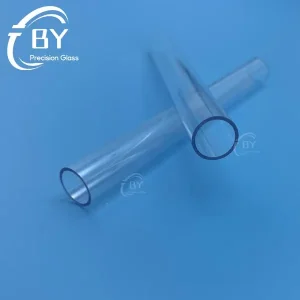

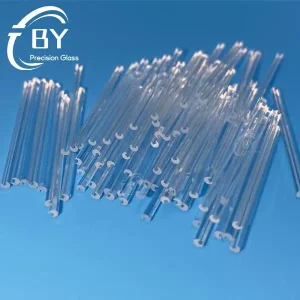
The Micro-Fluidic Revolution: High-Purity Fused Quartz Capillary Pipettes
Meeting the rigorous demands of next-generation bio-sensing, mass spectrometry nano-emitters, and sub-micron electrophysiological recording via precision glass redrawing.
In analytical biochemistry, neurobiology, and precision photonics, the transition from conventional borosilicate tubing to synthetic fused silica (JGS1) and natural fused quartz (JGS2/JGS3) capillary glass pipettes marks an indispensable technological shift. Fused silica offers unmatched dielectric strength, chemical inertness, near-zero thermal expansion coefficient (5.5 × 10⁻⁷ /°C), and broad-band optical transmittance stretching from deep ultraviolet (185 nm) through short-wave infrared (3,500 nm).
As a specialized wholesale quartz capillary glass pipette manufacturer, Tianjin BY Photonics operates cutting-edge precision vertical redraw towers and oxyhydrogen thermal micro-drawing systems. We resolve the critical bottlenecks that challenge instrument engineers: inner-diameter (ID) tapering, wall eccentricity, brittle fracturing under high pneumatic back-pressures, and trace-ion leaching that compromises sensitive patch-clamp recordings or nano-electrospray ionization mass spectrometry (nano-ESI-MS).
Thermal & Mechanical Integrity
With an annealing point at 1,120 °C and softening point at 1,683 °C, fused quartz pipettes withstand extreme flame pull-cycles, high-temperature furnace insertion, and repetitive cyclic autoclaving without dimensional creep or micro-fissuring.
Ultra-Low Electrical Noise
The superior volume resistivity of pure SiO2 (> 1018 Ω·cm) minimizes dielectric loss and capacitive dissipation. Essential for patch clamp single-channel recording where pA-level signals require giga-ohm electrical seals.
Chemical & Biological Purity
Virtually free from alkali metal oxides (Na2O, K2O, CaO < 0.1 ppm). Prevents ion leaching into cellular matrices, eliminating baseline drift in micro-injection, capillary electrophoresis, and analytical spectrophotometry.
Comparative Optical & Physical Matrix for Capillary Fabrication
Selecting the correct raw glass formulation is vital for device stability, chemical compatibility, and light transmission in spectroscopic or laser-assisted applications.
| Material Category | Spectral Window | Hydroxyl [OH-] Content | Softening Point | Dielectric Constant (1 MHz) | Primary Industrial Use-Cases |
|---|---|---|---|---|---|
| JGS1 Synthetic Fused Silica | 185 nm – 2,500 nm | < 10 – 30 ppm (Dry) | 1,730 °C | 3.75 | Deep UV Flow Cells Laser Capillaries |
| JGS2 Fused Quartz (Natural) | 220 nm – 2,500 nm | < 30 – 150 ppm | 1,683 °C | 3.78 | Micro-pipette Blanks Chromatography |
| JGS3 Infrared Optical Quartz | 260 nm – 3,500 nm | ≤ 5 ppm (Anhydrous) | 1,680 °C | 3.75 | IR Spectrometry Gas Pyrolysis |
| Borosilicate 3.3 Glass | 310 nm – 2,200 nm | N/A (Multi-component) | 820 °C | 4.60 | Routine Microinjection Medical Tubes |
| Fluorine-Doped Silica | 300 nm – 2,100 nm | Controlled refractive index | 1,650 °C | 3.70 | Total Internal Reflection Optical Cladding |
Engineering Insight: Selecting Capillary Stock for Laser Micropipette Pullers
When pulling pipettes with sub-micron tip orifices (< 0.1 μm) using CO2 laser pullers (such as Sutter P-2000), fused silica's strong absorption band at 10.6 μm provides instantaneous, localized melting without the prolonged thermal tail typical of metal-filament pullers. This rapid thermal cycle preserves sharp geometric tapers essential for penetrating tough cell membranes or organelle structures without mechanical buckling.
Macro Industry Solutions & Cross-Discipline Applications
How Tier-1 medical instrument builders, analytical device OEMs, and semiconductor facilities integrate our wholesale quartz capillary glass tubing into high-throughput operations.
Patch Clamp Electrophysiology
Our JGS1 low-noise capillary tubes feature ultra-clean inner bores and controlled wall-to-bore ratios. They form tight >10 GΩ gigaseals with cellular lipid bilayers, suppressing high-frequency background current noise during single-channel ion transport studies.
Nano-LC & ESI Mass Spec
Precisely drawn fused silica emitters with customized ID/OD geometries ensure non-turbulent, stable Taylor cone formation. Hydrophobic silanization compatibility allows zero dead-volume coupling to modern LC-MS/MS proteomic pipelines.
Microfluidic Droplet Injectors
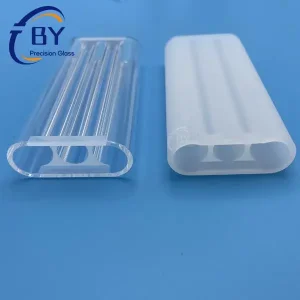
Square-bore, rectangular, and multi-bore (multi-lumen) capillaries enable hydrodynamic flow focusing, emulsion droplet generation, and micro-particle sorting. Optically flat exterior surfaces facilitate laser-induced fluorescence (LIF) detection without spherical aberrations.
Fiber Optic Ferrules & Splicing
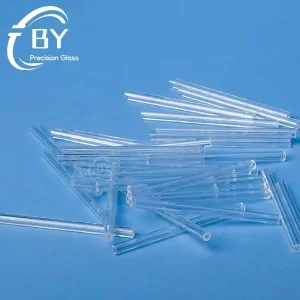
Capillary sleeve tubes with sub-micron inner diameter tolerances (e.g., 125.5 ± 0.5 μm) allow passive fiber alignment, collimator packaging, fiber-optic rotary joints, and fused biconical taper (FBT) coupler substrates.
Localized Support, Global Compliance & Cleanroom Handling
Ensuring zero-defect supply chains through automated optical metrology, rigorous cleanroom packaging, and global material traceability protocols.
In-Line Dual-Axis Laser Micrometry
Every meter of redrawn capillary is continuously monitored via high-frequency dual-axis laser scanning gauges. We capture real-time outer diameter and inner diameter variations at 1,000 Hz, instantly flagging any wall taper or out-of-round deviation greater than ±0.002 mm.
Class 100 Cleanroom Decontamination
Capillaries destined for medical and biopharma injection undergo automated ultrasonic de-ionized water flushing (18.2 MΩ·cm), chemical acid leached organic stripping, and nitrogen drying, packed hermetically in dust-free antistatic tubes to eliminate airborne particulate contaminants.
Global Certification & Traceability
Full compliance with RoHS, REACH, and California Prop 65. Every batch ships with an authentic Mill Test Certificate (MTC), UV-Vis-NIR spectroscopic transmission scans, and complete raw ingot trace chemical batch reports for absolute FDA/CE audits.
Next-Generation Quartz Capillary Fabrication Trajectory
Anticipating the converging requirements of quantum computing sensors, single-cell spatial omics, and ultra-high-pressure chromatography.
Sub-100 nm Laser Micromachining
Integrating femtosecond laser ablation on capillary tip terminations allows chip-free, perpendicular facet cutting, micro-notching, side-hole drilling, and 3D micro-nozzle profiling without thermal stress concentrations or micro-cracks.
Functional Surface Nano-Coatings
Developing pre-silanized and polymer-grafted interior capillary walls (PVP, polyacrylamide, hydrophobic C18 alkyl chains) directly inside the cleanroom drawing cycle, preventing protein adsorption in single-cell sequencing and electrophoresis.
Multi-Lumen & Polarized Geometries
Scaling up production of 3-bore, 4-bore, and theta-style dual-barrel quartz capillary tubes for multi-barrel microiontophoresis and simultaneous electrochemical/optical biosensing within a single microneedle penetration footprint.
Frequently Asked Questions by OEM Engineers & Buyers
Detailed engineering answers to address custom fabrication, material grades, tolerance holding, and wholesale supply agreements.
What are the key technical differences between Quartz (Fused Silica) and Borosilicate glass capillary pipettes?
Can you manufacture custom inner diameter (ID) and outer diameter (OD) sizes beyond standard catalog dimensions?
How do you maintain wall concentricity and prevent bore ovality during vertical capillary drawing?
What end-finishing options are available for wholesale quartz capillaries?
Are your quartz capillary tubes compatible with standard laboratory pipette pullers?
What packaging methods are implemented to prevent breakage and contamination during international freight?
What documentation and inspection reports are included with bulk orders?
What is your typical lead time for custom prototype lots versus volume mass production?
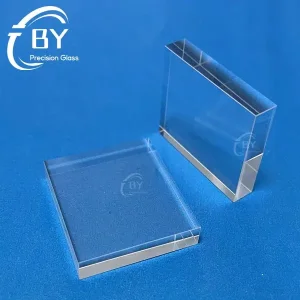
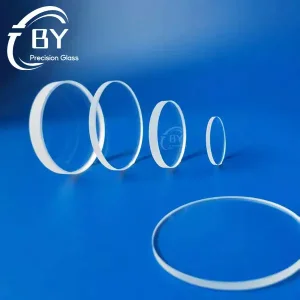
Precision Substrates, Laser Cavities & Optical Tubes
Complementary precision glass fabrication lines engineered with high chemical resistance, tight dimensional parallelism, and high optical damage thresholds.


Consult Our Optical Glass Engineers Within 24 Hours
Submit your STEP, DXF, DWG, or PDF drawings with custom capillary inner/outer diameters, length tolerances, or specialized beveling requirements. Our process engineering team provides instant DFM feasibility reviews and wholesale batch quotations.