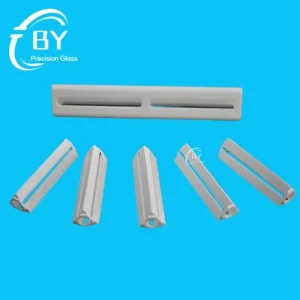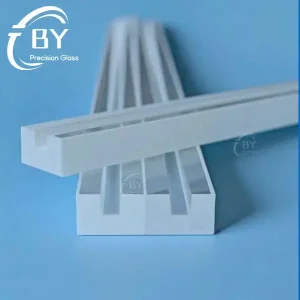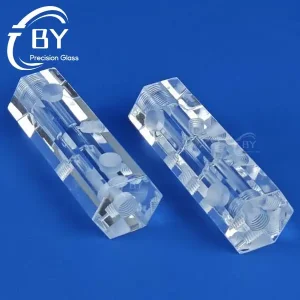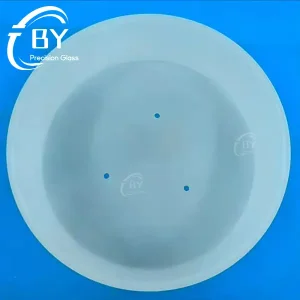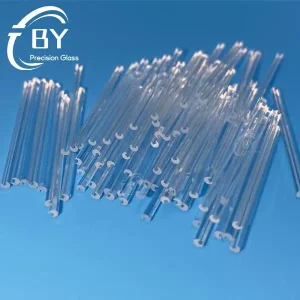
Micro-Machined & Optical Lineup
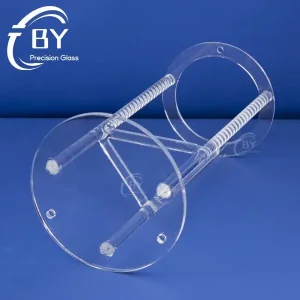
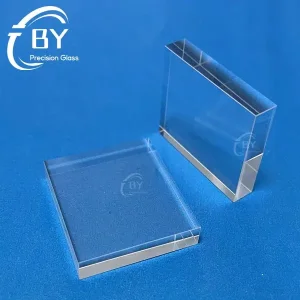
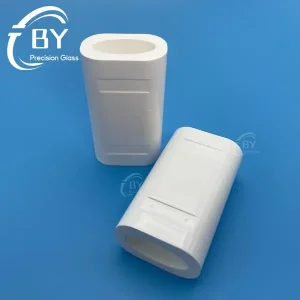
Primary Engineered Quartzware & Components
Engineered to drawing with micrometer concentricity, certified thermal stability, and low coefficient of thermal expansion.
15+
Years Precision Glass Fabrication
±0.002mm
Ultra-Tight Capillary Tolerance Control
1,100°C
Continuous Working Temp Resistance
< 24h
DFM Engineering Drawing Feasibility
Industry Evolution & Dynamics
The Paradigm Shift in Micro-Capillary Glass Technology
From simple lab liquid transfers to sub-micron optical resonators and deep-UV lithography diagnostic capillaries.
Synthetic Purity & UV Transmission
Traditional drawn borosilicate tubing fails under aggressive UV radiation (<254 nm) and high thermal flux. Synthetic fused silica (JGS1) micro tubes ensure >90% transmission down to 185 nm without solarization, driving high-resolution capillary electrophoresis (CE) and DNA sequencing systems worldwide.
Thermal & Chemical Micro-Environments
Modern semiconductor wet processing and micro-reactor setups subject channels to hydrofluoric acid gas, aqua regia, and rapid thermal cycling. Fused quartz micro tubes provide a virtually inert interface, a micro-expansion coefficient of 5.5 × 10⁻⁷/°C, and complete structural integrity up to 1,100°C continuous load.
Sub-Micron Dimensional Repeatability
Next-generation photonic crystal fibers (PCFs) and microfluidic flow cytometry require micro tubes with ultra-low wall variance and roundness eccentricity below 1.5%. Micro-redrawing towers equipped with multi-axis laser micrometer closed-loop control now govern high-volume wholesale manufacturing.
Global Procurement Intelligence
Procurement Criteria for Tier-1 Instrument & Fab Buyers
B2B optical engineers and supply chain heads prioritize four primary physical axes when vetting custom quartz micro-tube suppliers.
Material Grade Matching
Procuring teams must specify exact quartz grades:
- JGS1: UV Synthetic Silica (185-2,500nm, bubble-free).
- JGS2: Standard Optical Quartz (220-2,500nm).
- JGS3: Low-OH Infrared Quartz (260-3,500nm, <5ppm OH).
Geometrical Tolerance
Tolerances for micro-capillaries determine assembly yields:
- Outer Diameter (OD): Down to 0.15mm (±0.003mm).
- Inner Bore (ID): 0.020mm to 2.0mm (±0.002mm).
- Concentricity: >97% concentric bore alignment.
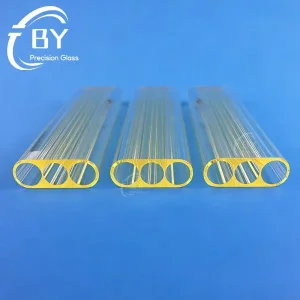
- Custom Bore: Round, rectangular, square, or dual-bore.
End-Face Finish & Cleaving
Fluidic and fiber-optic splices mandate zero micro-chipping:
- Fire-polished ends for seamless microfluidic tubing interface.
- Precision optical flat polish: λ/4 flatness, 20-10 Scratch-Dig.
- Precision angle cleave (8°, 45°) for reflection mitigation.
Traceability & Cleanliness
Stringent batch documentation eliminates contamination risk:
- Class 100/1000 cleanroom ultrasonic solvent wash.
- Batch-wise GDMS trace metal impurity certificate.
- Vacuum, particle-free nitrogen-sealed export packaging.
Macro Industry Solutions
Cross-Disciplinary System Integration
How wholesale quartz micro tubes solve engineering bottlenecks across high-reliability sectors.
Aerospace & Laser Gyroscopes
Micro-capillaries serve as essential gas discharge channels and resonance cavity conduits in ring laser gyroscopes (RLGs). The extremely low helium permeability of JGS1 quartz combined with supreme thermal dimensional lock ensures negligible drift across -55°C to +125°C mission cycles.
Biomedical Microfluidics & Flow Cells
In high-throughput cell sorting, point-of-care chips, and next-gen sequencing (NGS), our redrawn square-bore quartz micro tubes serve as transparent optical windows. Near-zero autofluorescence and superior chemical resistance guarantee pristine signal-to-noise ratios.
Semiconductor Gas Doping & Deposition
Within atomic layer deposition (ALD) and chemical vapor deposition (CVD) tools, precision micro tubes administer precursor gases at exact micro-flow rates. The absence of heavy metal leaching preserves wafer yield and prevents micro-defect formation on sub-3nm nodes.
Global Compliance & Verification
Rigorous Quality Infrastructure & Export Compliance
Ensuring frictionless integration with international safety, environmental, and metrological standards.
ISO 9001:2015 Operations
Full manufacturing and drawing traceability from raw ingot lot to drawing-tower run, secondary cutting, hot working, and final optical inspection.
RoHS & REACH Compliance
All quartz, fused silica, and borosilicate capillaries are completely free of hazardous substances, fully certified for European and North American OEM integration.
Opto-Laser Metrology
Equipped with Mitutoyo non-contact optical comparators, laser scan micrometers, and Zygo white-light interferometers verifying bore sphericity down to 0.001mm.
Global Engineering Desk
Direct DFM consulting in English and Chinese, offering turnaround feasibility feedback, CAD/STEP file checks, and prototype-to-batch scalings within 24 hours.
Forward Technology Roadmap
Strategic Engineering Roadmap for Micro-Tubes
Continuous investment in micro-redrawing tooling, dopant chemistry, and hybrid joining technologies.
Phase I • Precision Scaling
Ultra-Micro ID Control (<10μm)
Developing sub-10-micron bore capillary drawing using positive-pressure micro-nitrogen feed systems to eliminate wall collapses during furnace drawing.
Phase II • Material Formulation
Fluorine & Rare-Earth Doping
Formulating index-depressed fluorine-doped capillary cladding and samarium/cerium-doped cavity filters to attenuate parasitical 1064nm emissions.
Phase III • Multi-Lumen Array
Honeycomb Multi-Channel Canes
Expanding wholesale capabilities for 7-hole, 19-hole, and custom micro-channel arrays dedicated to hollow-core photonic bandgap fibers and multiplex microfluidics.
Phase IV • Surface Metrology
Super-Polished Inner Walls
Chemical mechanical polishing and flame-glaze conditioning to achieve inner wall surface roughness (Ra) < 0.5nm, lowering capillary flow drag to near theoretical limits.
Frequently Asked Technical Questions
Procurement & Engineering Inquiry Guide
Essential guidance on custom fabrication, tolerances, material matching, and export logistic capabilities.
What is the standard tolerance capability for quartz micro tubes?
Depending on dimension ratios, our capillary redrawing towers consistently maintain outside diameters (OD) within ±0.003 mm and inside diameters (ID) within ±0.002 mm. For demanding photonic alignments, custom lots can be sorted and verified via non-contact laser telemetry down to ±0.001 mm.
How do I choose between JGS1, JGS2, and JGS3 quartz for micro tubes?
Select JGS1 synthetic silica if your application operates in the deep ultraviolet spectrum (185–2500 nm) or requires negligible autofluorescence in biomedical analytics. Choose JGS2 for standard optical, heating, or electrical furnace tasks (220–2500 nm). Specify JGS3 if low OH absorption bands are necessary in the infrared spectrum up to 3500 nm.
Can you provide custom internal bore geometries such as square or rectangular?
Yes. By machining precision preforms prior to capillary redraw, we fabricate circular, square, rectangular, D-shape, and multi-bore quartz micro tubes. Proportions and internal edge radii are strictly controlled to match your exact CAD specifications without collapse.
What are the minimum order quantities (MOQ) and lead times for custom runs?
As a direct manufacturer, we offer agile batch prototyping starting from 10–50 pieces for specialized R&D validations. For wholesale commercial orders, we supply 10,000+ pieces monthly. Prototypes generally dispatch within 10 to 14 working days following drawing finalization.
High-Precision Optical Ware
Advanced Substrates, Viewports & Laser Cavities
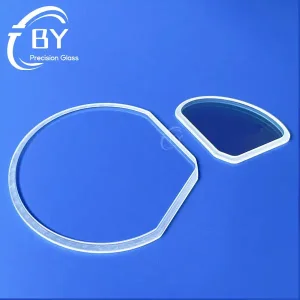
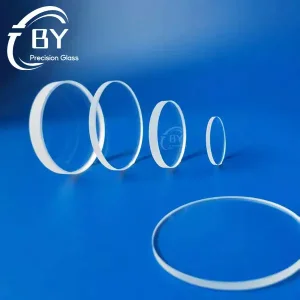
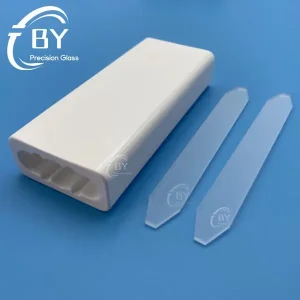
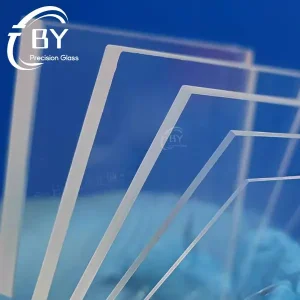
Explore specialized complementary components manufactured to identical high-reliability specifications.