
Engineered Optical Systems & Fluidic Interfaces
Precision-fabricated quartz, doped silicate, and fluoropolymer components tailored for ultra-clean lab-on-a-chip architectures, lasers, and semiconductor instrumentation.
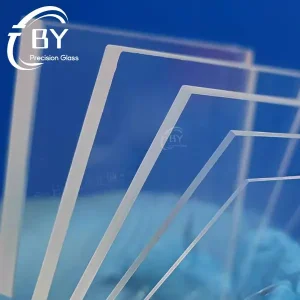
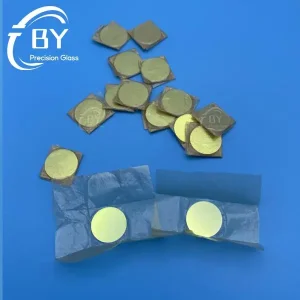
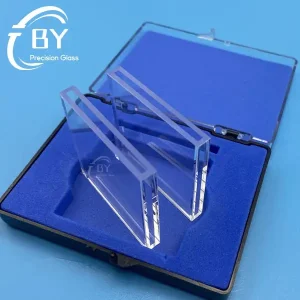
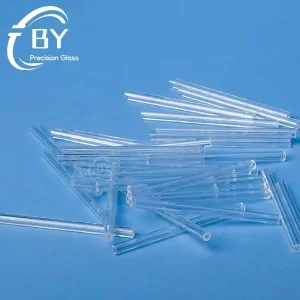
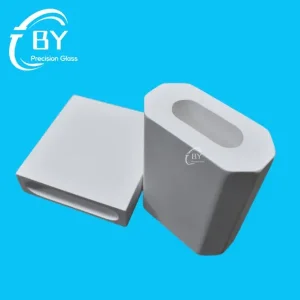
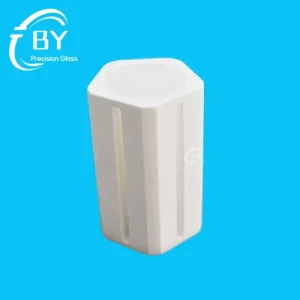
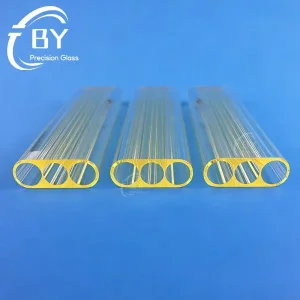
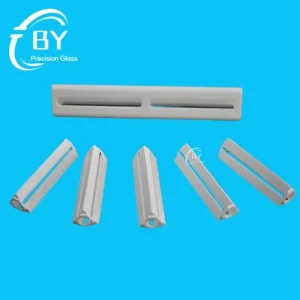
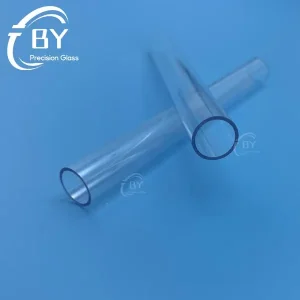
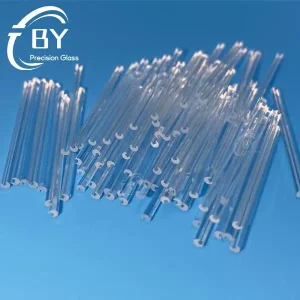
Precision Quartz Micro-Capillary & Microfluidic Tubing
Exploring the physicochemical advantages, ultra-precise thermal drawing thermodynamics, and sub-micron dimensional stability governing next-generation analytical science.
In high-throughput microfluidics, analytical instrumentation, single-molecule detection, and spatial biology, component performance is defined at the sub-micron boundary layer. Quartz micro-capillary tubes and quartz microfluidic channels represent the gold standard for fluid transfer, electrophoresis, spectroscopic measurement, and micro-reaction kinetics. Fabricated from ultra-pure synthetic fused silica (e.g., JGS1) or high-grade electric/flame-fused quartz (JGS2, JGS3), these precision micro-bore channels offer structural rigidity, extreme thermal shock resistance (CTE of 5.5 × 10⁻⁷ / °C), and exceptional optical transmission ranging from deep ultraviolet (DUV at 185 nm) through the mid-infrared spectrum.
Unlike conventional polymeric channels (PDMS, PMMA, or cyclic olefin copolymers) which suffer from hydrocarbon auto-fluorescence, micro-channel swelling under aggressive organic solvents, gas permeability, and unpredictable surface zeta potentials, precision fused silica quartz capillaries provide atomic surface stability. With inner diameters (ID) engineered from 5 μm up to 2.0 mm, radial concentricity tolerances held within ±1 μm, and internal bore surface roughness below Ra 0.5 nm, our custom-engineered capillaries empower global instrument builders to achieve laminar flow fidelity and optical signal-to-noise ratios impossible with alternate substrate materials.
Transformative Engineering Across Critical High-Tech Sectors
How micro-capillary redrawing and custom microfluidic quartz tubes resolve extreme thermodynamic, hydrodynamic, and optical bottlenecks.
Next-Gen Genomics & Capillary Electrophoresis (CE)
Modern Sanger sequencing, fragment analysis, and automated DNA forensic instruments depend entirely on ultra-uniform quartz capillaries. With pristine internal silica surfaces, our capillaries ensure highly repeatable electroosmotic flow (EOF) velocity, eliminating peak broadening and guaranteeing single-base resolution across extended electrophoretic migration matrices.
Nano-LC & Proteomic Mass Spectrometry
For liquid chromatography coupled to electrospray ionization (ESI-MS), peak capacity and sensitivity require minimal dead volume. Our fused silica micro-capillaries act as integrated packed-bed columns and laser-pulled ESI emitter tips, withstanding pressures exceeding 15,000 psi (1,000 bar) without mechanical dilation, phase rupture, or stationary phase shedding.
Semiconductor Wet-Etch & Ultra-Pure Gas Dosing
As semiconductor lithography nodes drop below 2 nm, micro-chemical delivery systems require total zero metal-ion extraction. Micro-capillary orifices and multi-bore flow restrictors fabricated from trace-metal controlled JGS1 quartz prevent ppb-level contamination during wafer cleaning, extreme low-flow gas injection, and atomic layer deposition (ALD) chemical vapor transport.
Droplet Microfluidics & Single-Cell Emulsion
Picoliter droplet generation demands hydrodynamic flow focusing nozzles with pristine inner edge chamfers. Our quartz microfluidic tubes provide exact orifice geometry, enabling rapid monodisperse water-in-oil droplet generation rates up to 20 kHz for single-cell mRNA sequencing, digital PCR (dPCR), and high-throughput micro-compartmentalized enzyme screening.
Fiber Optic Packaging, Splicing & Ferrule Sleeves
Precision multi-channel micro-capillaries serve as self-aligning fiber splices and collimator guide sleeves. With thermal expansion identical to optical fibers, zero radial eccentric shift across -50 °C to +150 °C operating spans is achieved, minimizing insertion loss and polarization mode dispersion (PMD) in high-capacity transceivers.
Flow Cytometry Hydrodynamic Sheath Flow Cells
In high-speed acoustic and hydrodynamic sorting systems, microfluidic optical quartz tubes allow simultaneous orthogonal laser excitation and scatter collection. Flawless window parallelism and fire-polished internal flow bores eliminate laser stray scattering and acoustic wave reflection, guaranteeing precision cell sorting purity.
Market Dynamics, Sourcing Resilience & Quality Paradigms
Strategic supply chain analysis for Tier-1 OEMs navigating high-purity glass drawing capacity, lead-time volatility, and synthetic silica availability.
The global precision quartz and microfluidic component market is expanding at an accelerated CAGR exceeding 11.4%, driven by rapid decentralization of clinical diagnostics, point-of-care biochip commercialization, and advanced wafer packaging. However, procurement officers and optical system engineers consistently face two major structural supply-chain risks: upstream high-purity silica sand availability and manufacturing yield degradation during secondary micro-redrawing operations.
Historically, European and North American suppliers have concentrated on low-volume, high-overhead custom glass blowing, leading to 16 to 24-week delivery backlogs and prohibitive pricing structures for emerging microfluidic startups. In contrast, advanced Chinese manufacturing hubs—exemplified by BY Photonics’ Tianjin integrated hot-and-cold processing base—have industrialized the end-to-end synthesis, automated precision vertical drawing tower controls, and CNC multi-axis grinding. By combining high-purity ingot synthesis (JGS1, JGS2, JGS3) with automated continuous laser gauge feedback systems, we ensure OEM instrument builders benefit from continuous production scale, rapid prototype turnaround (< 2 weeks), and consistent unit economics across wholesale batches.
| Material Designation | Purity (SiO2) | Transmission Band | OH Content | Primary Industrial Application |
|---|---|---|---|---|
| JGS1 (Synthetic Fused Silica) | ≥ 99.9999% | 185 nm – 2,500 nm | < 1 ppm (or customized) | Laser-induced fluorescence (LIF), DUV flow cells, CE micro-tubing |
| JGS2 (Fused Quartz) | ≥ 99.995% | 220 nm – 2,500 nm | ≈ 30 ppm | Sight glasses, microfluidic interconnects, standard spectrometry tubes |
| JGS3 (Infrared Fused Quartz) | ≥ 99.998% | 260 nm – 3,500 nm | < 5 ppm (Water-free) | FTIR spectroscopy micro-cells, IR pyrometry waveguides, gas sampling |
| Doped Samarium / Cerium Glass | Modified Matrix | Selective Blocking | N/A | Laser pump chamber cladding, UV-filtering cooling jackets, flashlamp filters |
| Borosilicate 3.3 | Commercial Grade | 320 nm – 2,000 nm | N/A | Cost-effective analytical capillaries, fluid reservoirs, thermal sight ports |
Precision Thermal Redrawing & Micro-Machining Control
How multi-stage redraw towers, laser-interferometric diameter monitoring, and oxyhydrogen flame sealing achieve micron-scale dimensional repeatability.
Vertical Tower Redrawing
Utilizing closed-loop vertical redraw towers equipped with non-contact dual-axis laser scanning micrometer heads, preforms are drawn under tension-controlled servo feed rates at over 1,950 °C. This guarantees that internal-to-external diameter ratios remain invariant across kilometer-length pull batches.
Non-Circular Bores & Multi-Lumen
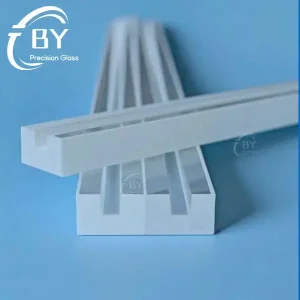
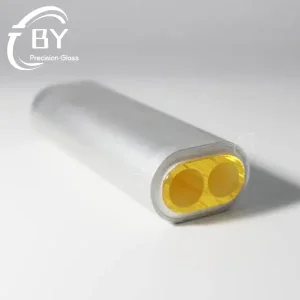
Beyond standard circular tubing, our redraw dies fabricate square, rectangular, D-shaped, and multi-bore (2 to 7+ channels) quartz structures. Square profiles eliminate cylindrical lens distortion, allowing direct, scatter-free laser focusing right into flowing analyte streams.
Precision End-Face Cleaving & Polish
Micro-capillary end faces can induce turbulent vortices or optical scatter if not cleaved perfectly perpendicular. We offer automated diamond scribing, laser cleaving, and planetary mechanical polishing to deliver end-face angles < 0.5° and surface roughness Ra < 5 nm.
Polyimide & Fluoropolymer Coating
To impart extreme flexibility and mechanical handling strength, silica capillaries are clad in-line with UV-cured polyimide, PTFE, or silicone external buffers. Coated capillaries can flex with bend radii under 25 mm without catastrophic brittle fracture.
Regulatory Harmonization, Cleanroom Logistics & Engineering DFM
Supporting clinical device commercialization under strict ISO 13485, RoHS, REACH, and USP Class VI biomedical standards.
Biocompatibility & USP Class VI Certification
For microfluidic devices directly contacting patient blood, reagents, or pharmaceutical APIs, our synthetic fused silica components pass rigorous USP Class VI, ISO 10993 cytotoxicity, and hemolysis extraction protocols. Completely pyrogen-free and bio-inert, they exhibit zero heavy-metal leaching even under prolonged exposure to hot acidic or basic buffers.
Dedicated 24-Hour Engineering DFM Review
Moving from prototype microfluidic CAD drawings (STEP, DXF, DWG) to industrial-scale serial manufacturing requires specialized Design for Manufacturability (DFM). Our senior engineering desk analyzes draft angles, wall aspect ratios, hydraulic resistance curves, and flame-polishing thermal shrinkage within 24 hours to prevent costly production revisions.
ISO Class 5 Cleanroom Packaging & Global Logistics
Micro-bore tubes can easily become blocked by sub-micron airborne particulates during trans-oceanic transport. All precision quartz micro-capillaries undergo ultrasonic surfactant decontaminating baths, high-resistivity deionized water rinses (18.2 MΩ·cm), vacuum baking, and nitrogen-purged hermetic sealing inside Class 100 (ISO Class 5) cleanrooms before export.
Specialized Use-Case Scenarios in Critical Instruments
Field-proven installations demonstrating structural reliability and optical clarity under strenuous conditions.
Scenario A: Laser-Induced Fluorescence (LIF) On-Column Detection
In high-sensitivity pharmaceutical impurity screening, excitation light (355 nm or 488 nm) must penetrate the capillary wall without generating background Raman scattering or auto-fluorescence. Our synthetic JGS1 quartz micro-capillaries with stripped polyimide optical windows enable sub-picomolar analyte detection limits, ensuring pharmaceutical formulations meet FDA safety thresholds.
Scenario B: Multi-Channel Fiber Bragg Grating (FBG) Sensor Housings
In aerospace cryogenic fuel tanks and downhole oilwell monitoring, bare optical fibers require protective rigid capillary jackets capable of withstanding 500 °C and extreme hydrostatic pressures. Our custom micro-capillaries serve as hermetic sensor sheaths, preventing chemical hydrogen darkening while maintaining zero hysteresis mechanical strain transfer.
Scenario C: Monodisperse Microfluidic Emulsification Units
In biopharmaceutical lipid nanoparticle (LNP) mRNA vaccine formulation, laminar mixing conditions must prevent turbulent shearing of fragile nucleic acid structures. Custom coaxial capillary junction assemblies built from precision concentric quartz tubes generate uniform nanometer-scale vesicles with polydispersity indices (PDI) below 0.05.
The Next Decade: Ultra-High Aspect Ratios & Monolithic Integration
Strategic directions shaping the future of micro-photonics and microfluidics through 2030 and beyond.
As micro-total analysis systems (μTAS) merge with quantum sensors, photonic crystal waveguides, and organ-on-a-chip biomimetic architectures, the technological requirements placed on quartz fabrication continue to intensify. Our technical development roadmap focuses on three distinct manufacturing frontiers:
1. Femtosecond Laser-Assisted Chemical Etching (FLICE)
Transitioning from pure thermal redrawing to 3D monolithic micro-machining. By exposing quartz substrates to focused femtosecond laser pulses followed by selective hydrofluoric acid etching, true 3D non-planar microfluidic channels and integrated optical waveguides can be embedded monolithically inside solid silica blocks.
2. Nanometer Chemical Surface Functionalization
Future micro-capillaries will incorporate pre-activated internal silanol chemistry. We are engineering standardized gas-phase silanization processes (C18, hydrophilic PEG polymers, and fluorinated silanes) applied directly within automated redraw towers, delivering ready-to-use bio-inert or chromatographic micro-tubes straight from the factory floor.
3. Ultra-Thin Wall Micro-Capillary Resonators
Developing micro-bubble and micro-capillary optofluidic resonators with wall thicknesses under 2 μm. These ultra-thin structures support whispering gallery modes (WGM) where light circulates thousands of times through the micro-channel perimeter, enabling label-free single-virus, single-protein, and refractive index measurements with unprecedented sensitivity.
Engineering Clarifications for Procurement & Optical Designers
Concise, authoritative answers directly from our factory process engineers regarding manufacturing thresholds and material specifications.
What is the absolute tightest tolerance attainable on micro-capillary inner (ID) and outer (OD) diameters?
Why choose synthetic fused silica (JGS1) over natural fused quartz (JGS2/JGS3) for microfluidic channels?
How do you clean and preserve the pristine surface of micro-bore capillary tubing during wholesale storage?
Can BY Photonics fabricate non-circular internal bores, such as square or rectangular capillary profiles?
What is the typical lead time for custom prototype redrawing versus full wholesale batch production?
Semiconductor, Laser & Precision Micro-Glass Solutions
Explore our full engineering portfolio spanning semiconductor wafer handling, fiber optic substrates, and high-energy laser pump assemblies.


Accelerate Your Microfluidic & Optical Glass Programs
Submit your 2D/3D CAD drawings (STEP, DWG, DXF, PDF). Our specialized glass machining and redraw engineering group provides comprehensive DFM analysis, tolerance optimization, and commercial volume quotas within 24 working hours.