Precision Engineering Whitepaper & B2B Procurement Hub
Wholesale Thin-Walled Glass Tubing Manufacturer & Factory
Leading Industry 4.0 high-concentricity redraw technologies for microfluidics, analytical optoelectronics, semiconductor handling, and laser flow chambers. Engineered to λ/10 tolerances with ISO certified optical pureness.
Featured Precision Components
Featured Precision Optics & Custom Thin-Walled Solutions
Discover high-specification optical glass components, samarium-doped tubes, fused silica windows, and specialty cavities tailored for enterprise laser assemblies and medical devices.
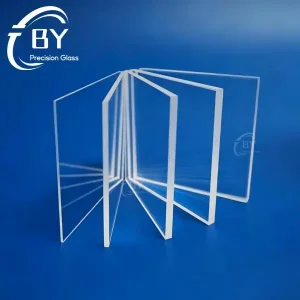
High-Quality JGS1 UItraviolet (UV) Grade Fused Silica Plate Supplier, Factory
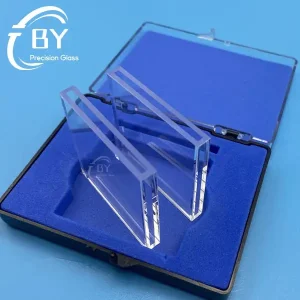
Wholesale Customize Quartz Cuvette for Spectrophotometer Supplier, Factory
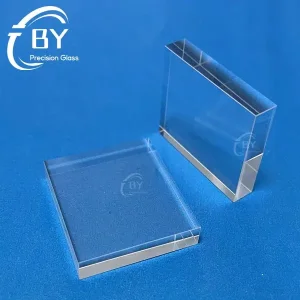
Custom Sapphire IPL Light Guide Block Used for Laser IPL Hair Removal Handle
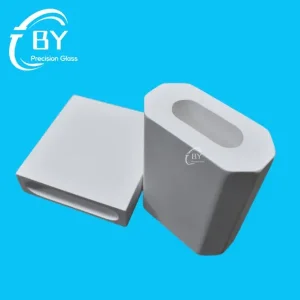
High-Quality Diffuse Reflectors Made of Spectralon‑Grade PTFE for Diode‑Pumping Chambers
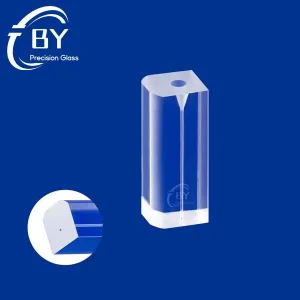
Custom Fiber Optic Glass Ferrules Supplier, Factories
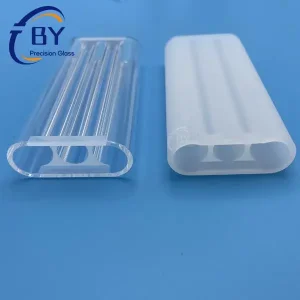
High-Quality Candela Laser Head Triple Bore Old and New Version In Stock
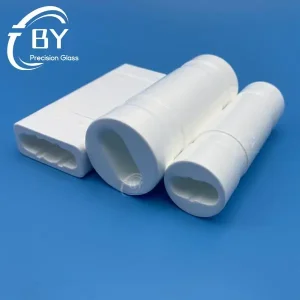
Wholesale Ceramics Reflector for Semiconductor Lasers Suppliers, Factory
Industry Whitepaper Insights
The Technological Evolution of Thin-Walled Glass Tubing
Precision thin-walled glass tubing—defined by wall thicknesses down to 0.05 mm and strict outer-to-inner concentricity—is transforming advanced optoelectronics, bio-analytical chemistry, and semiconductor processing. What was once a standard laboratory commodity has evolved into a micro-engineered, high-performance medium that demands atomic-level surface integrity.
Sub-Micron Dimensional Stability
Modern analytical detection systems require capillary conduits with inner diameter tolerances as low as ±0.002 mm. Our non-contact laser interferometer redrawing towers ensure continuous, real-time feedback loop control, eliminating traditional batch variances and wall thickness waviness.
Doping Chemistry & Cutoff Filters
By precisely introducing dopants such as Samarium (Sm) and Cerium (Ce), thin-walled quartz tubes achieve spectral cutoff absorption. They effectively absorb 1064 nm parasitic laser frequencies and inhibit unwanted UV degradation without losing mechanical or optical stability.
Thermal Shock Resistance
Fabricated from ultra-pure synthetic fused silica (JGS1) and high-grade borosilicate 3.3, our thin-walled configurations handle temperature differentials surpassing ΔT 1000°C without micro-fracturing, supporting demanding semiconductor rapid thermal processes (RTP).
B2B Quality Assurance
Global Procurement Criteria & Engineering Standards
Original Equipment Manufacturers (OEMs) across North America, Europe, and Asia Pacific require verifiable metrology and strict adherence to geometric, physical, and optical standards. Our cleanroom production satisfies international semiconductor and biomedical manufacturing thresholds.
| Critical Parameter | JGS1 Synthetic Fused Silica | Borosilicate Glass 3.3 | Inspection Metrology |
|---|---|---|---|
| Transmission Range | 185 nm – 2,500 nm (High Deep-UV) | 350 nm – 2,500 nm (Broad VIS/NIR) | Spectrophotometer Transmission Scan |
| Concentricity / TIR | < 0.01 mm Total Indicator Reading | < 0.02 mm Total Indicator Reading | 360° Non-Contact Multi-Axis Laser Scanner |
| Coefficient of Expansion (CTE) | 5.5 × 10⁻⁷ / °C (Zero-drift stability) | 3.3 × 10⁻⁶ / °C (High shock resistance) | Dilatometric Thermal Characterization |
| Surface Quality (Scratch-Dig) | MIL-PRF-13830B 20-10 or 10-5 | MIL-PRF-13830B 40-20 | Dark-Field Microscopic Surface Inspection |
| OH Content (Hydroxyl) | < 2 ppm (Low OH) or > 1200 ppm (UV) | Not Applicable (Compound Silicate) | FTIR Quantitative Spectroscopy |
Smart Manufacturing
China Factory 4.0: Supply Chain Resilience & Production Scale
Operating from Tianjin’s advanced industrial corridor since 2010, our vertically integrated plant combines thermal redrawing, high-speed multi-axis CNC cold diamond machining, cleanroom annealing, and oxyhydrogen flame finishing inside a single automated workflow.
15+
Years of Direct OEM Engineering & Global Export Experience
3,000m²
Standardized Class 10k/1k Cleanroom Precision Production Area
120+
High-Precision CNC, Ultrasonic Machining & Redraw Towers
<24h
Guaranteed Engineering DFM Review & Custom Drawing Feedback
Vertical Upstream Integration
By maintaining direct relationships with primary ingot casting and synthetic silica chemical vapor deposition (CVD) vendors, our plant guarantees consistent ingot-to-tube traceability, eliminating batch-to-batch impurities.
CNC Ultrasonic Machining
Thin-walled tubes are notoriously prone to micro-chipping during cutting and drilling. Our proprietary ultrasonic assisted diamond core tools achieve smooth edge finishes and slot cuts without structural stress cracks.
Customized Packaging for Export
We deploy moisture-barrier, anti-static vacuum packaging and foam-suspension transit cases to ensure zero damage rates during international air and sea shipments to cleanroom receiving bays worldwide.
Application Matrix
Mission-Critical Deployment Scenarios
From laser cavities to microfluidic diagnostics, our thin-walled glass tubing is engineered to handle challenging thermal, optical, and mechanical conditions.
Solid-State Laser Cavities
Acts as internal water-cooling sleeves and samarium-doped filters around Nd:YAG rods. They suppress transverse amplified spontaneous emission (ASE) and protect surrounding components from solarization.
Capillary Gas Chromatography
Precision-drawn fused silica capillary tubing serves as inert separation conduits. Ultra-smooth inner surfaces provide reliable, uniform retention times for high-sensitivity chemical sample detection.
Fiber Optic Aligners
Thin-walled capillary ferrules with micro-tapered entry holes facilitate precise glass fiber core positioning in telecom modules, high-power diode couplers, and harsh environment transceivers.
Semiconductor Gas Distribution
Ultra-thin quartz distributor tubes deliver reactive plasma etching and precursor gases across silicon wafers without metallic contamination, meeting parts-per-billion cleanliness specifications.
Frequently Asked Questions
Engineering & Procurement FAQ
Common technical questions regarding thin-walled glass tubing fabrication, material selection, and custom B2B manufacturing.
What is the minimum wall thickness your redrawing process can achieve?
Depending on outer diameter, our cleanroom vertical redraw towers can achieve stable wall thicknesses down to 0.05 mm (50 µm) with an inner diameter (ID) tolerance of ±0.003 mm. For standard borosilicate and fused quartz commercial products, typical thin-wall applications range from 0.1 mm to 0.5 mm, depending on pressure, thermal gradient, and handling requirements.
How do you maintain wall concentricity and prevent ovality during redraw?
We use high-precision preforms coupled with automated servo draw speeds, stabilized furnace temperatures (±0.5°C), and dual-axis laser micrometer gauge feedback loops. This automated approach limits total indicator runout (TIR) to under 1% of total wall thickness, preventing optical distortion and fluid channeling imbalances.
When should an engineer specify JGS1 fused silica over borosilicate 3.3?
Specify synthetic fused silica (JGS1) when your optical system requires deep UV transmission (down to 185 nm), minimal background fluorescence, service temperatures above 450°C (up to 1,100°C), or negligible thermal expansion. Borosilicate 3.3 is cost-effective for visible-to-NIR optics, general fluidics, and standard medical disposables where extreme operating temperatures are absent.
Can you provide custom secondary processing like fire polishing, slicing, and frosting?
Yes. Our facility houses hot-flame and cold-machining departments under one roof. We deliver diamond dicing cuts, beveling, mechanical optical-grade polishing, oxyhydrogen flame-polished edge rounding, chemical etching, ultrasonic slotting, and metallization/AR coating runs to customer drawings.
What is the lead time for prototype validation versus volume wholesale batches?
Prototype samples fabricated from standard preforms generally ship within 5 to 10 working days, backed by a complete dimensional CMM report. Commercial mass production runs typically ship within 3 to 4 weeks, depending on secondary CNC machining and custom optical coating requirements.
Advanced Semiconductor & Laser Optics
Semiconductor Glassware & Specialized Tubing Products
Explore high-purity quartz wafer carriers, doped UV-filtering conduits, sapphire viewport plates, and precision capillary tubes engineered for harsh operating environments.
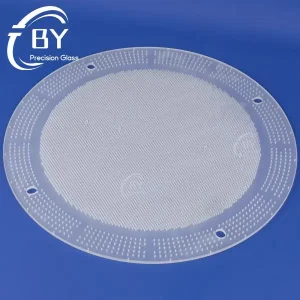
Custom Optical Quartz Gas Distribution Plate Manufacturer, Suppliers
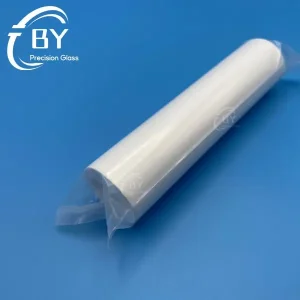
Wholesale Candela VBeam Laser 6" White Cavity Ceramic Reflector 2 Pk
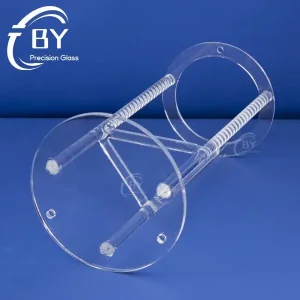
Wholesale Quartz Wafer Carriers for Semiconductor Supplier, Suppliers
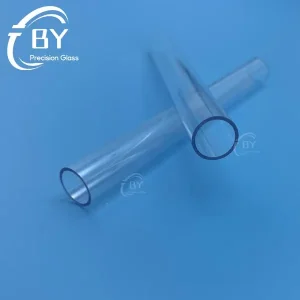
Wholesale Cerium Doped Quartz Tube Blocked UV Wavelength Manufacturer
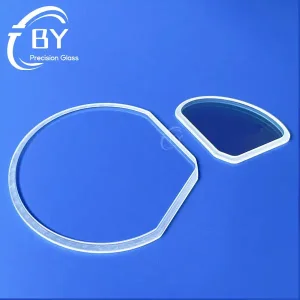
High-Quality Sapphire Viewing Plates for Harsh Chemical Environments Suppliers
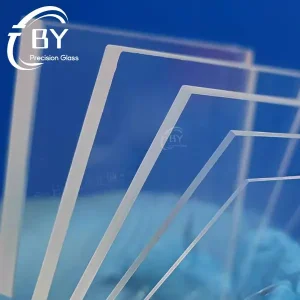
High-Quality Borosilicate Windows and Plates for Viewports Suppliers, Factory
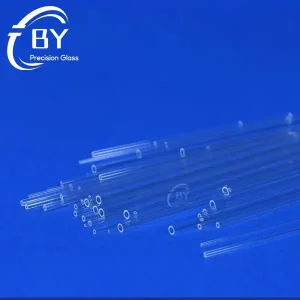
Wholesale Fluorine-Doped Fused Silica Capillary Tube Manufacturer, Factories