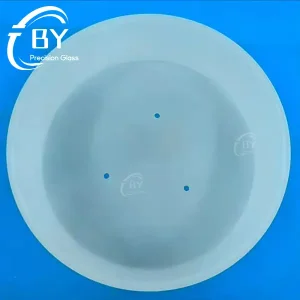
UV Optical Substrates & Laser Cavity Components
OEM/ODM wholesale solutions engineered with tight surface flatness, superior deep-UV transmission down to 185 nm, and high laser damage resistance thresholds.
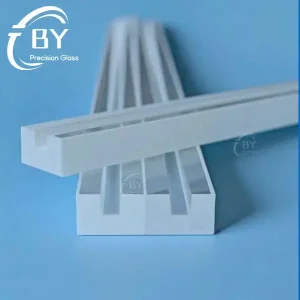
High-Quality Square Groove Quartz Substrate for Fiber Couplers
View Specifications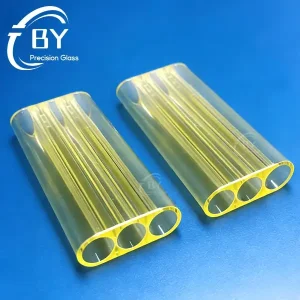
Wholesale Samarium-doped Quartz Triple Bore for Medical Laser
View Specifications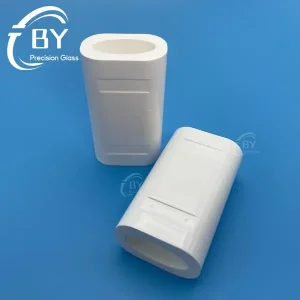
High-Quality Ceramic Cavities For Nd YAG Laser Supplier, Factories
View Specifications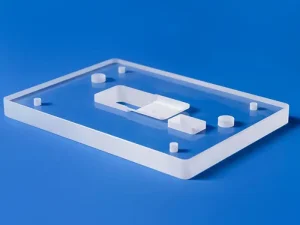
High-Quality Precision Quartz Glass Machining Plate Supplier
View Specifications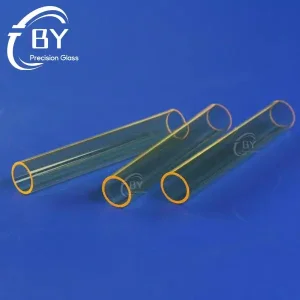
Custom UV Block Yellow Quartz Tube for IPL Lamp Flow Handle
View Specifications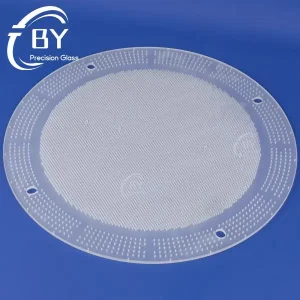
Custom Optical Quartz Gas Distribution Plate Manufacturer
View Specifications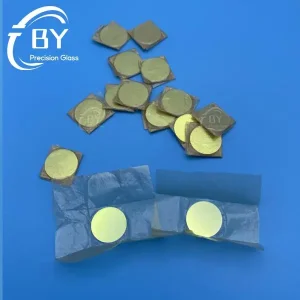
Candela Laser Distance Gauge Slider Windows With Coating
View Specifications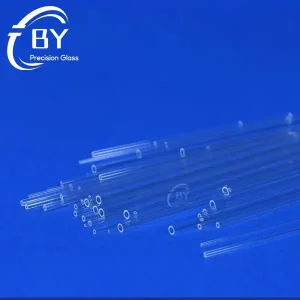
Wholesale Fluorine-Doped Fused Silica Capillary Tube
View SpecificationsGlobal State of UV Transmitting Glass: Materials & Physics
A rigorous examination of synthetic fused silica (SiO₂), hydroxyl radical (OH) concentrations, transmission efficiency from 185 nm to 400 nm, and photolytic solarization resistance.
In industrial photonics and analytical engineering, UV transmitting glass represents a foundational optical medium designed to permit uninterrupted photon transmission throughout the vacuum ultraviolet (VUV), deep ultraviolet (DUV), and near ultraviolet (NUV) spectra. Standard crown and borosilicate glasses exhibit severe cut-off frequencies below 350 nm due to intrinsic iron impurities (Fe³⁺) and silicon-oxygen lattice absorptions. To achieve internal transmittances exceeding 90% at 193 nm (ArF excimer) and 248 nm (KrF excimer), manufacturers worldwide synthesize high-purity amorphous silicon dioxide via chemical vapor deposition (CVD) or soot remelting processes, yielding structural quartz materials cataloged under international grades such as JGS1, Suprasil, and Corning 7980.
The international market for UV-grade glass has transitioned from passive scientific viewing ports into active process-critical hardware. Driven by the expansion of sub-7nm semiconductor lithography, excimer laser medical surgery, and photolytic advanced oxidation water disinfection, procurement engineers require optical glass capable of enduring immense cumulative fluence without color-center formation (solarization). The interaction between high-energy UV photons (3.1 eV to 6.7 eV) and the glass matrix demands absolute trace-metal purification—limiting metallic impurities (aluminum, titanium, iron) to sub-ppb thresholds while optimizing interstitial hydroxyl (OH content) between 800 and 1,200 ppm to maintain radiative defect healing.
Deep-UV Spectral Bandwidth
Synthetic silica (JGS1) delivers an expansive optical transmission window starting at 185 nm through 2,500 nm, eliminating fluorescence emissions under continuous 254 nm germicidal lamp excitation.
High Laser Damage (LIDT)
Engineered to withstand pulsed 355 nm and 266 nm solid-state harmonics exceeding 10 J/cm² @ 10ns, avoiding dielectric breakdown and subsurface micro-fracturing in demanding beam paths.
Ultra-Low Thermal Expansion
With an extremely low coefficient of thermal expansion (CTE ≈ 5.5 × 10⁻⁷ /°C from 20°C to 320°C), UV fused quartz maintains wave-front integrity (λ/10) despite intense thermal gradients.
Precision Chinese Fabrication & Engineering Efficiency
How state-of-the-art cold CNC working, automated oxyhydrogen flame sealing, and integrated supply chain clustering deliver 40% shorter turnaround times and strict ISO/MIL-spec adherence.
Synthetic Ingot Preform Control
Upstream vertical integration utilizes CVD synthesis of high-purity silicon tetrachloride (SiCl₄), achieving metallic contaminants below 0.1 ppm and consistent index homogeneity (Δn ≤ 2×10⁻⁶).
5-Axis CNC Ultrasonic Milling
Micro-crack-free machining of complex internal cooling ports, manifold showerheads, and step bores in hard-brittle quartz substrates with dimensional tolerances held to ±0.005 mm.
Planetary Double-Sided Lapping
Sub-nanometer surface roughness (Ra ≤ 0.5 nm) achieved via precision cerium/colloidal silica slurries, eliminating scatter losses and surface sub-layer stress for high-power laser windows.
Cleanroom Oxyhydrogen Lathes
Class 10,000 cleanroom hot-processing facilities utilizing stoichiometric H₂/O₂ gas blends to fabricate bubble-free multi-bore tubes, diffusion vessels, and capillary drawing cane assemblies.
Mission-Critical Applications of UV Transmitting Glass
Across semiconductor manufacturing, medical aesthetics, bioanalytical chemistry, and industrial laser synthesis, UV optics fulfill exacting operational mandates.
Semiconductor Lithography & Etch
Employed in photomask blanks, stepper projection lenses, and high-purity ICP etch quartz gas distribution plates. UV fused silica resists reactive plasma bombardment while maintaining zero particulate flaking across thousands of process hours.
Medical Aesthetic Lasers & IPL
Custom samarium-doped (Sm³⁺) glass and yellow UV-cutoff filter tubes absorb damaging short-wave UV below 380 nm and parasitical 1064 nm amplified spontaneous emission (ASE), protecting flashlamp seals and human epidermal tissue.
Spectrophotometry & HPLC Flow Cells
Optical microcuvettes, fluorescence analysis chambers, and capillary electrophoresis tubes fabricated from JGS1 provide zero baseline drift down to 190 nm, enabling precision protein identification and nucleic acid quantification.
UV-C Water & Air Disinfection
High-transmittance quartz sleeves designed for low-pressure and medium-pressure mercury amalgam lamps achieve >90% transmission at 253.7 nm, neutralizing pathogens without wall embrittlement under continuous hydraulic pressure.
Industrial UV Curing & Litho-Printing
Precision collimating lenses and quartz heat-shield windows isolate intense IR thermal radiation while passing 365 nm / 395 nm UV LED curing beams, safeguarding high-speed roll-to-roll printing substrates.
Aerospace & Defense Sensors
Extreme thermal shock viewports and missile seeker domes combining deep-UV synthetic silica and sapphire deliver environmental resistance against sand erosion, cryogenic transitions, and atmospheric friction.
UV Optical Glass Grade Comparison Matrix
Quantitative benchmarks to assist optical designers and procurement directors in matching quartz variants to wavelength, refractive index, and environmental parameters.
| Optical Material Grade | Transmission Band (nm) | OH Content (ppm) | Bubble / Inclusions (DIN 58927) | Laser Damage Threshold (355nm, 10ns) | Primary Industrial Use-Case |
|---|---|---|---|---|---|
| JGS1 Synthetic Silica UV Grade | 185 – 2,500 | ≥ 1,000 – 1,200 | Class 0 (Zero bubbles) | > 12 J/cm² | Excimer optics, DUV lithography, spectroscopy cells |
| JGS2 Fused Quartz Optical Grade | 220 – 2,500 | 150 – 300 | Class 1 (Micro-inclusions < 0.05mm) | > 6 J/cm² | Sight glass, laser flow tubes, UV lamps, viewports |
| JGS3 Fused Quartz IR-Enhanced | 260 – 3,500 | ≤ 5 – 10 (Water-free) | Class 1 – 2 | > 5 J/cm² | Broadband IR heaters, FTIR windows, pyrometry ports |
| Samarium-Doped Quartz Laser Filter | Cutoff < 380 & 1064nm | Variable | Class 0 – 1 | > 8 J/cm² | Solid-state Nd:YAG cavity tubes, medical laser cooling |
| Sapphire Single Crystal (Al₂O₃) Crystal | 170 – 5,500 | N/A (Crystalline) | Bubble-Free (HEM Grade) | > 15 J/cm² | Extreme pressure sight ports, IPL light guide prisms |
Emerging Trends & OEM Sourcing Criteria
Strategic procurement vectors governing global photonics supply chains over the next five to ten years.
Migration to Shorter Wavelengths
As semiconductor wafer fabs transition toward High-NA EUV and 193nm immersion tooling, optical system builders require synthetic quartz with near-zero birefringence (≤ 1 nm/cm) and zero striae to eliminate optical aberrations.
Stringent Surface Roughness (Ra < 0.2 nm)
Super-polishing processes are expanding from defense gyroscopes into commercial DUV flow cytometers and ring laser cavities. Controlling chemical mechanical polishing (CMP) chemistry minimizes stray scatter and back-reflection losses.
Vendor Consolidation & Turnkey DFM
Global optical OEMs are phasing out fragmented supply networks where raw glass cutting, precision grinding, CNC hole boring, and thin-film anti-reflective (AR) coating are executed by separate sub-contractors. Turnkey fabrication under one roof guarantees single-point quality traceability.
Frequently Asked Questions on UV Transmitting Glass
Comprehensive engineering clarifications addressing grade choices, chemical resistances, and tolerance specifications.
Why is synthetic fused silica (JGS1) mandatory for deep-UV applications below 240 nm instead of natural quartz?
What is solarization, and how does your manufacturing process mitigate UV transmission degradation over time?
What dimensional tolerances and surface flatness parameters can be maintained across production volumes?
How does samarium-doped (Sm³⁺) quartz operate within solid-state laser cavities?
What CAD and technical drawing file formats are required for quotation and engineering review?
How are optical quartz components packaged to ensure safe transit during international air freight?
High-Fluence UV Reflectors, Flowtubes & Custom Machined Components
Explore our wholesale portfolio of PTFE-based pump cavity reflectors, vacuum coating fixtures, and sapphire viewing viewports.
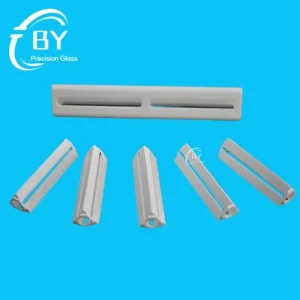
Diode-Pumping Chamber Diffuse Reflectors PTFE-based Supplier
View Specifications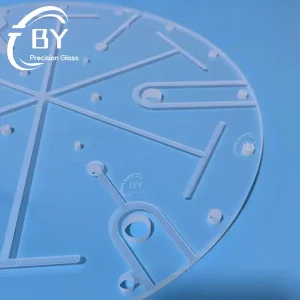
High-Quality Custom Precision Quartz Glass Fabrication Supplier
View Specifications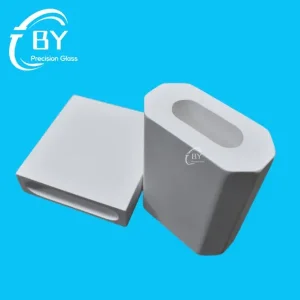
Diffuse Reflectors Made of Spectralon-Grade PTFE for Diode Chambers
View Specifications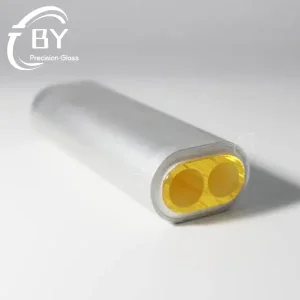
Custom Packed Laser Cavity Flowtubes for Laser Head Manufacturers
View Specifications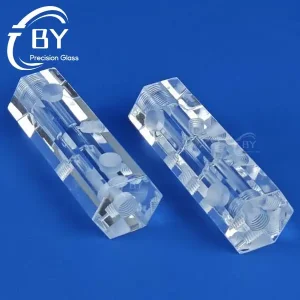
Custom Fabrication of Quartz Glass Precision Components Factory
View Specifications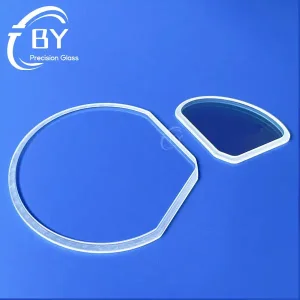
Sapphire Viewing Plates for Harsh Chemical Environments
View Specifications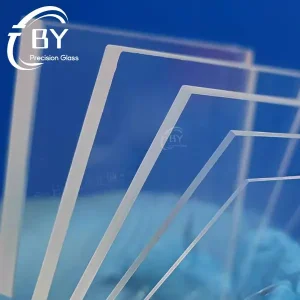
High-Quality Borosilicate Windows and Plates for Viewports
View Specifications