
Featured Precision Core Series for Paris High-Tech Enterprises
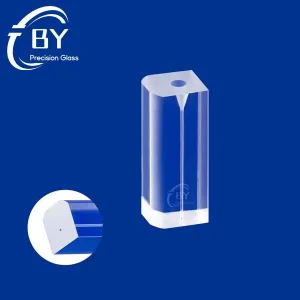
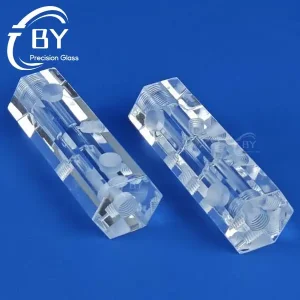
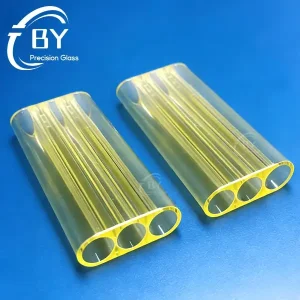
Ultra-accurate dimension-controlled capillaries, ferrule blanks, and specialized doped cavities calibrated to French high-specification engineering guidelines.
Industrial Dynamics: Paris & Île-de-France Precision Glass Demand
Mapping technological requirements across the Paris-Saclay innovation cluster, Genopole bioparks, and advanced aerospace nodes in the Parisian basin.
Paris-Saclay Deep-Tech & Quantum Cluster
The academic and industrial concentration at Paris-Saclay requires customized borosilicate capillary tubing for atomic vapor cells, quantum sensing housings, and optical traps. The low thermal expansion and high optical homogeneity minimize wavefront distortion in ultra-stable cryogenic and vacuum interfaces.
Genopole & MedTech Diagnostic Microfluidics
Leading biopharmaceutical researchers in Evry and Paris center utilize borosilicate capillary tubing for capillary electrophoresis (CE), micro-chromatography columns, and in-vitro diagnostic (IVD) chips. Inert hydrolytic Class 1 resistance eliminates leaching into sensitive biological assays.
Aeronautic & Defense Thermal Sensing
Operating near Le Bourget and the larger Île-de-France defense corridor, sensor manufacturers embed our precision borosilicate rods and heavy-wall capillary sleeves into pitot-static systems, high-voltage insulation cores, and fiber-optic gyroscopes (FOG) demanding extreme shock survival.
Technical Baseline: Borosilicate 3.3 vs. Synthetic Fused Silica
Comprehensive engineering benchmarks for procurement managers selecting structural and optical capillary tubes.
| Physical / Chemical Property | Borosilicate Glass 3.3 | JGS1 UV Synthetic Silica | Engineering Value for Paris Systems |
|---|---|---|---|
| Coefficient of Thermal Expansion (CTE) | 3.3 × 10⁻⁶ / K (20°C - 300°C) | 0.54 × 10⁻⁶ / K | Optimal match for Kovar, tungsten, and silicon matching seals. |
| Hydrolytic Resistance (ISO 719) | Class HGB 1 | Class HGB 1 | No alkali extraction in ultra-pure microfluidic analysis. |
| Refractive Index (nd at 589.3 nm) | 1.473 | 1.458 | Superior waveguide confinement for optical sensing and flow cytometry. |
| Softening Point | 825 °C | 1730 °C | Lower thermal energy required for localized flame fusion and micro-pulling. |
| Inner Diameter (ID) Tolerances | Down to ±0.002 mm | Down to ±0.001 mm | Precision micro-dispensing without drop-size variations. |
Compliance, Quality Assurance & French Trade Protocols
Ensuring frictionless procurement, full CE marking compliance, and traceable material documentation across France.
EU REACH & RoHS Validation
Every shipment of borosilicate capillaries and solid rods delivered to Charles de Gaulle (CDG) and Paris logistics hubs includes batch-specific REACH declaration certificates and RoHS analytical compliance reports, eliminating heavy-metal contaminants.
Metrology & Cleanroom Packaging
Capillaries undergo 100% optical laser gauging for ID/OD concentricity. Parts are ultrasonic cleanroom washed, flame-sealed on demand to prevent inner bore contamination, and vacuum sealed inside antistatic, double-blister enclosures.
DDP Express Logistics to Île-de-France
We provide full DDP (Delivered Duty Paid) shipping service via air express directly to Paris research sites, Saclay laboratories, and production lines in the surrounding industrial parks, handling all customs clearance and VAT filing.
Frequently Asked Questions: Sourcing Capillaries for Paris Clients
In-depth responses regarding manufacturing capabilities, tolerances, lead times, and custom engineering.
What geometric configurations are available for borosilicate capillary tubing?
We manufacture single-bore circular, rectangular, square, oval, multi-bore (dual-bore, four-bore, multi-channel arrays), and customized D-shaped borosilicate capillaries. We also fabricate heavy-wall solid rods and capillary sleeves tailored to your exact optical or mechanical drawings.
How do you guarantee bore diameter concentricity and straightness?
Our redrawing towers utilize continuous closed-loop non-contact laser micrometer scanning across both X and Y axes during the thermal pull. This ensures inner diameter (ID) tolerances up to ±0.002 mm, outer diameter (OD) tolerances up to ±0.005 mm, and straightness better than 0.1 mm per meter.
Can you supply flame-polished ends or ground and beveled edges?
Yes. Depending on your assembly method in Paris, we offer score-and-snap clean breaks, precision diamond-wheel saw cuts, optical flat polishing (λ/4 flatness, 20-10 scratch-dig), 45-degree micro-beveling, or flame-glazed end faces for crack mitigation.
What is the typical shipping lead time to Paris facilities?
Standard prototype and sample runs ship within 5 to 10 business days. Production batch volumes are fulfilled within 2 to 3 weeks, with priority direct air freight to Paris (CDG / Orly) taking 3 to 5 business days for door-to-door delivery.
Comprehensive Optical, Quartz & Reflector Catalog
Explore our integrated manufacturing matrix supplying high-temperature fabrication, lithography windows, and laser cavity components directly to the French industry.
-
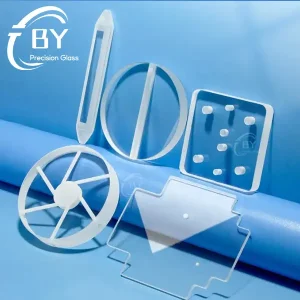
Wholesale High Temperature Custom Quartz Glass Fabrication Suppliers, Factories for Paris Market
-
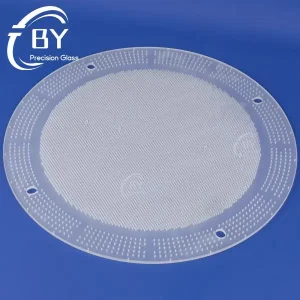
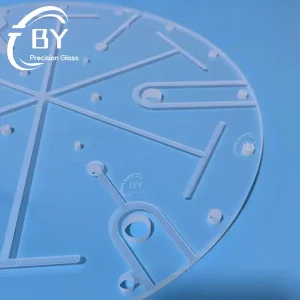
Custom Optical Quartz Gas Distribution Plate Manufacturer, Suppliers Serving Paris
-
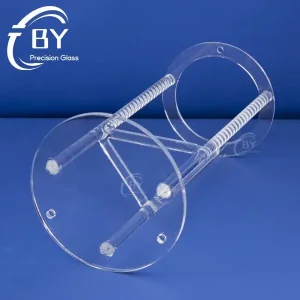
Wholesale Quartz Wafer Carriers for Semiconductor Supplier, Suppliers - Paris Branch
-

-
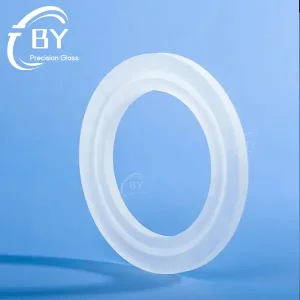
-
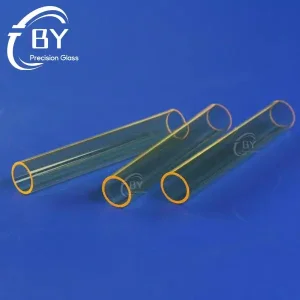
Custom UV Block Yellow Quartz Tube for IPL Lamp Flow Handle Manufacturer, Factories Serving Paris
-
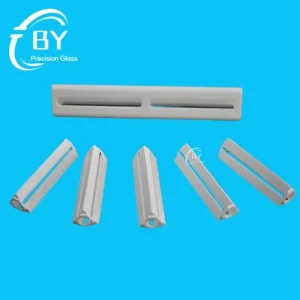
High-Quality Diode‑Pumping Chamber Diffuse Reflectors PTFE‑based Supplier to Paris
-
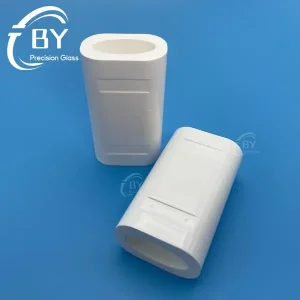
High-Quality Ceramic Cavities For Nd YAG Laser Supplier, Factories Dedicated to Paris Industry