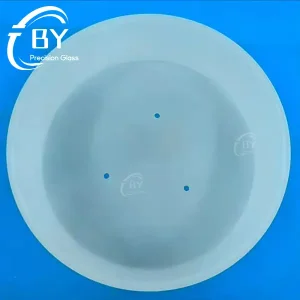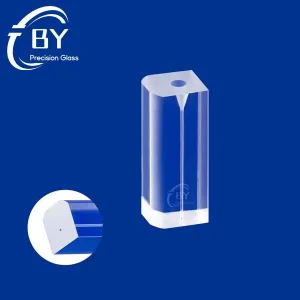
Precision Redrawn Lineup
High-Performance Capillary & Specialty Optics
Advanced hot-worked and cold-finished borosilicate and quartz solutions optimized for scientific instrument builders and laser integration plants throughout Central Europe.
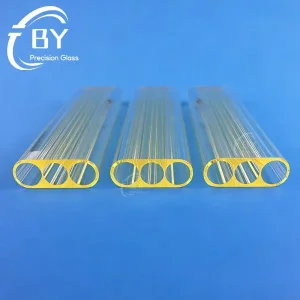
Samarium-Doped Laser Cavity Flow Tubes & Filters
Learn More & Specifications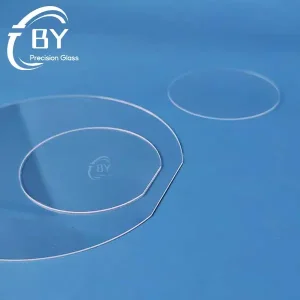
Borofloat 33® Glass Wafers for Semiconductor Substrates
Learn More & Specifications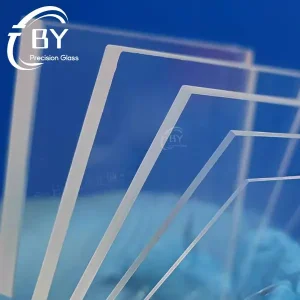
Precision Borosilicate Windows & Viewport Plates
Learn More & Specifications
Local Market Analysis
Precision Capillary Solutions for Poland's High-Tech Sectors
As Poland solidifies its role as Central and Eastern Europe's primary hub for advanced manufacturing, biotechnology research, and optoelectronics, high-durability borosilicate glass components have become vital building blocks.
Life Science & Lab-on-a-Chip Systems
Emerging research clusters across Warsaw and Wrocław demand chemically inert, ultra-smooth borosilicate micro-capillaries for gel electrophoresis, digital PCR droplet generation, and microfluidic blood analysis cassettes, resisting aggressive enzymatic buffers without ion leaching.
Industrial Process Instrumentation
In Silesian petrochemical installations and pharmaceutical processing centers around Poznań, borosilicate capillary sight level gauges and flowmeter metering tubes ensure thermal shock survivability from -50°C to +450°C under severe mechanical stress.
Optoelectronic & Telecommunication Packaging
Supporting Poland's expanding optical communications manufacturing, our redrawn single-mode and multi-bore capillary ferrules provide concentricity within <1.5 μm, ensuring seamless fiber alignment, low insertion loss, and stable fusion splicing.
Material Science
Why Low-Expansion Borosilicate 3.3 Outperforms Conventional Glass
Our borosilicate capillary tubing and solid rods strictly utilize high-purity alkali-borosilicate glass formulations complying with ISO 3585, offering unmatched dimensional precision and chemical neutrality.
| Physical / Chemical Property | Borosilicate 3.3 Glass | Standard Soda-Lime Glass | Synthesized Fused Silica (Quartz) |
|---|---|---|---|
| Coefficient of Thermal Expansion (CTE, 20–300°C) | 3.3 × 10⁻⁶ K⁻¹ | 9.0 × 10⁻⁶ K⁻¹ | 0.54 × 10⁻⁶ K⁻¹ |
| Hydrolytic Resistance (ISO 719 / DIN 12111) | Class HGB 1 (Extremely High) | Class HGB 3 (Moderate) | Class HGB 1 (Inert) |
| Maximum Working Temperature (Continuous) | 450 °C (Short peak: 500 °C) | 120 °C (Short peak: 150 °C) | 1,100 °C (Short peak: 1,250 °C) |
| Refractive Index (nd at 587.6 nm) | 1.473 | 1.520 | 1.458 |
| Bore ID Tolerance Capability | Down to ±0.003 mm (Redrawn) | Typically ±0.05 mm | Down to ±0.002 mm |
Direct Factory Advantage
End-to-End Vertical Integration: From Cane Pulling to Polishing
Operating from our standardized 3,000+ m² specialized production center in Tianjin, China, BY Photonics bridges high-throughput Chinese thermal draw processing with stringent European metrology standards.
Closed-Loop Precision Redrawing
Our automated high-tower drawing furnaces integrate dual-axis laser diameter micrometers capable of 1,200 scans/sec, regulating inner (ID) and outer (OD) dimensions to micron tolerances in real-time.
Custom Geometry Versatility
Beyond circular tubes, our flame-shaping and tooling shops redraw rectangular, square, D-shaped, D-bore, multi-lumen (dual, four-channel), and ultra-thick-walled capillary rods tailored to custom specifications.
Agile DFM & Rapid Logistics to Poland
Receive comprehensive Design-For-Manufacturability feedback in <24 hours. Our direct air-cargo corridors to Warsaw Chopin Airport (WAW) guarantee rapid batch delivery within 5–7 business days.
15+
Years Engineering Precision Glass Components
±0.003mm
Achievable Precision Redrawn Capillary Tolerances
120+
Advanced CNC, Flame & Drawing Systems In-House
<24h
Rapid Engineering CAD Review Turnaround
EU Regulatory Assurance
Full Compliance for Polish and EU Import Integration
Ensuring our industrial clients, OEM assembly contractors, and public university research groups throughout Poland enjoy zero frictionless customs clearance, full chemical documentation, and safe, break-proof transport.
Material Conformity & Environmental Compliance
Every shipment bound for Poland includes full Material Test Reports (MTR) confirming Type 3.3 chemical composition. Our capillary tubing adheres strictly to RoHS 3 (EU 2015/863), REACH (EC 1907/2006) SVHC thresholds, and ISO 3585 thermal-resistance standards.
Cleanroom Export Packaging & Shockproof Logistics
Micro-bore tubes and delicate capillary rods are ultrasonic-cleaned, vacuum-sealed in static-dissipative antistatic packs inside cleanrooms, and nested inside impact-absorbing multi-layer EPE foam enclosures with external tip-and-shock indicators.
Technical & Commercial FAQ
Frequently Asked Questions: Sourcing Borosilicate Capillaries
Clear, direct engineering answers to help purchasing specialists and optical system engineers streamline procurement.
What outer diameter (OD) and inner diameter (ID) ranges can BY Photonics redraw?
We routinely redraw borosilicate 3.3 capillary tubing with inner diameters ranging from as small as 0.05 mm (50 μm) up to 20 mm, and outer diameters from 0.20 mm up to 35 mm. Solid rods are drawn from 0.5 mm up to 30 mm in diameter. Ultra-custom ratios, square profiles, and non-concentric capillary configurations can be custom manufactured based on your CAD prints.
How do borosilicate 3.3 capillary tubes compare with fused silica (quartz) tubes?
Borosilicate 3.3 glass offers exceptional chemical durability and thermal shock resistance (continuous duty up to 450°C) at a substantially lower manufacturing cost compared to fused silica. While fused quartz is indispensable for high-intensity deep ultraviolet (UV down to 185 nm) and continuous operations above 1,000°C, borosilicate 3.3 is the most cost-effective and dependable material for visible/NIR optics, laboratory fluidics, medical diagnostics, and flow indicators.
Can you provide customized end-finishing such as flame polishing, grinding, or beveling?
Yes. Our processing lines accommodate precision precision-score cleaving, high-speed diamond wheel slicing, mechanical end-grinding, chamfering, optical flat polishing (up to 80/50 or 60/40 scratch-dig), and oxyhydrogen flame-rounding to ensure burr-free end apertures that protect inserted optical fibers or medical fluids.
What is the typical lead time and shipping route for delivery into Poland?
Custom prototypes typically dispatch within 10 to 15 business days following engineering drawing freeze. Volume batch orders are usually completed in 3 to 4 weeks. Standard shipments ship via express couriers (DHL, FedEx, UPS) directly to Polish addresses (Warsaw, Kraków, Gdańsk, Katowice) within 4 to 6 transit days. All commercial export documentation and HS codes are provided for efficient customs clearance.
What information is required to receive an immediate quotation and DFM feedback?
Please share a dimensional drawing (PDF, DWG, DXF, or STEP) noting the OD, ID, overall length, concentricity requirements, tolerance ranges, end-finish specifications (cut, ground, or flame-polished), intended volume, and the application's working temperature and chemical environment.
Comprehensive Photonics Portfolio
Specialty Optical & Substrate Solutions for Polish OEMs
Explore our complete manufacturing spectrum of UV fused silica plates, crystal viewports, high-reflectance cavity bodies, and micro-machined precision components.
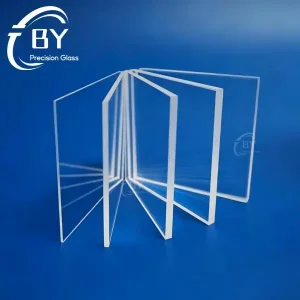
JGS1 Ultraviolet Grade Fused Silica Optical Plates
Learn More & Specifications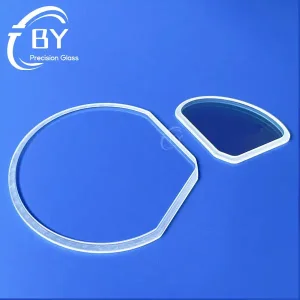
Sapphire Viewing Plates for Harsh Chemical Viewports
Learn More & Specifications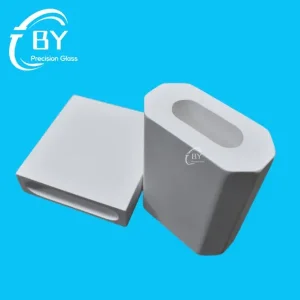
Spectralon-Grade PTFE Diffuse Pump Reflectors
Learn More & Specifications
Custom Quartz Fiber End Caps for QBH Connectors
Learn More & Specifications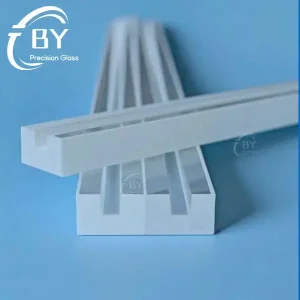
Square Groove Quartz Substrates for Fiber Couplers
Learn More & Specifications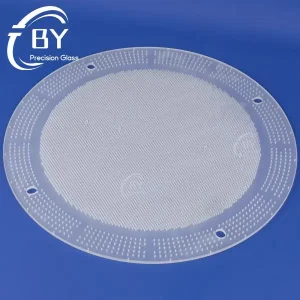
Custom Optical Quartz Gas Distribution Plates
Learn More & Specifications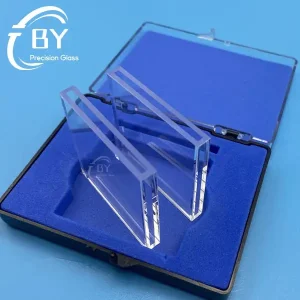
Fused Silica Spectroscopy Cuvettes & Flow Cells
Learn More & Specifications