Core Component Lineup
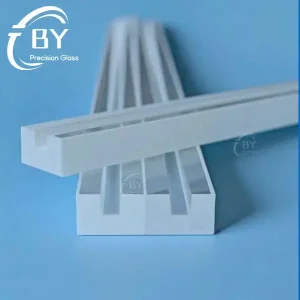
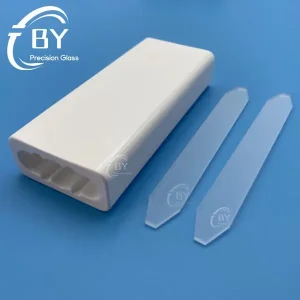
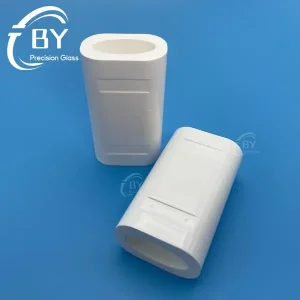
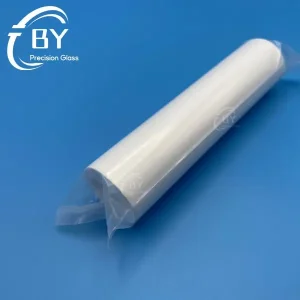
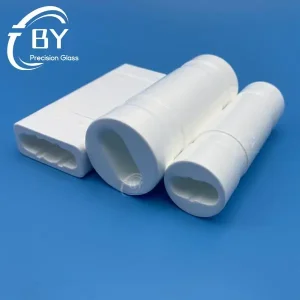
High-Efficiency Laser Ceramic Cavities & Optical Reflectors
Engineered diffuse reflectance components delivering superior thermal stability and extended pump cavity lifetime across medical, scientific, and industrial solid-state laser systems in Melbourne and global territories.
Regional Market Intelligence
Melbourne's High-Tech Photon Ecology & Ceramic Optics Landscape
An authoritative analysis of Victoria's photonics infrastructure, advanced manufacturing corridors, and medical device maintenance clusters driving demand for high-durability diffuse reflectors.
98.2%
Diffuse Reflectance @ 600-1100 nm
>15 kW
Industrial Pump Handling Capacity
<24h
Engineering DFM Turnaround for Victoria
ISO 9001
Certified Ceramic Sintering Protocol
Advanced Laser Manufacturing across Melbourne & Clayton Corridors
Greater Melbourne, anchored by precision engineering clusters across Clayton, Dandenong, and Fishermans Bend, serves as Australia's epicenter for advanced additive manufacturing, laser clad coating, and precision defense photonics. In systems utilizing high-power solid-state lasers (such as flashlamp-pumped or diode-pumped Nd:YAG and Alexandrite configurations), internal cavity efficiency defines operational uptime.
Industrial fabricators in Victoria routinely experience laser pump chamber degradation when using lower-grade metallic or porous ceramics. Gold-coated metallic reflectors commonly suffer peeling and oxidation from continuous DI cooling water exposure, requiring frequent re-plating and recalibration. High-purity sintered alumina (Al₂O₃ ≥ 99.7%) ceramic reflectors resolve this challenge entirely by providing near-perfect Lambertian scattering, outstanding dielectric strength, and impervious resistance to chemical corrosion in closed-loop deionized liquid cooling systems.
- Medical Aesthetic Device Servicing: High-density aesthetic laser clinics throughout Collins Street, South Yarra, and wider Melbourne depend on zero-downtime cavity components for Candela VBeam, GentleLase, and DEKA platforms.
- Heavy Rail & Aerospace Cladding: Sintered multi-cavity reflectors optimized for automated Nd:YAG repair heads deployed across Melbourne industrial hubs.
- Academic Research Collaboration: Precision-machined custom prototypes supplied directly to laser metrology labs in Monash University, University of Melbourne, and RMIT.
| Physical & Optical Properties | Standard Value | Melbourne Specification |
|---|---|---|
| Alumina Content (Al₂O₃) | 97.5% - 99.0% | ≥ 99.7% High Purity |
| Reflectance (600nm - 1100nm) | 94% - 96% | ≥ 98.2% Diffuse Lambertian |
| Thermal Conductivity (20°C) | 20 W/(m·K) | 32 W/(m·K) Optimized |
| Apparent Porosity (%) | < 0.5% | 0.00% (Glaze-Sealed) |
| Dielectric Breakdown Strength | 12 kV/mm | ≥ 18 kV/mm |
| Bulk Density (g/cm³) | 3.65 | ≥ 3.92 g/cm³ |
Supply Chain Strategy
Global Sourcing Architecture & Macro-Industry Solutions
How leading optical system integrators navigate ceramic cavity procurement, total cost of ownership (TCO), and thermal engineering bottlenecks.
Eliminating Cavity Solarization
Prolonged exposure to intense xenon and krypton flashlamps induces severe solarization in inferior glass and composite materials. Our porous-matrix ceramics, sealed with selective optical glaze, remain impervious to deep ultraviolet radiation, preserving output efficiency for millions of pulses.
Hydraulic & Glaze Integrity
Unsealed ceramics absorb cooling fluid, leading to conductive ion leeching, laser threshold drops, and cavity contamination. We utilize proprietary internal glazing technology that creates a glassy barrier resistant to hot DI water leaching up to 90°C.
Geometric Precision CNC Grinding
Post-sintering diamond grinding guarantees bore circularity within ±0.02 mm and end-face parallelism under 0.05 mm. This exactness prevents mechanical pinch stress on expensive laser crystals like Nd:YAG, Er:YAG, and Ruby rods.
Uniform Lambertian Scattering
Unlike specular metal reflectors that generate thermal hot spots across the laser rod profile, our micro-porous bulk alumina structures diffuse light uniformly in 360°, ensuring a cleaner Gaussian TEM₀₀ beam profile and lowering thermal lens distortion.
Direct Drop-In OEM Replacement
Fully backwards-compatible replacement cavities for major global systems (Candela, DEKA, Cynosure, Fotona, Quanta System). Melbourne clinics eliminate long lead-time delays and inflated manufacturer markup.
Rapid Prototype to Production Scale
From single-bore test chambers for University research prototypes to monthly shipments of hundreds of standardized cylinders, our production lines in Tianjin accommodate scalable schedules with verified batch traceability.
Forward-Looking Tech
Technology Roadmap: Next-Generation Solid-State Laser Reflectors
Addressing the shifting paradigm from flashlamp pumping to ultra-dense high-power direct diode pumping architectures.
The Evolution toward Near-Zero Porosity & Additive Ceramic Optics
The photonics sector is rapidly advancing toward ultra-compact diode-pumped solid-state (DPSS) systems and disk lasers. Traditional dry-pressed ceramics face constraints when integrating complex micro-channel cooling pathways directly within the reflector envelope.
BY Photonics is pioneering the integration of high-precision ceramic injection molding (CIM) and slip-casting diamond finishing to produce multi-faceted polygonal cavities. These tailored designs maximize energy coupling efficiency from 808 nm and 940 nm laser diode bars directly into solid-state media, pushing optical-to-optical conversion rates above 55%.
Furthermore, our technical research pipeline focuses on anti-browning glaze additives that absorb stray 1064 nm return beams while reflecting pump bands, effectively eliminating amplified spontaneous emission (ASE) losses in high-gain amplifiers used in defense and laser fusion initiatives.
Regulatory & Logistics Assurance
Melbourne Localization, Logistics & Quality Compliance
Delivering enterprise-grade assurance to Victoria's high-tech manufacturing sector through rigorous quality testing and direct express shipping lanes.
Expedited Melbourne Freight Corridor
Direct priority air corridors from Tianjin through to Melbourne Airport (Tullamarine) guarantee door-to-door transit within 3 to 5 business days for emergency maintenance spares and batch supplies.
TGA & ISO 13485 Equipment Compliance
Our ceramic components meet strict inertness and non-leaching benchmarks required by medical device engineers conforming to Australian Therapeutic Goods Administration (TGA) manufacturing criteria.
Export-Grade Vacuum Cushion Packaging
Every ceramic reflector is ultrasonically cleaned, desiccated, and double-vacuum packed in shock-dampening high-density foam cells to eliminate transit vibration, dust, and micro-fracture risks.
Expert Answers
Frequently Asked Questions: Ceramic Laser Reflectors
Key technical insights to guide procurement decisions and laser cavity maintenance protocols.
Why is 99.7% Al₂O₃ ceramic preferred over gold-coated metal cavities?
Gold-coated metal cavities reflect specularly, which often produces localized thermal hot-spots inside solid-state rods. Furthermore, gold films peel, oxidize, and scratch over time when exposed to deionized cooling water. In contrast, 99.7% porous alumina ceramics offer Lambertian diffuse reflectance of up to 98.2%, cannot oxidize, provide electrical isolation from flashlamp ignition pulses, and last indefinitely without degradation.
What is the purpose of applying a glaze to the ceramic reflector bore?
Unsealed high-diffuse alumina has micro-porosity that can absorb deionized cooling water, resulting in coolant contamination, biological growth, and structural discoloration. By applying a high-temperature glass glaze to fluid-contact surfaces, the cavity is sealed hermetically. The glaze maintains high optical transmission across the pump wavelengths while preserving chemical impermeability.
Can you manufacture custom cavity geometries based on Australian CAD models?
Yes. We regularly machine custom single-lamp, dual-lamp, multi-rod, and elliptic laser cavity bodies to client specifications. You can submit files in STEP, IGES, DWG, or PDF formats. Our engineering team conducts full Design for Manufacturability (DFM) reviews and confirms tolerances before production.
What lead times can Melbourne clinics and labs expect?
Standard replacement reflectors for systems such as Candela, DEKA, and Cynosure are stocked for dispatch within 24–48 hours. Custom engineered or prototype ceramic cavities typically require 2 to 3 weeks for tooling, high-temperature sintering, diamond precision machining, glazing, and optical testing, followed by 3–5 days air transit to Melbourne.
Integrated Optics Ecosystem
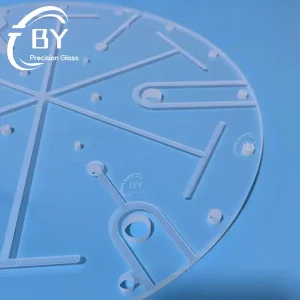
Precision Quartz, Flow Plates & Semiconductor Components
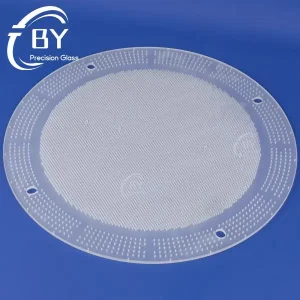
Engineered synthetic fused silica, laser flow plates, and high-purity quartz substrates engineered to complement high-power laser and semiconductor installations across Victoria.