Direct Ultra-Precision Optical Manufacturing

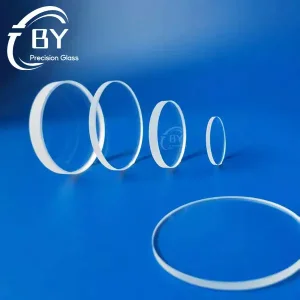
Custom Sapphire Glass Plates & Parts Suppliers & Factory for Australia

Delivering Monocrystalline Sapphire (Al₂O₃), Sub-Nanometer Laser Windows, Extreme Deep-Sea Pressure Discs, and Harsh Mining Sight Assemblies to Sydney, Melbourne, Perth, and Brisbane.

Priority Production Showcase

Precision Synthetic Optical Components for Australian Industry

Direct from our CNC milling, ultrasonic micro-machining, and double-sided lapping facility to Australian engineering operations.

OFFSHORE & HPAL High-Quality Sapphire Viewing Plates for Harsh Chemical Environments

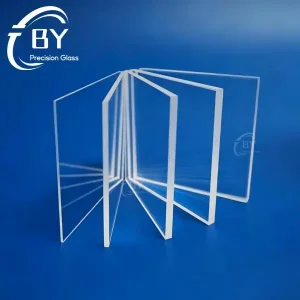
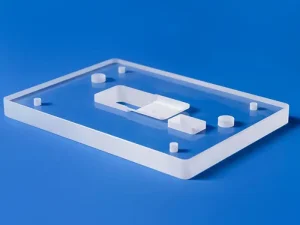
Custom Sapphire Viewing Plates for Harsh Environments

Monocrystalline Al₂O₃ windows engineered for Pilbara slurry pipelines, sulfuric acid HPAL reactors, and subsea oil observation ports.

Configure Sapphire Viewing Plate
CLINICAL & DERMA Wholesale Candela VBeam Laser 6 Inch White Cavity Ceramic Reflector

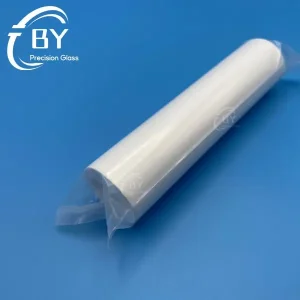
Medical Laser Ceramic Cavity Reflectors

High-diffuse reflectance 99.7% Al₂O₃ ceramic chambers tailored for aesthetic clinics and surgical pulsed-dye laser maintenance across Australia.

Request Reflector Pricing
DEFENCE & QUANTUM Precision Quartz Glass Machining Plate Supplier

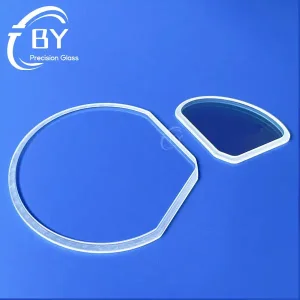
Precision Quartz & Sapphire Machining Plates

Sub-nanometer Ra surface finish plates for ultra-high vacuum optomechanics, beam splitters, and ANSTO/CSIRO cryogenic test rigs.

Order Custom Machined Plates
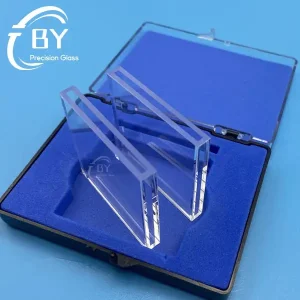
SPECTROSCOPY Wholesale Customize Quartz Cuvette for Spectrophotometer

Spectrophotometer Precision Quartz Cuvettes

Flame-fused, bubble-free optical cells with broadband transmission for environmental water testing, mineral assays, and bio-laboratories.

Get Cuvette Specifications
Mohs 9 Hardness Rating (Second to Diamond)
λ/10 Transmitted Wavefront Accuracy (@632.8nm)
0.17–5.5µm Broadband Optical Transmission Range
< 24 Hrs Australian DFM Engineering Review
Australian Strategic Sourcing

Synthetic Sapphire in the Australian Economy: Mining, Defense & Subsea

The Commonwealth of Australia operates some of the world's most mechanically demanding, geographically remote, and chemically punishing industrial installations. From high-pressure acid leaching (HPAL) nickel-cobalt processing plants in Western Australia and Goldfields slurry pipelines to subsea exploration vessels in the North West Shelf, conventional optical materials such as borosilicate or standard fused silica suffer rapid surface erosion, mechanical scouring, and catastrophic failure.

Monocrystalline synthetic sapphire (alpha-Al₂O₃) has transitioned from an exotic laboratory medium into an indispensable engineering component for Australian OEMs. With a Mohs hardness of 9, compressive strength approaching 2,000 MPa, and total chemical inertness to hydrofluoric etching and aggressive brines, custom sapphire glass plates serve as critical sensor shields, high-pressure sight windows, and spectroscopic interface viewports.

AUKUS Pillar II & Sovereign Defense Photonics

Under the AUKUS technological framework, Australian sovereign defense primes in Adelaide, Melbourne, and Canberra require resilient electro-optical infrared (EO/IR) sensor housings, missile seeker domes, and LIDAR windows capable of withstanding supersonic particulate scouring and thermal shocks exceeding 400°C/second.

Why Australian Project Managers Eliminate Quartz & Borosilicate

Field data from Western Australian lithium and iron ore processing hubs show that slurry telemetry sensors fitted with standard quartz glass require unscheduled shutdown replacements every 3–5 weeks due to mechanical gouging. Converting to double-side polished C-plane sapphire plates increases continuous operating life to over 24 months, slashing site maintenance overhead by up to 88%.

  • Zero micro-crack propagation under intense abrasive quartz particle impingement.
  • Maintains absolute sealing integrity across hydrostatic pressures up to 120 MPa.
  • High dielectric constant (ε ≈ 11.5) optimized for downhole radar and microwave sensing.
  • Direct air-freight logistics straight to Perth Airport (PER) or Sydney (SYD).
Material Science Benchmark

Sapphire vs. Alternative Structural Optical Materials

A rigorous physical and mechanical comparison designed for Australian mechanical design engineers and optical systems architects.

Property Parameters Monocrystalline Sapphire (Al₂O₃) UV Fused Silica (JGS1) Fused Quartz (JGS2) Borosilicate Glass (Borofloat 33)
Crystalline Structure Trigonal Hexagonal Amorphous SiO₂ Amorphous SiO₂ Amorphous Silicate Matrix
Optical Spectral Window 0.17 µm – 5.50 µm (Deep-UV to Mid-IR) 0.185 µm – 2.50 µm 0.22 µm – 2.50 µm 0.35 µm – 2.50 µm
Hardness (Mohs / Knoop) Mohs 9 / 1800–2200 kg/mm² Mohs 5.5–6.0 / 460 kg/mm² Mohs 5.5 / 450 kg/mm² Mohs 5.5 / 480 kg/mm²
Flexural Strength (Modulus of Rupture) 800 – 1000 MPa 48 – 60 MPa 45 – 55 MPa 25 MPa
Young’s Modulus (Elasticity) 345 – 400 GPa 72 GPa 70 GPa 64 GPa
Thermal Conductivity (25°C) 35 – 40 W/(m·K) (Parallel to c-axis) 1.38 W/(m·K) 1.30 W/(m·K) 1.20 W/(m·K)
Maximum Working Temperature 1,800 °C (Continuous) / 2,000 °C 1,100 °C 1,050 °C 450 °C
Chemical Resistance Insoluble in standard acids, alkalis, Aqua Regia Etched by HF & hot alkaline solutions Etched by HF & hot alkaline solutions Attacked by hot phosphoric & HF

C-Plane (0001) Substrates

Zero birefringence along the optical c-axis. Preferred for deep-sea subsea observation ports, laser output coupler windows, and GaN LED / superconductor quantum thin-film epitaxy in Australian research facilities.

A-Plane (11-20) Plates

Uniformly birefringent crystal orientation offering maximum mechanical bending strength and high fracture toughness. Extensively used in sub-surface downhole high-torque mining exploration probes.

R-Plane (1-102) & M-Plane Parts

Essential for microelectronic silicon heteroepitaxy (SOS: Silicon on Sapphire), high-frequency microwave microstrip resonators, and specialized polarising optical filters utilized by Australian space telemetry teams.

Engineered Field Solutions

Solving Australia’s Harshest Optical Engineering Challenges

From extreme ocean abyssal trenches to ultra-high-temperature smelting furnaces.

Deep-Sea Hydrostatic Pressure Discs

Australian autonomous underwater vehicles (AUVs) exploring offshore oil reserves or seabed telecommunications cables encounter pressures over 600 bar. We engineer custom stepped and beveled circular sapphire plates with finite-element stress analysis (FEA), calculating safety burst pressure ratings over 1,000 bar without structural deflection.

  • Zero water absorption and impervious to saline biological fouling
  • Custom ground outer diameters held to ±0.01 mm for tight O-ring sealing

Mining Slurry Particle Scour Windows

Hydrocyclones and high-velocity slurry lines in Queensland coal and WA iron ore facilities need continuous real-time radiometric and visual telemetry. Standard sight glasses lose transparency within 100 operating hours. Our diamond-lapped sapphire plates preserve optical clarity under high-concentration quartz particulate impact.

  • Retains optical transmission above 85% even under severe erosion
  • Resistant to thermal shocks caused by cold washdown water

High-Power Laser Cutting Debris Shields

Heavy fabrication plants across Brisbane, Adelaide, and Newcastle utilize multi-kilowatt fiber lasers (up to 30 kW) for naval shipbuilding and rail manufacturing. Our custom sapphire protective windows prevent molten spatter adherence, maintaining thermal lens stability without wavefront distortion.

  • Laser damage threshold (LDT) > 25 J/cm² @ 1064nm, 10ns pulse
  • Double-side V-coating for residual reflectance < 0.15% per surface
Tianjin BY Photonics Precision Hub

China Factory 4.0: Supply Chain Agility, Scale & Cost Efficiency

Machining single-crystal sapphire requires specialized tooling due to its extreme hardness and cleavage planes. Conventional diamond-tipped cutters suffer rapid chatter, edge micro-chipping, and subsurface micro-cracks that compromise mechanical integrity. Our standardized 3,000+ m² smart facility in Tianjin integrates high-frequency ultrasonic-assisted CNC machining, 5-axis precision diamond grinding, and double-sided planetary chemical mechanical polishing (CMP).

By manufacturing in-house from boule coring to finished optical coating, we eliminate tier-two subcontractor markups, offering Australian engineering buyers 35% to 60% procurement cost reductions compared to domestic boutique fabricators—while guaranteeing strict batch-to-batch repeatability and expedited express logistics.

Direct Air Freight to Australian Capital Cities

Every shipment is packaged in cleanroom-grade, anti-static vacuum packs and shock-damped shipping containers. We offer direct door-to-door air freight via DHL, FedEx, and air cargo into Perth, Sydney, Melbourne, Brisbane, and Adelaide with full Australian customs clearance documentation.

Quality Assurance & Metrology Verification

Every custom sapphire plate and mechanical component undergoes 100% optical and dimensional verification prior to packaging:

  • Surface Flatness: Zygo Verifire GPI XP Laser Interferometer (λ/10 standard, λ/20 on request).
  • Surface Roughness (Ra): White-light optical profilers ensuring Ra < 0.2 nm for superpolished laser optics.
  • Crystal Orientation Precision: X-ray crystal orientation instruments (XRD) holding c-axis alignment within ±0.5°.
  • Spectrophotometric Traceability: Shimadzu UV-3600 Plus transmission curves supplied with shipment.
Sovereign Integration

Australian Compliance, Standards & QA Protocols

Ensuring frictionless integration with Australian corporate governance, environmental laws, and defense frameworks.

AS/NZS & ISO 9001 Alignment

Our quality management systems adhere strictly to ISO 9001:2015 frameworks. Every optical substrate manufactured for Australian deployment aligns with AS/NZS 60825 (laser safety shielding) and AS 1210 (pressure vessel inspection protocols) for mechanical sight glasses.

RoHS, REACH & Conflict-Free Materials

Our synthetic sapphire crystal boules are synthesized from 99.999% ultra-pure alumina (Al₂O₃), free of prohibited heavy metals, compliant with EU RoHS/REACH, and safe for medical, bio-analytical, and potable water testing devices across Australia.

Full Mill Certificates & Inspection Reports

Each delivery incorporates comprehensive inspection documentation: material certificates of analysis (COA), 3D coordinate measuring machine (CMM) dimensional verification sheets, and interferometric surface topography plots signed by senior QC engineers.

Procurement Engineering Checklist

How Australian Sourcing Teams Define Precision Sapphire Orders

Because sapphire cannot be cut, drilled, or surfaced with tooling used for standard quartz or borosilicate, precise design for manufacturability (DFM) input is critical before manufacturing starts. We recommend Australian purchasing managers include the following parameters in your RFQ:

  • Crystallographic Orientation: State whether C-plane (0001) is required for optical symmetry, or whether random orientation is acceptable for non-critical structural wear plates.
  • Surface Quality (MIL-PRF-13830B): Specify 20-10 or 10-5 Scratch-Dig for laser/sensor viewports; 60-40 or 80-50 for sight glasses and mining slurry erosion plates.
  • Edge Treatment & Chamfers: Specify ground protective chamfers (e.g., 0.3mm × 45°) to prevent chipping on high-pressure metal-to-crystal mating seats.
  • Dielectric Coatings: Request single or multi-layer anti-reflective (BBAR 400–1000nm or 3–5µm MWIR) to increase total optical throughput from 86% to above 98.5%.

Rapid 24-Hour DFM Engineering Review

Our senior optical engineering desk reviews 2D drawings (PDF, DWG, DXF) and 3D CAD files (STEP, IGES) daily from Australian timezones (AEST, ACST, AWST), returning feasibility assessments and machining cost-reduction tips within 24 hours.

Complete High-Precision Technical Catalog

Integrated Optical & Ceramic Component Portfolio for Australia

Explore specialized precision-machined quartz, ceramic reflectors, and engineered glass components supporting sovereign industrial systems.

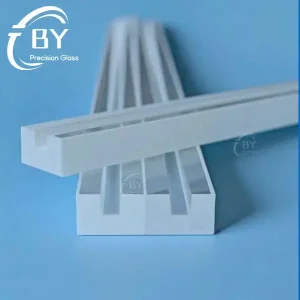
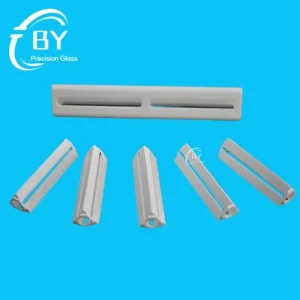
TELECOM & FIBER Square Groove Quartz Substrate for Fiber Couplers

Precision Grooved Optical Substrates for Australian Telecom

Sub-micron V-groove and square-groove fused silica substrates for optical fiber array alignment and multi-channel photonic couplers.

Explore Grooved Substrates
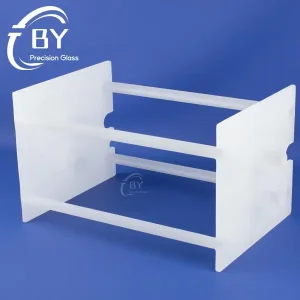
SEMICONDUCTOR Quartz Diffusion Boat for Semiconductor

Quartz Diffusion Boats for Australian Microelectronics

Oxyhydrogen flame-welded high-purity quartz carriers with low trace metal content (<15 ppm) for high-temperature furnace wafer processing.

Configure Quartz Boats
INDUSTRIAL LASER Ceramic Cavity Reflector use for DEKA Laser

Ceramic Laser Cavity Reflectors for Australian Systems

Glazed porous alumina ceramic bodies with 97.5% diffuse reflectivity at 1064nm, extending flashlamp pump efficiency and core laser life.

View Laser Cavity Parts
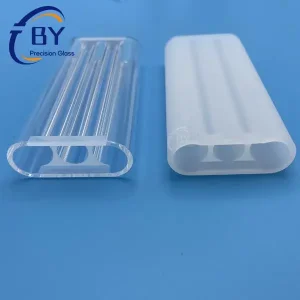
MINING LASERS Custom Packed Laser Cavity Flowtubes for Laser Head

Engineered Laser Cavity Flow Tubes for Material Processing

Custom samarium-doped and synthetic quartz liquid cooling flow tubes that selectively filter parasitic 1064nm amplified spontaneous emission.

Request Flowtube Quote
DEFENCE PHOTONICS Diode-Pumping Chamber Diffuse Reflectors PTFE-based

PTFE Diode-Pumping Chamber Reflectors for Defence

Precision CNC-machined Spectralon-grade sintered PTFE diffuse chambers maintaining ultra-high 99% reflectivity across 400nm to 1500nm.

Explore PTFE Reflectors
SYNCHROTRON GRADE JGS1 Ultraviolet UV Grade Fused Silica Plate

JGS1 Deep-UV Fused Silica & Sapphire Beamline Plates

Synthetic silica plates with internal bubble-free classification Class 0, transmitting down to 185nm for Australian Synchrotron beamlines.

Order JGS1 UV Plates
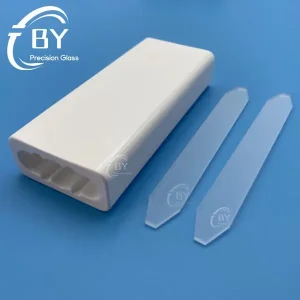
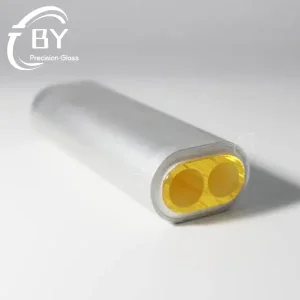
MEDICAL OVERHAUL Candela Laser Head Triple Bore Old and New Version

Triple-Bore Precision Laser Chambers for Medical Lasers

High-dielectric replacement chamber assemblies engineered to original factory specs for clinical laser service technicians in Australia.

Check Triple-Bore Stock
PRECISION METROLOGY Quartz Optical Windows for Semiconductor Lithography Equipment

Ultra-Flat Optical Windows for Lithography & Metrology

Double-side polished reference plates featuring parallelism under 5 arcseconds and surface roughness Ra < 0.2 nm for wafer inspection systems.

Configure Metrology Windows
Technical Clarifications

Frequently Asked Engineering & Sourcing Questions

In-depth answers addressing thermal shock, machining limitations, lead times, and customs clearance for Australian clients.

What is the typical delivery timeline from Tianjin to Australia?

For custom prototype sapphire components, tooling and CNC programming require 7–12 working days, followed by double-sided polishing and interferometric inspection. Air cargo express via DHL/FedEx takes 3–5 business days to reach major Australian customs gateways (Sydney, Melbourne, Perth, Brisbane), ensuring end-to-end receipt within 3 weeks of drawing approval.

How does sapphire handle thermal shock compared to fused silica?

While fused silica possesses a near-zero coefficient of thermal expansion (CTE ≈ 0.55 × 10⁻⁶/K) giving it extreme thermal shock resistance, sapphire features high thermal conductivity (35–40 W/(m·K)), which is roughly 25 to 30 times higher than glass. This allows rapid heat dissipation from localized laser spots or flame exposures, preventing localized thermal stress fractures up to 1,800°C.

Can you machine complex 3D internal geometries and through-holes in sapphire?

Yes. Utilizing 5-axis ultrasonic-assisted CNC machining centres with specialized high-speed diamond rotary burrs, we produce stepped counterbores, blind recesses, miniature fluidic channels, and through-holes down to Ø0.3 mm without edge chipping, maintaining micro-crack-free structural integrity along all cleavage planes.

Are import duties applicable on optical sapphire entering Australia?

Under the China-Australia Free Trade Agreement (ChAFTA), optical sapphire elements, quartzware, and precision glass parts entering Australia generally qualify for 0% preferential customs tariff duties under appropriate HS Codes (e.g., HS 9001.90 or HS 7104.99). We provide certified ChAFTA Certificates of Origin (Form COO) to ensure zero-tariff customs entry.

How do you calculate the required thickness for high-pressure sapphire viewports?

We apply the Gardner hydrostatic plate formula incorporating sapphire’s design flexural strength (typically using 150–200 MPa with a conservative 4:1 safety factor for offshore human-occupied or high-hazard mining zones). Thickness depends on unsupported aperture diameter, peak burst pressure, and clamping gasket compliance. Send us your parameters for free FEA thickness verification.

What surface roughness and flatness parameters can your factory hold?

Our planetary double-sided chemical mechanical polishing line achieves flatness up to λ/10 @ 632.8nm across clear apertures up to Ø200mm, with parallelism under 10 arcseconds. Surface roughness (Ra) is consistently held below 0.3 nm (superpolished grade down to 0.15 nm for high-finesse laser cavity optics and quantum substrates).

Direct Factory RFQ Gateway

Accelerate Your Australian Project with Custom Sapphire Precision

Bypass tier-two brokers and connect directly with senior optical manufacturing engineers. Send your STEP, DXF, or dimensioned PDF drawings for an immediate manufacturability assessment, crystal orientation advice, and competitive volume pricing within 24 hours.