
High-Performance Quartz Plates & Optical Windows for Ghana
Engineered to withstand extreme operating conditions: 1100°C continuous service, corrosive acid fumes, and Deep-UV to Near-IR spectral transmissions.
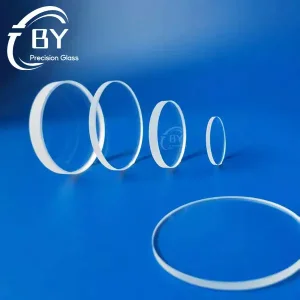
Surface Quality: 20/10 Scratch-Dig
Flatness: λ/4 @ 632.8nm
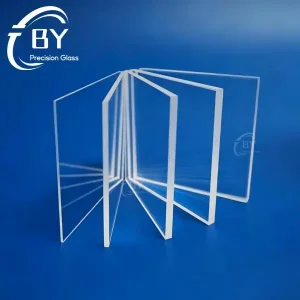
Thermal Shock: >1100°C ΔT
Purity: SiO2 ≥ 99.999%

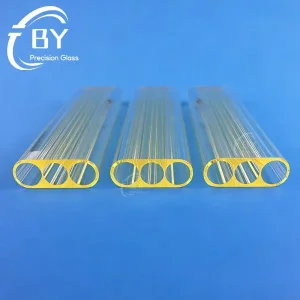
Max Temperature: ~450°C continuous
Chemical Class: Hydrolytic Class 1
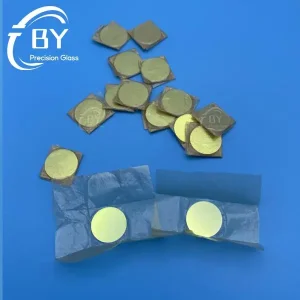
Function: Blocks 1064nm parasitic light
Application: Nd:YAG Laser Heads
Industrial Landscape & Quartz Procurement Demands Across Ghana
Ghana stands as the premier gold producer in Africa, while rapidly advancing its petrochemical, manufacturing, and university research sectors. High-purity quartz plates and optical windows serve as indispensable mission-critical components across these industrial pillars.
The Critical Role of Fused Silica in Ghana's Core Sectors
In modern metallurgical assay hubs such as Tarkwa, Obuasi, Prestea, and Ahafo, industrial laboratories process thousands of geological core samples daily. Fire assay testing, Inductively Coupled Plasma Optical Emission Spectrometry (ICP-OES), and Atomic Absorption Spectrometry (AAS) require optical quartz windows that maintain high ultraviolet transmission (>90% at 193–254 nm) under severe thermal shock and acidic reagent atmospheres containing aqua regia and nitric acid.
Concurrently, the expansion of the Tema Oil Refinery, Takoradi port petrochemical hubs, and offshore West Cape Three Points facilities demands ruggedized high-pressure viewport glasses capable of withstanding both thermal stress and extreme alkaline/saline atmospheres. Ordinary soda-lime glass fractures instantaneously under these conditions; precision polished JGS1 fused silica and Borofloat 33 sight glasses provide an operational lifetime 10 to 15 times longer.
Furthermore, Ghana’s prominent academic and metrological establishments—including the Kwame Nkrumah University of Science and Technology (KNUST), University of Ghana (UG Legon), and the Ghana Atomic Energy Commission (GAEC)—consistently expand their photonic, laser ablation, and solar photovoltaic research laboratories. They require custom dimensional quartz substrates with parallelism under 30 arcseconds and flatness up to λ/10.
| Ghana Regional Hub | Dominant Application | Quartz Material Specification |
|---|---|---|
| Tarkwa & Obuasi | Gold Fire Assay & Spectroscopy | JGS1 Synthetic Fused Silica (UV Grade) |
| Tema Industrial Zone | Petrochemical Sight Viewports | High-Pressure Borosilicate / JGS2 Fused Quartz |
| Takoradi Harbor Hub | Offshore Sensor Housing & Fluidics | Precision CNC-Machined Quartz Windows |
| Kumasi (KNUST) | Laser & Photovoltaic R&D | Polished Substrates (Flatness λ/8, 20/10 S-D) |
| Accra Metrology Labs | Water UV Disinfection & Chemical Quality | Deep-UV Transparent Quartz Plates (254nm >92%) |
Engineering Grade Breakdown: JGS1 vs. JGS2 vs. JGS3 for African Climates
Selecting the exact synthetic or fused silica formulation prevents catastrophic optical darkening, premature embrittlement, and thermal fracturing in Ghana's tropical and high-humidity ambient environments.
JGS1: Synthetic UV-Grade Fused Silica
Synthesized through high-temperature chemical vapor deposition (CVD) of silicon tetrachloride (SiCl4) in an oxyhydrogen flame. Exceptionally pure with bubble class 0 and virtually no metallic trace impurities.
- Transmission Band: 185 nm – 2,500 nm
- UV Cutoff: ~160 nm (deep ultraviolet)
- OH Content: ~800 to 1,200 ppm
- Primary Use: UV spectroscopy, laser mirrors, photolithography
- Resistance: Zero solarization under intense excimer UV
JGS2: Optical-Grade Fused Quartz
Manufactured by fusing select natural crystalline quartz crystals at electric arc temperatures exceeding 2000°C. Cost-efficient, high mechanical rigidity, and outstanding thermal stability.
- Transmission Band: 220 nm – 2,500 nm
- Visible Clarity: >92% from 350 to 1100 nm
- OH Content: ~150 to 200 ppm
- Primary Use: High-temp sight glasses, furnace viewports, flow cells
- Resistance: Resists thermal cycling from 1100°C to cold water quench
JGS3: Infrared-Grade Low-OH Fused Quartz
Produced using electric vacuum melting techniques to strip virtually all hydroxyl ions (OH), eliminating the pervasive absorption band at 2.73 µm.
- Transmission Band: 260 nm – 3,500 nm
- OH Content: < 5 ppm (ultra-low hydroxyl)
- Primary Use: IR pyrometers, thermal imaging viewports, gas analysis
- Dielectric Strength: 25–40 kV/mm
- Thermal Expansion: 5.5 × 10⁻⁷ /°C (virtually negligible)
Localization Support, Ghana Standards Authority (GSA) & Trade Compliance
Ensuring zero regulatory delays, standardized import clearance through ICUMS, and seamless integration for Ghanaian procurement managers.
GSA & Minerals Commission Protocols
All quartz plates, observation windows, and flow cells exported to Ghana are accompanied by comprehensive Quality Inspection Certificates (CoQ), Material Test Reports (MTR), and ISO 9001 compliance documentation aligning with Ghana Standards Authority (GSA) requirements.
For mining clients operating under the supervision of the Minerals Commission of Ghana, our products comply with environmental discharge criteria (EPA Ghana Act 490), ensuring non-leaching performance when handling hazardous leachate solutions.
Port Clearance Via ICUMS at Tema & Takoradi
To facilitate hassle-free customs clearance via Ghana's Integrated Customs Management System (ICUMS), we issue authenticated commercial invoices, packing lists with Harmonized System (HS) Code 7002.31 / 7002.39, and clean Certificates of Origin (CO).
Whether arriving via ocean freight container at Tema Port or express air cargo directly into Kotoka International Airport (ACC), shipments are palletized according to ISPM 15 heat-treated phytosanitary regulations.
Shockproof Tropicalized Packaging
Ghana's tropical coastal climate presents relative humidity averaging 80% to 95%. Standard paper-based packing leads to moisture condensation and hazing on optical surfaces.
Our Tianjin factory deploys sealed, multi-layer vacuum foil enclosures with high-capacity silica desiccant packets, encased in custom-cut high-density EPE foam cradles and reinforced plywood flight crates, guaranteeing scratch-free, pristine condition upon arrival at your site.
Chinese Factory Supply Chain Superiority: Why Sourcing Direct Wins
Eliminate European and American distributor markups of 200%–350% while receiving rapid engineering iteration directly from our advanced Tianjin machining center.
Cost Efficiency Without Tolerance Compromise
Western suppliers frequently outsource their base quartz ingots to China before rebranding them with hefty premiums. By engaging Tianjin BY Photonics directly, Ghanaian procurement teams secure factory-gate pricing, reducing consumable viewport and spectrometry plate operational budgets by up to 40% to 60% annually.
Complete In-House Processing Under One Roof
We do not broker parts. Our 3,000 m² modern workshop runs cutting-edge double-sided continuous lapping machines, 5-axis ultrasonic CNC machining centers, and hydrogen-oxygen automated flame polishing benches. This unified workflow prevents tolerance stack errors and eliminates inter-subcontractor delays.
24-Hour Design For Manufacturability (DFM)
Send our senior engineering desk your STEP, DWG, DXF, or PDF engineering drawings. Within 24 hours, you receive a full DFM manufacturability evaluation specifying optimum blank preparation, chamfer radius stress-mitigation advice, polishing limits, and cost-reduction opportunities.
Localized Application Scenarios in Ghana
Engineered quartz glass parts solving real-world extreme temperature, optical clarity, and chemical corrosion challenges across the Ghanaian economy.
Gold Fire Assay Furnace Viewports
Installed on smelting and cupellation furnaces running at 1050°C to 1200°C in Tarkwa and Obuasi assay houses. Our heavy-wall (8mm–15mm) JGS2 polished quartz plates offer zero optical distortion, letting metallurgical technicians monitor lead button separation without opening the door and causing thermal loss.
UV-C Municipal & Industrial Water Disinfection
Ghana Water Company Limited (GWCL) treatment facilities and private beverage bottling plants throughout Greater Accra rely on our high-purity JGS1 quartz sleeve tubes and flat end-caps. These deliver over 92% transmission at the critical germicidal wavelength of 253.7 nm, neutralizing pathogens without thermal degradation.
Offshore Oil & Gas Sight Glasses
Mounted on separator vessels, reboilers, and heat exchangers in the Jubilee and TEN offshore fields. Our Borofloat and fused silica viewports are diamond-edge beveled to resist high mechanical clamping pressures, hydraulic surges, and continuous exposure to corrosive marine saltwater mist.
KNUST & UG Academic Laser Research
Custom polished 25.4mm and 50.8mm round quartz laser windows coated with anti-reflective (AR) thin films for 532nm, 1064nm, and broadband visible spectrums. Used in spectroscopy research, laser-induced breakdown spectroscopy (LIBS), and quantum optics experiments.
Solar PV Weathering & Pyranometer Domes
Ghana's solar energy boom in the Northern and Upper East regions (Navrongo, Yendi) requires highly transmissive, non-yellowing protective quartz windows for solar irradiance radiometers, pyranometers, and test benches enduring relentless sunlight and 45°C ambient heat.
Chemical Refining & Acid Digestion Chambers
Precision-machined fused silica digestion caps, cuvettes, and reaction vessel covers. Inert to virtually all acids (except hydrofluoric and hot concentrated phosphoric acid), ensuring zero background contamination during trace mineral and gold bullion purity verifications.
Global Industry Trends: The Future of Precision Quartz Components
Emerging manufacturing technologies and photonic integration are redefining the specifications required by international procurement engineers.
Microfluidic Lab-on-a-Chip Integration
Traditional diagnostic equipment is shifting toward miniaturized microfluidic analytical chips. By leveraging ultra-fast femtosecond laser etching and high-precision CNC ultrasonic micro-milling, we now produce fused silica substrates with internal channels as narrow as 20 microns, allowing instantaneous field analysis of mineral slurry and environmental water samples in remote Ghanaian camps.
Ion-Beam Sputtered (IBS) Hard Coatings
Standard evaporated optical coatings degrade under tropical African humidity and abrasive dust storms (Harmattan wind conditions). Our automated cleanroom coating lines implement Ion-Beam Sputtered (IBS) hard dielectric coatings that bond atomically to the quartz substrate, maintaining damage thresholds exceeding 15 J/cm² @ 1064nm and passing strict MIL-C-48497A environmental tests.
Synthetic Silica vs. Sapphire Hybrid Assemblies
Where extreme mechanical abrasion and thermal radiation intersect—such as downhole oil exploration tools in the Gulf of Guinea—optical engineers increasingly specify hybrid quartz-sapphire assemblies. We fabricate precision step-ground fused silica windows sealed into CNC titanium holders using specialized gold-tin (AuSn) or glass-frit hermetic bonding.
Frequently Asked Questions (FAQ) for Ghana Industrial Buyers
Comprehensive technical and commercial answers to streamline your procurement decisions.
What is the maximum operating temperature for your quartz windows in assay furnaces?
Our JGS1 and JGS2 fused quartz plates withstand continuous operating temperatures up to 1100°C and short-term thermal excursions up to 1300°C. They exhibit an exceptionally low coefficient of thermal expansion (5.5 × 10⁻⁷ /°C), meaning you can pull a red-hot quartz plate out of a 1000°C furnace and plunge it into cold water without inducing fracture.
Can you provide custom shapes, drilled holes, and step profiles for existing Ghanaian machinery?
Yes. Over 75% of our production consists of customized components built to print. Using multi-axis ultrasonic CNC machines and high-speed diamond grinding centers, we produce complex geometries, countersunk holes, bevels, stepped flanges, slots, and laser-engraved serial identification strictly according to your CAD drawings (STEP, DXF, DWG, PDF).
How does BY Photonics prevent moisture fogging and scratching during maritime transit to Tema Port?
All finished optical components undergo multi-stage ultrasonic degreasing in Class 1000 cleanroom conditions. Each part is sealed within anti-static, moisture-barrier vacuum packaging containing active desiccant packs. Outer packaging comprises shock-absorbing closed-cell EPE foam layers housed in reinforced, fumigated plywood export crates.
What is the typical lead time for expedited orders to Accra or Kumasi?
Standard prototype quantities and urgent replacement windows (1 to 20 pieces) typically ship from our factory within 5 to 7 working days. For transit, we partner with DHL Express, FedEx Priority, and air cargo forwarders into Kotoka International Airport (ACC), delivering to your facility in Ghana within 4 to 6 transit days.
How do quartz plates perform when exposed to aqua regia, cyanide, and hydrofluoric acid?
Fused silica exhibits virtually total chemical inertness to aqua regia, nitric acid, hydrochloric acid, cyanide solutions, and organic solvents used in gold leaching and assay dissolution. The only chemicals that attack quartz are hydrofluoric acid (HF) and hot, concentrated phosphoric acid (>300°C). For HF environments, we recommend our specialized sapphire or PTFE-grade windows.
Do you support customs documentation for tax exemptions or mining concessionaires?
Yes. Many mining operations registered under the Ghana Investment Promotion Centre (GIPC) or Minerals Commission operate under zero-duty or reduced-tariff import concessions. We provide tailored commercial documentation with exact HS Code classification (7002.31 / 7002.39 / 9001.90) and authenticated packing lists compliant with ICUMS upload requirements.
What is the optical difference between mechanical polishing and flame polishing?
Mechanical pitch polishing yields extreme optical precision (surface roughness Ra < 0.5 nm, flatness up to λ/10, scratch-dig 20/10), essential for laser cavities, interferometers, and spectrometry viewports. Flame polishing uses an oxyhydrogen torch to melt surface micro-scratches, producing a smooth, rounded edge and high mechanical strength at lower cost, ideal for furnace sight glasses and furnace tubes.
Can you supply optical anti-reflective (AR) coatings for high humidity environments?
Yes. We offer electron-beam evaporated and ion-assisted deposition (IAD) multi-layer anti-reflective coatings tailored for specific laser lines (e.g., 355nm, 532nm, 1064nm) or broadband visible/NIR ranges (400–700nm, 650–1050nm). These coatings withstand severe humidity and adhere strictly to ISO 9211 and MIL-C-675C standards.
Specialized Precision Optics & Quartz Fabrication for Ghana
Explore our comprehensive lineup of laser components, micro-capillary tubes, ceramic pump chambers, and borosilicate wafer substrates manufactured to strict OEM tolerances.
Damage Threshold: >10 J/cm² @ 10ns
Substrate: JGS1 Optical Grade Fused Silica
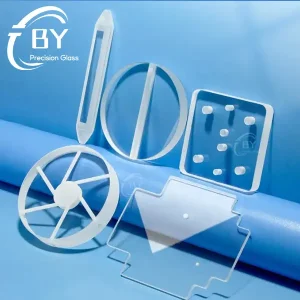
Service Temp: Up to 1200°C
Application: Furnace Chambers & Boilers
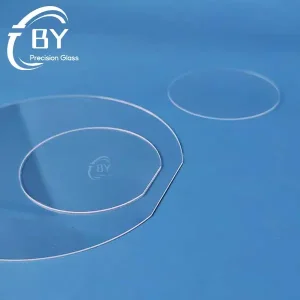
TTV: < 5 µm
Surface Finish: Double-Side Polished Ra < 0.5nm
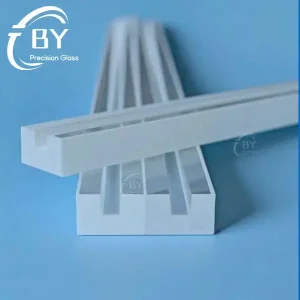
Groove Geometry: V-Groove & U-Groove CNC
Application: Optical Fiber Aligners
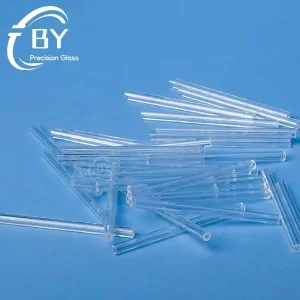
Concentricity: < 0.01mm
Material: Pure Fused Silica / Borosilicate
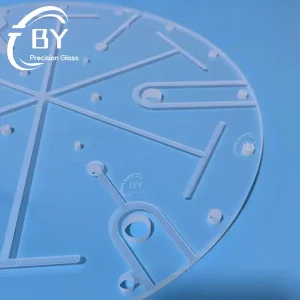
Tolerance: Down to ±0.01mm
Finishing: Fire-Polished / Lapped Optical Flat
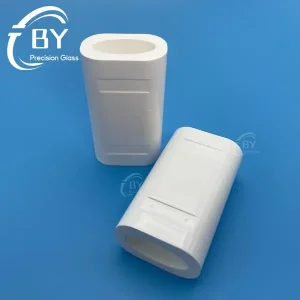
Material: Porous High-Purity Alumina Ceramic
Lifetime: Non-aging diffuse reflectivity
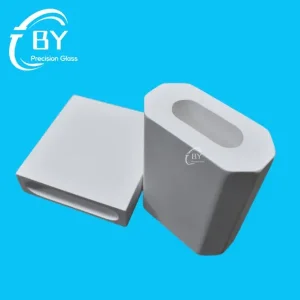
Homogeneity: Lambertian reflectance profile
Form: CNC machined to laser head block