
Primary Industrial Optical & Laser Solutions
Explore our baseline precision-engineered laser cavities, custom doped quartz tubes, and micro-machined capillary components built to micron-level tolerance specifications.
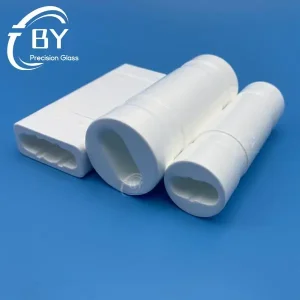
Wholesale Ceramics Reflecor for Semiconductor Lasers Suppliers, Factory
View Details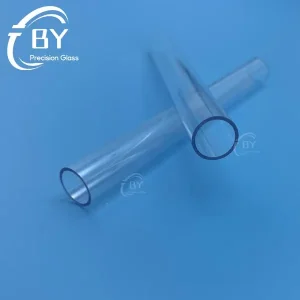
Wholesale Cerium Doped Quartz Tube Blocked UV Wavelength Manufacturer, Manufacturers
View Details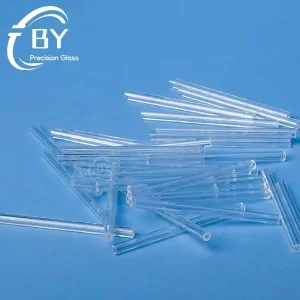
High-Quality Custom Precision Quartz Capillary Tubes Manufacturers, Suppliers
View Details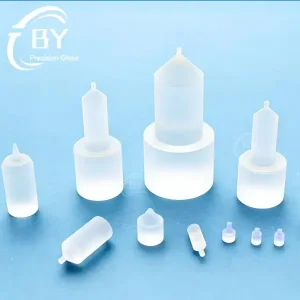
High-Quality Customized Quartz Fiber End Caps for QBH Manufacturer, Factory
View Details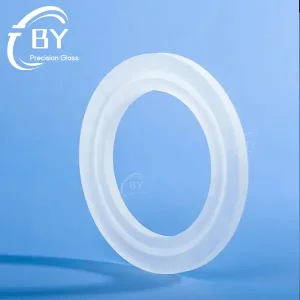
High-Quality Precision Custom Quartz Glass Components for Semiconductor Manufacturers, Supplier
View Details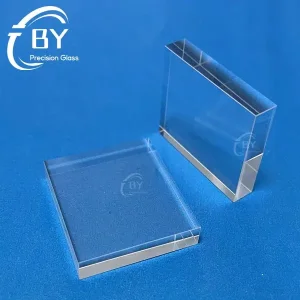
Custom Sapphire IPL Light Guide Block Used for Laser IPL Hair Removal Handle Manufacturer, Manufacturers
View Details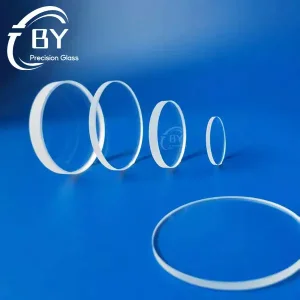
Wholesale Quartz Optical Windows for Semiconductor Lithography Equipment Suppliers, Factories
View Details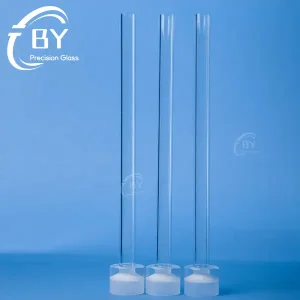
High-Quality Chemical Resistant Custom Quartz Glass Parts Fabrication Supplier, Factories
View DetailsPhysics of High-Purity Porous Ceramic Laser Reflectors
In high-power diode-pumped solid-state (DPSS) and flashlamp-pumped laser architectures, pump chamber optical efficiency and thermal dielectric isolation determine the system's operational ceiling and beam spatial homogeneity.
Lambertian Optical Scattering
Unlike specular metallic reflectors (e.g., gold or silver coatings that suffer from polarization-dependent reflection and localized hotspot degradation), our porous alumina ceramics utilize controlled microscopic inter-granular voids (~1.5 to 3.5 μm grain spacing). This structure induces multiple volumetric optical refractions, yielding true Lambertian diffuse scattering with reflectance reaching 97.5%–98.2% across key pumping bands (700 nm to 1064 nm).
Dielectric Insulation & Arc Quenching
Flashlamp-pumped pulsed lasers utilize trigger pulses reaching upwards of 25 kV to 35 kV. Metallic cavity assemblies create severe electrical arcing risks and parasitic capacitive losses. BY Photonics' insulation ceramic reflectors exhibit volume resistivities exceeding 10¹⁴ Ω·cm at 20°C and a dielectric strength >15 kV/mm, entirely eliminating the risk of flashover discharges while preserving thermal stability.
Precision Glaze Hydrodynamic Protection
Direct exposure of raw porous ceramics to deionized cooling water leads to gradual microbial entrapment, chemical leaching, and reflectivity attenuation over operational life. We engineer an ultra-smooth, vitreous borosilicate-aluminate glaze layer (40–80 μm thickness) matched specifically to the ceramic body's coefficient of thermal expansion (CTE), ensuring complete chemical impermeability without surface crazing.
| Performance Parameter | BY Photonics Glazed Alumina | Sintered PTFE (Spectralon-grade) | Gold-Plated Metal Cavities | Standard Unglazed Ceramics |
|---|---|---|---|---|
| Diffuse Reflectance (808–1064 nm) | 97.5% – 98.2% | 99.0% – 99.2% | 95.0% – 96.5% (Specular) | 96.8% – 97.4% |
| Dielectric Breakdown Strength | > 18 kV/mm | > 20 kV/mm | 0 kV/mm (Conductive) | > 14 kV/mm |
| Operating Temperature Limit | 1,450 °C | ~260 °C (Melts/Deforms) | ~300 °C (Plating blistering) | 1,600 °C |
| Coolant Resistance (Deionized Water) | Superior (Impermeable Glaze) | Moderate (Porosity trapping) | Poor (Pinholes & oxidation) | Poor (Liquid absorption) |
| Laser Induced Damage Threshold (LIDT) | > 15 J/cm² @ 1064nm, 10ns | ~ 4 J/cm² (Prone to ablation) | ~ 6 J/cm² | > 12 J/cm² |
| Structural Rigidity / Machinability | Rigid (±0.02mm Tolerancing) | Soft (Creeps under torque) | Rigid (Standard metal CNC) | Rigid (Difficult post-grind) |
Localized Engineering Applications & Case Studies
From dermatological aesthetic suites to cleanroom semiconductor fabrication tools, our bespoke ceramic pump cavities are tailored to extreme thermal, chemical, and photonic loads.
Aesthetic & Medical Lasers
Widely deployed in Alexandrite (755 nm), Nd:YAG (1064 nm), and Er:YAG (2940 nm) multi-bore laser chambers for aesthetic treatment consoles (hair removal, tattoo eradication, fractional skin resurfacing). The internal glaze prevents cooling channel microbial fouling and guarantees zero dielectric breakdown during 200 J pulse discharges.
Semiconductor Metrology
Integrated within high-repetition-rate pulsed ultraviolet and deep-UV laser sources used for wafer inspection, defect metrology, and lithographic alignment. Our 99.7% trace-metal-free alumina ceramic matrices produce negligible chemical outgassing, even in high-vacuum cleanroom inspection housings.
Industrial Laser Machining
Provides uniform multi-lamp diffuse excitation for kilowatt-class CW and Q-switched industrial laser welding, cutting, and additive manufacturing engines. By eliminating intensity localized spikes (hotspots) in the laser crystal, our reflectors preserve the TEM₀₀ mode beam profile and reduce rod thermal lensing.
Aerospace & Defense LIDAR
Custom cylindrical and elliptical ceramic reflectors for airborne and terrestrial target designation and long-range atmospheric LIDAR transceivers. Sintered ceramics withstand severe continuous vibration, high g-forces, and thermal cycles from -55°C to +125°C without delamination or optical shift.
Chinese Supply Chain Agility & Fabrication Depth
Tianjin BY Photonics Co., Ltd. (established in 2010) consolidates raw materials processing, isostatic powder pressing, green-state CNC machining, ultra-high-temperature sintering, and precision robotic glazing under one unified manufacturing roof.
Vertically Integrated Raw Material Line
By securing direct partnerships with premier Chinese synthetic α-alumina suppliers, we control precursor grain size distributions down to the sub-micron scale (<0.6 μm D50). This tight control prevents grain clustering and micro-porosity collapses during the 1,680°C atmospheric sintering phase, ensuring consistent batch-to-batch diffuse reflectivity without relying on fluctuating international raw powder routes.
Cold Isostatic Pressing (CIP) & CNC Milling
Our workshop houses high-pressure Cold Isostatic Pressing systems (250 MPa) that create isotropic density gradients in raw ceramic blanks. Advanced green-state machining allows complex features—including multi-bore flow channels, dual-lamp elliptical chambers, and internal O-ring seal grooves—to be milled quickly prior to firing, saving substantial diamond grinding lead times.
Rapid Prototyping & Agility
Western ceramic manufacturers frequently quote 12 to 18 weeks lead time for custom tooling and validation. Leveraging BY Photonics' integrated toolmaking, sintering schedules, and diamond wire slicing in Tianjin, we deliver verified custom engineering prototypes in as few as 10 to 15 working days, expediting our OEM clients' time-to-market window.
Technical Roadmap: Next-Generation Ceramic Photonics
As solid-state lasers transition to higher average power outputs and multi-kilowatt diode arrays, ceramic reflector engineering must adapt with new multi-spectral matrices and thermal micro-architectures.
Nanoscale Surface Glaze Smoothing
Optimization of borosilicate-aluminate glazing slurries to reduce surface roughness down to Ra <0.2 μm, minimizing microscopic fluid drag inside high-velocity coolant channels and preventing localized cavitation corrosion.
Doped Selective-Filtering Ceramics
Integration of samarium oxide (Sm₂O₃) and cerium oxide (CeO₂) directly into the ceramic substrate matrix to simultaneously reflect target pump bands (e.g., 808 nm) while absorbing unwanted ultraviolet wavelengths and parasitic 1064 nm amplified spontaneous emission (ASE).
Additive 3D Ceramic Micro-Channels
Developing stereolithography (SLA) additive ceramic manufacturing for internal conformal cooling circuits directly inside the ceramic reflector body, reducing thermal resistance between the pump core and the coolant fluid by 40%.
Composite Transparent/Diffuse Hybrid Matrices
Co-sintering polycrystalline YAG ceramic jackets with diffuse porous alumina backing layers to produce integrated laser rod-reflector monolithic pump cartridges that eliminate interface boundary Fresnel reflections.
International Regulatory Alignment & Engineering Support
Precision photonics demand absolute supply chain transparency. Every custom ceramic reflector batch is accompanied by comprehensive testing metrics, optical spectrophotometer logs, and chemical compliance dossiers.
100% Spectroscopic & Dimensional CMM Audit
Every production lot undergoes rigorous reflectance curve verification using our PerkinElmer Lambda 1050+ UV/Vis/NIR spectrophotometer equipped with a 150mm integrating sphere. Multi-axis Zeiss CMM touch-probes confirm bore concentricity and mounting face parallelism to within ±0.015 mm.
RoHS, REACH & Cleanroom Packaging
All ceramic substrates and glaze materials are certified completely free of hazardous heavy metals (lead, cadmium, hexavalent chromium). Finished components pass ultrasonic de-ionized cleaning, vacuum-baking for degasification, and double-sealed Class 10,000 cleanroom nitrogen packaging ready for OEM fab integration.
Direct OEM Engineering Desk & DFM
Communicate directly with senior ceramic material engineers rather than generic sales brokers. We supply Design-for-Manufacturability (DFM) structural evaluations within 24 hours of receiving your STEP, IGES, or DXF CAD files, recommending draft angles, glaze clearances, and cost-effective dimensional tolerancing.
Frequently Asked Questions (FAQ)
Authoritative technical clarifications addressing common engineering and procurement questions regarding custom insulation ceramic reflectors.
Why choose porous ceramic diffuse reflectors over gold-plated metallic cavities?
What is the structural purpose of applying glaze on a ceramic laser reflector?
What mechanical and dimensional tolerances can BY Photonics maintain?
Can you manufacture exact drop-in replacements for obsolete or legacy laser heads?
How does BY Photonics evaluate and control Laser-Induced Damage Threshold (LIDT)?
What CAD file formats and technical documentation should we submit for quotation?
Specialized Laser Optics, Flow Tubes & Cavity Components
Complementary precision flow tubes, sapphire viewing windows, and diffuse PTFE pump reflectors produced in our Tianjin advanced facility.
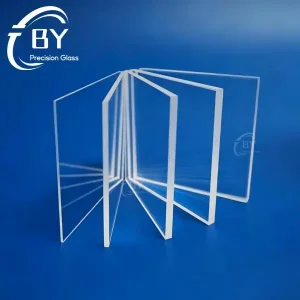
High-Quality JGS1 UItraviolet (UV) Grade Fused Silica Plate Supplier, Factory
View Details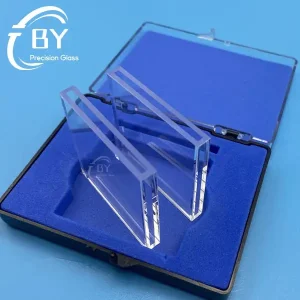
Wholesale Customize Quartz Cuvette for Spectrophotometer Supplier, Factory
View Details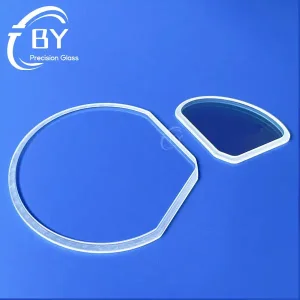
High-Quality Sapphire Viewing Plates for Harsh Chemical Environments Suppliers, Factories
View Details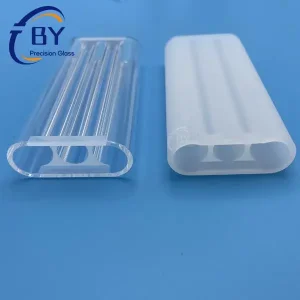
High-Quality Candela Laser Head Triple Bore Old and New Version In Stock Manufacturer, Factory
View Details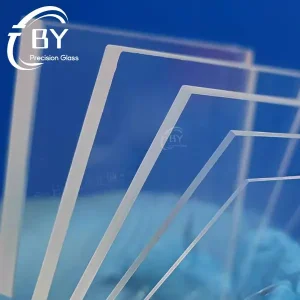
High-Quality Borosilicate Windows and Plates for Viewports Suppliers, Factory
View Details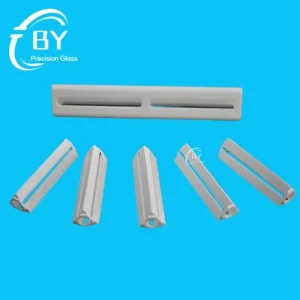
High-Quality Diode‑Pumping Chamber Diffuse Reflectors PTFE‑based Supplier, Suppliers
View Details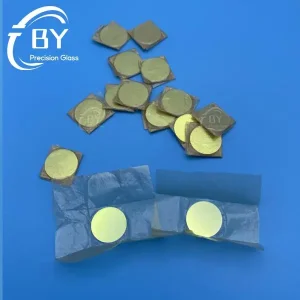
High-Quality Candela Laser Distance Gauge Slider Windows With coating 755 and 1064nm Suppliers, Factories
View Details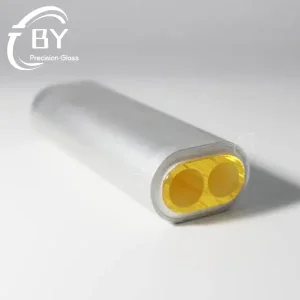
Custom Packed Laser Cavity Flowtubes for Laser Head Manufacturers, Suppliers
View DetailsRequest Custom Ceramic Reflector Engineering Assessment
Send your 2D drawings or 3D CAD files directly to our engineering team in Tianjin. We provide comprehensive Design-for-Manufacturability (DFM) feedback, material grain recommendations, glaze contour options, and volume quote structures within 24 working hours.