
Direct Factory Inventory
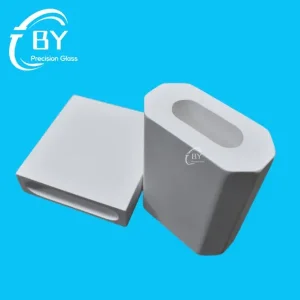
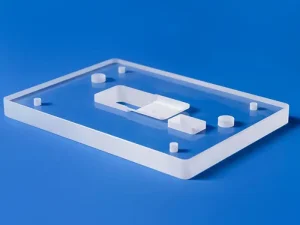
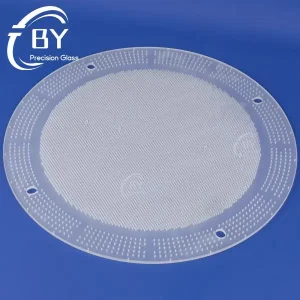
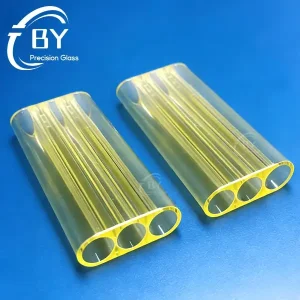
Precision Protection Windows & Cavity Components
Browse our factory-direct, high-power optical barriers, protective cover slides, and custom cavity filters manufactured strictly from ultra-pure quartz, doped glass, and optical ceramics.

Industrial Whitepaper
Global Laser Protective Glass Market Dynamics
Understanding the mission-critical role of protective optical barriers in high-brightness material processing, additive manufacturing, and high-energy directed physics.
High Power Scaling & LIDT Demands
As modern fiber lasers aggressively breach power thresholds beyond 20kW to 60kW, conventional BK7 or soda-lime cover glasses fail instantaneously due to internal thermal stress and bulk absorption. Industrial facilities require synthetic JGS1 fused silica substrates with an ultra-high Laser-Induced Damage Threshold (LIDT > 15 J/cm² @ 1064nm, 10ns) to prevent explosive micro-fracturing and expensive downstream cutting head destruction.
Multi-Spectral Laser Attenuation
Modern manufacturing demands combined wavelength integrity. Industrial processing windows must not only transmit driving laser lines (such as 1030nm–1080nm disc/fiber lasers, 515nm green lasers, or 450nm blue semiconductor diodes) with >99.8% absolute efficiency via advanced Ion-Beam Sputtered (IBS) anti-reflective coatings, but also block harmful back-reflected radiation from highly reflective brass, copper, or aluminum processing surfaces.
Stringent Surface Morphology Rules
Even a microscopic sub-micron scratch, pit, or embedded polishing residue can absorb incoming multi-kilowatt coherent energy, initiating immediate thermal runaway (thermal lensing). Global optical compliance requires protective glass to meet stringent 10-5 to 20-10 Scratch-Dig specifications according to MIL-PRF-13830B or ISO 10110 standards, paired with absolute wavefront transmitted distortion of under λ/10.
Direct Manufacturing Advantage
Why Global Tier-1 OEMs Source from Chinese Optical Hubs
Combining complete raw quartz supply chains, automated CNC cold-machining, and high-precision class-100 cleanroom thin-film coating under a single traceable infrastructure.
Vertical In-House Integration
From synthetic quartz ingot slicing, double-sided planetary planetary lapping, CNC core-drilling to robotic ultrasonic chemical cleaning, Chinese state-of-the-art facilities eliminate multi-tier subcontractor markups and ensure uninterrupted production integrity.
Sub-Wavelength Coatings
Equipped with high-vacuum magnetron sputtering and Leybold electron-beam physical vapor deposition systems, achieving ultra-hard, non-porous fluorinated thin-film layers that resist moisture ingress, laser scorch marks, and high thermal drift.
Interferometric Metrology
Every single batch of laser protective glass is validated with Zygo Verifire GPI XP phase-shifting laser interferometers, PerkinElmer Lambda 1050+ spectrophotometers, and precision coordinate measurement machines (CMM) before dispatch.
Rapid Prototype to Mass Scaling
Whether providing custom non-standard geometries (octagons, customized step chamfers, multi-layer wafer cutouts) for pilot R&D within 5 business days, or shipping over 100,000 standard laser windows monthly, our agility remains world-class.
< 0.05%
Absorption Rate @ 1064nm
> 99.85%
Transmittance Efficiency
λ/10
Transmitted Wavefront Distortion
24h
Engineering Feasibility SLA
Engineering Reference Data
Laser Protective Glass Substrate & Optical Matrix
Technical performance data comparing primary substrate grades used across custom laser safety windows and consumable protective debris shields.
| Substrate Material | Transmission Band | Damage Threshold (LIDT) | Thermal Expansion (CTE) | Common Laser Systems | Primary Industrial Role |
|---|---|---|---|---|---|
| JGS1 Synthetic Fused Silica | 185 – 2,500 nm | > 25 J/cm² @ 1064nm | 0.54 × 10⁻⁶ /K | High-Power CW Fiber & Disc Lasers | High-Kilowatt Laser Cutting & Welding Protective Windows |
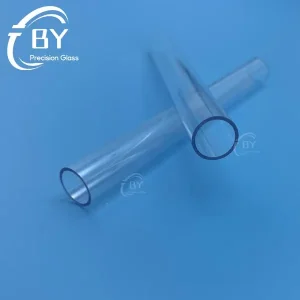
| JGS2 Fused Quartz | 220 – 2,500 nm | > 12 J/cm² @ 1064nm | 0.55 × 10⁻⁶ /K | Nd:YAG, Diode Laser Arrays | Internal Laser Cavities, Flow Tubes & Inspection Sight Glass |
| JGS3 Optical Quartz (Infrared) | 260 – 3,500 nm | > 15 J/cm² @ 2100nm | 0.55 × 10⁻⁶ /K | Holmium (Ho:YAG), Er:YAG, Mid-IR | Surgical Laser Delivery & Industrial Thermal Laser Sensors |
| Monocrystalline Sapphire (Al₂O₃) | 170 – 5,500 nm | > 18 J/cm² @ 1064nm | 5.8 × 10⁻⁶ /K | Pico/Femtosecond Ultrafast, Harsh Ambient | Ultra-Hard Scratch-Proof Laser Debris Windows, Waterjet Laser heads |
| Samarium-Doped Optical Glass | Custom Filter Bands | Cavity Specific | High Chemical Stability | Pulsed Medical & Aesthetic Lasers | Absorbs Parasitic 1064nm Spontaneous Emissions inside Cavities |
Localized Applications
Field-Proven Industrial Integration Scenarios
Deploying precision custom laser protective windows into demanding operating environments worldwide.
Kilowatt Fiber Laser Cutting Heads
Mounted as the sacrificial optical barrier directly below the focusing doublet. Isolates sensitive internal optical assemblies from molten metal splatter, high-pressure assist nitrogen/oxygen gas dynamics (up to 25 bar), and volatile aerosol particulates during 24/7 continuous metal sheet piercing.
Dermatological & Aesthetic Medical Handpieces
Integrated as contact or non-contact beam exit windows within Alexandrite (755nm), Nd:YAG (1064nm), and pulsed dye systems. Features high dielectric endurance, chemical resistance against clinical disinfectants, and specialized coatings ensuring patients receive exact delivered radiant energy.
Laser Powder Bed Fusion (LPBF / SLM)
Large-format circular and rectangular protective quartz isolation viewports that separate high-vacuum or inert gas process chambers from external galvo-scanner optics. Prevents fine titanium and nickel powder vapor condensation from shifting the focal position during critical aerospace additive builds.
Strategic Sourcing Intelligence
Future Technological Horizons & OEM Requirements
Strategic supply chain foresight for procurement teams and optomechanical system architects.
Macro Industry Evolution
Emergence of Blue & Green Diodes: With the booming electric vehicle (EV) battery sector, laser processing of copper busbars has shifted from infrared to 450nm and 515nm regimes. This transition requires optical glass suppliers to pioneer high-damage threshold AR coatings engineered specifically for shorter wavelengths, where material scatter and linear absorption naturally spike.
Smart Optical Monitoring Windows: The integration of embedded edge-sensor chips and photodiode arrays within protective glass mounting rings is driving demand for sub-millimeter chamfers and highly specialized side-polished edges capable of capturing scattered leak-light to signal window failure before catastrophe strikes.
Global Enterprise Procurement Trends
Supply Chain Dual-Sourcing & Redundancy: Global laser machine manufacturers are actively derisking by partnering directly with validated Chinese precision optics factories rather than relying exclusively on Western catalog distributors whose retail prices are marked up 300% to 500% with prolonged lead times.
Strict Lot-to-Lot Traceability: Procurement directives require complete traceability certificates including spectrometer transmission curves, interferometry maps, RoHS/REACH compliance documentation, and validated ISO 9001 quality certificates delivered with every production lot.
Expert Technical FAQ
Frequently Asked Questions by Optical Engineers
Direct answers to mission-critical questions regarding custom protective glass selection, thermal lensing, and coating lifetimes.
Why is fused silica preferred over K9/BK7 in high-power laser protective windows?
While standard BK7 optical glass is suitable for low-power optical inspection or laser alignment diodes, its relatively high bulk absorption coefficient and higher coefficient of thermal expansion (approx. 7.1 × 10⁻⁶ /K) cause it to absorb thermal energy rapidly under multi-kilowatt exposure. This creates severe thermal lensing (focus shifting) and eventual catastrophic thermal breakage. Fused silica (JGS1) possesses virtually zero thermal expansion (0.54 × 10⁻⁶ /K) and microscopic absorption losses (< 10 ppm/cm), ensuring total optical focus stability across prolonged industrial duty cycles.
How do anti-reflective (AR) coatings influence the lifespan of laser protective glass?
Uncoated quartz glass reflects approximately 3.5% to 4% of incident light per surface through natural Fresnel reflection. In a 12kW laser, an uncoated window would bounce nearly 800W of stray laser power back into internal optic barrels, destroying seals and sensor assemblies. Dual-sided multi-layer dielectric AR coatings reduce surface reflectance to R < 0.1% or even R < 0.05% at specified wavelengths. Sputtered hard coatings (IBS) also provide a dense, durable physical barrier that repels environmental moisture and withstands aggressive wiping cleanings.
What causes a protective glass window to explode or crack during laser cutting?
Laser window explosions are almost always triggered by localized surface contamination. When tiny slag particles, assist-gas oil mists, or ambient dust land on the window surface, they immediately absorb the laser beam energy, generating extreme localized hotspot temperatures exceeding 1000°C within fractions of a second. This localized thermal expansion causes localized shear stress exceeding the yield strength of the glass, leading to fracture. Maintaining class-10,000 clean air standards and replacing degraded windows proactively prevents this failure mode.
What geometric tolerances and edge specifications can your factory achieve?
Our Tianjin precision manufacturing center holds dimensional outer diameter tolerances within ±0.02 mm, center thickness within ±0.02 mm, and parallelism within < 10 arcseconds. Standard edge finishing includes C-type protective safety chamfers (0.2–0.5 mm × 45°) or polished edges to eliminate micro-chips that could propagate into cracks under thermal and mechanical clamping stresses.
Can you manufacture protective glass with custom dual-wavelength or broad-band coatings?
Yes. We frequently produce dual-wavelength protective windows tailored for systems using both a cutting wavelength (e.g., 1064nm or 1080nm) and a coaxial red targeting/pilot diode (635nm–650nm) or optical coherence tomography (OCT) monitoring beam (840nm). Custom Ion-Beam Sputtered AR coatings can be custom-deposited to deliver >99.8% transmission at processing wavelengths while maintaining high visibility at monitoring bands.
What documentation and quality verification accompany custom OEM shipments?
All production runs are accompanied by a comprehensive Certificate of Conformance (CoC), material melt origin certificates, spectrophotometer transmission spectrum scans across operating wavelengths, surface roughness/flatness interferograms (Zygo), and dimensional inspection reports confirming critical metrics prior to vacuum packaging.
Specialized Optics & Substrates
Precision Glass Components & Specialized Assemblies
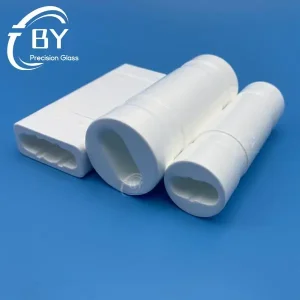
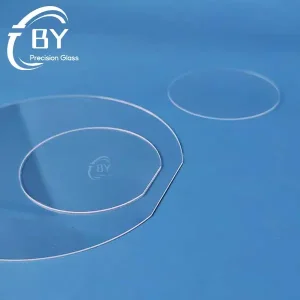
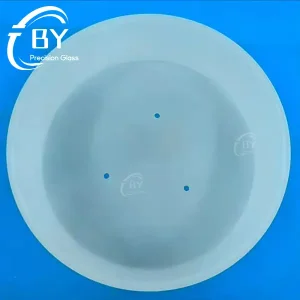
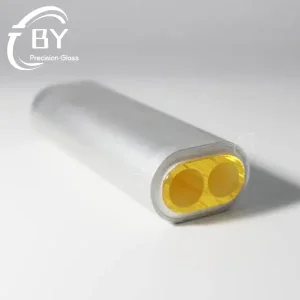
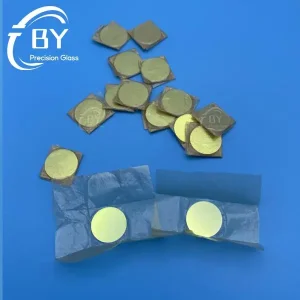
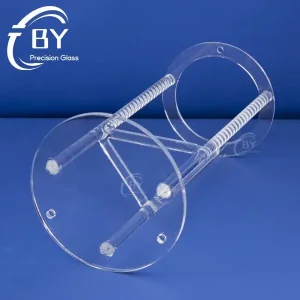
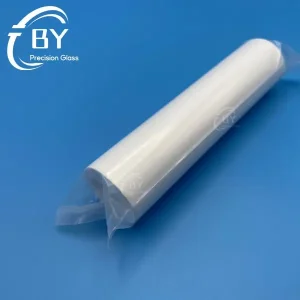
Engineered quartzware, laser cavity flow tubes, and semiconductor glass substrates customized for international OEM manufacturing lines.
Connect With Senior Optical Engineers
Ready to Request Custom Laser Protective Glass Prototypes or Production Quotes?
Upload your technical 2D/3D optical drawings (STEP, DWG, DXF, or PDF). Our team assesses substrate suitability, thermal lensing parameters, and coating routes, delivering a detailed engineering manufacturability review within 24 working hours.