High-Purity Quartzware & Optical Glass Assemblies
Engineered cold machining, oxyhydrogen flame processing, and precision drawing directly mapped to international OEM specifications.
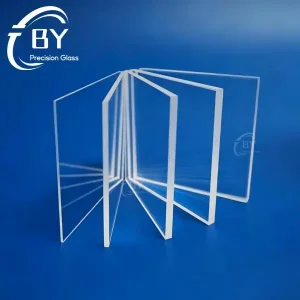
High-Quality JGS1 UItraviolet (UV) Grade Fused Silica Plate
View Specifications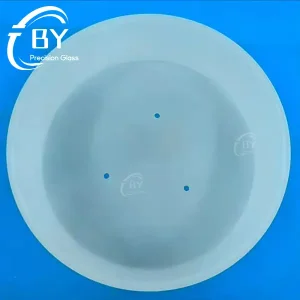
High-Quality Custom Quartz Glass Components for Vacuum Coating
View Specifications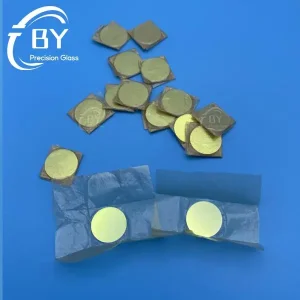
High-Quality Candela Laser Distance Gauge Slider Windows 755/1064nm
View Specifications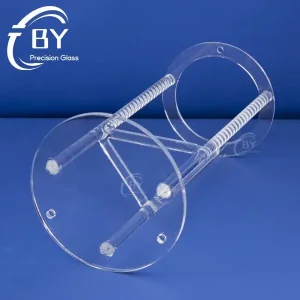
Wholesale Quartz Wafer Carriers for Semiconductor Processing
View Specifications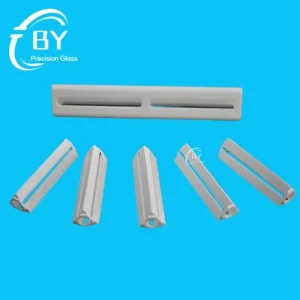
High-Quality Diode-Pumping Chamber Diffuse Reflectors PTFE-based
View Specifications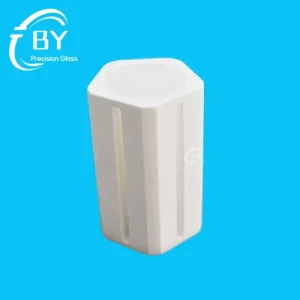
Wholesale Diffuse High-Reflectivity PTFE Cavity Reflectors
View Specifications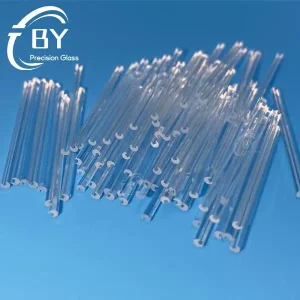
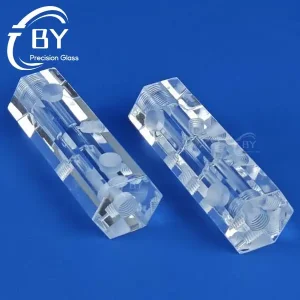
High-Quality Quartz Substrate Groove for Optical Fiber Coupler
View Specifications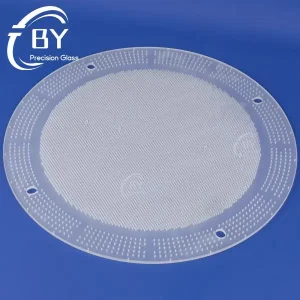
Custom Precision Optical Quartz Gas Distribution Plate
View SpecificationsEngineering Physics: The Science of Ultra-Precise Micro Quartz Capillaries
A rigorous examination of synthetic fused silica redrawing dynamics, inner-diameter boundary layer fluidics, and laser damage resistance.
Sub-Micron Dimensional Stability
Micro-capillary fluidics operate under low Reynolds number regimes where even sub-micron inner-diameter variance produces severe laminar flow turbulence and chromatographic peak tailing.
- Inner Bore Diameters: Down to 2 µm ±0.5 µm
- Concentricity & Runout: < 0.5% OD/ID ratio
- Surface Roughness (Ra): Internal bore Ra < 0.8 nm
- Zero chemical leachable ions (< 0.05 ppb trace metals)
Spectroscopic UV Transparency
Fabricated using ultra-pure synthetic JGS1 fused silica (SiO₂ > 99.9999%), micro capillary tubes ensure high photon throughput across the deep ultraviolet spectrum (185 nm – 2500 nm).
- UV Transmission @ 193 nm / 248 nm: > 90.5%
- Hydroxyl Radical (OH⁻) content: Controlled < 1 ppm or > 1200 ppm
- Fluorescence Background: Undetectable under 365 nm excitation
- Damage Threshold: > 15 J/cm² @ 1064 nm (10 ns pulse)
Severe Environment Resilience
Unlike borosilicate or polymer capillary tubings, micro quartz capillaries maintain crystalline structural integrity across wide thermal ranges and exposure to aggressive organic solvents.
- Continuous Operating Temp: Up to 1100 °C (Short spike 1250 °C)
- Thermal Expansion Coeff (CTE): 5.5 × 10⁻⁷ /°C
- Tensile Strength (Polyimide coated): > 100 kpsi
- Hydrolytic & Acid Class 1 resistance under DIN 12111
| Material Class | Spectral Cutoff (UV/IR) | Softening Point | Chemical Resistance (pH Range) | Typical Industrial Usages |
|---|---|---|---|---|
| JGS1 Synthetic Fused Silica | 185 nm – 2,500 nm | 1,730 °C | pH 0 – 11 (Non-HF) | Capillary Electrophoresis, DUV Cytometry, Fiber Optics |
| JGS2 Fused Quartz (Natural) | 220 nm – 2,600 nm | 1,680 °C | pH 1 – 10 (Non-HF) | Laser Flow Sleeves, Plasma Gas Lines, Chromatography |
| JGS3 Optical Quartz (Infrared) | 260 nm – 3,500 nm | 1,700 °C | pH 1 – 10 (Low OH) | IR Sensors, Gas Cell Spectroscopy, Petrochemical Probes |
| Precision Borosilicate 3.3 | 310 nm – 2,200 nm | 820 °C | pH 2 – 9 | Clinical Fluidics, Disposable Microchannel Cannulas |
Mission-Critical Applications for High-Purity Capillaries
Bridging physical manufacturing capabilities with systems-level performance across advanced global high-technology sectors.
Genomics & Bio-Analytical
Capillary Gel Electrophoresis (CGE), MALDI-TOF mass spectrometry emitter tips, and DNA sequence arrays demand near-zero inner wall adsorption and tight UV-laser fluorescence detection.
Semiconductor Metrology
Extreme chemical inertness against ultra-pure hydrogen peroxide, corrosive gaseous acids, and high temperatures makes quartz capillaries integral for particle sampling and etching chamber control.
Fiber Optic Interconnects
Multi-bore capillary ferrules and pigtail sleeves require sub-micron concentricity to prevent refractive index mismatch, return insertion loss, and back reflection across dense WDM networks.
Medical Laser Energy Guides
In high-power holmium, thulium, and excimer laser delivery handles, quartz capillaries serve as non-degrading internal guide tubes, heat shields, and dynamic micro-fluidic cooling jackets.
China Factory 4.0: Scalable Precision & Resilient Sourcing
Combining automated draw towers, intelligent laser diameter gauge feedback, and cold-machining infrastructure in Tianjin, China.
Vertical Upstream Integration
By securing direct ingot production pipelines with certified quartz feedstock vendors, BY Photonics buffers global customers from raw silica volatility and lead-time shocks.
Closed-Loop AI Draw Towers
Automated draw towers utilize multi-axis non-contact dual laser micrometers, streaming continuous geometric data at 10 kHz directly to traction servos to preserve wall concentricity.
100% Traceable Metrology
Every capillary run undergoes microscopic end-face profile measurement, Zygo white-light interferometry, and spectrophotometric validation with lot-specific inspection sheets provided.
International Regulatory & Procurement Standards
Built to meet the vendor auditing protocols of North American, European, and Asian tier-one medical and semiconductor manufacturers.
RoHS & REACH Compliance
Every capillary cane, jacketed fiber tube, and quartz window complies fully with EU RoHS Directives 2011/65/EU and Regulation (EC) No 1907/2006 regarding SVHC dangerous materials.
Class 100 Cleanroom Packaging
Critical precision tubing components are ultrasonic de-ionized water cleaned, nitrogen blow dried, and vacuum encapsulated inside double-layer antistatic sleeves to stop shipping debris.
Dual-Faceted DFM Reviews
Procurement proposals are scrutinized by optical physicists and mechanical glassblowers within 24 hours to balance cost effectiveness with fabrication tolerance realities.
Micro-Capillary Technology Roadmap (2025–2030)
Adapting capillary geometry, refractive index modifications, and hybrid surface engineering for emerging photonics and multi-omics architectures.
Fluorine-Doped Depressed Cladding
Integrating synthetic fluorine-doped layers directly onto the capillary inner/outer walls to establish waveguiding capabilities, reducing refractive boundaries in optofluidic lab-on-a-chip setups.
Complex Multi-Lumen Geometries
Transitioning from single circular bores to custom multi-bore configurations (dual-bore, square outer/round inner, hex-channel matrices) for concurrent fluid-sheath micro flow cytometry.
Functionalized Anti-Reflective Coatings
Advanced vacuum PECVD coatings applied to outer and interior channel faces to enhance high-power laser transmission, preventing localized thermal buildup inside optogenetic probes.
Frequently Answered Technical Questions
Specific engineering insights addressing material selection, production tolerances, and international export logistics.
What are the key structural distinctions between JGS1, JGS2, and JGS3 quartz capillary materials?
What is the tightest achievable tolerance for custom micro quartz capillary inner diameters (ID)?
Can BY Photonics deliver micro quartz capillary tubing with protective outer coatings?
How does BY Photonics safeguard brittle micro capillary tubing during international air freight?
What technical drawing and CAD file formats are preferred for formal quotations?
Precision Semiconductor & Optoelectronic Components
Complementary precision products engineered to the same exacting geometric standards as our micro capillary tubing solutions.
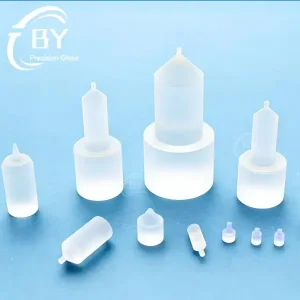
High-Quality Customized Quartz Fiber End Caps for QBH
View Specifications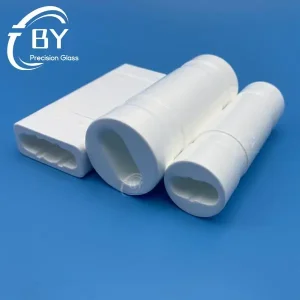
Wholesale Ceramics Reflector for Semiconductor Lasers
View Specifications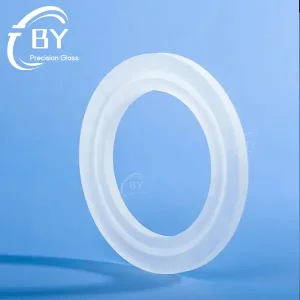
Precision Custom Quartz Glass Components for Semiconductor
View Specifications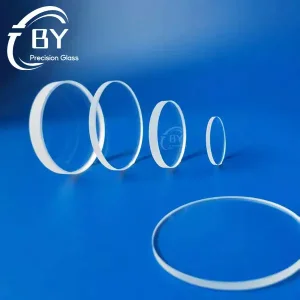
Wholesale Quartz Optical Windows for Semiconductor Lithography
View Specifications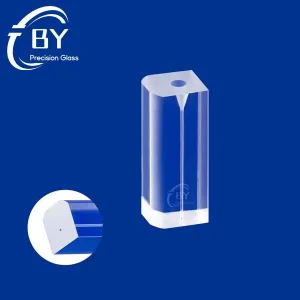
Custom Precision Fiber Optic Glass Ferrules & Capillaries
View Specifications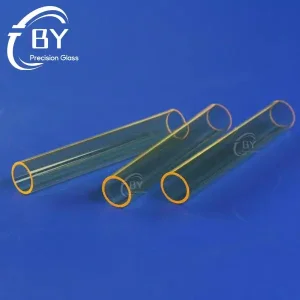
Custom UV Block Yellow Quartz Tube for IPL Lamp Flow Handle
View Specifications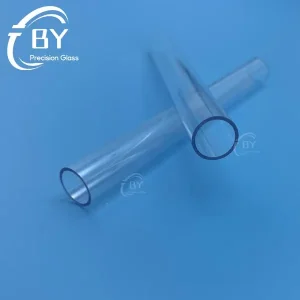
Wholesale Cerium Doped Quartz Tube Blocked UV Wavelength
View Specifications