Integrated Micro-Fabrication Catalog
Featured Semiconductor & Precision Optical Products
State-of-the-art cold-worked and redrawn optical solutions engineered down to sub-micron geometric and concentricity tolerances.
Technical Engineering Whitepaper
Engineering Superiority in Custom Quartz Capillary Rods
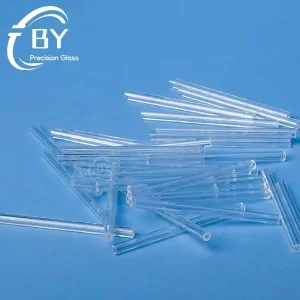
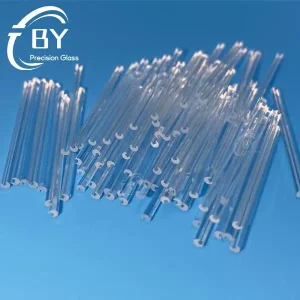
Precision quartz capillary rods (solid micro-cylindrical glass elements drawn from high-purity synthetic and natural fused silica) represent critical enabling components across quantum computing, deep ultraviolet (DUV) lithography, biomedical micro-dispensing, and telecommunication photonics.
99.999%
SiO₂ Chemical Purity (Grade JGS1)
±0.001mm
Dimensional Outer Diameter (OD) Tolerance
1100°C
Continuous Working Thermal Threshold
λ/10
End-Face Optical Surface Flatness
Material Science Foundations
Fabricated using pristine synthetic fused silica (JGS1), optical visible/UV grade (JGS2), and low-hydroxyl infrared fused quartz (JGS3). Our raw materials guarantee absolute chemical homogeneity, near-zero bubble inclusions, and exceptional resistance to high-flux laser degradation.
Thermomechanical Invariance
Boasting a near-zero thermal expansion coefficient (5.5 × 10⁻⁷ /°C from 20°C to 320°C), our custom capillary rods resist extreme thermal shock. Engineers can subject these components to rapid thermal cycling from liquid nitrogen sub-zero temperatures up to 1200°C without risk of micro-fracturing.
Broadband Spectral Clarity
From deep UV radiation (185 nm) through the telecommunications C-band up to infrared wavelengths (3500 nm), our capillary rods display virtually uninhibited optical transmission. Ideal for evanescent wave sensors, high-power diode couplers, and TIR (Total Internal Reflection) light guides.
Macro Market Landscape
Global Procurement Demand & Industry Trends
The structural transition toward smaller photonic nodes, heterogeneous multi-chip integration, and high-throughput point-of-care biofluidics dictates precision capillary sourcing worldwide.
Semiconductor Metrology & Nanoprobing
Next-gen 2nm and GAA (Gate-All-Around) architectures demand electrically insulating, dimensionally static probe tips and low-dielectric alignment pins. Custom quartz capillary rods serve as structurally rigid, chemically unreactive carriers inside plasma etch chambers and atomic force microscope (AFM) instrumentation.
Biophotonic Single-Cell Manipulation
Capillary rods redrawn with micron and sub-micron tips enable mechanical patch clamping, intracellular micro-injection, and optical trapping waveguides. OEM medical manufacturers require ultra-clean inner structures and chemically pristine glass matrices devoid of residual metallic leachates.
Co-Packaged Optics & Fiber Alignment
With artificial intelligence computing clusters driving high-density optical transceivers, glass ferrules, quartz grooved substrates, and precision solid alignment rods must maintain sub-micron TIR positioning. Thermal match with silicon substrates prevents signal degradation under hyper-scale data center thermal loading.
| Performance Parameter | JGS1 (Synthetic Fused Silica) | JGS2 (Fused Quartz) | JGS3 (Low-OH Quartz) | Custom Borosilicate 33 |
|---|---|---|---|---|
| Transmission Range | 185 nm – 2,500 nm | 220 nm – 2,500 nm | 260 nm – 3,500 nm | 350 nm – 2,500 nm |
| Hydroxyl (OH⁻) Content | < 5 ppm to 1200 ppm | < 30 ppm | < 1 ppm (Dry) | N/A |
| Thermal Expansion (CTE) | 5.5 × 10⁻⁷ /°C | 5.5 × 10⁻⁷ /°C | 5.5 × 10⁻⁷ /°C | 32.5 × 10⁻⁷ /°C |
| Refractive Index (nd @ 589nm) | 1.4585 | 1.4585 | 1.4585 | 1.4730 |
| Transformation Temp. (Tg) | 1,075 °C | 1,050 °C | 1,050 °C | 525 °C |
| Standard Diameters (OD) | Ø 0.1 mm to Ø 25.0 mm | Ø 0.5 mm to Ø 50.0 mm | Ø 0.5 mm to Ø 30.0 mm | Ø 0.5 mm to Ø 30.0 mm |
Integrated Manufacturing Methodology
Macro Industry Solutions: From Drawing to Cleanroom Delivery
Deploying synchronized vertical production lines—combining tower thermal draw, computerized cold-working CNC processing, and stress-annealed oxyhydrogen polishing.
1. Tower Redrawing with Laser Micrometry
Preforms undergo high-temperature thermal drawing inside contamination-free induction furnaces. Continuous multi-axis non-contact laser gauges perform real-time OD and roundness monitoring at 200 Hz sampling rates to ensure uninterrupted dimensional stability.
2. Multi-Axis Precision CNC Machining
Hard and brittle materials are cold-processed utilizing diamond-tipped milling cutters, ultrasonic machining spindles, and multi-axis slicing saws. We achieve step pins, taper tips, hemispherical domes, and polished bevels without sub-surface micro-cracking.
3. Double-Sided Lapping & Super-Polishing
Capillary rod end faces are processed via chemical mechanical polishing (CMP) to achieve scratch-dig specifications down to 10-5, surface roughness Ra < 0.5 nm, and optical transmission losses of less than 0.1% per interface.
4. Oxyhydrogen Thermal Sealing & Annealing
Precision hot working using purified hydrogen-oxygen burners eliminates micro-striae, enables monolithic glass assemblies, and executes bulb forming. Completed rods undergo long-duration programmable thermal annealing to mitigate internal stress birefringence.
Quality Assurance & Global Supply Chains
Localization Support, Traceability & Regulatory Compliance
Mitigating cross-border procurement vulnerabilities with validated material purity certificates, precision export packing, and end-to-end metrology documentation.
Full Regulatory Adherence (RoHS / REACH)
All quartz products comply fully with RoHS, REACH, and Conflict Minerals guidelines. Complete material traceability dossiers, glow discharge mass spectrometry (GDMS) elemental reports, and biocompatibility declarations (USP Class VI) are supplied per batch.
Cleanroom Verification & Class 100 Packing
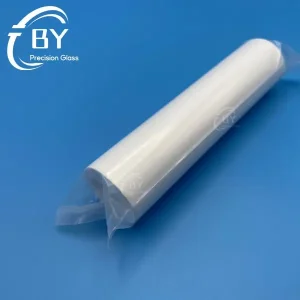
Parts undergo multi-stage ultrasonic degreasing, ultra-pure water (UPW) rinsing, and are dried under laminar HEPA flow. Rods are individually encased in anti-static, cleanroom-grade PET trays and sealed within moisture-barrier, vacuum-sealed enclosures.
Global DFM Engineering Assistance
Direct communication with senior optical and mechanical fabrication engineers within 24 working hours. We examine STEP, DWG, DXF, and PDF models to pinpoint potential fabrication bottlenecks, recommending tolerance optimization to reduce recurring procurement costs.
Technology Roadmap & Strategic Vision
Micro-Optic Frontiers: The Next Decade of Quartz Innovation
Anticipating the technological inflections defining laser fusion optics, advanced space-borne payloads, and integrated optofluidics through 2030 and beyond.
Laser-Induced Damage Threshold (LIDT) Optimization
As industrial ultra-fast femtosecond and picosecond lasers breach multi-kilowatt power densities, quartz capillary rods used in beam conditioning must exhibit extreme damage thresholds. Proprietary CO₂ laser flame-polishing protocols mitigate surface micro-cracking, boosting LIDT past 15 J/cm² @ 1064nm, 10ns.
Doped Multi-Material Capillary Preforms
Next-generation R&D incorporates radial refractive-index profiles within capillary rods, integrating fluorine doping (for numerical aperture depressing) and rare-earth doping (Nd³⁺, Sm³⁺, Yb³⁺) directly into drawn canes for distributed laser gain and suppression of amplified spontaneous emission (ASE).
Sub-Micron Non-Circular Capillary Geometries
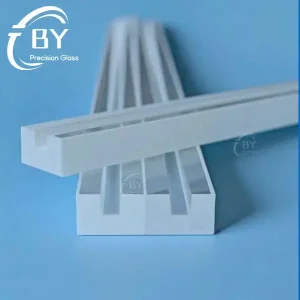
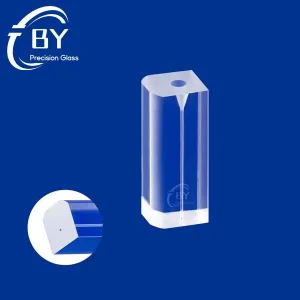
Moving beyond conventional cylindrical profiles, modern lithographic and fiber coupling requirements call for square, hexagonal, D-shaped, and multi-faceted cross-sections. Precision CNC preform profiling combined with tension-regulated drawing guarantees precise profile fidelity along multi-meter lengths.
Procurement & Metrology FAQ
Frequently Asked Technical Questions
Definitive engineering answers addressing material purity, fabrication tolerances, and operational parameters for OEM procurement managers.
What is the practical distinction between a quartz capillary tube and a capillary rod?
A capillary tube features an internal calibrated micro-bore running continuously along its longitudinal axis, predominantly employed in chromatographic elution, electrophoresis, and fluid delivery. A quartz capillary rod is an entirely solid micro-cylinder, primarily utilized for light guidance, fiber optic ferrule alignment, micro-actuation pins, optical lens precursors, and rigid structural supports inside thermal reactors.
Which quartz grade should be specified for high-power Deep UV (DUV) applications?
JGS1 (synthetic fused silica) is imperative. Unlike natural fused quartz derived from crushed mineral crystals (JGS2/JGS3), synthetic JGS1 is formed through chemical vapor deposition of silicon halides. It possesses virtually zero metallic impurities (Fe, Al, Ti < 0.1 ppm) and an absence of absorption bands at 248 nm (KrF) and 193 nm (ArF), completely averting solarization and color-center formation under sustained UV radiation.
What outer diameter (OD) and length tolerances can be reliably sustained?
For standard draw runs, an OD tolerance of ±0.01 mm is standard. Utilizing computerized continuous laser-draw feedback control, precision-selected runs can sustain ±0.002 mm (2 µm). If secondary centerless cold grinding and chemical mechanical polishing (CMP) are applied, our machine shop holds critical outer diameters down to ±0.001 mm with end-face lengths toleranced to ±0.02 mm.
How do quartz capillary rods behave under prolonged thermal exposure above 1000°C?
Fused silica rods will reliably endure continuous thermal regimes up to 1100°C, and short-term thermal excursions up to 1300°C. Prolonged operation at or above the annealing point (~1140°C) without proper vacuum or inert gas conditions can trigger surface devitrification (nucleation and growth of cristobalite crystals), particularly in the presence of ambient alkaline contaminants (Na, K).
Can custom quartz rods be coated with anti-reflective (AR) or metallic thin films?
Yes. We provide complete thin-film deposition via Ion Beam Sputtering (IBS) or Physical Vapor Deposition (PVD). Available coatings include broadband anti-reflective (BBAR) coatings covering visible to NIR spectra, high-reflection dielectric coatings for micro-laser end-cavities, and bio-compatible gold/titanium coatings for surface plasmon resonance (SPR) sensing.
What engineering documentation is delivered alongside prototype and mass-production orders?
Every shipment can be accompanied by comprehensive Quality Inspection Reports containing CMM dimensional verification, laser interferometric end-face flatness graphs (Zygo reports), spectral transmission curves measured via UV-Vis-NIR spectrophotometry, and raw material mill certificates confirming purity and batch provenance.
Complementary Micro-Optics & Laser Line
Explore Additional Specialized Optical Components
Precision components supporting lasers, medical optics, optical communication, and wafer-level packaging assemblies.