
Precision Substrates, Viewports & Spectrophotometer Windows
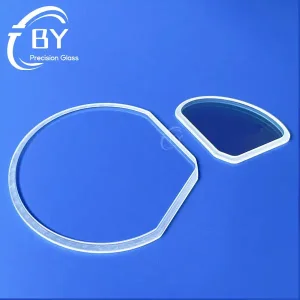
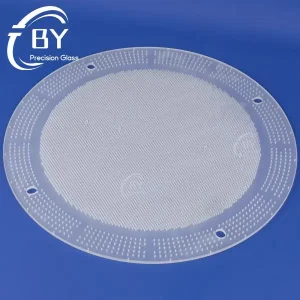
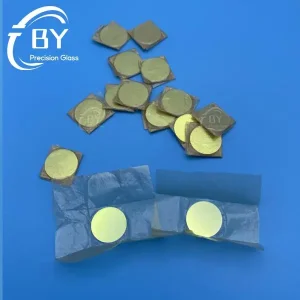
Explore our core baseline line of borosilicate viewports, sapphire optical windows, and custom-machined quartz gas distribution units manufactured for analytical and laser systems.


Evolutionary Trends in Spectrophotometer Glass Cuvette Engineering
From static manual optical absorption cells to continuous-flow capillary microfluidics: understanding the physics of transmittance, stray light mitigation, and molecular cohesion bonding.
Lambert-Beer Metric Integrity
Spectrophotometry relies fundamentally on the Beer-Lambert law: A = ε · c · l. The physical pathlength (l) must remain non-variant under chemical expansion and thermal load. A variance of just ±0.02 mm causes an unacceptable 0.2% measurement error in analytical quantitation.
- Dimensional path tolerances machined down to ±0.005 mm
- Elimination of optical path divergence via CNC surface grinding
- Certified parallel window alignment to within <15 arcseconds
Advanced Fusion Technology
Traditional spectrophotometer cuvettes relied on adhesive bonding or epoxy glues that degraded rapidly when exposed to organic solvents like acetone, toluene, or acidic matrices. Modern factory standards demand high-temperature molecular sintering and optical contact fusion.
- Direct molecular contact fusion without chemical fluxes
- Operating temperature threshold up to 1,100 °C for quartz cells
- Zero chemical leachables, zero fluorescence artifact interference
Full Spectral Coverage Dynamics
Modern analytical spectroscopy demands uniform transmission from vacuum deep-UV (190 nm) to the mid-infrared (3,500 nm). Sourcing specific glass compositions ensures minimal light attenuation and maximized signal-to-noise ratios (SNR) across analytical assays.
- JGS1 Synthetic UV Fused Silica: 185 nm – 2,500 nm
- JGS2 Optical Fused Quartz: 220 nm – 2,500 nm
- JGS3 Far-Infrared Quartz with trace OH below 2 ppm: up to 3,500 nm
Global Enterprise Procurement Dynamics for Optical Cuvettes
Analytical instrument OEMs, biopharma laboratories, and industrial testing houses are transitioning procurement models from off-the-shelf catalog products to bespoke, built-to-print optical cell assemblies.
Total Cost of Ownership (TCO)
Procurement directors in Europe and North America increasingly evaluate cuvette life cycle costs rather than initial purchase pricing. Fragile adhesives and inconsistent window flatness generate downtime in high-throughput automated robotic workstations.
- Optical contact fusion eliminates joint separation during sonic baths
- Polished chamfers prevent chipping during automated pick-and-place
- Matched paired cuvettes eliminate baseline recalibration cycles
Strict Regulatory Compliance
Regulated pharmaceutical laboratories governed by FDA 21 CFR Part 11, European Pharmacopoeia (Ph. Eur. 2.2.25), and United States Pharmacopeia (USP <857>) enforce strict wavelength accuracy and absorbance linearity standards on all analytical optics.
- Spectrophotometric verification certificates supplied per batch
- Traceability of ingot raw silica to Tier-1 mining suppliers
- Cleanroom Class 1,000 double-vacuum anti-static packaging
Micro-Volume & Flow-Through Trends
With high-value biological reagents and DNA/RNA quantitation, sample volumes are shrinking from 3.5 mL macro cuvettes down to 50 μL semi-micro, and 5 μL sub-micro channels, mandating extreme internal CNC machining precision.
- Micro-aperture black quartz masking absorbs parasitic stray light
- Laser micro-machined fluidic inlet and outlet ports (1/4-28 UNF)
- Z-height matching (8.5 mm or 15 mm) optimized for all major detector slits
China Factory 4.0: Supply Chain Resilience & Precision Throughput
Tianjin BY Photonics Co., Ltd. (established in 2010) integrates cold CNC optical machining, oxyhydrogen hot working, capillary redrawing, and sub-nanometer interferometric metrology within a single, quality-monitored facility.
Oxyhydrogen Flame Working
High-temperature micro-torch quartz welding and precision thermal annealing processes relieve residual stress, ensuring zero birefringence across polarized spectroscopy setups.
Ultrasonic 5-Axis Glass CNC
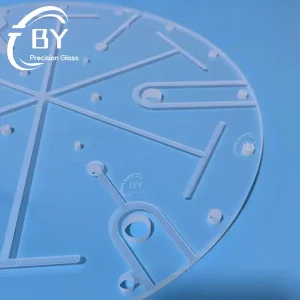
High-speed rotary ultrasonic vibration drilling and contouring prevents edge micro-fractures, allowing complex flow manifolds, threaded holes, and channel geometries in brittle fused silica.
Metrology & AOI Traceability
Equipped with Zygo laser interferometers, PerkinElmer Lambda UV/Vis/NIR spectrophotometers, and coordinate measuring machines (CMM) guaranteeing 100% pathlength verification.
Mission-Critical Industrial & Laboratory Deployment Scenarios
Custom glass cuvettes and optical flow cells perform as the optical transducer interface across diversified analytical sectors worldwide.
Biopharma & Protein Kinetics
Microcuvettes and Peltier-thermostatted quartz cells are essential for thermal denaturation (Tm) assays, nucleic acid concentration checks (A260/A280 ratios), and monoclonal antibody purity testing where volume availability is restricted to microliters.
Semiconductor Wet Chemical In-Line Monitoring
Real-time continuous measurement of SC-1, SC-2, and hydrofluoric acid (HF) etching mixtures. Flow cells machined from high-purity sapphire or synthetic silica withstand continuous chemical circulation without surface clouding or dissolution.
Environmental Water & TOC Analyzers
Continuous emission monitoring systems (CEMS) and Total Organic Carbon (TOC) municipal water quality instruments rely on 50 mm and 100 mm long-pathlength optical glass cuvettes to amplify sensitivity for ultra-low trace contaminant detection.
Clinical In-Vitro Diagnostics (IVD)
High-throughput clinical chemistry analyzers utilize multi-cavity disposable or reusable quartz cuvette wheels. Precise rotational concentricity and matched optical transmittance ensure uniform diagnostic readouts across clinical panels.
Fluorescence & Laser Raman Scattering
Unlike standard 2-window absorption cuvettes, 4-window polished cells engineered from ultra-low autofluorescence synthetic fused silica (JGS1) minimize scattering cross-sections, providing pristine backgrounds for photon counting detectors.
Petrochemical & Biofuel Refinery Testing
Heavy aromatic hydrocarbons, biofuels, and lubricants demand cuvettes constructed with chemically bonded PTFE stoppers or screw caps with septa to prevent volatile solvent evaporation and sample degradation during UV-Vis-NIR scanning.
Comparative Specification Data: Optical Cuvette Substrates
Cross-reference material properties, operational spectral cutoffs, and dimensional tolerances to engineer the ideal cuvette for your system architecture.
| Material Classification | Spectral Usable Band | Refractive Index (nd) | Pathlength Tolerance | Max Temp (°C) | Autofluorescence | Chemical Resistance |
|---|---|---|---|---|---|---|
| JGS1 UV Synthetic Fused Silica | 185 – 2,500 nm | 1.458 | ±0.005 mm | 1,100 °C | Extremely Low (Near Zero) | Exceptional (Acids, Bases, Solvents) |
| JGS2 Optical Quartz Glass | 220 – 2,500 nm | 1.458 | ±0.010 mm | 1,050 °C | Low | High (General Analytical Use) |
| JGS3 Low-OH Infrared Quartz | 260 – 3,500 nm | 1.458 | ±0.010 mm | 1,100 °C | Moderate | High (No OH peak at 2.7 μm) |
| Optical Borosilicate (B270 / Schott) | 340 – 2,500 nm | 1.523 | ±0.015 mm | 450 °C | Moderate to High | Moderate (Sensitive to strong bases) |
| Optical Sapphire Crystal (Al₂O₃) | 170 – 5,500 nm | 1.768 | ±0.005 mm | 1,800 °C | Negligible | Extreme (Immune to HF and hot alkali) |
Frequently Asked Questions on Custom Spectrophotometer Cuvettes
In-depth technical answers regarding fabrication tolerances, optical testing standards, and field maintenance protocols.
What is the difference between optical contact fusion and glue-bonded cuvettes?
Why is pathlength tolerance critical for compliance with USP <857> and Ph. Eur. 2.2.25?
How do you eliminate stray light and bubble entrapment in micro-volume flow cells?
Which glass substrate should be specified for fluorescence vs. standard absorption measurements?
What is the standard cleaning and maintenance protocol for fused silica optical cuvettes?
Can Tianjin BY Photonics manufacture custom cuvette geometries from client CAD drawings?
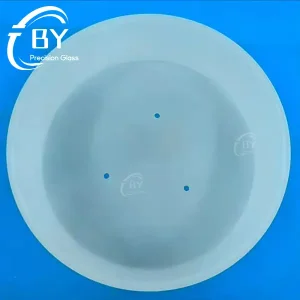
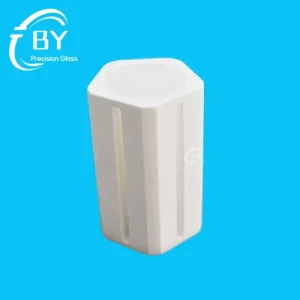
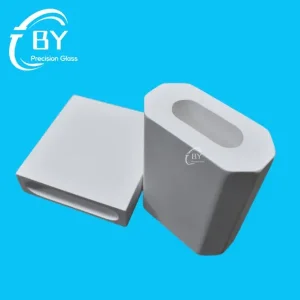
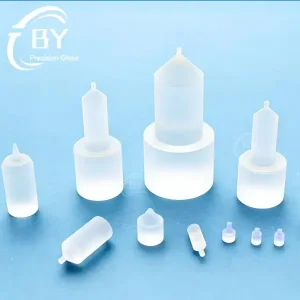
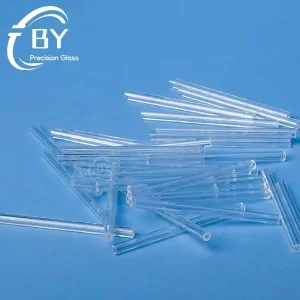
Laser Cavities, Semiconductor Quartzware & Capillary Tubes
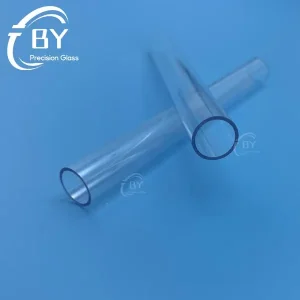
Complete your optical system specification with our extended collection of ceramic reflectors, semiconductor diffusion components, and precision redrawn capillary assemblies.
Initiate Your Custom Cuvette Feasibility Analysis
Email your STEP, IGES, DWG, or PDF drawings directly to our optical engineering team in Tianjin, China. Receive comprehensive manufacturability feedback, tolerance assessments, and volumetric tiered pricing within 24 working hours.