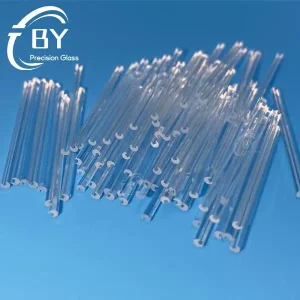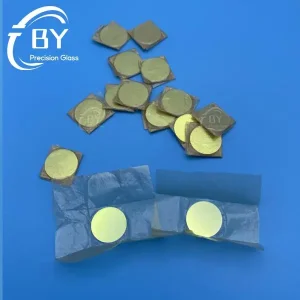
Featured Optical & Pump Cavity Components
Engineered ceramic cavities, quartz substrates, and optical assemblies ready for laser-head integration.
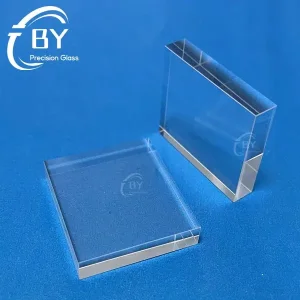
Custom Sapphire IPL Light Guide Block for Laser IPL Hair Removal
View Details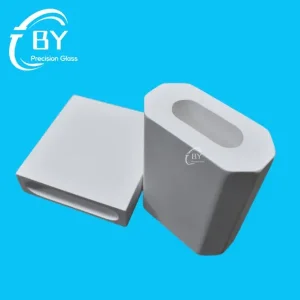
Diffuse Reflectors Made of Spectralon-Grade PTFE for Diode Chambers
View Details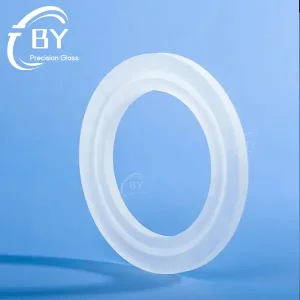
High-Quality Precision Custom Quartz Components for Semiconductor
View Details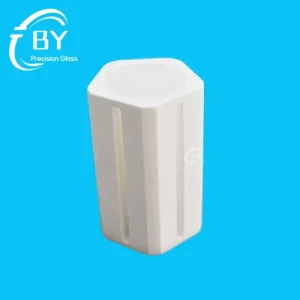
Wholesale Diffuse High-Reflectivity PTFE Reflectors for Diode Pumping
View Details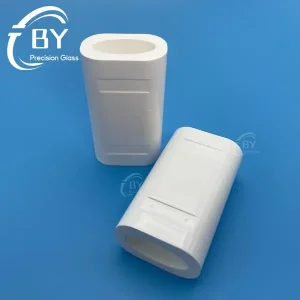
High-Quality Ceramic Cavities For Industrial Nd:YAG Laser Pumping
View Details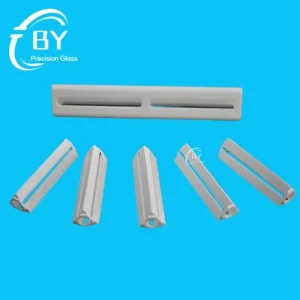
Diode-Pumping Chamber Diffuse Reflectors PTFE-based Cavity
View Details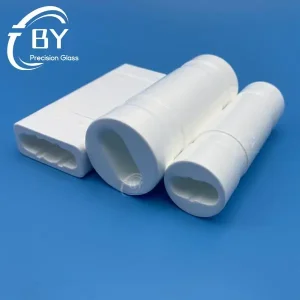
Ceramics Reflector for Semiconductor Diode Lasers & Solid-State Units
View DetailsTechnical White Paper: Advanced Al2O3 Laser Cavities
A deep engineering review of diffuse reflectivity mechanics, thermo-optical longevity, and industry trends.
Lambertian Scattering Dynamics
Unlike specular metallic reflectors (e.g., gold-coated copper), porous ceramic alumina (Al2O3) functions via volumetric subsurface scattering. Micro-porosity distribution creates a near-perfect Lambertian profile across 600 nm to 1100 nm, mitigating hot-spot creation in laser gain media.
- Diffused reflectance: > 97.8% @ 600–1064 nm
- Eliminates transverse cavity oscillation modes
- Improves rod thermal lens homogeneity
Corrosion & Coolant Immersion
Flashlamp-pumped and DPSS high-pulse-energy lasers require deionized (DI) water cooling directly over the reflector surface. High-purity sintered Al2O3 with glazed sealing technology prevents chemical leaching, micro-porosity blistering, and metallic ion contamination.
- Glazed interior seals avoid micro-algae adhesion
- Zero chemical oxidation under high-UV flash irradiance
- High dielectric breakdown against pulse ignition
Global Laser Sourcing Trends
Global medical aesthetic OEMs (Alexandrite 755nm, Nd:YAG 1064nm) and industrial additive tooling providers are replacing PTFE and metallized cavities with engineered Al2O3 ceramics to support continuous 24/7 duty cycles without yellowing or solarization degradation.
- Transition from PTFE in > 500W pulsed regimes
- Stable reflectivity across > 100 million flash pulses
- Thermal expansion matched to kovar/invar mounts
China Factory 4.0: Supply Chain Resilience & Processing
Combining raw sub-micron powder preparation, cold isostatic pressing (CIP), precision 5-axis green machining, and high-temperature vacuum sintering under one roof.
Sub-Micron Slip & Sintering
Our facility controls high-purity (99.7%) alpha-phase Al2O3 powders with trace magnesium oxide (MgO) as a grain-growth inhibitor. Sintering schedules above 1,680°C guarantee uniform diffuse reflection and high fracture toughness.
CNC Diamond Grinding
After firing, ceramic cavities undergo diamond-tool precision grinding to attain ±0.02 mm bore positional tolerances, ensuring alignment with Nd:YAG rods, triple-bore xenon flashlamps, and cooling sleeves.
Traceability & Rapid DFM
Full spectrophotometer scans across 200–2500 nm are generated per production lot. Our Design for Manufacturability (DFM) desk reviews custom CAD iterations within 24 working hours to accelerate global procurement cycles.
99.7%
Al2O3 Alumina Ceramic Purity
>98%
Diffuse Reflectance (600–1064nm)
±0.02mm
CNC Diamond Milling Tolerance
<24h
Direct Engineering DFM Turnaround
Optical Cavity Material Performance Matrix
Comprehensive engineering comparison for procurement directors deciding between Al2O3, PTFE, and Gold Plating.
| Property / Material | Al2O3 Porous Ceramic (BY Photonics) | Spectralon-Grade Sintered PTFE | Gold-Coated Copper / Invar |
|---|---|---|---|
| Reflectance Type | Volumetric Lambertian Diffuse (>97.8%) | Surface & Near-Surface Diffuse (>99%) | Specular Reflection (~96%) |
| Max Service Temperature | 1,500 °C (Extreme thermal resistance) | 260 °C (Deforms under dry pulse) | 300 °C (Coating flaking limit) |
| Laser Radiation Hardness | Ultra-High (No color center formation) | Medium (Prone to intense UV solarization) | Degrades rapidly upon cooling failure |
| Direct DI Water Immersion | Excellent (With dense glazed barrier) | Fair (Porous swelling risk over time) | Poor (Electrochemical stripping risk) |
| Mechanical Rigidity | High Mohs 9 Hardness / Zero creep | Soft / Easily marred during service | High Structural Rigidity |
Localized Industrial & Medical Applications
Tailored manufacturing matching strict North American, European, and Asian photonic design specifications.
Aesthetic & Surgical Medical
Widely utilized in Candela, Cynosure, and DEKA-compatible replacement and OEM laser handpieces. Sustains repeated 755nm Alexandrite and 1064nm long-pulse pulses without reflective loss.
Additive Manufacturing & SLM
Integrated within high-average-power DPSS laser amplifiers powering metal 3D printing and precision laser cladding, maintaining chamber efficiency under intense back-reflections.
Semiconductor Metrology
Deep UV (DUV) inspection equipment requires ceramic cavity reflectors capable of functioning in pristine cleanroom environments without generating airborne volatile particulate matter.
Defense & Range Finding
Solid-state laser range finders operating in harsh outdoor conditions rely on Al2O3 cavities for zero hygroscopic swelling and reliable thermal shock resistance from -40°C to +85°C.
Technical FAQ: Al2O3 Laser Cavity Procurement
Direct technical answers addressing porosity, glazing, mechanical tolerances, and international logistics.
Why is internal glazing required on Al2O3 reflectors?
Because sintered porous Al2O3 contains continuous micro-voids that scatter light, circulating DI cooling water could penetrate the ceramic body without a glaze. Our internal glaze seals the coolant fluid channels, preventing chemical entrapment while preserving high diffuse reflectivity.
How does Al2O3 compare to gold-plated metal cavities?
Gold-plated cavities offer directional specular reflection, which can generate non-uniform hot spots inside Nd:YAG crystals. Furthermore, gold coatings peel and corrode under UV radiation from flashlamps. Ceramic Al2O3 offers uniform diffuse distribution and near-infinite photonic operational lifespan.
Can you machine complex twin-bore or triple-bore geometry?
Yes. Utilizing multi-axis CNC diamond mills, we produce monolithic dual-lamp, close-coupled elliptical, and multi-faceted pump cavities with integrated cooling inlets, O-ring sealing steps, and thermocouple sensor channels strictly per client drawings.
What is the typical production lead time for custom prototypes?
Standard engineering DFM review is completed within 24 hours. Green-body machining and sintering take approximately 2 to 3 weeks for prototype verification, followed by diamond finishing. Emergency sample runs can be expedited via our rapid-tooling production cell.
Precision Quartz, Sapphire & Laser Optics Collection
Complementary optical substrates, flow tubes, and laser cavity components manufactured to exacting standards.
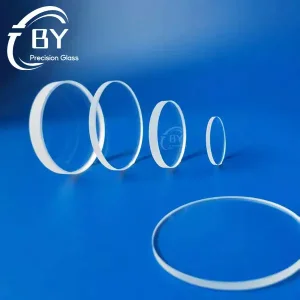
Wholesale Quartz Optical Windows for Semiconductor Lithography
View Details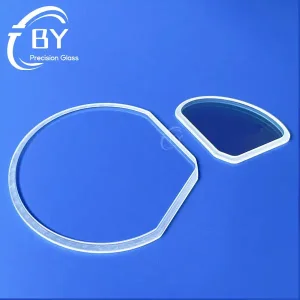
Sapphire Viewing Plates for Harsh Chemical & High-Pressure Use
View Details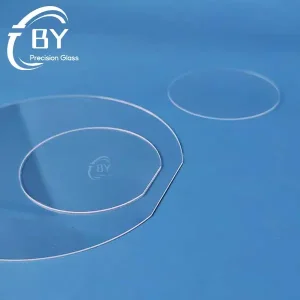
Custom Borofloat 33® Precision Glass Wafers for Semiconductor
View Details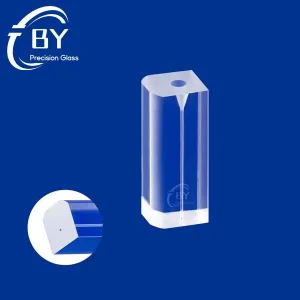
Custom Fiber Optic Glass Ferrules for Precision Telecommunication
View Details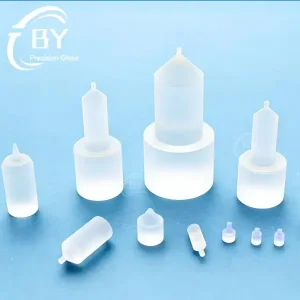
High-Quality Customized Quartz Fiber End Caps for QBH Laser Head
View Details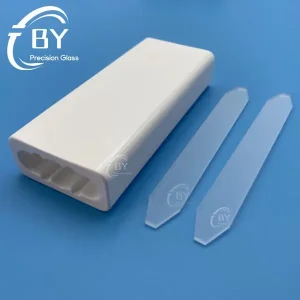
Ceramic Cavity Reflector Replacement Used for DEKA Medical Lasers
View Details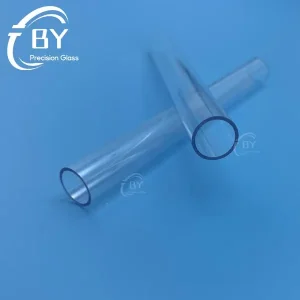
Cerium Doped Quartz Flow Tube with UV Cut-off for Laser Rods
View Details