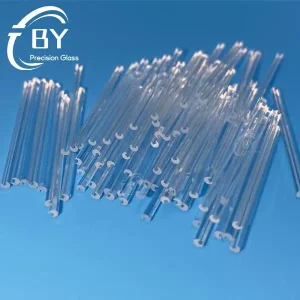
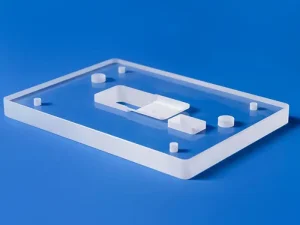
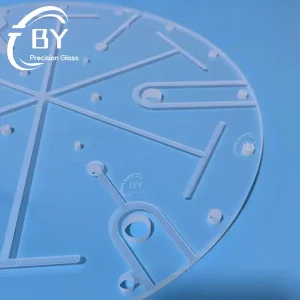
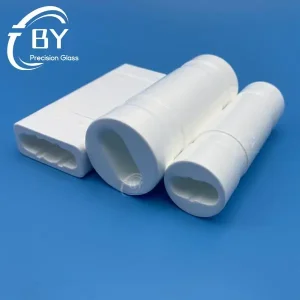
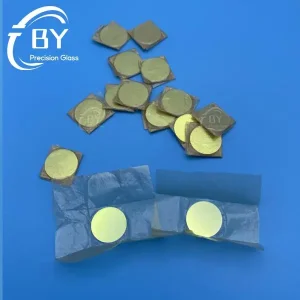
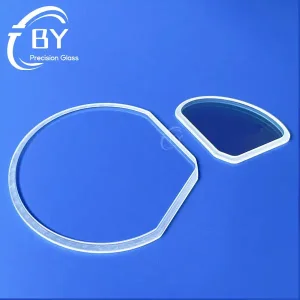
Featured Pumping Cavities & Optical Substrates
Direct OEM manufacturing of high-reflectance diffuse ceramic bodies, doped quartz filtering sleeves, and semiconductor-grade flow elements engineered to withstand extreme thermal radiation.
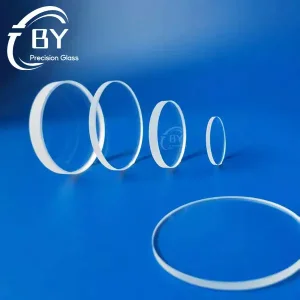
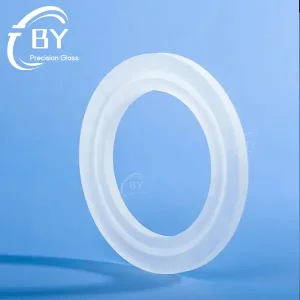

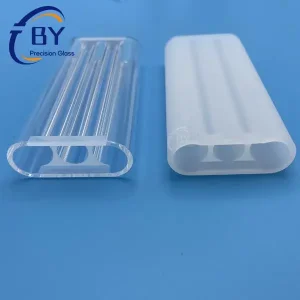
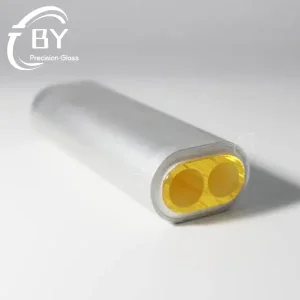
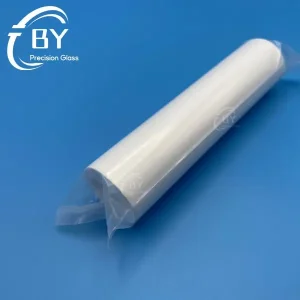
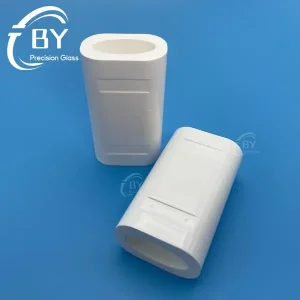
Microstructural Engineering of High-Purity Alumina Reflectors
Solid-state laser pump cavities demand diffuse reflectance exceeding 97.5% across primary pump absorption bands (500 nm to 1100 nm). Our proprietary sintering and vitrification processes eliminate solarization, handle continuous operating temperatures up to 1200°C, and provide uncompromised optical transfer efficiency.
| Critical Parameter | Technical Metric (99.7% Al₂O₃ Laser Grade) | Alternative: Gold-Plated Metal | Operational Impact & ROI Benefit |
|---|---|---|---|
| Bulk Diffuse Reflectivity (λ = 600-1064 nm) | ≥ 97.8% (Lambertian Profile) | 88.0% - 92.0% (Specular) | Eliminates hot-spots, preventing Nd:YAG crystal fracture and maximizing pumping uniformity. |
| Thermal Conductivity (W/m·K) | 28 – 35 W/m·K @ 20°C | 120 - 310 W/m·K | Maintains steady structural dimensional stability under rapid deionized water circulation. |
| Surface Glaze Chemical Resistance | Zero degradation against DI Water / Glycol | Vulnerable to micro-pitting & peeling | Over 40,000 operational hours without degradation or flaking into coolant channels. |
| Dielectric Breakdown Strength | 15 - 20 kV/mm | Conductive (Requires isolation) | Allows close proximity mounting of high-voltage xenon flashlamps without arcing risk. |
| Bulk Density & Apparent Porosity | Density ≥ 3.92 g/cm³ | Open Porosity < 0.05% | N/A (Bulk alloy) | Prevents moisture stagnation, coolant cross-contamination, and biological fouling inside cavity walls. |
Global Procurement Needs in Next-Gen Laser Systems
Global Tier-1 photonics and medical laser manufacturers face escalating supply chain constraints, demand for RoHS/REACH-compliant green materials, and higher photon-conversion standards.
Medical Aesthetic & Dermatology Platforms
System integrators designing Alexandrite (755 nm), Nd:YAG (1064 nm), and Pulsed Dye Lasers (595 nm) require diffuse ceramic cavities with selective glazes. Porous alumina structures trap lamp heat, while our proprietary glaze seal prevents DI water erosion, maintaining laser shot consistency exceeding 3,000,000 pulses without energy loss.
Semiconductor Lithography & Annealing
Modern wafer fab equipment requires laser annealing and DUV inspection heads with zero chemical outgassing. Our particulate-free ceramic chambers undergo strict 1000-class cleanroom ultrasonic cleaning and vacuum baking, ensuring clean pump modules capable of multi-kilowatt continuous wave (CW) pumping without volatile re-deposition.
Heavy Industrial Welding & Additive Manufacturing
High-power flashlamp-pumped systems and diode-array pumped solid-state (DPSS) systems operating 24/7 demand structural components resilient to mechanical vibration, thermal shock cycles, and deionized water flow speeds exceeding 15 L/min without mechanical creep or bore misalignment.
Macro-Industry Solutions: Multi-Bore Pumping Assemblies
Laser pump head efficiency is not governed by the ceramic reflector alone. True engineering optimization occurs at the interface between the reflector body, flow tubes, coolant jackets, and gain mediums.
Double & Triple Bore Cavities
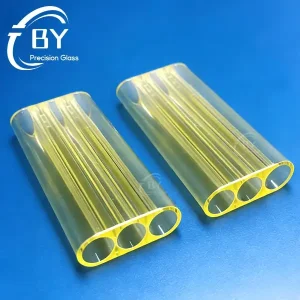
Engineered for Candela, Cynosure, and custom solid-state resonators. Triple bore cavities combine flashlamp and laser rod geometries into a unified ceramic block, minimizing coupling loss and ensuring uniform 360-degree radial gain distribution.
Integrated Sm³⁺ Parasitic Suppression
By coupling high-reflectivity alumina bodies with samarium-doped quartz flowtubes, our integrated solution absorbs 1064 nm amplified spontaneous emission (ASE) while transmitting pump bands, preventing gain depletion in high-power Nd:YAG pulses.
Engineered UV Blocking Glazes
High-energy lamp discharge generates extreme solarizing UV light (<380 nm). We offer customized glaze chemistries that absorb harmful shortwave UV rays, preventing rod color center generation and extending laser rod lifespans by up to 300%.
Sub-Millimeter CNC Machining
Diamond grinding and high-speed ultrasonic CNC tools machine complex mounting flats, fluid channels, O-ring seal grooves, and indexing keys with dimensional tolerances down to ±0.015 mm, ensuring drop-in replacement accuracy.
Next-Generation Developments in Laser Ceramics
Pumping architectures continue to evolve from lamp-pumping to high-power diode stacks and multi-kilowatt disk lasers. Our R&D pipeline addresses upcoming operational challenges in photonics.
Nanoscale Sintering & Grain Boundary Control
Transitioning to sub-micron alpha-phase alumina powder feeds with controlled spark plasma sintering (SPS). This increases diffuse reflectance to 98.6% across the 700–900 nm band while mitigating high-temperature thermal fracture risks under high-stress pumping loads.
Thermally Matched Cermet Interfaces
Developing direct ceramic-to-metal bonding interfaces that eliminate elastomer O-ring seals entirely. These cermet bonded assemblies support hermetically sealed, ultra-pure pump chambers suitable for space-borne LiDAR and aerospace defense resonators.
Rare-Earth Doped Functional Glazes
Introducing Cerium and Titanium co-doped cavity surface glazes. These active coatings absorb useless lamp emission wavelengths below 400 nm and fluorescence-shift the photons into the 700–850 nm pump spectrum, increasing wall-plug efficiency by up to 8.4%.
Metrology, Compliance & Localized OEM Support
Operating from our 3,000+ m² modernized plant in Tianjin, BY Photonics couples end-to-end material traceability with rigorous testing protocols compliant with global industrial and medical regulatory frameworks.
Spectrophotometric Testing
Every production batch undergoes diffuse reflectance verification utilizing integrating sphere spectrophotometry across the 200–2500 nm range. Standardized batch test certificates (CoAs) accompany every volume shipment.
RoHS, REACH & ISO 9001 Compliance
Fully compliant with European Union RoHS Directive 2011/65/EU and REACH regulations. Our inert alumina ceramics contain zero lead, cadmium, or hazardous binders, enabling streamlined integration into CE-marked medical devices.
Dedicated Global OEM Support
We support engineers throughout North America, Europe, and Asia with 24-hour drawing DFM turnaround, custom prototype iterations within 10 to 14 working days, and export-grade drop-tested packaging preventing transit micro-fractures.
Engineering & Procurement FAQ
Detailed technical answers to critical engineering inquiries regarding material selection, surface vitrification, dimensional tolerances, and operational lifespans.
Why is 99.7% porous alumina preferred over specular metallic reflectors?
Specular reflectors (such as gold or silver-plated brass) reflect light at precise angles, generating non-uniform flux distribution, localized hotspots, and severe thermal lensing in solid-state laser rods. Porous 99.7% Al₂O₃ produces near-perfect Lambertian diffuse reflection, bathing the gain medium uniformly from all angles, which maximizes pump absorption and prevents crystal fracture.
What is the purpose of applying a glaze to the inner bores of the ceramic cavity?
The porous alumina structure required for diffuse reflection exhibits a micro-rough surface with open porosity that can harbor contaminants and degrade under continuous deionized (DI) water or cooling fluid immersion. A micro-vitrified glass glaze creates a non-porous, chemically inert barrier that prevents water penetration, eliminates bacterial accumulation, facilitates easy cleaning, and protects against chemical cavitation.
How do alumina ceramic cavities compare with sintered PTFE reflectors?
While premium PTFE-based reflectors (such as Spectralon-grade) offer diffuse reflectance up to 99%, their service temperature is limited to ~250°C, and they easily distort under clamp pressure or intense flashlamp radiation. Alumina ceramics withstand continuous temperatures exceeding 1200°C, do not outgas under intense UV, and possess far superior mechanical stability and abrasion resistance in continuous water-cooled laser systems.
Can you provide direct drop-in replacements for standard aesthetic medical lasers?
Yes. We manufacture precision aftermarket and OEM replacement cavities for major commercial platforms, including Candela GentleLase, GentleYag, VBeam (single and dual-lamp varieties), Cynosure, and Cynosure Apogee. All components are machined to exact mechanical tolerances (±0.02 mm) to preserve optical alignment without cavity modification.
What tolerances can BY Photonics maintain on complex custom geometries?
Using high-precision multi-axis CNC ceramic grinding machines and ultrasonic core drilling, we achieve tolerances of ±0.02 mm on bore diameters and center-to-center distances, parallelism within 0.03 mm, and surface finishes down to Ra 0.4 µm on critical sealing faces. Custom CAD designs (STEP, IGES, DWG) can be realized quickly from prototype to volume production.
What documentation and test verification are provided with production batches?
Standard deliverable documentation includes Certificates of Conformance (CoC), material chemical composition analysis (confirming 99.7% Al₂O₃ purity), CMM coordinate dimensional inspection reports, and spectrophotometer diffuse reflectance curves upon customer request.
Explore Complete Precision Optical Assemblies
From single-crystal sapphire plates to fused silica flow elements and laser distance gauge optics, our factory delivers verified dimensional precision across demanding industrial workflows.