
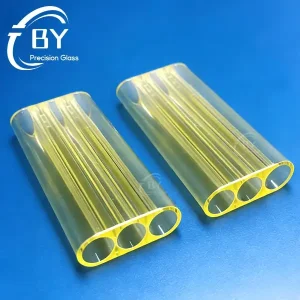
Featured Component Lineup
High-Precision Cuvette Quartz & Optical Glass Assemblies
Explore high-purity optical cuvettes, laser cavity bodies, and micro-machined silica substrates manufactured directly by BY Photonics to ISO 9001 certified engineering tolerances.
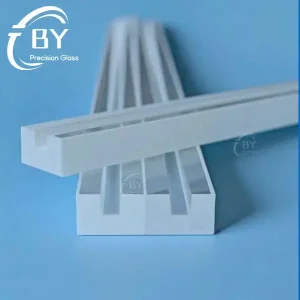
High-Quality Square Groove Quartz Substrate for Fiber Couplers Supplier, Factories
Explore Specifications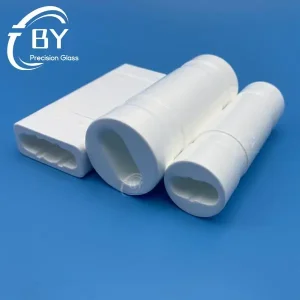
Wholesale Ceramics Reflecor for Semiconductor Lasers Suppliers, Factory
Explore Specifications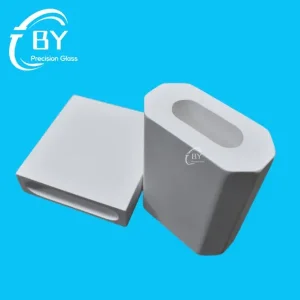
High-Quality Diffuse Reflectors Made of Spectralon‑Grade PTFE for Diode‑Pumping Chambers Manufacturer, Suppliers
Explore Specifications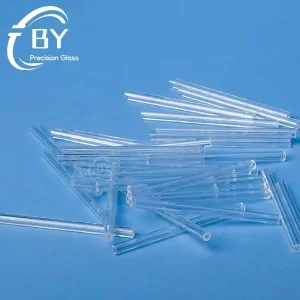
High-Quality Custom Precision Quartz Capillary Tubes Manufacturers, Suppliers
Explore Specifications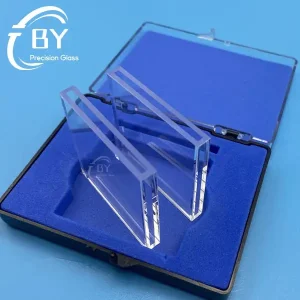
Wholesale Customize Quartz Cuvette for Spectrophotometer Supplier, Factory
Explore Specifications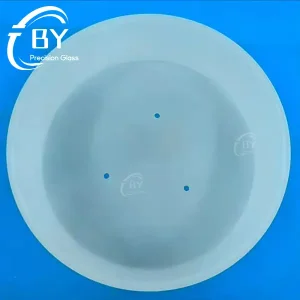
High-Quality Custom Quartz Glass Components for Vacuum Coating Supplier, Factories
Explore Specifications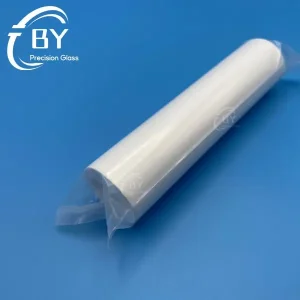
Wholesale Candela VBeam Laser 6" White Cavity Ceramic Reflector 2 Pk Manufacturer, Suppliers
Explore Specifications
Metrological Integrity
The Metrology of High-Performance Cuvette Quartz
In analytical spectroscopy, chromatographic detection, and automated in-vitro diagnostics (IVD), the optical cuvette is far more than a passive sample reservoir. It is a precision transmissive window whose dimensional accuracy, optical homogeneity, and surface flatnesses govern absolute absorbance values and signal-to-noise ratios (SNR).
A premier cuvette quartz supplier must operate at the intersection of thermal quartz physics, chemical stoichiometry, and advanced nanometer-scale cold machining. When evaluating optical cuvettes for UV-Vis-NIR spectrophotometry, fluorescence analysis, or dynamic light scattering, procurement teams frequently encounter challenges involving stray light refraction, adhesive degradation under organic solvents, and pathlength deviation across thermal gradients.
- Strict Pathlength Tolerances held within ±0.005 mm across standard 10 mm paths.
- Molecular Optical Contact Bonding eliminating adhesive-induced autofluorescence.
- Complete Elimination of Birefringence through vacuum-annealed thermal cycles.
Core Engineering Principles
Every cuvette supplied by BY Photonics undergoes rigorous wavefront transmission mapping. By integrating synthetic fused silica grades such as JGS1, Suprasil equivalents, and infrared-optimized JGS3, our products guarantee minimal optical absorption from deep ultraviolet (185 nm) through the extended short-wave infrared spectrum (3500 nm).
Key Operational Advantage
100% molecular direct fusion with zero organic glue guarantees absolute resistance to aggressive acids, polar organics, and high-energy pulsed laser irradiation.
Material Science Matrix
Comparative Physics of Cuvette Quartz Substrates
Understanding the atomic purity, hydroxyl radical (OH⁻) content, and transmission spectra between synthetic fused silica and natural fused quartz.
| Optical Quartz Grade | Primary Spectral Band | Hydroxyl Content ([OH⁻]) | Bubble Class (DIN 58927) | Direct Equivalent | Target Analytical Field |
|---|---|---|---|---|---|
| JGS1 (Far UV Synthetic) | 185 nm – 2,500 nm | < 1 ppm to 1200 ppm (Controlled) | Class 0 (Bubble-free optical aperture) | Suprasil 1 / Corning 7980 | DNA/RNA Oligonucleotide QC, CD Spectroscopy |
| JGS2 (Standard Fused Quartz) | 220 nm – 2,500 nm | < 30 ppm | Class 1 (Industrial Optical) | Homosil / Herasil | Routine UV-Vis Photometry, HPLC Detectors |
| JGS3 (Infrared Fused Quartz) | 260 nm – 3,500 nm | < 5 ppm (Water-free) | Class 0 – 1 (Precision Polished) | Infrasil 301 / 302 | FTIR Quantitative Spectroscopy, NIR Analysis |
| Optical Borosilicate | 350 nm – 2,000 nm | Not applicable | Standard Visual | Schott Duran / Borofloat 33 | Visible Colorimetry, Educational Lab Testing |
Deep UV Purity (185–250 nm)
JGS1 synthetic fused silica is synthesized via chemical vapor deposition (CVD) of pure silicon halides. This yields zero metallic trace impurities (Fe, Ti, Al < 0.1 ppm), preventing solarization, solar-induced color centers, and transmission drop-off under high-intensity deuterium lamp exposure.
Hydroxyl Depletion in NIR
For Near-Infrared (NIR) measurements spanning 1400 nm to 2800 nm, standard quartz exhibits heavy water absorption bands at 1380 nm, 2200 nm, and 2730 nm. JGS3 quartz is electrically fused under vacuum to strip hydroxyl groups below 5 ppm, eliminating spurious analytical peaks.
Thermomechanical Resilience
Possessing an ultra-low coefficient of thermal expansion (CTE of 5.5 × 10⁻⁷ /°C), fused silica cuvettes withstand immediate thermal shocks spanning from cryogenic nitrogen bath immersion up to 1,100 °C without mechanical rupture or micro-fracture propagation.
Strategic Value Driver
China Supply Chain Advantages: Tianjin BY Photonics
How our fully integrated industrial hub delivers end-to-end quality sovereignty, structural cost control, and rapid custom turnaround for tier-one OEM instrumentation builders.
Single-Roof Vertical Integration
From primary silica ingots and oxyhydrogen flame redrawing to multi-axis 5-axis CNC diamond grinding, ultrasonic coring, double-sided chemical mechanical planarization (CMP), and certified cleanroom packaging.
Direct Feedstock Sovereignty
Strategically situated within China's advanced optics manufacturing belt, we maintain direct procurement partnerships with high-purity polysilicon and quartz crystallite refiners, mitigating global raw material supply shortages.
Fast Agile Prototyping (DFM)
Our 110+ optical machinists, laser flame engineers, and metrologists conduct full Design-for-Manufacturability (DFM) technical reviews within 24 hours, taking custom flow-cell drawings from CAD to prototype in 7 to 10 days.
High Yield & Scalable Economies
Operating over 120 precision processing workstations across a 3,000+ m² standardized workshop, we produce over 150,000 optical cells and capillary flow bodies annually with unmatched dimensional uniformity and lower total cost of ownership (TCO).
15+
Years Manufacturing Excellence (Est. 2010)
< 24h
Engineering Drawing DFM Feasibility Feedback
λ/10
Optical Transmissive Surface Flatness Achieved
100%
Optical Contact Direct Fusion (No Solvents/Glues)
Procurement Intelligence
Overcoming Critical Sourcing Risks in Quartz Optical Hardware
Enterprise laboratory and OEM instrumentation procurement heads balance strict budget metrics with zero-tolerance for data variance. We resolve the four most damaging supply chain vulnerabilities.
1. Adhesive Leaching & Background Noise
The Risk: Budget cuvette vendors use epoxy adhesives or low-temperature frits to assemble windows. Under organic solvents (acetonitrile, DMSO, THF), glues dissolve, contaminating samples and corrupting baseline absorbance.
Our Solution: 100% high-temperature molecular optical fusion without bonding agents.
2. Pathlength Drift & False Quantitation
The Risk: Beer-Lambert calculations rely completely on pathlength (A = ε·c·l). A deviation of just 0.05 mm on a 10 mm path induces a catastrophic 0.5% systematic error in active pharmaceutical ingredient (API) assay assays.
Our Solution: Micro-interferometric verification holding pathlength to ±0.005 mm.
3. Batch-to-Batch Optical Inconsistency
The Risk: Inconsistent thermal annealing schedules leave residual internal stress (birefringence), resulting in variable refractive indexes and polarization distortion between manufacturing lots.
Our Solution: Controlled vacuum de-stress annealing inspected via dual-polarizer polarimeters.
4. Freight Breakage & Customs Friction
The Risk: Delicate optical glass cells routinely suffer micro-cracks during long-haul intercontinental air cargo if packaged using commercial polystyrene foam.
Our Solution: Custom suspension packaging, sealed nitrogen barrier bags, and fully documented Harmonized System (HS) compliance documentation.
Certified Compliance & Traceability Standards
BY Photonics manufactures all optical quartzware in accordance with strict international pharmacopoeial and industrial guidelines, giving global procurement departments immediate pass-through compliance:
- United States Pharmacopeia (USP <857>): Full photometric verification of pathlength, stray light, and wavelength accuracy across the ultraviolet-visible spectrum.
- European Pharmacopoeia (Ph. Eur. 2.2.25): Qualified absorption linearity and matched-pair optical transmission variance (< 0.5% ΔT at 200–250 nm).
- ISO 9001:2015 & ISO 14001: Certified factory quality management protocols governing diamond tooling wear, water recycling, and dust-free assembly.
- RoHS 3 & REACH SVHC: Completely free of hazardous substances, lead, cadmium, halogenated flame retardants, or prohibited organic compounds.
Local Support & Regulatory Armor
Global Compliance with Localized Engineering Support
Operating across North America, Europe, East Asia, and the Middle East, our technical distribution and sales networks provide immediate localized engineering evaluations. We eliminate the communication lag typical of generic glass vendors by assigning dedicated optical application engineers to every enterprise account.
Whether your regulatory roadmap requires factory audits, full Certificate of Analysis (CoA) batches, optical transmission curve certifications using PerkinElmer Lambda 1050+ spectrometers, or specialized Cleanroom Class 10,000 double vacuum packing, Tianjin BY Photonics delivers guaranteed audit-ready documentation.
Application Engineering
Mission-Critical Applications of Cuvette Quartz Systems
Where photonics precision meets harsh chemical and biological realities: discover how our quartz cuvettes power next-generation instruments across diversified industries.
Biopharmaceutical Protein & Gene Therapy
Quantifying A260/A280 ratios for nucleic acids and aromatic amino acids (tryptophan, tyrosine) requires zero baseline drift. Our ultra-micro JGS1 sub-microliter cuvettes (down to 5 µL volume) empower precious sample recovery in viral vector titer assays and monoclonal antibody (mAb) formulations.
High-Throughput Clinical In-Vitro Diagnostics
Automated clinical biochemistry analyzers demand high-speed flow-through cuvettes capable of enduring millions of wash cycles with alkaline detergents. Our fire-polished flow cells resist biological adhesion, protein fouling, and cavitation wear under rapid peristaltic pulse flows.
Semiconductor Wet Chemistry & SC-1 Analysis
Fab lines rely on online spectroscopy to monitor trace metal contamination and hydrogen peroxide/ammonium hydroxide ratios in RCA cleaning baths. Our synthetic fused silica cuvettes provide unmatched inertness against corrosive piranha solutions and ozone-enriched deionized water.
Laser-Induced Fluorescence & Raman Metrology
Fluorescence analysis requires four-window polished cuvettes where scattering at 90° excitation/emission geometries is held near zero. Our multi-window flame-fused cells utilize selected low-strain JGS1 stock, preventing stray background Raman peaks and baseline flare.
Environmental Water Quality Monitoring
Continuous monitoring stations for Chemical Oxygen Demand (COD), Total Organic Carbon (TOC), and heavy metal pollutant ions (hexavalent chromium) rely on long-pathlength cuvettes (up to 100 mm) engineered to operate unattended under ambient field conditions.
Petrochemical & Fuel Octane Spectroscopy
From ASTM standard jet fuel aromatic analysis to octane rating in refined hydrocarbons, our JGS3 water-depleted infrared cuvettes eliminate ambient moisture bands to allow unambiguous identification of carbon-hydrogen (C-H) vibrational overtones.
Industry Horizon
Emerging Trends Reshaping Quartz Photometric Components
How next-generation analytical instruments are driving photonics manufacturing toward nanoscale miniaturization, hybrid optofluidics, and high-energy ultraviolet resilience.
Micro-Optofluidic Flow Cells
Traditional 3.5 mL macroscopic cuvettes are rapidly migrating to monolithic fused silica micro-flow cells with channel widths down to 50 µm. These designs eliminate dead volume for single-cell sequencing and real-time droplet microfluidic fluorescence detection.
Extreme Deep UV (DUV < 190 nm) Demands
With excimer laser analytics and EUV lithography inspection gaining ground, cuvettes must transmit at vacuum ultraviolet wavelengths down to 170 nm. BY Photonics continues to engineer high-purity synthetic quartz with sub-ppb metallic concentrations.
Additive Quartz & Laser Sintered Geometries
Femtosecond laser micromachining combined with selective chemical etching (SLE) allows the fabrication of complex 3D internal helical mixing channels within solid quartz cuvette blocks, opening unprecedented capabilities for stopped-flow kinetic analysis.
Extended Production Portfolio
High-Quality Laser Cavities, Substrates & Machined Quartzware
Complementary precision optical components fabricated under the same certified quality management workflow at our Tianjin manufacturing center.
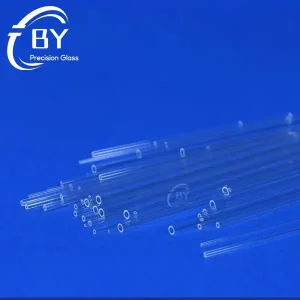
Wholesale Fluorine-Doped Fused Silica Capillary Tube Manufacturer, Factories
Explore Specifications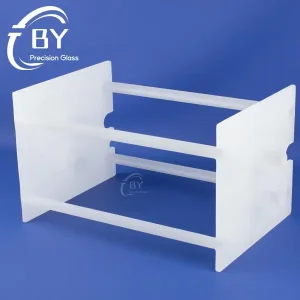
Wholesale Quartz Diffusion Boat for Semiconductor Suppliers, Factories
Explore Specifications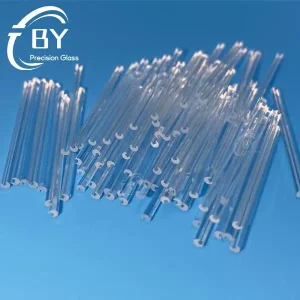
High-Quality Quartz Substrate Groove Use For Optical Fiber Coupler Suppliers, Factories
Explore Specifications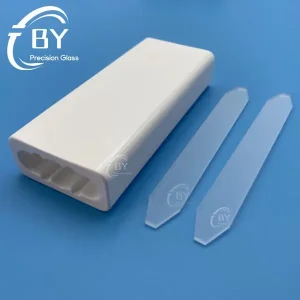
Wholesale Ceramic Cavity Reflector use for DEKA Laser Manufacturers, Supplier
Explore Specifications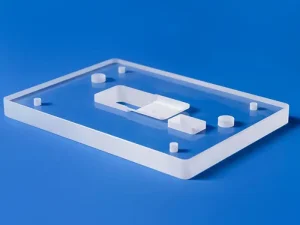
High-Quality Factory Supply Precision Quartz Glass Machining Plate Supplier, Suppliers
Explore Specifications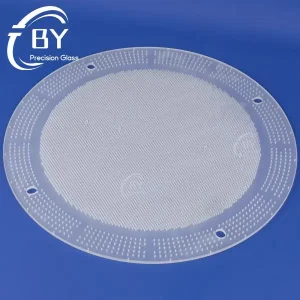
Custom Custom Optical Quartz Gas Distribution Plate Manufacturer, Suppliers
Explore Specifications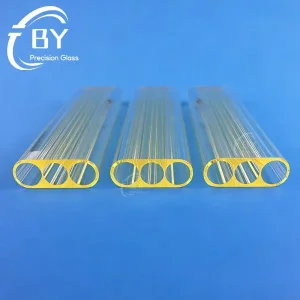
Custom Laser Cavity Flow Tubes & Filters Made from Samarium-doped Glass Supplier, Suppliers
Explore Specifications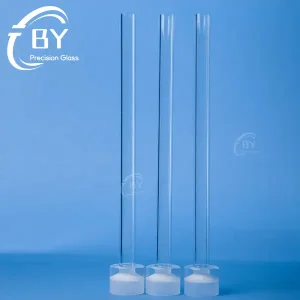
High-Quality Chemical Resistant Custom Quartz Glass Parts Fabrication Supplier, Factories
Explore Specifications
Technical Knowledge Base
Frequently Asked Questions: Quartz Cuvette Engineering & Sourcing
Detailed answers to the critical metallurgical, optical, and procurement inquiries posed by laboratory directors and OEM engineers.
How does direct optical contact fusion differ from traditional flame welding or adhesive bonding?
Optical contact bonding (direct molecular fusion) involves ultra-polishing quartz plates to flatness tolerances exceeding λ/10, bringing the optical surfaces into atomic contact at room temperature, followed by high-temperature annealing at approximately 1,150 °C. The silica lattices join seamlessly without organic glues, low-temperature fluxing agents, or mechanical joint distortion. This provides 100% autogenous chemical resistance against all aggressive solvents (HF excluded) and prevents adhesive autofluorescence.
What is the standard pathlength tolerance, and how is it verified?
Standard spectrophotometer cuvettes feature a nominal 10 mm pathlength with a precision manufacturing tolerance of ±0.005 mm (5 µm). For specialized short-path cells (e.g., 0.1 mm, 0.2 mm, or 1.0 mm pathlengths used for concentrated biological or UV-absorbing samples), we maintain tolerances of ±0.002 mm. Verification is carried out using non-contact optical low-coherence interferometry calibrated against traceable NIST gauge blocks.
Why is JGS1 synthetic quartz necessary for measurements below 220 nm?
Natural quartz (such as JGS2) is melted from naturally occurring mineral quartz crystals containing trace metallic impurities (like iron and titanium at parts-per-million levels). These metallic impurities induce optical absorption bands in the deep ultraviolet, causing transmittance to fall steeply below 220 nm. JGS1 is synthetically produced via chemical synthesis, providing extreme chemical purity with metallic impurities under 0.1 ppm, maintaining over 80% internal transmission down to 185 nm.
Can quartz cuvettes be cleaned in ultrasonic baths, and what reagents are recommended?
Yes, molecularly fused quartz cuvettes withstand ultrasonic cleaning. However, the cuvette must be suspended in an ultrasonic cleaning basket and never placed directly on the stainless steel floor of the bath to avoid micro-chipping. Optimal cleaning protocols involve soaking in warm 3M nitric acid, 10% Hellmanex III, or optical-grade ethanol/isopropanol. Avoid hot concentrated alkaline solutions (KOH, concentrated NaOH) and hydrofluoric acid (HF), as they chemically etch the polished optical surface.
What is a matched pair of cuvettes, and why is matching essential?
A matched pair consists of two cuvettes selected from a production run whose transmission characteristics and pathlengths are measured to be virtually identical—typically within ΔT < 0.5% across the working spectral range (e.g., 200–250 nm). In dual-beam spectrophotometers, one cuvette holds the blank/solvent while the other holds the sample. Any optical discrepancy between the two cells creates a direct measurement error; matched pairs ensure that baseline subtraction is accurate.
Can BY Photonics customize flow-through cuvettes according to proprietary OEM drawings?
Yes. OEM customization forms a core part of BY Photonics' manufacturing operations. We machine custom cuvettes, microfluidic quartz chips, Peltier-jacketed temperature-regulated cells, and flow-through spectrophotometer cells based on STEP, IGES, DWG, DXF, or dimensioned PDF drawings. We provide precision inlet/outlet threading (e.g., 1/4-28 UNF, M6), fused silica tube connections, optical window masking, and anti-reflective (AR) coatings upon request.