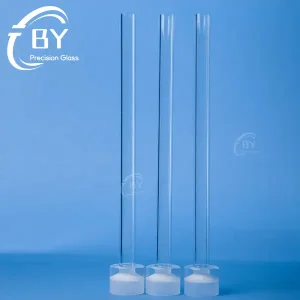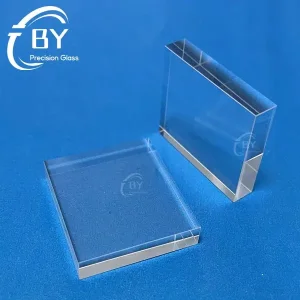
Featured Precision Components
Featured Optical Assemblies & Cavity Cavities
Direct factory production lines covering high-tolerance synthetic fused silica, sapphire, advanced optical doped glasses, and micromechanical sintered diffuse cavity geometries.
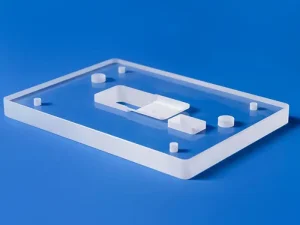
High-Quality Factory Supply Precision Quartz Glass Machining Plate Supplier
Explore Technical Specs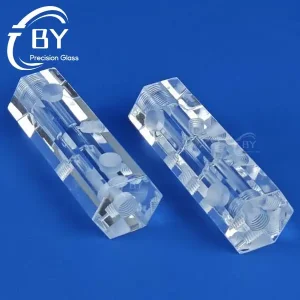
High-Quality Custom Fabrication of Quartz Glass Precision Components Factory
Explore Technical Specs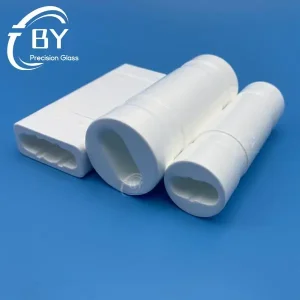
Wholesale Ceramics Reflector for Semiconductor Lasers Suppliers, Factory
Explore Technical Specs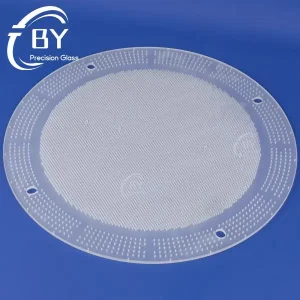
Custom Optical Quartz Gas Distribution Plate Manufacturer, Suppliers
Explore Technical Specs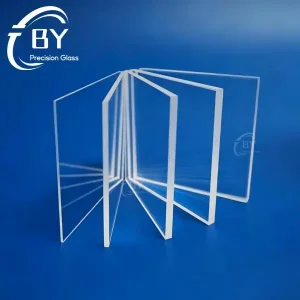
High-Quality JGS1 Ultraviolet (UV) Grade Fused Silica Plate Factory
Explore Technical Specs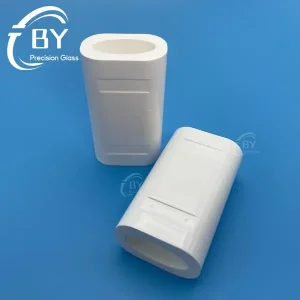
High-Quality Ceramic Cavities For Nd YAG Laser Supplier, Factories
Explore Technical Specs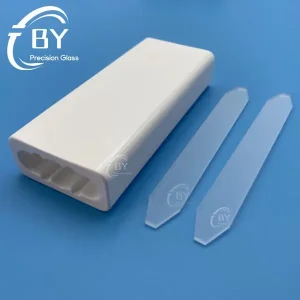
Wholesale Ceramic Cavity Reflector Use for DEKA Laser Supplier
Explore Technical Specs
Material Physics & Core Science
Physics of Sintered PTFE Diffuse Reflectors: The Mechanics of Extreme Reflectance
In high-power diode-pumped solid-state (DPSS) systems, laser cavity efficiency and spatial gain homogeneity are strictly governed by reflector wall dynamics. Polytetrafluoroethylene (PTFE)-based diffuse reflectors—often engineered from Spectralon-grade micro-porous resins—represent the state of the art in diffuse scattering physics.
Isotropic Lambertian Scattering
Unlike specular metallic cavities (e.g., gold or silver coating) where reflection follows Fresnel laws prone to localized hot-spots, porous PTFE creates multiple subsurface scattering events. The reflected radiance is strictly proportional to the cosine of the emission angle, distributing optical energy evenly across laser crystals (Nd:YAG, Yb:YAG, Ti:Sapphire).
- Reflectance: >99.2% across 400–1500 nm
- Eliminates thermal lensing hotspots
- Maintains depolarization fidelity
High Laser-Induced Damage Threshold
Sintered pure PTFE maintains an exceptionally broad optical bandgap (~8.4 eV), making multiphoton ionization and electronic breakdown practically impossible under typical diode pump conditions. This provides catastrophic breakdown resilience far outstripping conventional glazed ceramics and dielectric-coated quartz.
- LIDT: >10–15 J/cm² at 1064 nm (10 ns pulse)
- Continuous CW handling up to multi-kW regimes
- Immune to surface thin-film peeling
Chemical & Thermal Inertness
Operating inside closed-loop cooling chambers requires zero leaching. Our sintered PTFE cavities undergo specialized vacuum degassing and hydrophobic stabilization, guaranteeing zero hydrolysis, zero chemical reaction with deionized water, and resistance to coolant UV degradation.
- Continuous operating limit: 260 °C (intermittent 300 °C)
- Zero chemical degradation with DI water/glycol
- Non-hygroscopic, chemically inert matrix
| Performance Parameter | High-Purity Sintered PTFE | High-Alumina Laser Ceramic (99.7% Al₂O₃) | Gold/Silver Coated Metallic Cavities | Samarium-Doped Glass Flowtubes |
|---|---|---|---|---|
| Diffuse Reflectance (808–980 nm) | 99.2% – 99.7% | 96.5% – 97.8% | 95.0% – 98.2% (Specular) | N/A (Selective Filter) |
| Lambertian Uniformity Index | >0.98 (Pure Cosine) | ~0.85 (Slight Specular Component) | 0.00 (Purely Specular) | N/A (Refractive) |
| Laser Induced Damage (1064nm, 10ns) | >15 J/cm² | ~10 J/cm² | <3 J/cm² (Coating breakdown) | >20 J/cm² (Substrate) |
| Coolant Leaching / Rust Risk | Zero (Chemically Inert) | Zero (Inorganic Oxide) | Moderate to High (Micro-pinholes) | Zero (Acid polished) |
| CNC Micromachining Versatility | Extremely High (Tolerances to ±0.01mm) | Difficult (Requires Green-state tooling) | High (Standard CNC + Electroplating) | Grinding & Hot Flame Only |
Industrial Deployment
Localized Application Scenarios: Field-Tested Engineering Configurations
From medical aesthetics in European clinics to multi-kilowatt material processing lines in North America, our PTFE reflectors are purpose-engineered for demanding optoelectronic integration.
Clinical Dermatology & IPL Handpieces
Modern IPL (Intense Pulsed Light) and aesthetic hair-removal handles require efficient light recycling around flashlamps. PTFE reflectors redirect multi-directional emissions directly through yellow-doped quartz filters and sapphire light guides, optimizing fluence while suppressing peripheral heating.
- Eliminates epidermal skin burns via uniform beam profiles
- Stable against prolonged Xenon pulse UV degradation
- Direct integration with flowtubes and light guide blocks
DPSS Laser Resonators & Amplifiers
For side-pumped or end-pumped Nd:YAG rods and slabs, our CNC-machined PTFE blocks act as pump chambers. The Lambertian scattering field homogenizes side-diode bar emissions (808 nm / 880 nm / 940 nm), maximizing crystal absorption efficiency and producing clean TEM₀₀ output modes.
- Increases overall wall-plug electrical efficiency by 12–18%
- Accommodates complex internal DI coolant flow channels
- Custom geometric bores down to 1.5 mm diameter
Integrating Spheres & Quantum Metrology
In spectrometer calibration, LED lumen characterization, and quantum sensor referencing, PTFE liners serve as the definitive reflection standard. Our hydrophobic micro-sintering process preserves spectral flatness from 250 nm (UV) through 2500 nm (SWIR) without yellowing or aging.
- Exceeds NIST SRM-2019 diffuse calibration linearity
- Zero fluorescence across UV/Visible excitation
- Sub-micron surface finishing without optical glazes
Manufacturing Capability & Scale
China Factory Supply Chain: Vertical Integration & Engineering Resilience
Operating from our specialized facility in Tianjin, China, BY Photonics bridges the gap between precision polymer sintering, ultra-hard crystal cold machining, and high-purity glass fabrication.
Consolidated In-House Production
By housing PTFE cleanroom CNC milling, quartz glass flame working, and sapphire polishing under one roof, we eliminate subcontractor markups, prevent cross-contamination, and compress prototype-to-production turnaround times by over 45%.
Strict Raw Material Traceability
We source ultra-pure virgin granular PTFE and optical-grade quartz ingots (JGS1, JGS2, JGS3). Each production run is validated via spectrophotometric reflection testing and laser dimensional metrology, complete with batch material certificates.
Direct DFM Engineering Support
Direct communication with process engineers. Send your CAD drawings (STEP, DWG, PDF) and receive comprehensive Design for Manufacturability (DFM) feedback within 24 hours, addressing shrink allowances, mounting chamfers, and coolant seals.
Global Logistics & Packing Security
Precision-cleaned in ultrasonic deionized baths and sealed in dust-free vacuum packaging. Shipped worldwide via express logistics networks with shock-absorbing multi-layer foam to ensure zero edge-chipping or surface micro-abrasion.
15+
Years Manufacturing (Since 2010)
3,000+
m² Production Workshop
120+
Precision Machining Systems
<24h
DFM Engineering Response
Market Intelligence & Industry Dynamics
Global Commercial Landscape: Why OEM Engineers are Shifting to Custom PTFE
The solid-state laser and clinical device market is transitioning away from fragile ceramics and gold-plated housings. Here is the operational and economic rationale observed across Tier-1 OEM programs:
Mitigating the Supply Constraints of Western Brands
For decades, Western laboratories relied almost exclusively on proprietary trademarked PTFE compounds (e.g., Spectralon). However, lengthy lead times (often 16–24 weeks), excessive custom engineering premiums, and inflexible minimum order quantities (MOQs) have constrained OEM agility. BY Photonics delivers identical optical reflectance (>99% across target pump bands) and equal micro-porous consistency at 40–60% lower capital outlay and 3–4 week rapid delivery cycles.
Elimination of Cavity Aging & Recoating Downtime
Gold and silver-electroplated copper reflectors degrade over time: coolant turbulence strips metallic coatings, pinhole rust causes catastrophic diode back-reflection, and thermal cycles induce flaking. Sintered PTFE diffuse cavities are homogeneous solid monoliths. Even if minor mechanical scratches occur during routine field maintenance, the diffuse reflectance remains intact across the entire volume of the substrate.
Future Roadmap
Technology Roadmap: Next-Generation Innovations in Diffuse Optics
As solid-state lasers push into extreme UV wavelengths and high-repetition industrial ultrafast domains, our R&D team is developing next-generation reflector chemistries.
Deep-UV Deep-Sintering (190–300 nm)
Standard PTFE begins exhibiting minor organic absorption bands below 250 nm. We are qualifying ultra-purified resin feedstocks sintered under high-pressure inert argon atmospheres to push unattenuated Lambertian reflectance (>98.5%) down to 193 nm for excimer and deep-UV harmonics.
Thermally Conductive Composite PTFE
Pure PTFE has relatively low thermal conductivity (~0.25 W/m·K). Our materials laboratory is engineering isotropic nano-diamond and boron nitride ceramic micro-fillers that increase heat dissipation by 400% without compromising optical backscattering efficiency.
Direct-Bonded Hybrid Opto-Mechanical Assemblies
To eliminate elastomer O-ring degradation in DI water channels, we are commercializing mechanical diffusion bonding techniques to fuse PTFE cavity segments directly with synthetic fused silica (JGS1) windows and samarium-doped filter tubes into monolithic assemblies.
International Standards
Localized Support, Regulatory Compliance & Quality Governance
International photonics contracts require stringent quality guarantees. We maintain rigorous compliance across global chemical, environmental, and optoelectronic standards.
RoHS & REACH Compliance
All sintered PTFE grades and optical glasses supplied by BY Photonics are certified free from heavy metals, toxic plasticizers, and regulated perfluorooctanoic acid (PFOA/PFOS) compounds, satisfying strict EU and North American environmental directives.
Cleanroom Cleaning & Vacuum Packaging
Components destined for high-vacuum laser enclosures or closed DI water cooling loops are ultrasonically cleaned using multi-stage deionized water systems, dried under Class 1000 laminar flow, and hermetically sealed to prevent hydrocarbon condensation.
Comprehensive Optical Metrology Reports
Orders are dispatched with dimensional CMM verification data, surface roughness (Ra) profilometer traces, and spectrophotometer reflection scan graphs (250–2500 nm) to facilitate immediate incoming inspection clearance at your facility.
Procurement Knowledge Base
Frequently Asked Technical & Sourcing Questions (FAQ)
Direct answers to the most common engineering and procurement inquiries regarding PTFE diffuse reflectors and laser cavity components.
How does sintered PTFE diffuse reflectance compare to Spectralon®?
Spectralon is a registered brand name for a patented sintered PTFE resin formulation. Our optical-grade PTFE utilizes an identical high-density, micro-porous thermoplastic fluoropolymer sintering process. In comparative spectrophotometer testing across the key laser diode pump bands (808 nm, 880 nm, 940 nm, 980 nm), our sintered PTFE delivers equivalent total hemispherical reflectance (>99.2%) and pure Lambertian cosine distribution, meeting or exceeding standard commercial specifications while providing substantially reduced lead times and cost advantages.
Can PTFE diffuse reflectors be directly immersed in laser deionized cooling water?
Yes. Sintered PTFE is naturally hydrophobic, chemically inert, and contains zero plasticizers or binders. It does not degrade, swell, or hydrolyze in deionized cooling water or glycol-water mixtures. However, due to its microscopic open-pore structure, thorough pre-degassing and vacuum stabilization are recommended prior to pressurized cavity filling to prevent microscopic air bubbles from attaching to internal flow walls.
What CNC machining tolerances can you hold for complex pump cavity blocks?
PTFE is softer and possesses a higher thermal expansion coefficient than quartz or ceramics. Utilizing temperature-stabilized cleanroom CNC machining centers, specialized sharp-radius PCD (polycrystalline diamond) tooling, and optimized feed rates to prevent thermal stress, we routinely achieve dimensional tolerances of ±0.02 mm (±20 μm) on critical crystal bore diameters and ±0.05 mm on overall exterior envelope dimensions.
What is the cleaning and maintenance protocol if a PTFE reflector becomes contaminated?
For dust and non-greasy particulates, blow the surface with clean, dry nitrogen (N₂). For finger grease or organic contamination, immerse the reflector in analytical-grade isopropyl alcohol (IPA) or acetone under gentle ultrasonic agitation, followed by vacuum drying at 60°C. If severe physical burn spots occur on the outer surface from catastrophic laser strikes, the surface can be lightly resurfaced using clean 600-grit silicon carbide waterproof sandpaper rinsed in deionized water to restore virgin diffuse matrix material without altering bulk reflectance.
What drawing formats are accepted, and how quickly can we receive prototypes?
We accept 3D formats including STEP, IGES, and Parasolid, as well as 2D PDF and DWG engineering prints. Our engineering desk provides a comprehensive DFM (Design for Manufacturability) assessment within 24 working hours. Prototype production for custom CNC-machined PTFE cavity prototypes is typically completed in 7 to 10 working days, backed by express air dispatch.
Extended Laser & Semiconductor Components
Complementary Precision Quartz, Glass & Laser Cavity Products
Explore our full line of companion optical components manufactured to synchronize with your diffuse reflector and solid-state laser resonator setups.
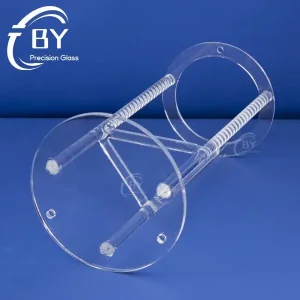
Wholesale Quartz Wafer Carriers for Semiconductor Supplier, Suppliers
Explore Technical Specs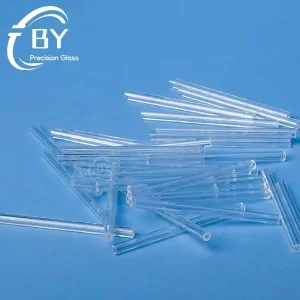
High-Quality Custom Precision Quartz Capillary Tubes Manufacturers
Explore Technical Specs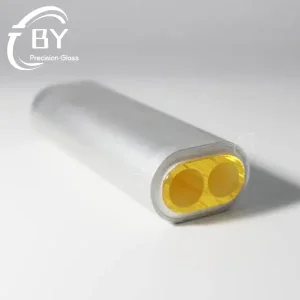
Custom Packed Laser Cavity Flowtubes for Laser Head Manufacturers
Explore Technical Specs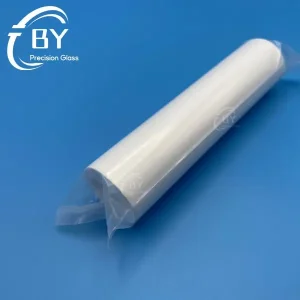
Wholesale Candela VBeam Laser 6" White Cavity Ceramic Reflector 2 Pk
Explore Technical Specs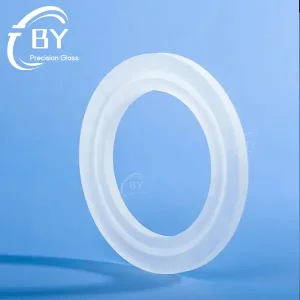
High-Quality Precision Custom Quartz Glass Components for Semiconductor
Explore Technical Specs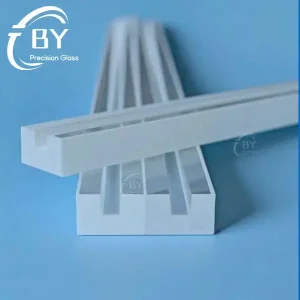
High-Quality Square Groove Quartz Substrate for Fiber Couplers Supplier
Explore Technical Specs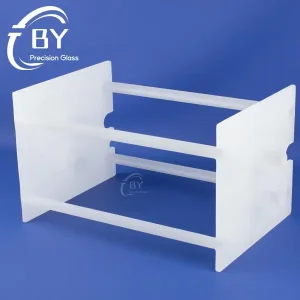
Wholesale Quartz Diffusion Boat for Semiconductor Suppliers, Factories
Explore Technical Specs