
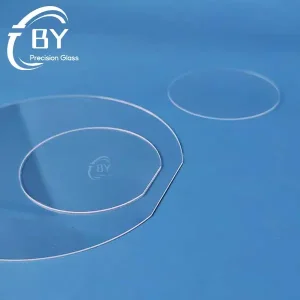
Custom Borofloat 33® Glass Wafers for Semiconductor Manufacturers, Factories
Explore Product
Original high-reliability engineered optical and semiconductor units engineered under ISO 9001:2015 traceability.
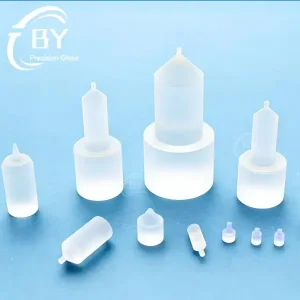
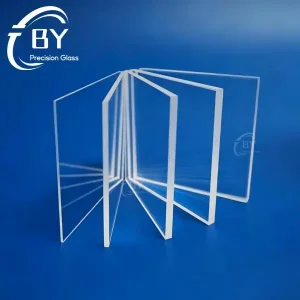
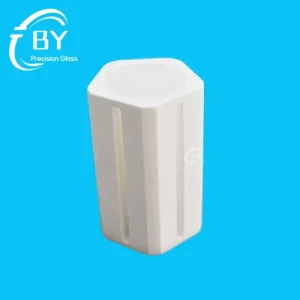

The international market for precision quartz glass test tubes, cuvettes, and high-temperature digestion vessels has evolved from standard wet-chemistry laboratory consumables intomission-critical components across the advanced semiconductor, biomedical analysis, photovoltaic CVD processing, and analytical spectroscopy ecosystems. Characterized by unmatched purity (SiO₂ > 99.999%), an ultra-low coefficient of thermal expansion (5.5 × 10⁻⁷ /°C), and exceptional broad-band spectral transmission from deep ultraviolet (DUV 185 nm) to far infrared (NIR 3,500 nm), quartz glass remains non-substitutable in extreme operating envelopes.
Understanding raw material thermodynamics is critical for engineering buyers. Synthetic fused silica (JGS1) is synthesized from silicon tetrachloride (SiCl₄) vapor hydrolysis, achieving near-zero bubble classification and minimal trace heavy metal impurity, making it mandatory for UV spectrophotometry test tubes and plasma etching chambers. Natural quartz (JGS2/JGS3) utilizes high-purity crystalline quartz sand, optimized for high-temperature diffusion tubes, thermal pyrolysis, and infrared pyrometry.
Unlike borosilicate 3.3, a high-purity quartz test tube can be heated to 1,100°C and plunged directly into 20°C ice water without micro-fracturing or catastrophic failure. However, thermal longevity requires controlling devitrification—the phase transformation from amorphous silica to crystalline cristobalite. Our proprietary thermal annealing cycles and controlled chemical etching eliminate surface micro-defects and alkali contaminants, extending life cycles by over 300%.
With exceptional inertness toward virtually all mineral acids (except hydrofluoric HF and hot concentrated phosphoric H₃PO₄ above 150°C), our custom-machined quartz reaction tubes serve as indispensable standard containment units for trace element microwave digestion (ICP-MS/ICP-OES) where borosilicate leaches sodium, boron, and calcium into sensitive sample volumes.
Detailed quantitative benchmarking of engineered silica glasses utilized in scientific test tubes, reactor jackets, and optical cells.
| Material Category | Transmission Bandwidth | Strain / Softening Point | Trace Impurity (Al / Fe) | Thermal Expansion Coeff. | Primary Industrial Application |
|---|---|---|---|---|---|
| JGS1 Synthetic Fused Silica | 185 nm – 2,500 nm (DUV) | 1,070°C / 1,730°C | < 0.05 ppm / < 0.02 ppm | 5.5 × 10⁻⁷ /°C | DUV spectrometry tubes, photolysis reactors, laser optics |
| JGS2 Optical Fused Quartz | 220 nm – 2,500 nm (Standard UV-Vis) | 1,025°C / 1,680°C | < 14 ppm / < 1.5 ppm | 5.4 × 10⁻⁷ /°C | Semiconductor process tubes, sight glasses, medical flow tubes |
| JGS3 Infrared Fused Quartz (Low-OH) | 260 nm – 3,500 nm (IR / Full Spec) | 1,020°C / 1,680°C | < 18 ppm / < 2.0 ppm | 5.5 × 10⁻⁷ /°C | FTIR sample vessels, pyrometry windows, infrared heating jackets |
| Borofloat 33® / Borosilicate 3.3 | 320 nm – 2,500 nm (Visible/NIR) | 518°C / 820°C | Alkali-rich (Na₂O ~4%, Al₂O₃ ~2.5%) | 32.5 × 10⁻⁷ /°C | Standard clinical test tubes, distillation columns, sight disc |
| Monocrystalline Sapphire (Al₂O₃) | 170 nm – 5,500 nm (Broadband) | Operates to ~1,800°C | Pure Crystal Oxide | 7.5 × 10⁻⁶ /°C | Ultra-high pressure digestion cells, harsh alkali/HF reactors |
Where precision quartz tubes, heavy-wall test vessels, and capillary columns operate inside global production infrastructure.
Employed as vertical furnace liners, micro-bubbler tubes, and thermocouple protection sheaths in atomic layer deposition (ALD), diffusion, and rapid thermal annealing (RTA). High structural integrity prevents particle shedding and volatile metal outgassing at operational temperatures above 1,050°C.
Fused silica test tubes with optically polished flat bottoms (surface figure λ/4 to λ/10) function as integrated spectrophotometric cuvettes for UV-Vis absorption, fluorescence lifetime measurements, and micro-flow cytometers where refractive index uniformity and zero autofluorescence are non-negotiable.
Reinforced heavy-wall quartz test tubes engineered for high-pressure digestion blocks (Parr bombs and microwave reactors). Resistant to aqua regia, concentrated nitric acid, and perchloric acid digestion protocols at 250°C and 80 bar pressures without wall delamination.
Manufactured as samarium-doped (Sm-doped) or cerium-doped quartz cooling sleeves and flow jackets. Selectively filters harmful ultraviolet radiation below 380 nm and eliminates parasitic 1064 nm amplified spontaneous emission (ASE), maximizing pumping efficiency and preventing crystal thermal lensing.
Employed across polysilicon ingot growth, high-temperature PECVD solar cell passivation, and continuous chemical vapor synthesis. Outstanding mechanical strength ensures structural stability during vacuum evacuation down to 10⁻⁶ Torr under continuous cycling.
Precision-redrawn fused quartz capillaries (down to 10 µm inner diameter) featuring sub-micron dimensional concentricity and smooth inner wall fire-polishing. Essential for DNA sequencing, capillary zone electrophoresis, and micro-chromatography columns.
Strategic overview of advanced fabrication methods overcoming traditional limits of brittle glass processing.
Integrating 5-axis ultrasonic high-speed machining centers with diamond-plated tools. Reduces subsurface micro-cracks below 2 µm, enabling thin-wall quartz test tubes with custom micro-perforations, internal threads, and complex flange connections without risk of micro-fracture during heating.
Combining nanoscale sol-gel glass precursors with stereolithography (SLA) printing. Allows production of re-entrant channels, internally baffled quartz reactor tubes, and integrated multi-lumen cuvettes previously impossible to produce via traditional lathe flame-working.
Refining gas-phase vacuum sintering to reduce OH content below 1 ppm (suppressing absorption peaks at 1,380 nm, 2,200 nm, and 2,720 nm). Enables specialized quartz analytical tubes suited for full-spectrum NIR vibrational spectroscopy and high-power laser fluid conduits.
Transitioning from manual artisan oxyhydrogen blowpipes to automated 6-axis robotic laser fire-polishing. Guarantees uniform wall thickness tolerance within ±0.02 mm across test tube lengths exceeding 1,200 mm, ensuring concentricity and repeatable volume calibrations.
BY Photonics operates unified cold working, oxyhydrogen lathe glassblowing, and cleanroom optical coating under one roof in Tianjin, China. We solve procurement fragmentation by handling raw ingot selection through validated export logistics.
Send CAD files in STEP, IGES, DWG, or PDF formats. Our optical engineering team provides comprehensive Design-For-Manufacturability feedback within 24 working hours, optimizing dimension tolerances, corner radius relief, and thermal stress transition zones to decrease yield loss and overall unit production cost.
Our manufacturing plant pairs 120+ machines—including optical lapping machines, multi-axis CNC routers, and heavy-duty glassblowing lathes. Custom fabrication includes ground joints (standard taper 14/20, 24/40), threaded screw caps, GL45 thread adapters, round or optical-flat bottoms, and vacuum flanges.
Quality control runs across 20+ specialized optical metrology systems: Zygo GPI phase-shifting laser interferometers for surface flatness, PerkinElmer Lambda 1050+ spectrophotometers for spectral transmission curves, polariscopes for residual stress checking, and ICP-MS testing for raw quartz material certificates (CoC).
Industrial laser cavity optics, flow tubes, capillary redrawing, and sapphire light guides manufactured to drawing specifications.
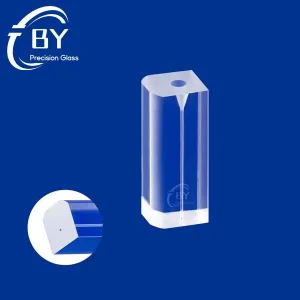
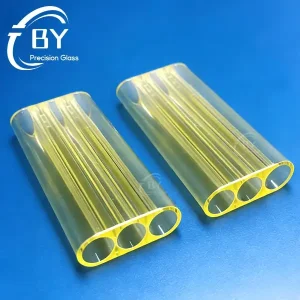
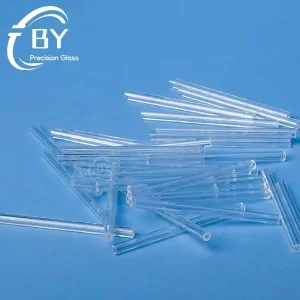
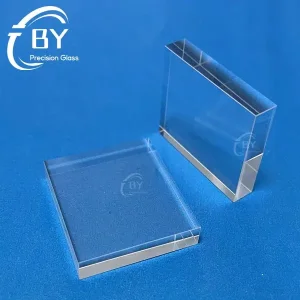
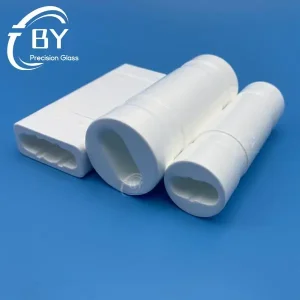
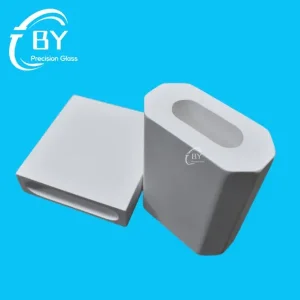
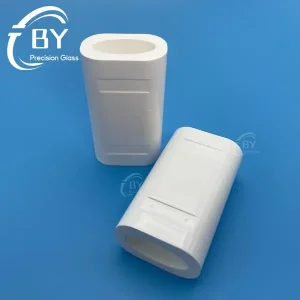
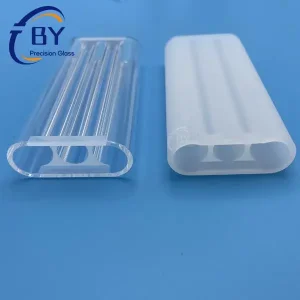
Essential criteria engineering procurement teams verify prior to ordering custom fused silica labware and production tubes.