Precision Engineering Portfolio
Precision Optical & Capillary Components
Explore our industrial-grade optical windows, precision capillary tubes, and specialized quartz solutions manufactured under certified cleanroom protocols.
Global Industrial Landscape
Macro-Industry Solutions & Borosilicate 3.3 Physics
A comprehensive engineering review of linear thermal expansion, hydrolytic resilience, and bore concentricity tolerances in mission-critical fluidic and telecommunication environments.
Thermal Shock Integrity
Borosilicate 3.3 glass features an exceptionally low coefficient of thermal expansion (CTE 3.3 × 10⁻⁶ K⁻¹). This enables capillary tubes to withstand abrupt operational thermal differentials exceeding 150°C without risk of micro-fracture or stress-induced dimensional warping.
Hydrolytic Class 1 Chemistry
Compliant with ISO 719 Class HGB1 and USP Type I chemical resistance standards. The inert borosilicate silica matrix prevents sodium ion elution, completely eliminating liquid contamination in medical assay analysis and high-throughput chromatographic separation.
Sub-Micron Bore Precision
Utilizing high-stability thermal draw towers with continuous dual-axis laser micrometer monitoring, BY Photonics achieves inner diameter (ID) tolerances as narrow as ±0.002 mm, ensuring laminar fluid dynamics and zero backpressure drift in microfluidic channels.
| Physical / Chemical Property | Borosilicate 3.3 (Duran / Pyrex) | Synthetic Fused Silica (JGS1) | Soda-Lime Standard Glass |
|---|---|---|---|
| Thermal Expansion (CTE: 20-300°C) | 3.3 × 10⁻⁶ K⁻¹ | 0.54 × 10⁻⁶ K⁻¹ | 9.0 × 10⁻⁶ K⁻¹ |
| Max Short-Term Service Temp | 500 °C | 1200 °C | 150 °C |
| Hydrolytic Resistance (ISO 719) | Class 1 (HGB 1) | Class 1 (Ultra-Pure) | Class 3 |
| Acid Resistance (DIN 12116) | Class 1 | Class 1 | Class 1-2 |
| Inner Diameter (ID) Tolerance Scope | Down to ±0.002 mm (Custom) | Down to ±0.001 mm | ±0.05 mm - ±0.1 mm |
| Wholesale Cost Efficiency Ratio | Optimized for OEM Scale-Up | High Performance / Premium | Standard Utility Only |
OEM Application Engineering
Localized Engineering Use Cases & Custom Geometries
How global system integrators deploy BY Photonics precision capillaries across optical communications, bio-sensing, and chemical process manufacturing.
Fiber Optic Alignment Ferrules
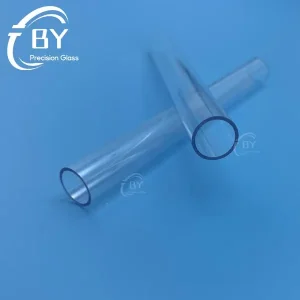
Borosilicate capillary tubing serves as critical alignment sleeves for telecom pigtailed collimators, CWDM splitters, and DWDM transceivers. The thermal stability matches surrounding alloy housings, preventing optical insertion loss across -40°C to +85°C Telcordia test cycles.
Clinical Diagnostics & Hematology
Custom treated glass micro-hematocrit capillaries and blood gas sampling tubes. Supplied with precision fire-polished or diamond-cut end profiles, available with inner anticoagulant coatings (Heparin sodium / ammonium) compliant with ISO 12772 international medical standards.
GC & HPLC Chromatography
Gas and liquid chromatography interface sleeves and injection split tubes. Precision-honed internal bores deliver smooth flow fronts without sample adsorption or chromatographic peak tailing, surviving aggressive organic solvents and derivatization reagents.
Lab-on-a-Chip Microfluidics
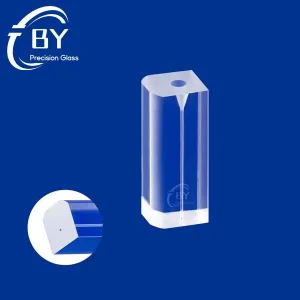
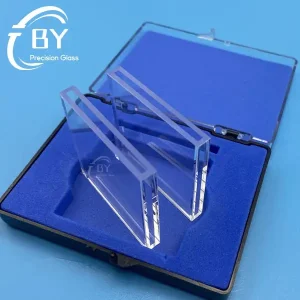
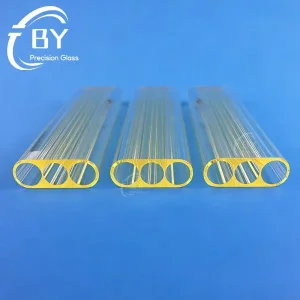
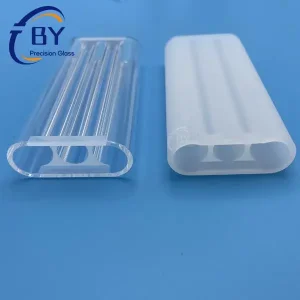
Rectangular, square, and multi-bore capillary tubes used for micro-flow cytometry, electrophoretic cell separation, and droplet microfluidics. Flat external walls minimize optical refraction distortion during high-speed microscopic imaging and fluorescence laser excitation.
Global Quality Assurance
Localization Support, Quality Compliance & OEM Security
Enterprise procurement requires rigorous documentation, repeatable metallurgical control, and international export packaging safeguards.
Full Regulatory Adherence
Every wholesale batch comes with complete raw material lot certification (RoHS 3, REACH, and California Prop 65 compliance). Certified lead-free and arsenic-free glass composition ensures frictionless customs clearance into the EU, North American, and Asia-Pacific markets.
Cleanroom Export Packaging
Capillary tubes are ultrasonically decontaminated, vacuum-sealed in anti-static Class 10,000 cleanroom packaging, and cushioned with shock-absorbing honeycomb polymer supports to guarantee zero breakage and scratch-free arrival under international air and sea freight.
Dedicated DFM Engineering Desk
Our bilingual senior glass processing engineers collaborate directly with your R&D team. From initial CAD/STEP review to prototyping within 5-7 business days, we provide Design-for-Manufacturability (DFM) feedback that significantly lowers mass production scrap rates.
R&D Evolution
Technical Roadmap & Next-Gen Manufacturing Outlook
Pioneering ultra-thin wall geometry, specialized inner-surface functionalization, and automated vision inspection for next-decade micro-optics.
Phase I: Femtosecond Laser Micromachining
Integrating non-thermal ultrafast laser ablation directly on the draw line to achieve crack-free micro-perforations, precision end-face chamfers (<0.05 mm), and lateral fluidic bypass ports without inducing thermal stress concentration.
Phase II: Advanced Internal Silanization
Developing in-line gas-phase chemical vapor deposition (CVD) to passivate inner capillary walls with ultra-hydrophobic or organosilane coatings, drastically preventing bio-protein adherence in next-gen single-cell gene sequencing workflows.
Phase III: AI-Powered Deep In-Line Metrology
Rolling out neural-network-backed machine vision modules capable of inspecting 100% of tube length at 60 meters/minute, capturing sub-surface bubbles down to 5 µm and dynamic wall eccentricity variations in real-time.
Procurement & Technical Queries
Frequently Asked Questions
Clear, direct technical answers regarding MOQ, custom tooling, material distinctions, and export handling.
What is the standard tolerance for wholesale borosilicate capillary tubes?
Standard drawn capillaries hold an OD/ID tolerance of ±0.02 mm to ±0.05 mm. For high-precision chromatography or optical ferrule applications, secondary precision redrawing achieves tighter tolerances down to ±0.002 mm to ±0.005 mm depending on the wall thickness ratio.
When should an engineer specify Quartz over Borosilicate glass?
Choose borosilicate 3.3 for high thermal stability, aggressive acid resistance, and high-volume cost efficiency up to 450°C-500°C. Choose synthetic fused silica (quartz) if you require deep UV transmission below 300 nm, continuous operating temperatures above 1000°C, or minimal background autofluorescence.
Can you provide custom cross-sections like square or dual-bore tubing?
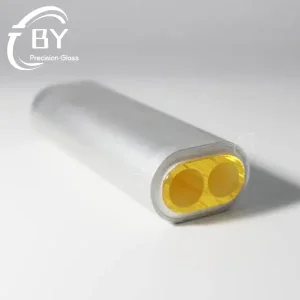
Yes. In addition to standard concentric round tubes, our tooling supports square, rectangular, D-shape, elliptical, dual-bore, and multi-lumen capillary configurations drawn to customer engineering prints.
What end-finish options are available for cut lengths?
We supply precision cut lengths from 2 mm up to 2000 mm. End finishes include scratch-free optical diamond blade cuts, high-precision flat lap-polished ends, round fire-polished profiles, and custom inside/outside chamfers.
What is the typical Minimum Order Quantity (MOQ) and lead time?
Stock capillary dimensions have no MOQ requirements and ship within 48 hours. Custom tooling profiles require a nominal initial sample batch (typically 100-500 pieces), with production scale-up delivery scheduled within 2 to 3 weeks.
How do you safeguard fragile capillary tubes during export transit?
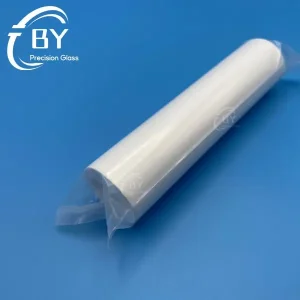
Products are wrapped in dust-free peelable barrier films, packed into sealed plastic capillary canisters, suspended inside multi-layer shock-damping honeycomb cartons, and palletized for export with impact-tilt sensor indicators.
Semiconductor & Optoelectronic Catalogue
Advanced Substrates, Flowtubes & Quartzware
Explore our specialized semiconductor wafers, laser cavity flowtubes, and sapphire viewing components for ultra-clean industrial operations.