Precision Optical Capillary & Substrate Solutions (Set 1)
Engineered quartz, capillary tubes, and flow components manufactured under rigorous micro-finishing standards for high-reliability optical coupling and alignment matrices.
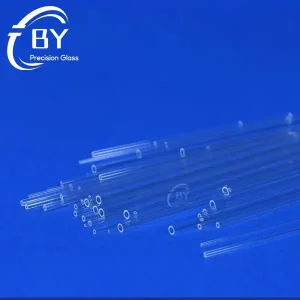
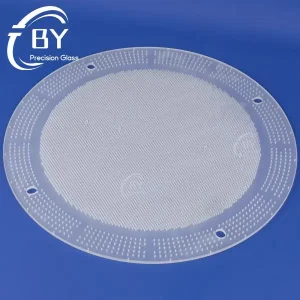
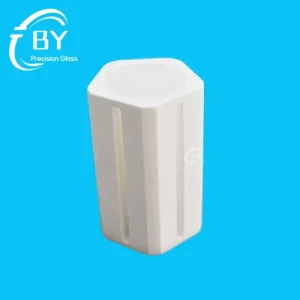
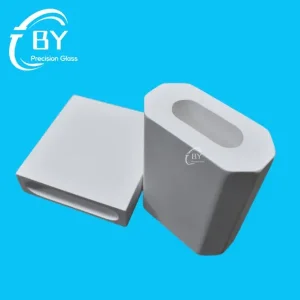

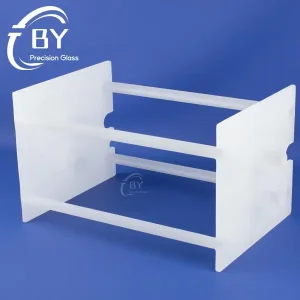
Micron-Level Kinematics: The Mechanics of Fiber Optic Alignment Sleeves
An in-depth metallurgical and silica crystal analysis on how precision alignment sleeves eliminate insertion loss, suppress return reflection, and ensure physical contact reliability across billions of optical cycles.
The Critical Physics of Radial Alignment in Sub-Micron Cores
In single-mode optical fiber interconnects (such as ITU-T G.652.D or G.657), light propagates within a mode field diameter (MFD) measuring only 9.2 ± 0.4 μm at 1310 nm. An angular deviation of just 0.5 degrees or a lateral axis offset exceeding 0.8 μm causes immediate insertion loss (IL) degradation beyond acceptable limits (>0.2 dB) and severe optical return loss (ORL) drop due to Fresnel reflection and wave interference.
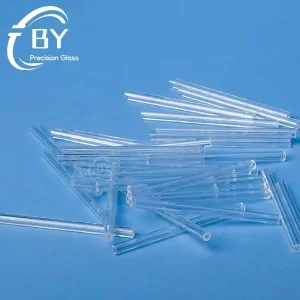
The fiber optic alignment sleeve serves as the mechanical core of optical adapters and active optical connectors (SC, LC, FC, ST, MU). Fabricated primarily from yttria-stabilized tetragonal zirconia polycrystals (Y-TZP) or precision redrawn fused silica quartz capillaries, the split sleeve must exert precise, uniform hoop stress. It aligns two cylindrical ferrules (typically 1.25 mm or 2.50 mm OD) along a coaxial line with sub-micron concentricity, tolerating thousands of mating cycles without galling, micro-cracking, or permanent elastic deformation.
Core Engineering Tolerances Held
Inner Diameter (ID) Tolerance: ±0.0005 mm (0.5 μm)
Outer Diameter (OD) Concentricity: ≤ 0.001 mm (1.0 μm)
Inner Surface Roughness (Ra): ≤ 0.05 μm (Mirror Lap)
Retention Force: 1.0 N to 3.0 N (Customizable to Telcordia GR-326-CORE)
Operating Temperature Envelope: -40°C to +125°C without creep
| Material Classification | Elastic Modulus (GPa) | Vickers Hardness (HV) | Thermal Expansion (×10⁻⁶/K) | Insertion Loss Stability (500 cycles) | Primary Industrial Use Case |
|---|---|---|---|---|---|
| Zirconia Ceramic (Y-TZP) | 210 GPa | 1,250 HV | 10.3 | ΔIL ≤ 0.05 dB | Carrier-grade telecom adapters, standard LC/SC patch bays, high-density CPO |
| Fused Quartz / Synthetic Silica | 72 GPa | 710 HV | 0.55 | ΔIL ≤ 0.03 dB | Extreme temperature sensors, cryogenic quantum circuits, corrosive fluidics |
| Phosphor Bronze Alloy | 110 GPa | 190 HV | 17.8 | ΔIL ≤ 0.20 dB | Cost-effective multimode datacom (OM1/OM2/OM3), legacy telecom networks |
| Fluorine-Doped Silica Capillaries | 68 GPa | 680 HV | 0.48 | ΔIL ≤ 0.04 dB | Specialty waveguiding, high-power fiber laser seed alignment, capillary collimators |
Why Tier-1 Global Procurement Selects China's Precision Foundries
Combining high-purity inorganic material synthesis, computerized ultra-precision redrawing, and verticalized quality validation directly from Tianjin and national manufacturing clusters.
Fully Integrated Upstream Sourcing
From refined mineral silica crystals and chemical-vapor-deposited synthetic fused silica boules to micro-abrasive diamond slurry, Chinese manufacturers maintain 100% localized supply integrity. This eliminates geopolitical bottleneck risks and guarantees rapid raw-material availability.
CNC Redrawing & Mirror Lapping Lines
Equipped with thermal-stabilized oxyhydrogen redraw towers, automated ultrasonic wire saws, and multi-axis planetary lapping machinery, factories consistently hold internal micro-dimensions within ±0.5 μm while eliminating microscopic burrs that cause ferrule scratching.
Telcordia GR-326-CORE Compliance
Every wholesale batch undergoes 100% automated optical interferometry, withdrawal force testing, thermal cycling (-40°C to +85°C at 95% RH for 2,000 hours), and high-pressure steam salt-spray endurance before leaving the cleanroom facility.
Next-Generation Optical Application Landscapes
From 800G/1.6T hyperscale AI clusters to deep-subsea optical transponders, discover how precision alignment sleeves resolve critical photonic interconnection challenges.
AI Data Centers & 1.6T Co-Packaged Optics
Ultra-dense AI acceleration clusters powered by Nvidia and AMD GPUs demand massive photonic interconnects. Fused silica and ceramic split sleeves accommodate high thermal dissipation environments inside optical transceiver modules (QSFP-DD, OSFP) without dimensional drift or axial misalignment.
Aerospace, Defense & Extreme Environments
Harsh military avionics and tactical deployable field communications require vibration-impervious connectors. High-retention-force alignment sleeves prevent physical contact disengagement during sustained 50G mechanical shock and extreme thermal cycling between -55°C and +150°C.
Biomedical OCT & Endoscopic Diagnostics
Optical Coherence Tomography (OCT) catheters and medical laser ablation systems utilize micro quartz capillary sleeves. Chemically inert and biologically compatible, they guide coherent laser energy safely within patient tissue without toxic leaching or UV photodarkening degradation.
Wholesale Sourcing Criteria for Global Supply Chain Managers
A structured auditing framework designed for hardware engineers, BOM managers, and international optical component distributors.
1. Material Authenticity
Insist on verifiable spectrographic and X-ray diffraction (XRD) metallurgical certificates verifying genuine 3Y-TZP ceramic or JGS1/JGS2 synthetic silica without recycled slag inclusion.
2. Slot Precision & Elasticity
Verify that the longitudinal split slot is laser-cut or micro-diamond ground with uniform seam margins (±0.01 mm) to ensure symmetric radial clamping without point stresses.
3. Chamfer Geometry
Check the internal entrance lead-in chamfer. A smooth, fire-polished 30° to 45° angle ensures frictionless ferrule entry, completely preventing ceramic chipping or stub end-face scratches.
4. Cleanroom Packaging
High-volume alignment components must be ultrasonic cleaned with deionized water, baked dry, and vacuum-sealed in Class 10,000 cleanroom antistatic trays to eliminate particulate contamination.
Frequently Asked Questions: Wholesale Optical Alignment Sleeves
Comprehensive engineering insights addressing design limitations, customization, and factory logistics.
What is the key functional difference between a split sleeve and a solid non-split sleeve?
Why are zirconia ceramic (ZrO2) sleeves predominantly selected over phosphor bronze?
Can your factory manufacture custom inner diameter (ID) dimensions and special shapes?
How do you test and prevent microscopic cracking during high-speed automated assembly?
What are the standard lead times, MOQ, and clean packaging standards for wholesale orders?
Integrated Laser, Quartz & Cavity Components (Set 2)
Engineered optical assemblies, groove substrates, and semiconductor carriers complementing high-precision fiber interconnect infrastructures.