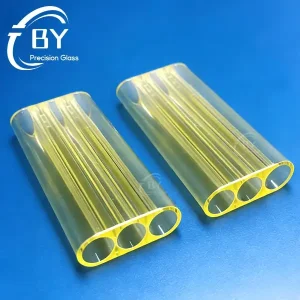
High-Precision Optical Windows & Cavity Components: Batch Series A
Explore production-ready optical components manufactured from JGS1, JGS2, Samarium-doped glass, and optical sapphire substrates with sub-nanometer surface roughness and customized AR coatings.
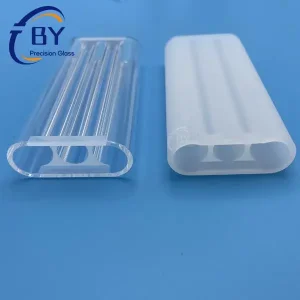
Candela Laser Head Triple Bore (Old & New Version)
View Product Specs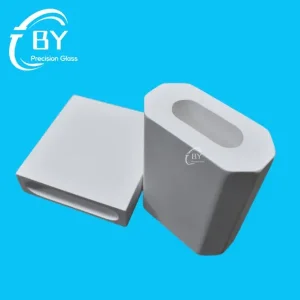
Spectralon-Grade PTFE Diffuse Reflectors for Pumping Cavities
View Product Specs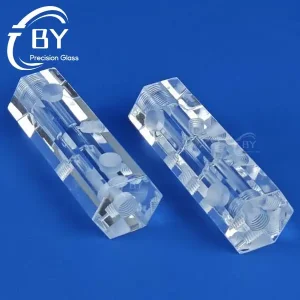
Custom Fabrication of High-Purity Quartz Precision Components
View Product Specs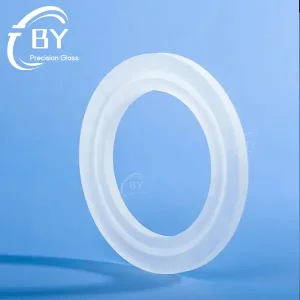
Semiconductor Wafer-Grade Custom Precision Quartz Components
View Product Specs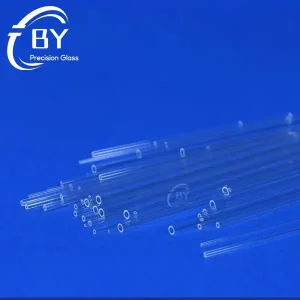
Fluorine-Doped Fused Silica Capillary Tubing (Custom ID/OD)
View Product Specs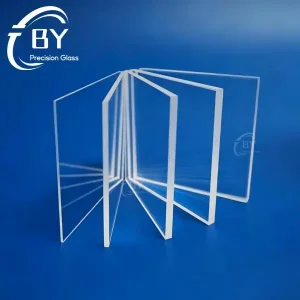
JGS1 Deep UV-Grade Synthetic Fused Silica Flat Optical Plates
View Product Specs
Lithography-Grade Precision Quartz Optical Windows (EUV/DUV)
View Product Specs
Corrosion-Resistant Fused Quartz Chambers & Custom Optics
View Product SpecsGlobal Enterprise Procurement Dynamics for Laser Protection Windows
A technical guide for supply chain heads, optical design authorities, and manufacturing engineers managing high-power laser optics supply networks.
Total Cost of Ownership (TCO) vs. Failure Rates
In 10kW to 60kW fiber laser cutting and multi-axis robotic welding cells, protective windows are consumable optical shields. However, procurement cannot evaluate them strictly on initial unit acquisition price.
Substandard windows exhibiting micro-inclusions or residual polishing sub-surface damage (SSD) fail catastrophically under extreme thermal load. A single optical burst contaminates internal collimating and focusing optics, generating thousands of dollars in downtime and replacement costs.
- Elimination of explosive ablation risks through strict inclusion density grading (<0.05 mm² / 100cm³)
- Extended cleaning duty cycles via hydrophobic and oleophobic sealing layers
- Predictable lifespan modeling reducing unplanned factory shift stoppages
Supply Chain Resiliency & In-House Integration
Tier-1 system integrators in North America, Germany, Japan, and South Korea face vulnerability when sourcing optical blanks from one vendor, CNC shape machining from another, and thin-film anti-reflective (AR) coating from third-party coaters.
Tianjin BY Photonics mitigates this vulnerability through end-to-end vertically integrated production. By housing raw boule selection, double-sided chemical mechanical planarization (CMP), ultrasonic CNC contouring, and automated cleanroom magnetron/IBS vacuum coating under one roof, we eliminate cross-contamination and cumulative lead time delays.
- Guaranteed batch-to-batch spectral transmission consistency (>99.8% at specified wavelengths)
- Buffer stock agreements and vendor-managed inventory (VMI) frameworks
- Rapid scaling from custom prototype lots (10–50 pcs) to high-volume OEM runs (50,000+ pcs/month)
Stringent Metrology & Defect Elimination
Modern automated beam monitoring systems immediately flag wavefront distortion caused by thermal lensing. Laser protection windows must maintain absolute mechanical flatness and parallel alignment to prevent beam degradation.
Our metrology infrastructure uses Zygo laser interferometers, spectrophotometers covering 185 nm to 3,500 nm, and automated cavity defect mapping to certify that every wholesale lot complies with ISO 10110 drawings.
- Transmitted Wavefront Distortion (TWD) kept within λ/8 @ 632.8 nm
- Wedge tolerances ≤ 10 arcseconds to prevent lateral focal offset
- Surface quality rated to military-spec 10-5 or 20-10 Scratch-Dig for high-power laser lines
Macro-Industry Solutions & System Integration Matrix
Custom-engineered optical windows designed around specific wavelength dynamics, thermal gradients, and environmental stresses across primary industrial domains.
Multi-Kilowatt Industrial Fiber Laser Systems
Operating in 1,064 nm to 1,080 nm continuous-wave (CW) modes, systems from 6kW to 40kW create extreme localized thermal stress on the final protective slide. Thermal lensing shifts focal position, degrading kerf quality during thick metal plate slicing.
We deploy high-purity synthetic fused silica (JGS1) with bulk absorption under 1 ppm/cm at 1,064 nm, finished with dual-surface hard dielectric IAD coatings capable of sustaining extreme continuous irradiance without mechanical distortion.
- LIDT rating > 15 J/cm² @ 1064 nm (10 ns pulse, 20 Hz)
- Reflectivity R < 0.1% per surface at operating bands
- Standard and custom outer diameters: ∅22.4mm, ∅30mm, ∅37mm, ∅50mm
Semiconductor Photolithography & Metrology
Advanced node mask inspection and lithography rely on Deep Ultraviolet (DUV 193 nm, 248 nm) and extreme vacuum operating conditions. Conventional silicates darken via color center development under excimer UV exposure.
We machine excimer-grade synthetic fused silica exhibiting negligible hydroxyl (OH) variation, zero bubble/inclusion classes, and molecular stability that resists photochemical compaction under long-term DUV flux.
- Homogeneity grade class H4 or better (Δn ≤ 2 × 10⁻⁶)
- Solarization-resistant silica formulation for ArF/KrF excimer lasers
- Ultra-clean handling, degreasing, and Class 1,000 cleanroom packaging
Medical & Aesthetic Dermatological Handpieces
Medical lasers (Alexandrite 755 nm, Nd:YAG 1,064 nm, Er:YAG 2,940 nm, and IPL systems) require dual-function protective shields that survive cryogenic cooling bursts while blocking toxic stray flashlamp UV.
We supply precision-edged sapphire windows and customized Samarium-doped/Cerium-doped quartz windows that filter radiation harmful to living tissue while preserving pump cavity efficiency and cooling fluid stability.
- Monocrystalline optical-grade c-axis Sapphire (Al₂O₃) for abrasive environments
- Samarium-doped quartz filters for 1064 nm parasitic emission suppression
- Biocompatible, non-toxic edge chamfering for patient-adjacent handpiece tips
Substrate Selection Matrix: JGS1 vs. JGS2 vs. JGS3 vs. Sapphire
A comparative engineering breakdown of physical, thermal, and optical properties essential for specifying protective optics in high-stress photonic systems.
| Substrate Material | Transmission Band | Refractive Index (nd) | Thermal Expansion (×10⁻⁶/K) | Max Temp (°C) | Typical Laser Application Fields |
|---|---|---|---|---|---|
| JGS1 Synthetic Fused Silica | 185 nm – 2,500 nm | 1.458 | 0.54 | 1,100 °C | High-Power CW Fiber Cutters, UV Lasers, DUV Optics |
| JGS2 Optical Fused Quartz | 220 nm – 2,500 nm | 1.458 | 0.54 | 1,100 °C | Standard Industrial Processing, Flow Tube Plates |
| JGS3 Infrared Fused Quartz | 260 nm – 3,500 nm | 1.458 | 0.54 | 1,100 °C | Mid-IR Laser Systems, CO₂ Lasers, Thermal Chamber Viewports |
| Monocrystalline Sapphire (Al₂O₃) | 170 nm – 5,500 nm | 1.768 | 5.8 | 1,800 °C | Harsh Chemical Media, Debris Blast Shields, IPL Guides |
| Samarium-Doped Glass (Sm/Quartz) | Selective Cut-off | 1.462 | 0.55 | 1,050 °C | Medical Laser Cavities, Solid-State Laser Flow Tubes |
The Physics of Laser-Induced Damage Threshold (LIDT)
LIDT represents the maximum optical fluence (J/cm² in pulsed mode) or irradiance (MW/cm² in CW mode) an optic tolerates without structural modification. Damage begins with multiphoton ionization at microscopic impurity sites, creating thermal runaway.
Tianjin BY Photonics uses controlled chemical-mechanical polishing (CMP) that prevents mechanical micro-fractures in the subsurface layer, driving raw damage thresholds well above international safety baselines.
IBS vs. Dual-Magnetron Thin Film Deposition
Traditional electron-beam evaporation produces porous thin-film structures that absorb atmospheric moisture, shifting peak transmission bands. We employ Ion-Beam Sputtered (IBS) and Ion-Assisted Deposition (IAD) technology.
This process creates amorphous, near-bulk-density dielectric film stacks with extinction coefficients (k) under 10⁻⁵, maintaining absolute wavelength stability in fluctuating factory temperatures and humidities.
Wavefront Preservation & Transmitted Beam Quality
A laser protection window must serve as an invisible boundary. Surface irregularities produce phase distortions characterized by high M² beam propagation factors, degrading focal spot symmetry.
Our double-sided planetary polishing produces transmitted wavefront distortion ≤ λ/10 over the clear aperture, maintaining focal point geometry and eliminating spot wander across the work surface.
The Global Laser Protection Optics Landscape
A clear view of cost structures, supply stability, and logistics for OEM manufacturers scaling global production.
Supply Chain Diversification
Global equipment builders require dependable supply sources that balance cost and technical performance. Tianjin BY Photonics provides an optimal bridge: world-class synthetic optical purity matched with competitive Chinese precision manufacturing economics.
Our direct access to regional synthetic quartz boule synthesizers gives OEM partners insulated pricing and predictable inventory access during global raw material shifts.
Yield Economics & CNC Production Scale
Protective windows depend on edge integrity. Chipped bevels or uncontrolled micro-fractures under retaining rings cause premature cracking when clamped in pressurized cutting heads.
We utilize customized 5-axis ultrasonic CNC diamond machining centers for all edge grinding, C-shaping, and beveling operations. This produces smooth chamfers that distribute mechanical clamp forces evenly across the window perimeter.
Global Engineering & Logistics Assurance
Optics are sensitive components requiring specialized packaging for international transport. Every shipment is cleaned via multi-stage ultrasonic baths, sealed in cleanroom vacuum blisters, and shock-packed to prevent surface micro-scratches during transit.
Our sales engineering desk works directly with overseas teams, providing full engineering documentation, material melt certificates, and dimensional CMM inspection reports with every delivery.
Quality Control, Metrology Protocols & Global Compliance
Every laser window shipped from our Tianjin production facility adheres to strict international optical fabrication and environmental protocols.
ISO 10110 Optical Drawing Standard
Complete adherence to ISO 10110 drawing callouts, ensuring unambiguous interpretation of surface figure (3/), centering (4/), surface imperfection tolerances (5/), and LIDT certifications (6/).
Interferometric Inspection
Zygo Verifire laser Fizeau interferometers verify transmitted wavefront distortion, optical parallelism, and peak-to-valley surface flatness across 100% of critical apertures.
Laser Damage Certification
Routine destruct test sampling adheres to ISO 21254 protocols, confirming compliance with specified pulse energy ratings and irradiance thresholds before wholesale batch release.
Environmental Compliance
All products, raw glasses, and dielectric thin-film chemistries comply with RoHS (2011/65/EU) and REACH (EC 1907/2006) regulations, free of hazardous heavy metals and regulated materials.
Frequently Asked Questions: Laser Protection Windows
Direct answers from our engineering desk addressing material properties, coatings, operational tolerances, and ordering workflows.
What causes laser protective windows to burn or fail rapidly in high-power cutting systems?
How do JGS1, JGS2, and JGS3 optical glass grades differ for laser window applications?
JGS2 is fused quartz created from refined natural quartz crystal. It features low bubble counts and transmits cleanly from 220 nm to 2,500 nm, serving as a dependable substrate for standard sight glass, moderate industrial laser optics, and flow plates.
JGS3 is synthetic or electrically fused silica engineered with extremely low hydroxyl content (<5 ppm OH), eliminating the strong water absorption dip around 2,730 nm. This provides transparent transmission through 3,500 nm, making it ideal for infrared, Ho:YAG, and Er:YAG laser systems.
What are your standard manufacturing tolerances for custom laser windows?
- Outer Diameter / Dimensions: +0.00 / -0.05 mm (or tighter on request)
- Thickness: ±0.05 mm
- Parallelism / Wedge: ≤ 10 to 30 arcseconds
- Surface Flatness: λ/4 to λ/10 per 25mm @ 632.8 nm
- Surface Quality: 20-10 or 10-5 Scratch-Dig (MIL-PRF-13830B)
- Clear Aperture: > 90% of physical dimension
- Chamfer: 0.1 – 0.3 mm × 45° protective mechanical bevel to eliminate edge microchipping
Can you apply customized Anti-Reflective (AR) coatings for dual or triple wavelengths?
What is the minimum order quantity (MOQ) and production turnaround for custom designs?
How should laser protection windows be cleaned and maintained in industrial cleanrooms?
Precision Flow Tubes, Cavity Reflectors & Optical Tubes: Batch Series B
Explore our complete manufacturing line including doped laser cavity flow tubes, capillary redrawn tubes, ceramic pump reflectors, and customized quartz vacuum components.
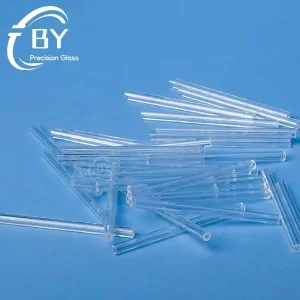
High-Precision Redrawn Quartz Capillary Tubing & Rods
View Product Specs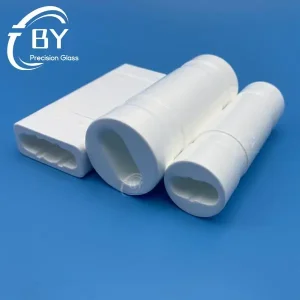
Alumina Ceramic Reflectors for Semiconductor Pump Cavities
View Product Specs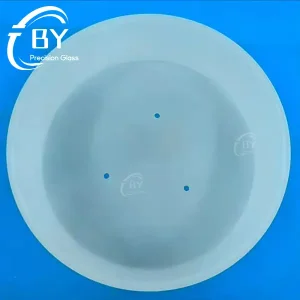
Custom Fused Quartz Components for Thin-Film Vacuum Coating
View Product Specs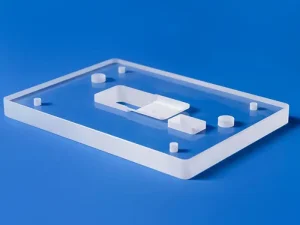
CNC Machined Precision Quartz Plates & Optical Stages
View Product Specs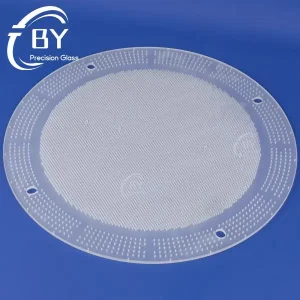
Semiconductor Quartz Gas Distribution Plates (Showerhead)
View Product Specs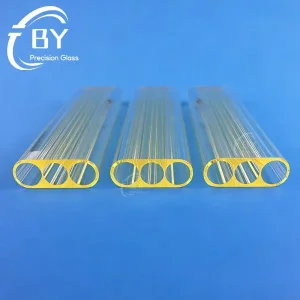
Samarium-Doped Glass Flow Tubes & Laser Filters (Sm Glass)
View Product Specs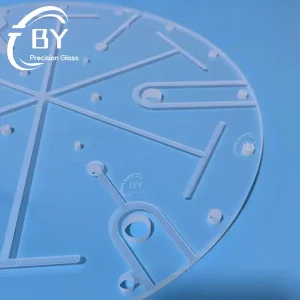
Hot-Worked & Welded Precision Quartz Custom Assemblies
View Product Specs