
Precision Optical Tubes & High-Purity Quartzware
Engineered for extreme fluence laser cavities, semiconductor fabrication chambers, and harsh physicochemical optical assemblies.
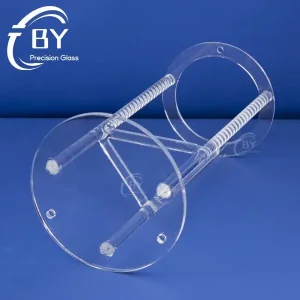
Wholesale Quartz Wafer Carriers for Semiconductor Supplier, Suppliers
View Product Details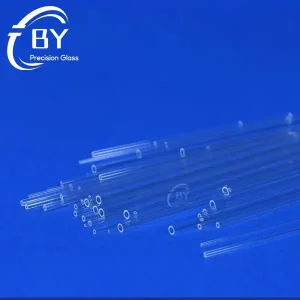
Wholesale Fluorine-Doped Fused Silica Capillary Tube Manufacturer, Factories
View Product Details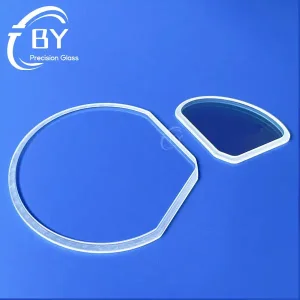
High-Quality Sapphire Viewing Plates for Harsh Chemical Environments Suppliers, Factories
View Product Details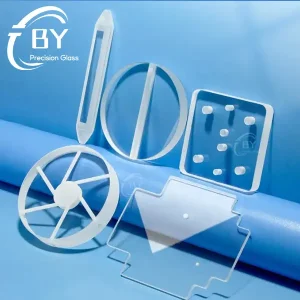
Wholesale High Temperature Custom Quartz Glass Fabrication Suppliers, Factories
View Product Details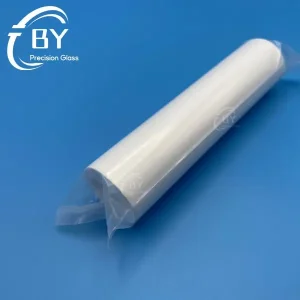
Wholesale Candela VBeam Laser 6" White Cavity Ceramic Reflector 2 Pk Manufacturer, Suppliers
View Product Details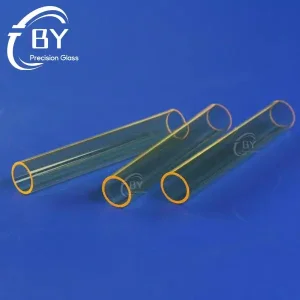
Custom UV Block Yellow Quartz Tube for IPL Lamp Flow Handle Manufacturer, Factories
View Product Details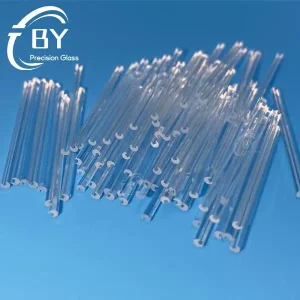
High-Quality Quartz Substrate Groove Use For Optical Fiber Coupler Suppliers, Factories
View Product Details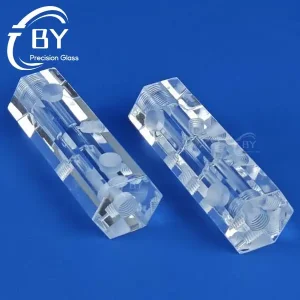
High-Quality Custom Fabrication of Quartz Glass Precision Components Supplier, Factory
View Product Details1. The Physics and Optical Dynamics of Laser Pump Lamp Flow Tubes
In high-intensity flashlamp-pumped and continuous-wave arc-lamp solid-state laser systems (such as Nd:YAG, Alexandrite, Ruby, and Er:YAG), the laser pump lamp flow tube serves a dual, mission-critical function: thermodynamic fluid boundary separation and active optical spectral filtration. Mechanically positioned inside the pump chamber, the flow tube encloses the xenon or krypton flashlamp and the gain medium rod, facilitating turbulent or laminar liquid coolant flow (typically deionized water or water-glycol mixtures) to dissipate multi-kilowatt thermal loads generated by non-radiative transitions.
From an optical engineering perspective, unfiltered flashlamp emission produces broad-spectrum radiation ranging from deep ultraviolet (180 nm) to the near-infrared. High-energy UV radiation beneath 380 nm causes severe photovoltaic consequences:
- Solarization and Color Center Formation: Shortwave UV induces crystalline lattice defects in laser crystal rods (such as Nd:YAG and Alexandrite), leading to broad-band absorption, drastic reduction of stimulated emission cross-sections, and dynamic thermal lensing distortion.
- Photochemical Coolant Degradation: Unfiltered vacuum-UV photolyzes coolant molecules, producing corrosive free radicals and oxidizing agent traces that corrode gold-plated or high-reflectance ceramic pump chambers.
- Amplified Spontaneous Emission (ASE) Losses: In continuous and pulsed operations, parasitic transversal oscillations at 1064 nm drain the upper laser level ($^4F_{3/2}$) population inversion before the main pulse can extract the energy.
Technical Distinction: Doped flow tubes act as targeted chemical notch filters. Doping fused silica with Rare Earth elements (specifically Cerium $Ce^{3+}$ or Samarium $Sm^{3+}$) produces sharp cut-off characteristics that completely block unwanted destructive wavelengths while maximizing pump-band optical transmission (>99% in targeted absorption bands).
Modern wholesale procurement requires a comprehensive understanding of raw material categorization. Synthetic UV Fused Silica (equivalent to JGS1) is specified when maximal transmission down to 185 nm is required for excimer and deep-UV harmonics. In standard industrial laser pumping, Cerium-doped quartz is utilized to absorb wavelengths <380 nm and re-emit fluorescence within the absorption pump band (approx. 400–450 nm), significantly increasing pumping efficiency. Conversely, Samarium-doped glass (typically 10% or custom $Sm_2O_3$ concentrations) provides an indispensable 1064 nm absorption band that suppresses parasitic laser oscillations in high-gain Nd:YAG amplifiers while blocking ultraviolet radiation below 400 nm.
2. Global Trends in Industrial & Medical Laser Pumping
Navigating the strategic engineering pivot toward ultra-narrow tolerances, composite doped sleeves, and high repetition rate durability.
Aesthetic Medical Lasers Surging
Dermatological platforms (such as 755nm Alexandrite and 1064nm Nd:YAG long-pulse systems) demand high-durability yellow-doped and cerium-doped quartz sleeves capable of withstanding intense thermal cycling (>10 Hz pulse frequencies) without micro-fissuring or degradation of anti-reflective dielectric coatings.
Additive & Aerospace Peening
Laser Shock Peening (LSP) and military-grade rangefinding call for high pulse energy (10–50 Joules per pulse). Flow tubes in these chambers endure hydrodynamic liquid shocks and severe acoustic pressure waves, necessitating precision fire-polished and chemically annealed quartz finishes.
Multi-Bore Complex Integration
Next-generation compact cavities are moving away from concentric dual tubes toward monolithic multi-bore flow tubes (double-bore, triple-bore, and customized flow plates). This engineering architecture guarantees fixed geometric centers between the lamp and rod while eliminating fluid bypass dead zones.
3. Global Enterprise Procurement Matrix: What Tier-1 OEMs Demand
When procurement officers and chief photonics engineers evaluate wholesale flow tube factories, raw geometric dimensions represent only the baseline. High-volume automated assembly lines require strict adherence to stringent physicochemical and optical criteria.
Key parameters scrutinized during incoming quality audits include:
- Concentricity and Wall Thickness Uniformity: Wall thickness runout exceeding 0.05 mm produces asymmetric cooling gradients, causing rod thermal bowing, wavefront aberration, and premature crystal fracturing under high pump power.
- Hydroxyl (OH-) Content: In infrared applications, OH- absorption at 2.73 µm generates thermal stress spikes. Specialized water-free synthetic quartz (JGS3) is mandatory for long-wave stability.
- Surface Micro-Roughness and Edge Chipping: Sub-surface damage (SSD) or micro-cracks at the flow tube ends act as stress concentrators during thermal expansion. CNC fine grinding must be succeeded by precision oxyhydrogen fire-polishing to eliminate micro-fractures.
| Engineering Property | Standard Grade Quartz | Ce-Doped Quartz | Sm-Doped Optical Glass |
|---|---|---|---|
| UV Cut-off Wavelength | < 200 nm (JGS1) | ∼ 380 nm - 400 nm | ∼ 400 nm - 420 nm |
| 1064 nm Transmittance | > 92% (Fresnel loss only) | > 92% | < 0.1% (High Absorption) |
| Thermal Expansion (CTE) | $5.5 \times 10^{-7} /^\circ\text{C}$ | $5.6 \times 10^{-7} /^\circ\text{C}$ | $9.8 \times 10^{-6} /^\circ\text{C}$ |
| Thermal Shock Tolerance | $\Delta T = 1100^\circ\text{C}$ to water | $\Delta T = 900^\circ\text{C}$ to water | $\Delta T = 180^\circ\text{C}$ controlled |
| Standard Surface Quality | 20-10 Scratch-Dig | 20-10 Scratch-Dig | 10-5 / 20-10 Scratch-Dig |
| Cooling Annulus Velocity | Up to 12 m/s turbulent | Up to 10 m/s turbulent | Laminar to low turbulent |
4. China Factory 4.0: Supply Chain Resilience & Processing Superiority
How advanced Chinese photonics hubs integrate vertical ingots melting, ultrasonic cold-machining, and laser interferometric inspection.
Vertical Integration & Raw Stock
By controlling raw high-purity natural silica sand refinement, synthetic vapor deposition, and direct drawing of high-precision parent tubes, top-tier Chinese factories eliminate the 6-to-9 month raw material bottlenecks common in Western supply chains, maintaining consistent lot-to-lot traceability.
5-Axis Ultrasonic CNC Machining
Doped optical glasses and quartz are notoriously brittle. Advanced production lines deploy ultrasonic vibration-assisted diamond CNC grinding to machine custom coolant notches, flanged profiles, and O-ring retaining grooves with zero sub-surface micro-cleavage, guaranteeing extreme mechanical burst pressure capacity.
100% Optical Metrology & QA
Every single flow tube batch undergoes laser interferometry (Zygo/Fizeau wavefront measurement to guarantee <λ/4 distortion), spectrophotometric transmission validation across 200–1200 nm, and static hydrostatic pressure validation at 2.0 MPa for 120 seconds prior to export cleanroom packaging.
5. Localized Application Engineering Scenarios
A. Aesthetic & Dermatology Medical Laser Heads (Candela, Cynosure, Lumenis Compatible)
In high-end hair removal and vascular lesion treatment systems (such as 755nm Alexandrite and 1064nm long-pulse Nd:YAG), flashlamps fire millions of pulses over their operational lifespan. Custom Cerium-doped yellow quartz flow tubes and samarium-doped sleeves act as shields that protect the delicate laser rod from extreme UV solarization while maintaining stable operating temperatures. Flow sleeves with integrated O-ring sealing grooves and anti-abrasion flame-polished ends ensure hermetic water sealing without crushing fragile glass components during handpiece assembly.
B. Industrial Nd:YAG Laser Welding and Deep Cladding Chambers
Heavy manufacturing equipment operating in 24/7 automotive stamping and aerospace repair relies on continuous-wave (CW) or pulsed Nd:YAG laser systems pumped by multi-kilowatt krypton arc lamps. Flow tubes in these chambers are exposed to high coolant flow rates (up to 30 liters/minute) that generate substantial fluid shear forces. Precision borosilicate and synthetic fused silica tubes with wall concentricity tolerances tighter than ±0.015 mm are deployed to prevent fluid turbulence cavitation, preventing boundary-layer boiling and hotspot burnouts on the gold-coated cavity reflectors.
C. Scientific Research, Fusion Diagnostics & Rangefinders
In petawatt-class multi-pass amplifiers and aerospace laser rangefinders, parasitic lasing and amplified spontaneous emission (ASE) deplete gain storage. Samarium-doped glass flow tubes engineered with precise 10% Sm concentration serve as optical dampers that selectively attenuate 1064nm amplified photons traveling across the rod-coolant interface, enabling maximum energy extraction along the longitudinal resonator axis.
6. Frequently Asked Questions (FAQ) for Engineering & Sourcing
Authoritative answers to the most rigorous technical questions raised by laser cavity designers and wholesale procurement directors.
Why choose Samarium-doped (Sm3+) glass flow tubes over standard fused quartz for Nd:YAG laser heads?
What is the optical difference between Cerium-doped quartz and yellow UV-block quartz?
How does Chinese factory 4.0 production prevent micro-cracking and burst pressure failure under high water velocity?
What geometric tolerances can your factory maintain for custom single-bore and multi-bore flow tubes?
What CAD drawing formats and minimum order quantities (MOQ) are supported for OEM manufacturing?
Doped Flow Sleeves, Reflectors & Engineered Substrates
Complete material solutions for laser pump modules, semiconductor thermal tools, and optical instrumentation.
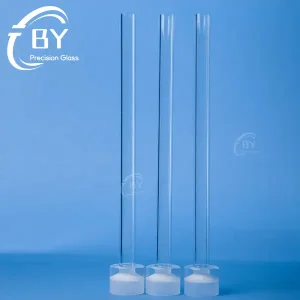
High-Quality Chemical Resistant Custom Quartz Glass Parts Fabrication Supplier, Factories
View Product Details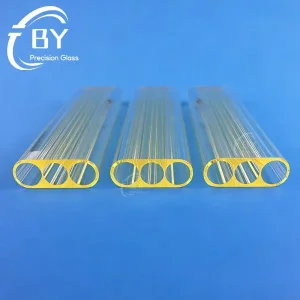
Custom Laser Cavity Flow Tubes & Filters Made from Samarium-doped Glass Supplier, Suppliers
View Product Details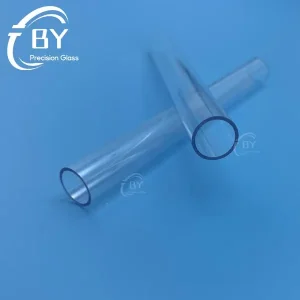
Wholesale Cerium Doped Quartz Tube Blocked UV Wavelength Manufacturer, Manufacturers
View Product Details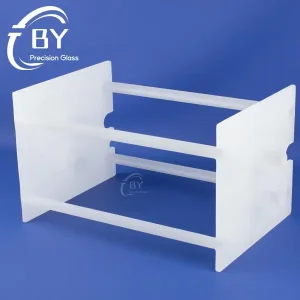
Wholesale Quartz Diffusion Boat for Semiconductor Suppliers, Factories
View Product Details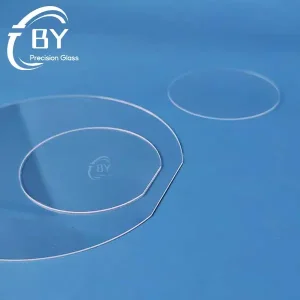
Custom Borofloat 33® Glass Wafers for Semiconductor Manufacturers, Factories
View Product Details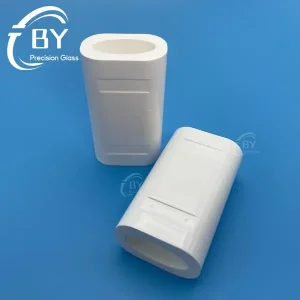
High-Quality Ceramic Cavities For Nd YAG Laser Supplier, Factories
View Product Details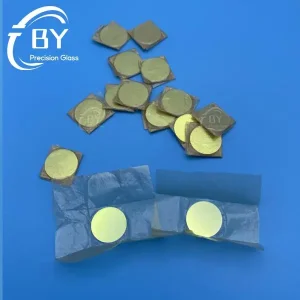
High-Quality Candela Laser Distance Gauge Slider Windows With coating 755 and 1064nm Suppliers, Factories
View Product Details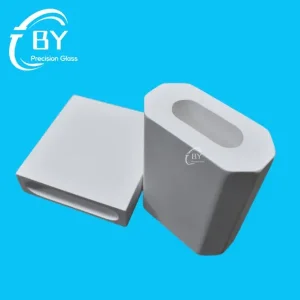
High-Quality Diffuse Reflectors Made of Spectralon‑Grade PTFE for Diode‑Pumping Chambers Manufacturer, Suppliers
View Product DetailsConnect Directly with Optical Engineering
Submit your technical drawings (STEP, DWG, PDF) for comprehensive Design for Manufacturability (DFM) feedback and competitive factory wholesale pricing within 24 hours.