
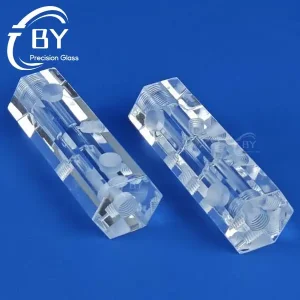
Precision Glass Catalog
High-Quality Custom Fabrication of Quartz Glass Precision Components Supplier, Factory
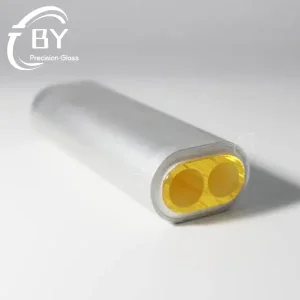 Custom Packed Laser Cavity Flowtubes for Laser Head Manufacturers, Suppliers
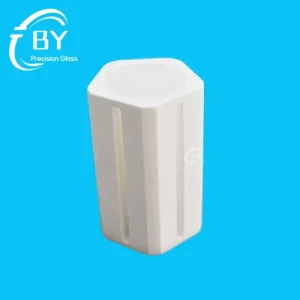 Wholesale Diffuse High‑Reflectivity PTFE Reflectors for Diode‑Pumping Chambers Suppliers, Factory
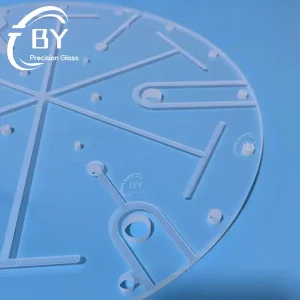 High-Quality Custom Precision Quartz Glass Fabrication Supplier, Suppliers
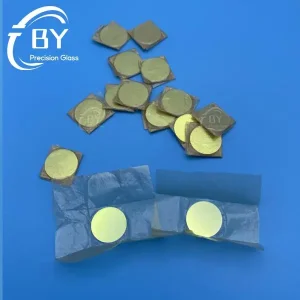 High-Quality Candela Laser Distance Gauge Slider Windows With coating 755 and 1064nm Suppliers, Factories
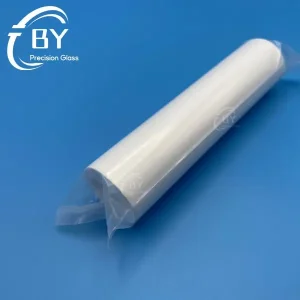 Wholesale Candela VBeam Laser 6" White Cavity Ceramic Reflector 2 Pk Manufacturer, Suppliers
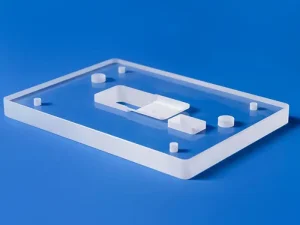 High-Quality Factory Supply Precision Quartz Glass Machining Plate Supplier, Suppliers
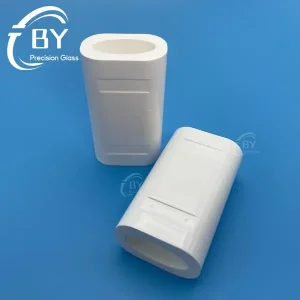 High-Quality Ceramic Cavities For Nd YAG Laser Supplier, Factories
Featured Precision Quartz Components & Assemblies
Direct factory supply of precision-machined fused silica, customized flowtubes, high-temperature cavity reflectors, and semiconductor process components manufactured to micro-level tolerances.
Global Industry Landscape
Strategic Status of Fused Quartz Tubes & Rods in Modern Industry
High-purity fused silica and quartz rods (SiO₂ ≥ 99.99%) represent foundational materials across critical global industries, powering advanced semiconductor fabrication, solar photovoltaic ingot pulling, optical fiber preform drawing, and extreme-environment photonic hardware.
Semiconductor & Photovoltaic Transition
The continuous shift toward advanced node wafer fabrication (≤3nm) and large-scale TOPCon/heterojunction solar cells has dramatically increased the demand for ultra-low alkali diffusion furnace tubes, wafer carriers, and quartz bell jars resistant to high thermal shock up to 1,200°C.
Optical Fiber Preforms & Photonics
Telecom network bandwidth expansion requires large-diameter synthetic silica substrate tubes and fluorinated capillary handles with near-zero bubble density, minimal hydroxyl [OH] levels, and exceptional refractive index uniformity across kilometer-long spans.
Extreme Heat & Chemical Resistance
Boasting a thermal expansion coefficient of approximately 5.5 × 10⁻⁷ /°C, fused quartz withstands thermal quenching from 1,100°C directly into cold water without fractures, making it irreplaceable for halogen heating, analytical flow cells, and ozone generation systems.
99.999%
Silicon Dioxide Purity
1,150°C
Continuous Working Temp
0.55×10⁻⁶
Thermal Expansion /°C
185-3500nm
Broadband Transmission
Manufacturing Superiority
China Factory Scale & Engineering Efficiency Advantage
China has consolidated the global quartz manufacturing ecosystem by pairing abundant domestic high-purity natural silica sand purification with state-of-the-art oxyhydrogen flame drawing and sub-micron cold CNC machining.
Integrated Upstream Supply
From raw mineral sand chlorination to synthetic silicon tetrachloride (SiCl₄) synthesis, Chinese cluster facilities eliminate raw material wait times, maintaining extensive inventories of transparent, opaque, and doped quartz tube stock.
Dual-Discipline Production
Unlike standard workshops that outsource thermal processing, integrated factories operate precision redrawing towers alongside automated CNC ultrasonic mills, fire-polishing lathe rooms, and vacuum dehydroxylating furnaces under one roof.
Agile OEM Tooling & Rapid DFM
Design-for-manufacturability feedback is delivered within 24 hours. Custom drawing prototyping takes 3 to 7 days, allowing global equipment makers to iterate optical cavity designs without multi-month procurement cycles.
Engineering Reference Matrix
Material Classification: Fused Silica vs. Fused Quartz
Selecting the appropriate quartz grade is critical for balancing optical transmission efficiency, OH radical absorption bands, and total procurement budget.
| Material Standard | Manufacturing Method | Spectral Range | [OH] Content | Primary Industrial Application |
|---|---|---|---|---|
| JGS1 Synthetic Silica | Chemical Vapor Deposition (SiCl₄ flame) | 185 nm – 2,500 nm | < 1,200 ppm (or < 5 ppm) | Deep-UV excimer lithography, laser flow cells, analytical cuvettes |
| JGS2 Fused Quartz | Oxyhydrogen Melting of Natural Crystal | 220 nm – 2,500 nm | 150 – 300 ppm | Semiconductor diffusion tubes, high-temp sight glasses, laser flow tubes |
| JGS3 Fused Quartz (IR) | Vacuum Electric Arc Melting | 260 nm – 3,500 nm | < 5 ppm | Infrared optics, thermal imaging viewports, industrial furnace components |
| Doped Quartz (Sm / Ce) | Rare-earth Element Ingot Doping | Selective Cutoff (absorbs UV) | Variable | Laser pump cavity flowtubes, flashlamp sleeves, IPL filter blocks |
| Borosilicate 3.3 | Float Glass / Redrawing Technique | 350 nm – 2,500 nm | Standard | Microfluidic capillary tubes, moderate-temp sight gauges (<450°C) |
Application Engineering
Localized Industrial Integration & Case Scenarios
Engineered quartz tubing and precision-drawn glass rods solve critical thermal, mechanical, and optical isolation challenges across complex operational environments.
1. Semiconductor Wafer Diffusion
Heavy-wall fused quartz tubes (OD 150mm to 450mm) act as process chambers during thermal oxidation and LPCVD steps. Extreme purity prevents metal ions (Fe, Cu, Na) from migrating into crystalline silicon structures at elevated furnace temperatures.
2. Laser Head Flowtubes & Cavities
Precision-concentric samarium-doped and cerium-doped quartz flow tubes surround Nd:YAG rods. They filter parasitic 1064nm fluorescence and absorb damaging solarizing UV radiation while channeling deionized cooling water under high flow velocity.
3. High-Intensity UV & Ozone Lamps
Custom clear and ozone-free quartz tubes provide direct transmission at 254nm for water disinfection and municipal wastewater sterilizers, while maintaining vacuum envelope integrity under continuous electrode heating.
4. Fiber Splicing & Capillary Ferrules
Micro-capillary tubes redrawn with inner bore diameters down to 0.05mm (±0.002mm tolerance) provide exact axial alignment for single-mode optical fiber pig-tailing, end-cap collimators, and microfluidic gradient detectors.
5. Analytical Flow Cells & Cuvettes
Fused silica square capillary tubing and fire-polished rectangular cells deliver optical flatness up to λ/4, ensuring clean spectrophotometric readings without birefringence or optical distortion in HPLC detector flow channels.
6. Thermal Processing & Sight Glass
Heavy-duty transparent quartz rods serve as light guides and non-contact pyrometer optical conduits, transferring infrared radiation from sealed vacuum reaction chambers to external thermal sensors safely.
Roadmap & Emerging Horizons
Future Trends in Advanced Quartz Tube & Rod Processing
As equipment architectures evolve toward sub-nanometer tolerances, higher power density lasers, and extreme operating pressures, specialized manufacturing requirements are shaping the industry roadmap.
Ultra-Large Diameter Tubes for 300mm/450mm Fabs
Modern semiconductor front-end plants require quartz furnace tubes exceeding 500mm in outside diameter with sub-millimeter wall thickness uniformity. Advanced horizontal centrifugal casting and vertical redraw towers now ensure roundness deviations below 0.15%.
Laser Powder Bed Fusion & Additive 3D Quartz
Traditional flame forming is increasingly complemented by 5-axis ultrasonic CNC milling and emerging fused silica slurry 3D printing. This allows internal helical cooling channels and complex manifold structures inside single-piece quartz flow bodies.
Zero-Carbon Synthetic Silica Feedstock
Green synthetic manufacturing processes utilize non-fossil SiCl₄ synthesis powered by renewable electricity. This minimizes total carbon footprints while driving down trace bubble contamination and metallic impurities to parts-per-trillion levels.
Procurement Standards
Global Procurement Checklist: How to Specify Quartz Tubes & Rods
To prevent production delays, rework, and thermal cracking in operating environments, professional engineering teams follow a rigorous technical verification protocol before releasing wholesale purchase orders.
Dimensional Tolerances & Geometry
- Outer / Inner Diameter (OD/ID): Standard draw (±0.2mm) vs. Precision Ground/Polished (±0.01mm).
- Wall Thickness Uniformity: Splay and eccentricity metrics should not exceed 5% of nominal thickness.
- Bow & Straightness: High-speed rotational furnaces require straightness better than 0.5mm per meter.
- End Face Finish: Specify scored snap, machine saw cut, ground bevel, or full flame-glazed sealed ends.
Material Purity & Optical Specifications
- Hydroxyl [OH] Concentration: High-OH (1,000 ppm) for UV stability; Low-OH (<5 ppm) to stop 2,730nm IR absorption.
- Bubble & Inclusion Class: DIN ISO 10110 compliance regarding allowable bubble size, seeds, and striations.
- Residual Stress & Annealing: Controlled oven cycle ensuring birefringence path difference < 10 nm/cm.
- Dehydroxylating Treatment: Vacuum heat treatment above 1,050°C to stabilize high-temperature furnace ware.
Technical Knowledge Center
Frequently Asked Questions: Quartz Manufacturing & Wholesale Supply
Expert answers to technical inquiries commonly raised by optical designers, semiconductor equipment buyers, and plant managers.
What is the maximum operating temperature for clear fused quartz tubes?
Clear fused quartz can operate continuously at 1,100°C to 1,150°C, and intermittently up to 1,300°C. Above 1,150°C, devitrification (crystallization into cristobalite) may occur over time depending on atmospheric cleanliness, while the annealing point is approximately 1,140°C and softening begins around 1,650°C.
Why do laser cavities prefer samarium-doped quartz over transparent quartz?
Samarium-doped glass (Sm-doped) exhibits sharp transmission characteristics: it completely absorbs 1064nm wavelength light (suppressing amplified spontaneous emission and parasitic oscillations in Nd:YAG rods) and cuts off harmful UV below 400nm (preventing rod solarization), while transmitting the pump spectrum between 600nm and 900nm.
How does China factory direct wholesale reduce procurement costs for custom sizes?
By avoiding middle-tier distribution markups and maintaining on-site precision drawing towers and CNC glass workshops, tier-1 Chinese manufacturers can redraw custom OD/ID tubes without incurring high custom extrusion die fees, providing scalable cost savings of 30% to 50% for batch runs.
What packaging standards protect long quartz tubes and rods during sea and air transit?
Standard industrial export packaging uses custom pearl wool (EPE) slotted cradles, vacuum air-cushion tubing, moisture-proof desiccants, and shock-absorbing non-fumigation plywood crates. Fragile and tip-and-tell indicators are affixed to track courier handling.
Can quartz tubing be joined to metal components or borosilicate glass directly?
Due to the extreme difference in thermal expansion (quartz: 0.55×10⁻⁶/°C; borosilicate: 3.3×10⁻⁶/°C; metals: >10×10⁻⁶/°C), direct welding causes immediate structural cracking. Transition assemblies require graded glass-to-glass seals with sequential thermal gradient layers, or Kovar alloy brazed flanges.
Extended Factory Product Portfolio
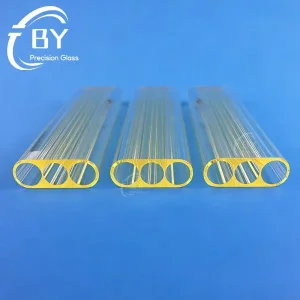 Custom Laser Cavity Flow Tubes & Filters Made from Samarium-doped Glass Supplier, Suppliers
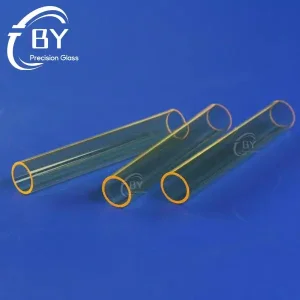 Custom UV Block Yellow Quartz Tube for IPL Lamp Flow Handle Manufacturer, Factories
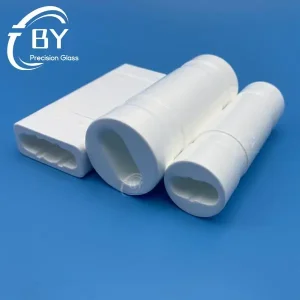 Wholesale Ceramics Reflecor for Semiconductor Lasers Suppliers, Factory
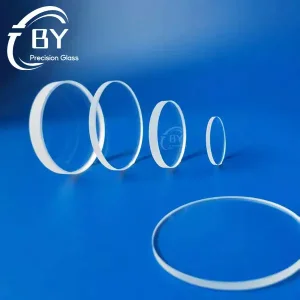 Wholesale Quartz Optical Windows for Semiconductor Lithography Equipment Suppliers, Factories
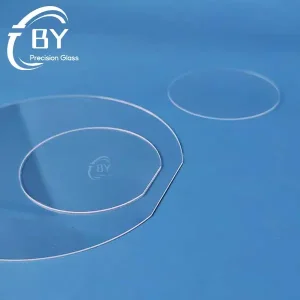 Custom Borofloat 33® Glass Wafers for Semiconductor Manufacturers, Factories
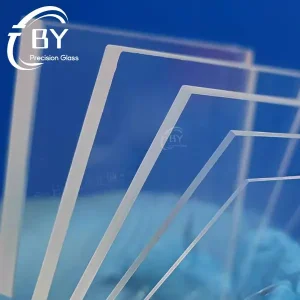 High-Quality Borosilicate Windows and Plates for Viewports Suppliers, Factory
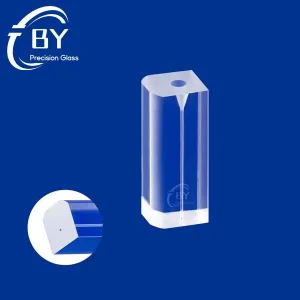 Custom Fiber Optic Glass Ferrules Supplier, Factories
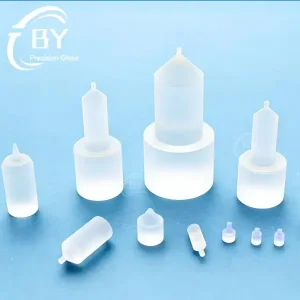 High-Quality Customized Quartz Fiber End Caps for QBH Manufacturer, Factory
Optical Glass, Doped Flow Tubes & Semiconductor Quartzware
Explore custom high-reflectivity cavity ceramics, UV-block flow handles, borosilicate viewports, and optical fiber end-caps engineered to customer technical drawings.