
High-Precision Optical Solutions for Luxembourg Advanced Industries
Engineered to withstand ultra-high pressure differentials, deep cryogenic cycles, and aggressive etching chemistry in satellite payloads and analytical spectroscopy.
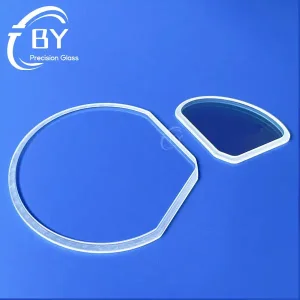
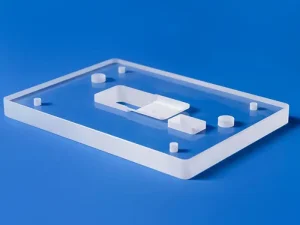
Luxembourg High-Quality Sapphire Viewing Plates for Harsh Chemical Environments
View Product Details →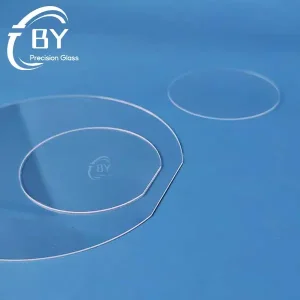
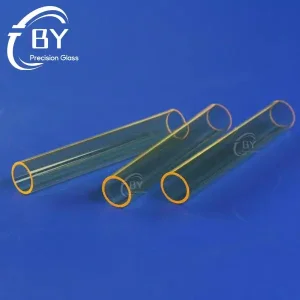
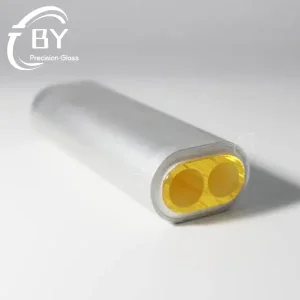
Sapphire Glass Plates and Custom Optics in the Luxembourg Industrial Ecosystem
From the Grand Duchy's pioneering space mining initiatives to advanced automotive sensor research, precision optical substrates form the foundation of critical modern instrumentation.
NewSpace & Satellite Communications
Home to global telecommunications giants (such as SES) and cutting-edge startups fostered under the Luxembourg Space Agency (LSA) and SpaceResources.lu, Luxembourg demands radiation-hardened sapphire windows capable of enduring cosmic ionizing radiation, micro-meteorite abrasions, and extreme thermal cycling between -180°C and +150°C in low-earth orbit (LEO) and geostationary payloads.
Automotive Mobility & LiDAR Metrology
With R&D powerhouses like IEE and Goodyear's Innovation Center operating across Bissen and Contern, Luxembourg leads in smart mobility. Monocrystalline sapphire cover plates protect autonomous vehicle cameras and solid-state LiDAR optical transmitters from sand erosion, road debris impacts, and aggressive atmospheric de-icing salts without losing optical wavefront coherence.
Biomedical Diagnostics & Belval Innovation
At the Luxembourg Institute of Science and Technology (LIST) and the University of Luxembourg's Belval campus, microfluidic cell sorters and in-situ spectroscopic reactors leverage our C-plane sapphire viewing windows and fused quartz flow cells to conduct live cell optical interrogation across the ultraviolet (UV) through infrared (IR) spectrum without background fluorescence.
Strategic Sourcing Note: While Luxembourg engineers world-class hardware designs, local access to end-to-end sapphire ingot crystal growth, diamond CNC slicing, and multi-axis optical planarization is limited. Tianjin BY Photonics bridges this gap with comprehensive OEM production pipelines backed by direct factory-gate logistics directly serving Findel Airport Cargo Hub.
Engineering Monocrystalline Al₂O₃: Structural & Optical Superiority
Unlike standard fused quartz or borosilicate, synthetic sapphire represents the zenith of hard-brittle crystal physics, combining Mohs 9 hardness with an extraordinary optical transmittance envelope spanning 170 nm to 5500 nm.
| Property / Characteristic | Synthetic Sapphire (α-Al₂O₃) | JGS1 UV Fused Silica | Borofloat® 33 Glass |
|---|---|---|---|
| Crystalline Structure | Hexagonal Rhombohedral (Monocrystal) | Amorphous (Isotropic SiO₂) | Amorphous Borosilicate |
| Mohs Hardness | 9.0 Mohs (Knoop 1800-2200 kg/mm²) | 5.5 – 6.5 Mohs | 5.5 Mohs |
| Optical Transmission Range | 170 nm – 5,500 nm (Deep UV to Mid-IR) | 185 nm – 2,500 nm | 350 nm – 2,500 nm |
| Melting Point & Max Thermal Range | 2,040 °C (Service up to 1,800 °C) | 1,710 °C (Service up to 1,150 °C) | ~820 °C (Service up to 450 °C) |
| Thermal Conductivity | 40 W/(m·K) @ 25°C (Parallel to C-axis) | 1.38 W/(m·K) | 1.2 W/(m·K) |
| Young’s Modulus / Tensile Strength | 345 – 400 GPa (Extremely rigid) | 73 GPa | 64 GPa |
| Chemical Incompatibility | Immune to all commercial acids except boiling H₃PO₄ >300°C | Attacked by HF & hot alkaline solutions | Attacked by strong HF solutions |
Crystallographic Orientation & 5-Axis Diamond Machining
Because monocrystalline sapphire is an anisotropic birefringent material, component longevity and optical performance depend upon selecting the precise crystallographic plane.
C-Plane (0001) Sapphire Plates
Zero birefringence along the optical axis (C-axis). Ideal for high-energy polarization-sensitive laser optics, transmission windows, high-pressure sight glasses, and pyrometric viewports where phase distortion must be eliminated.
A-Plane (11-20) & M-Plane (10-10)
Offers maximum mechanical uniformity and wear resistance. Preferred in abrasive particulate slurry flow environments, subsea drilling instrumentation, and scratch-proof protective plates for military optics and avionic pods.
R-Plane (1-102) Semiconductor Substrates
Engineered with specific lattice constants to enable heteroepitaxial deposition of silicon (Silicon-on-Sapphire / SOS) and III-V nitride thin films used in high-frequency radar circuits and aerospace microelectronics.
Cold Working & Chemical Mechanical Polishing (CMP) Workflow
At Tianjin BY Photonics, processing raw Kyropoulos-grown sapphire boules into dimensional parts requires rigid adherence to precision engineering controls:
- Diamond Wire Slicing & Edge Trepanning: Slicing raw ingots using multi-wire high-tension diamond saw blades with automated tension feedback to prevent internal micro-cracks and shear fractures.
- 5-Axis Ultrasonic CNC Machining: Diamond-impregnated grinding wheels operating with ultrasonic cavitation to mill complex counterbores, bevels, stepped grooves, and chamfers without subsurface edge flaking.
- Double-Sided Planetary Lapping: Diamond slurries down to 0.5-micron grading eliminate wedge errors and achieve parallelism down to < 5 arcseconds.
- Chemical-Mechanical Planarization (CMP): Colloidal silica under alkaline temperature-controlled pads delivers epi-ready, scratch-free surfaces with surface roughness Ra < 0.2 nm.
China Factory 4.0: Supply Chain Agility Serving Luxembourg
Founded in 2010 in Tianjin, China, BY Photonics consolidates raw crystal synthesis, precision machining, oxyhydrogen flame welding, and optoelectronic metrology under one roof.
Integrated Cold & Hot Processing Under One Roof
Subcontracting glass blanks to third-party polishing shops introduces tolerance creep and extended lead times. Our 3,000 m² modern manufacturing workshop houses over 120 dedicated machining stations—spanning multi-axis CNC machines, double-sided planetary polishers, oxyhydrogen flame annealing torches, and capillary redrawing towers. Every phase of your project remains fully traceable within our internal quality management system.
Rigorous Metrology & Cleanroom QC Validation
Equipped with Zygo VeriFire laser interferometers, Mitutoyo 3D Coordinate Measuring Machines (CMM), PerkinElmer Lambda 1050+ UV/Vis/NIR spectrophotometers, and Olympus optical profilers. Parts bound for cleanroom deployment in Luxembourg are ultrasonically cleaned in multi-stage deionized water cascades, vacuum-baked to eliminate volatile organic residues, and packaged in Class 100/1000 cleanrooms.
European Compliance & Frictionless Importation: All shipments to Luxembourg and the broader EU community are 100% compliant with RoHS Directive (2011/65/EU) and REACH Regulation (EC 1907/2006). We furnish complete Inspection Certificates (DIN EN 10204 3.1), full dimensional CMM reports, and material origin declarations to eliminate customs delays at Luxembourg Findel Airport.
Specifying Sapphire & Precision Glass for Global Tenders
To avoid over-tolerancing or costly production iterations, our application engineering team recommends specifying parts against the following dimensional and optical criteria.
1. Geometric Dimensioning & Tolerancing
Specify overall dimensions (diameter, length, width, thickness), true position of drilled ports, and bevel geometries. Standard CNC tolerance: ±0.05 mm; ultra-precision tolerance: down to ±0.005 mm upon review.
2. Surface Quality & Transmitted Wavefront
Define scratch-dig according to MIL-PRF-13830B (e.g., 60-40 for general sight ports; 20-10 or 10-5 for laser cavity optics). Transmitted wavefront distortion should be specified at 632.8 nm (He-Ne laser wavelength).
3. Thin-Film Anti-Reflective (AR) Coatings
Uncoated sapphire exhibits ~7.5% Fresnel surface reflection per face due to its refractive index (n ≈ 1.76). Specify dual-band AR coatings or broadband BBAR coatings to achieve > 99% transmission at critical laser lines (e.g., 532 nm, 1064 nm, 2940 nm).
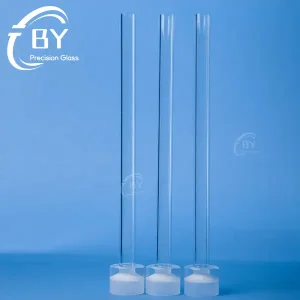
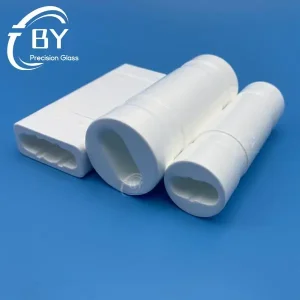
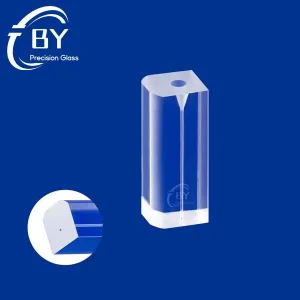
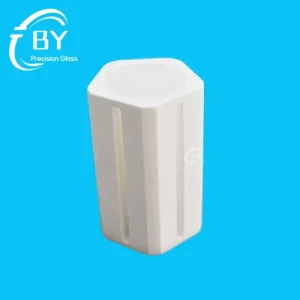
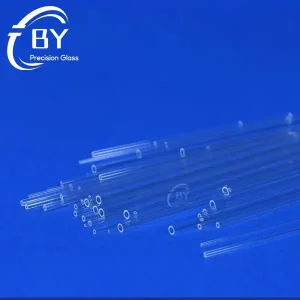
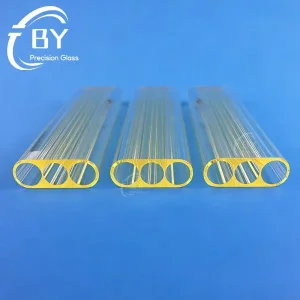
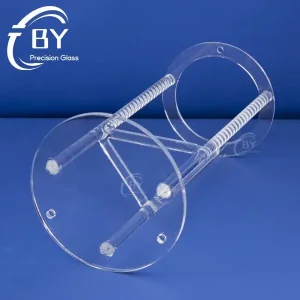
Precision Quartz, Laser Ceramics, and Specialized Glass Components
Explore our complete manufacturing series engineered for diode-pumped solid-state lasers, semiconductor chemical etching, and high-frequency fiber optics.
Frequently Asked Questions: Sapphire & Quartz Components
Expert answers addressing the concerns of Luxembourg optical engineers, procurement heads, and quality managers.