Featured Optical Products
Precision Optical & Substrate Solutions (Part I)
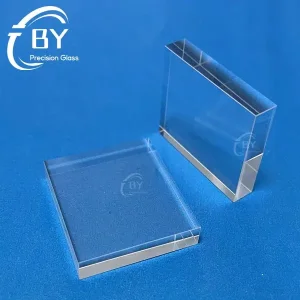
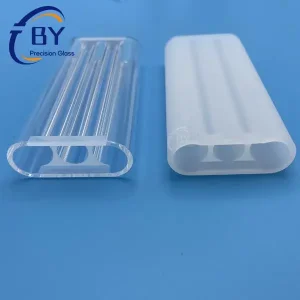
Engineered quartz substrates, laser pump chambers, and micro-groove alignments designed specifically for optical splitters, laser cavities, and spectral routing.
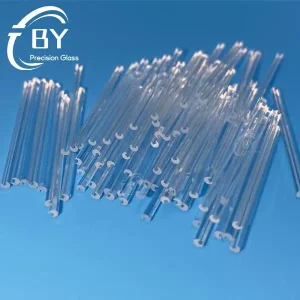
High-Quality Quartz Substrate Groove Use For Optical Fiber Coupler
View Product Specs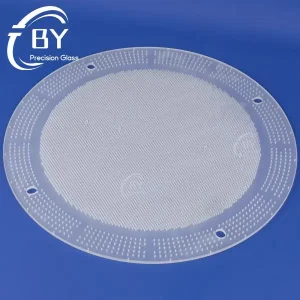
Custom Custom Optical Quartz Gas Distribution Plate Manufacturer
View Product Specs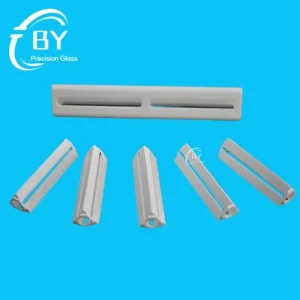
High-Quality Diode‑Pumping Chamber Diffuse Reflectors PTFE‑based
View Product Specs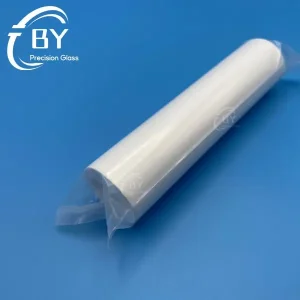
Wholesale Candela VBeam Laser 6" White Cavity Ceramic Reflector 2 Pk
View Product Specs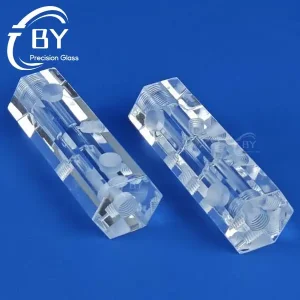
High-Quality Custom Fabrication of Quartz Glass Precision Components
View Product Specs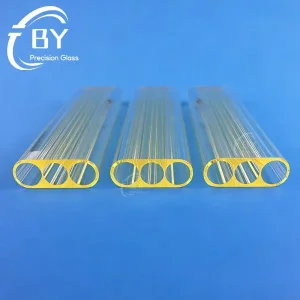
Custom Laser Cavity Flow Tubes & Filters Made from Samarium-doped Glass
View Product Specs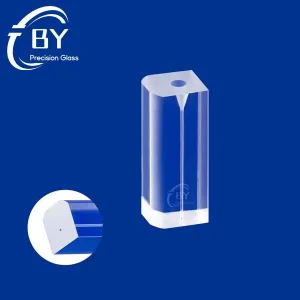
Custom Fiber Optic Glass Ferrules Supplier, Factories
View Product Specs
Technical White Paper & Market Insights
Macro Industry Landscape: The Evolution of Custom Fiber Splitters
Optical power splitting and wavelength division architecture form the undisputed physical layer backbone of global broadband, hyperscale AI clusters, and high-energy laser distribution systems.
FTTx & Next-Gen PON Expansion
With the international transition toward 10G-PON, 25G-PON, and emerging 50G-PON topologies, the demand for passive optical splitters engineered with ultra-flat spectral response across 1260 nm to 1650 nm has accelerated. Standard splitters face severe polarization-dependent loss (PDL), necessitating custom fused biconical taper (FBT) and planar lightwave circuit (PLC) assemblies with nanometer-level quartz alignment substrates.
Hyperscale AI & Optical Interconnects
Modern GPU computing fabrics require ultra-low latency co-packaged optics (CPO) and high-density optical routing. Splitters integrated into intra-datacenter fabrics must operate in harsh thermal environments while guaranteeing an insertion loss uniformity variance of less than 0.4 dB. Precision quartz substrate grooving and CTE-matched fused silica encapsulation prevent chromatic dispersion skew and phase misalignment.
Kilowatt-Class Laser Processing
In solid-state and fiber laser systems, splitters distribute pump laser energy from multi-emitter diode bars. Commercial telecom-grade splitters catastrophically degrade under multi-kilowatt power spikes. BY Photonics delivers synthetic high-purity JGS1 fused silica substrate blocks and end-caps with laser-induced damage thresholds (LIDT) exceeding 15 J/cm² at 1064 nm, ensuring total thermal shock resilience.
Industrial Authority & Manufacturing Mastery
Engineering Custom Fiber Splitters: From Raw Silica to Calibrated Arrays
Combining in-house cold ultrasonic CNC processing, high-temperature oxyhydrogen fusion, and micron-tolerance capillary redrawing under one unified quality management standard.
V-Groove Quartz Substrates
Optical splitting circuits depend entirely on waveguide alignment geometry. We diamond-grind single-mode and multi-channel quartz substrates with pitch accuracies within ±0.5 μm and groove angle precision of 0.1°, eliminating core-cladding offset.
Hermetic Quartz Capillaries
For fused biconical taper splitters, tube concentricity determines split-ratio stability under mechanical shock. Our thermal redrawing tower ensures bore eccentricity below 0.3%, supporting 1x2, 1x4, and custom unbalanced power splitting ratios.
High-Purity Material Chemistry
Every component is produced utilizing synthetic UV-grade fused silica (JGS1) and dry quartz (JGS3). Hydroxyl (OH⁻) concentrations are controlled below 2 ppm, eliminating the damaging 1383 nm water-peak attenuation in wideband CWDM/DWDM communications.
Sub-Nanometer Metrology
Equipped with 20+ laser interferometers, spectrophotometers, coordinate measuring machines (CMM), and optical loss test sets, validating surface roughness down to Ra < 0.5 nm and optical end-face flatness to λ/10.
Technical Benchmarks
Engineering Specifications for Custom Fiber Splitter Glassware
Comprehensive physical, mechanical, and optical parameters for custom splitters and alignment substrate manufacturing.
| Performance Characteristic | JGS1 Synthetic Fused Silica | JGS2 Standard Optical Quartz | JGS3 Low-OH Infrared Quartz | Testing & Compliance Protocol |
|---|---|---|---|---|
| Operating Spectral Window | 185 nm – 2,500 nm (Deep UV/Vis/NIR) | 220 nm – 2,500 nm (Vis/Telecom NIR) | 260 nm – 3,500 nm (Telecom & MWIR) | PerkinElmer Lambda 1050+ UV/Vis/NIR |
| Hydroxyl (OH⁻) Content | < 1200 ppm (High purity water-free grade < 5 ppm) | < 150 ppm | < 2 ppm (Zero 1383 nm Absorption Peak) | FTIR Infrared Spectroscopy |
| Substrate Groove Pitch Precision | ± 0.5 μm (Ultra-Precision) | ± 1.0 μm (Industrial Grade) | ± 0.5 μm (Custom Arrays) | Non-Contact White Light Optical Profilometry |
| Coefficient of Thermal Expansion (CTE) | 5.5 × 10⁻⁷ / °C (-50°C to +200°C) | 5.5 × 10⁻⁷ / °C | 5.4 × 10⁻⁷ / °C | Dilatometric Thermal Characterization |
| Laser Induced Damage Threshold (LIDT) | > 15 J/cm² @ 1064 nm, 10 ns, 20 Hz | > 8 J/cm² @ 1064 nm | > 12 J/cm² @ 1064 nm | ISO 21254 Pulsed Laser Surface Verification |
| End-Face Surface Quality & Flatness | 20-10 Scratch-Dig, λ/10 @ 632.8 nm | 40-20 Scratch-Dig, λ/4 @ 632.8 nm | 20-10 Scratch-Dig, λ/8 @ 632.8 nm | Zygo Verifire Laser Fizeau Interferometry |
Real-World Applications
Localized Deployment Scenarios for Custom Fiber Splitters
From extreme submarine cable enclosures to cleanroom medical diagnostic sensors, BY Photonics components adapt to mission-critical operational challenges.
Subsea Repeater Branching Units
Submarine optical repeaters experience hydrostatic pressure up to 10,000 psi. We supply custom quartz alignment capillary shells and chemical-vapor-deposited fused silica housings that withstand millions of operational cycles without micro-cracking or refractive index drift.
Aerospace Gyroscopes & Distributed Sensing
Fiber Optic Gyroscopes (FOG) and perimeter Distributed Acoustic Sensing (DAS) demand balanced 50:50 and 90:10 custom splitters capable of maintaining strict split ratio tolerances under rapid thermal variations from -55°C to +125°C.
Medical OCT & Diagnostic Flow Cells
Optical Coherence Tomography (OCT) requires low-noise interferometric splitting in the 1310 nm and 850 nm regions. Our non-magnetic, bio-inert quartz glass capillaries and fiber couplers integrate directly into surgical and ophthalmic diagnostic probes.
Global Compliance & Assurance
Localized Engineering Support & International Standards
Serving global OEMs across North America, Europe, and Asia-Pacific with fully certified, rigorously documented export manufacturing.
RoHS & REACH Compliance
All synthetic quartz substrates, dopants, adhesives, and ceramic reflectors conform fully to EU RoHS Directives 2011/65/EU and REACH (EC 1907/2006). Complete material declaration sheets, third-party SGS analytical test reports, and conflict mineral disclosures accompany every batch.
Telcordia GR-1209 & GR-1221
Fiber optic assemblies engineered with BY Photonics quartz components are built to pass strict environmental qualification standards, including 2,000-hour damp heat testing (85°C / 85% RH), thermal cycling (-40°C to +85°C), and mechanical shock/vibration resistance protocols.
Export Packaging & Rapid DFM
Cleanroom vacuum-sealed anti-static packaging prevents particulate adhesion and surface moisture condensation during transit. Our bilingual engineering desk returns complete Design for Manufacturability (DFM) evaluations and cost optimization feedback within 24 hours.
Forward Engineering
Technology Roadmap: Splitting Optics for the 1.6T Era
Addressing the physical limitations of legacy fiber glass as computing architectures transition into Terabit co-packaging and quantum routing networks.
Phase I: Micro-Lens Arrays & Silicon Photonics
Integrating planar quartz splitters directly with silicon photonic transceivers via monolithic fused quartz micro-lens arrays (MLA). By matching Mode Field Diameters (MFD) between optical fibers and waveguide chips, insertion losses are constrained below 0.15 dB per channel.
Phase II: Hollow-Core Fiber (HCF) Splitting
Hollow-core optical fibers transmit data at 99.7% the speed of light in vacuum. BY Photonics is pioneering hermetic micro-machined capillary sleeves and specialized quartz collimators tailored to hollow-core fiber coupling and low-latency power division.
Phase III: Quantum Entanglement Distribution
Quantum key distribution (QKD) depends on splitting single-photon entangled pairs without altering polarization states. Our low-stress, zero-birefringence synthetic silica blocks provide the extinction ratio stability required for deterministic photon routing.
Knowledge Center
Frequently Asked Questions: Custom Fiber Splitters & Optics
In-depth technical answers addressing material selection, custom splitting ratios, manufacturing tolerances, and quality verification.
What is the core difference between FBT and PLC splitters from a glass manufacturing standpoint?
Fused Biconical Taper (FBT) splitters are fabricated by twisting, fusing, and tapering two or more fibers inside a high-temperature quartz capillary tube. They are highly customizable for uneven power splitting (e.g., 90:10, 80:20) and operate reliably up to 1x4 configurations. In contrast, Planar Lightwave Circuit (PLC) splitters utilize semiconductor photolithography and silica glass wafer deposition on quartz substrates to achieve 1x8, 1x16, 1x32, or 1x64 branching with uniform power distribution across broad wavelength bands (1260–1650 nm). BY Photonics manufactures the core quartz substrates and precision packaging glass capillaries for both technologies.
Why is synthetic fused silica (JGS1) preferred over optical grade borosilicate glass for splitter substrates?
Synthetic fused silica exhibits an exceptionally low Coefficient of Thermal Expansion (5.5 × 10⁻⁷ / °C) that perfectly matches standard optical fiber claddings. Borosilicate glass expands significantly more under fluctuating temperatures (CTE ~32.5 × 10⁻⁷ / °C), causing thermal stress, micro-bending losses, and polarization drift at fiber-groove junctions. Furthermore, JGS1 delivers superior optical transmission down to 185 nm and features high laser damage thresholds essential for multi-kilowatt power combiners and splitters.
How does BY Photonics control Polarization-Dependent Loss (PDL) and Insertion Loss (IL)?
PDL and IL are minimized by eliminating mechanical stress and ensuring sub-micron dimensional symmetry. Our internal CNC dicing and ultra-smooth chemical polishing eliminate micro-cracking and internal birefringence within quartz substrate grooves. All alignment grooves maintain pitch accuracies within ±0.5 μm and surface roughness Ra < 0.5 nm, ensuring flawless core concentricity during fiber ribbon pig-tailing and fusion bonding.
Can you manufacture customized asymmetric power splitting ratios (e.g., 70:30, 95:5)?
Yes. Through proprietary multi-bore redrawn capillary tubes and precision tapered quartz sleeves, we enable optical engineers to manufacture asymmetric FBT splitters tailored to monitoring ports, optical taps, Distributed Temperature Sensing (DTS), and local power feedback loops across custom wavelengths including 1064 nm, 1310 nm, 1550 nm, and 2000 nm.
Advanced Manufacturing Portfolio
Precision Optical & Substrate Solutions (Part II)
Explore custom quartz end caps, lithography windows, semiconductor carriers, and sapphire light guides manufactured strictly to client specifications.
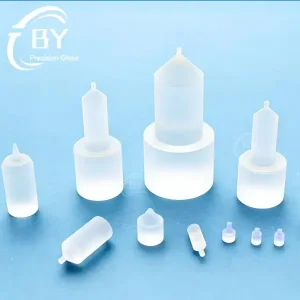
High-Quality Customized Quartz Fiber End Caps for QBH Manufacturer
View Product Specs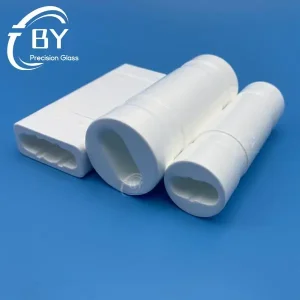
Wholesale Ceramics Reflecor for Semiconductor Lasers Suppliers
View Product Specs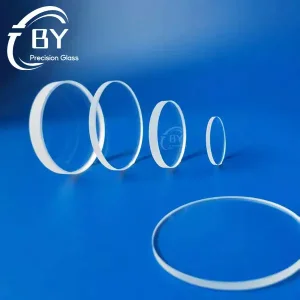
Wholesale Quartz Optical Windows for Semiconductor Lithography Equipment
View Product Specs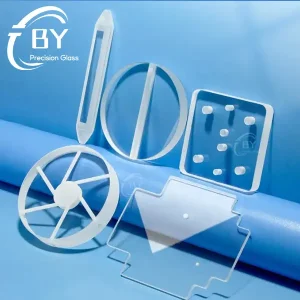
Wholesale High Temperature Custom Quartz Glass Fabrication
View Product Specs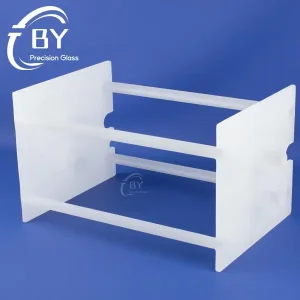
Wholesale Quartz Diffusion Boat for Semiconductor Suppliers
View Product Specs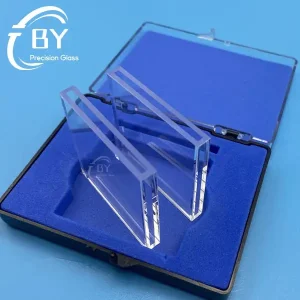
Wholesale Customize Quartz Cuvette for Spectrophotometer
View Product Specs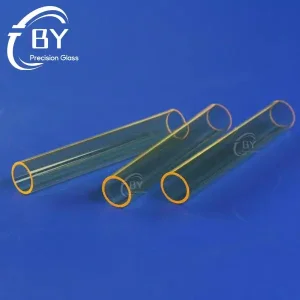
Custom UV Block Yellow Quartz Tube for IPL Lamp Flow Handle
View Product Specs