
Precision Sub-Assemblies & Optoelectronic Ware
Direct from our CNC micro-machining and hot-working lines: certified components supporting analytical chemistry, semiconductor exposure tools, and medical laser platforms.


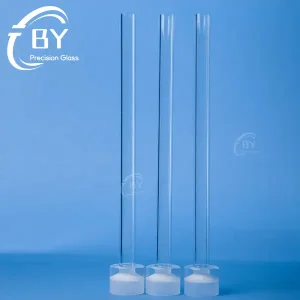
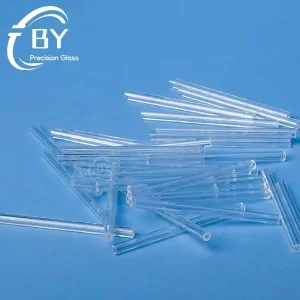
Precision Glass Capillary Tubing: Metallurgy, Redrawing & Fluidic Dynamics
Modern microfluidics, photonics, and analytical separation demand tolerances that push beyond standard thermo-mechanical thresholds. Here is how custom glass capillary tubes are designed, redrawn, and verified at our Tianjin facility.
Thermal Redraw Kinematics
The core challenge in producing micro-bore tubing lies in maintaining concentricity and inner diameter (ID) stability during high-temperature glass transition. Our precision vertical draw towers utilize closed-loop, dual-axis laser scanning micrometers monitoring down to 0.1 μm resolution.
- Elimination of wall-thickness variation via precise feed-rate control
- Hydrodynamic vacuum regulation inside the preform bore
- Controlled thermal gradient crystallization control (Tg > 1,150 °C)
High-Purity Material Grades
Capillary integrity depends fundamentally on glass chemistry. We machine and redraw JGS1 synthetic UV fused silica, JGS2/JGS3 fused quartz, and Schott-equivalent Borosilicate 3.3 to guarantee minimal background fluorescence and superior chemical inertness.
- Synthetic Fused Silica: Trace metal contamination < 19 ppm
- Low-OH content (< 5 ppm) for NIR and telecommunication optical arrays
- High mechanical hoop strength under pneumatic pressures exceeding 5,000 psi
End-Face Polishing & Cleaving
For capillary electrophoresis and laser fiber alignment, rough cleaved ends introduce vortex cavitation and beam scattering. Our automated diamond sawing, ultrasonic trepanning, and flame-polishing protocols achieve sub-nanometer surface smoothness.
- Perpendicularity tolerance to optical axis: < 0.5°
- Surface roughness (Ra) down to < 0.5 nm (super-polished)
- Custom chamfering, flared tips, bell mouths, and multi-angle tapers
| Material Classification | Refractive Index (nd @ 589 nm) | Transmission Bandwidth | Softening Point | Typical Dimensional Limits (ID / OD) | Primary Industrial Use-Case |
|---|---|---|---|---|---|
| JGS1 UV Synthetic Fused Silica | 1.458 | 185 nm – 2,500 nm | 1,730 °C | ID: 2 μm – 5.0 mm / OD: 50 μm – 25 mm | CE sequencing, UV absorption detectors, flow cells |
| JGS2 Optical Fused Quartz | 1.458 | 220 nm – 2,500 nm | 1,680 °C | ID: 10 μm – 10.0 mm / OD: 100 μm – 50 mm | Laser flow tubes, sight tubes, high-temp fluidics |
| JGS3 Low-OH Infrared Quartz | 1.458 | 260 nm – 3,500 nm | 1,680 °C | ID: 50 μm – 8.0 mm / OD: 200 μm – 30 mm | Infrared pyrometry, IR gas cell analysis, spectroscopy |
| Borosilicate Glass 3.3 | 1.473 | 320 nm – 2,500 nm | 825 °C | ID: 5 μm – 12.0 mm / OD: 80 μm – 40 mm | Standard microfluidic chips, medical dosing, disposable CE |
| Fluorine-Doped Silica (Low Index) | 1.435 – 1.450 | 250 nm – 2,200 nm | 1,600 °C | Custom ratios to OEM drawings | Light guiding capillaries, liquid core waveguides |
China Factory 4.0: Supply Chain Resilience & Efficiency Advantages
Tianjin BY Photonics bridges the gap between precision European craftsmanship and the agility, scalability, and cost efficiency of China’s advanced manufacturing ecosystem.
Vertical Integration
From raw quartz ingot sawing and core drilling to multi-stage redraw towers, cold grinding, ultrasonic cleaning, and laser metrology—100% executed in-house in our 3,000+ m² facility without sub-tier risks.
30–45% Cost Arbitrage
Optimized energy management, automated drawing kinematics, and direct regional quartz material sourcing allow us to provide Fortune 500 OEMs with top-tier optical specifications at substantially reduced procurement costs.
Dynamic Scalability
Whether producing a 10-piece pilot run for medical diagnostic validation or high-volume reels exceeding 500,000 meters annually, our multi-tower configuration adjusts output without recalibration bottlenecks.
Strategic Export Hub
Located near the Port of Tianjin and Beijing International Airport, we ensure rapid air cargo clearances, bonded warehouse export lanes, and robust shock-absorbing vacuum packaging for fragile silica canes.
Macro Industry Solutions: Where Our Capillary Tubes Perform
Serving Tier-1 OEM leaders across biopharma, semiconductor capital equipment, fiber-optic telecom, and high-energy physics.
Biomedical Diagnostics & CE Flow Cells
Capillary Electrophoresis (CE), DNA sequencing, and flow cytometry require chemically inert channels with minimal auto-fluorescence. Our synthetic silica capillaries feature ultra-uniform inner walls, ensuring constant electroosmotic flow (EOF) and reproducible peak retention times across thousands of cycles.
- Polyimide-coated silica canes for high flexural endurance
- Custom optical detection windows stripped via precision excimer lasers
- Multi-channel microfluidic manifold assemblies
Semiconductor & Ultra-Pure Gas Sampling
In wafer fab lithography tools, dry etching, and ultra-high-purity (UHP) gas distribution, our fused quartz capillaries deliver unmatched chemical resistance against corrosive halogens (HCl, Cl2, fluorine chemistries) while operating at continuous process temperatures up to 1,100 °C.
- No heavy metal leaching into ultra-pure water (UPW) streams
- Zero particle shedding after high-pressure ultrasonic megasonic baths
- Seamless integration into quartz gas diffusion systems
Fiber Optic Ferrules & Photonic Arrays
High-density optical transceivers, DWDM systems, and fiber array units (FAU) mandate micro-capillary glass sleeves with concentricity below 0.5 μm. We machine single-bore, dual-bore, and multi-lumen capillary tubes matching exact fiber cladding diameters (125 μm, 250 μm).
- Precise thermal expansion matching to silica single-mode fibers
- Bell-mouthed ID entries preventing fiber cleave micro-fractures
- Custom D-shaped, rectangular, and square internal cross-sections
Global Enterprise Sourcing & Quality Compliance Architecture
Purchasing mission-critical optical glass components requires risk-free engineering sign-offs, full trace-back documentation, and international regulatory compliance.
Audited Quality Protocols
Every production batch is certified against rigorous dimensional and cosmetic standards. We provide comprehensive inspection reports using automated optical coordinate measuring machines (CMM) and laser interferometers.
- Full traceability to raw silica synthetic crystal boules
- DIN ISO 10110 surface quality: scratch-dig down to 10-5
- EN 10204 3.1 Material Certificates furnished on demand
Regulatory & Cleanroom Readiness
Our packaging lines accommodate sensitive semiconductor and medical device assembly lines. Finished tubes undergo multiple ultrasonic degreasing steps and particle neutralization before Class 100 cleanroom sealing.
- RoHS Directive 2011/65/EU and REACH (EC 1907/2006) compliant
- Conflict-free mineral supply chain assurance
- Custom ESD-safe, clean-cut, ready-to-mount blister packaging
Dedicated Engineering Support
Eliminate back-and-forth friction between procurement teams and shop floors. Our bilingual optical engineers analyze your 2D/3D CAD models (STEP, DWG, DXF) to suggest DFM optimizations that yield high production yields.
- Design for Manufacturability (DFM) assessment within 24 hours
- Rapid prototyping: First-article prototypes dispatched in 7–10 days
- Flexible MOQs for R&D spin-offs and multi-year supply frameworks
Technical Roadmap: Next-Generation Micro-Glass Capillary Engineering
Anticipating the technological demands of quantum computing interconnects, organ-on-a-chip microfluidics, and extreme UV (EUV) optical routing.
Sub-Micron Multi-Lumen Canes
Industrialization of multi-bore capillaries with up to 127 individual parallel channels for massive-throughput micro-droplet generation and digital PCR arrays.
Photonic Crystal Waveguides
Hollow-core photonic bandgap capillaries manufactured with micro-structured cladding, delivering high-energy laser transmission with near-zero core material dispersion.
Hybrid Glass-Metal Nanowires
Co-drawing conductive noble metal microwires embedded directly within silica capillary walls for in-situ electrochemical detection inside single-cell cytometers.
AI In-Situ Thermal Redrawing
Autonomous closed-loop neural drawing furnaces that dynamically predict and compensate for ambient atmospheric pressure fluctuations to maintain sub-nanometer wall geometry.
Precision Quartz, Sapphire & Engineered Glassware
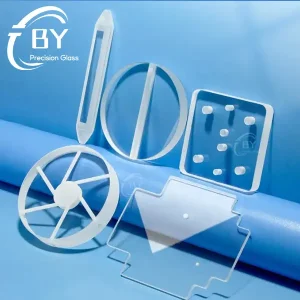
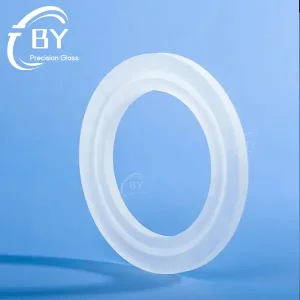
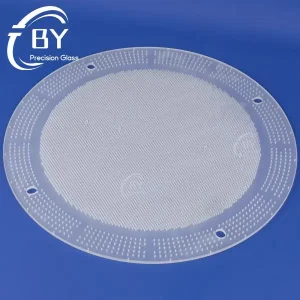
Explore related components engineered under the same strict quality umbrella: viewports, spectrophotometer cuvettes, gas distribution manifolds, and custom quartzware.


Frequently Asked Questions: Glass Capillary Engineering & Sourcing
Comprehensive answers compiled by our chief technical officer and application engineering team.
On custom JGS1 fused silica redrawing, our advanced servo-controlled towers routinely sustain inner diameter (ID) and outer diameter (OD) tolerances down to ±0.001 mm (±1 μm) for micro-bore dimensions between 5 μm and 500 μm. Concentricity (wall uniformity) is guaranteed within < 1% to prevent asymmetric hydrodynamic flow or optical beam divergence.
Yes. We specialize in non-circular micro-channel tubing, including square outer/square inner, circular outer/square inner, D-shape, elliptical, and multi-lumen profiles (2 to 127 parallel bores). Non-circular bores provide flat optical windows for on-column spectroscopy detection without cylindrical lens distortion.
JGS1 is a high-purity synthetic fused silica transmitting deep into the UV spectrum (from 185 nm) with practically zero trace-metal impurities and near-zero auto-fluorescence. In contrast, Borosilicate 3.3 cuts off below 320 nm and has lower chemical and thermal shock resistance, though it represents a significantly more economical choice for visible-light micro-dosing and standard fluid transfer.
We offer mechanical precision grinding, diamond wheel beveling, mechanical super-polishing (Ra < 0.5 nm), flame-polishing, and laser cleaving. We also offer protective external polyimide coatings (thermal resistance to 385 °C), fluoropolymer sleeving, silanization surface chemical grafting, and anti-reflective (AR) optical dielectric coatings on tube ends.
Complete drawing reviews and DFM feasibility assessments are returned within 24 hours. For standardized internal tooling, custom prototype tubes are manufactured and shipped in 7 to 10 working days. Expedited production cycles can be scheduled for urgent R&D or tool downtime scenarios.
All precision capillaries are vacuum-sealed inside high-density rigid polycarbonate sleeves or custom molded EVA foam channels, followed by multi-wall ESD-shielded vacuum packaging. Master export cartons are reinforced with internal shock-dampening structures and drop-tested to ISTA 3A specifications, guaranteeing zero breakage upon arrival in North America, Europe, or the Asia-Pacific region.