
Featured Precision Components: Primary OEM Portfolio
Direct factory production lines for advanced optoelectronic, medical laser, and micro-capillary equipment. High-precision flame synthesis, hot-drawing, and CNC cold working with full material certificates.
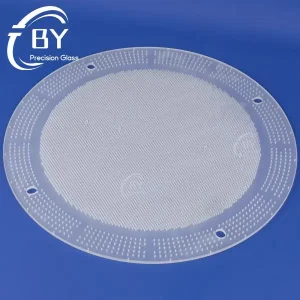
Custom Custom Optical Quartz Gas Distribution Plate Manufacturer, Suppliers
Explore Specification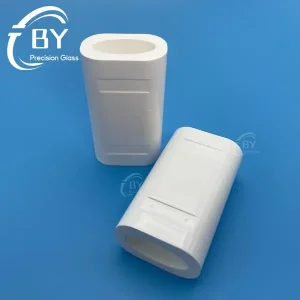
High-Quality Ceramic Cavities For Nd YAG Laser Supplier, Factories
Explore Specification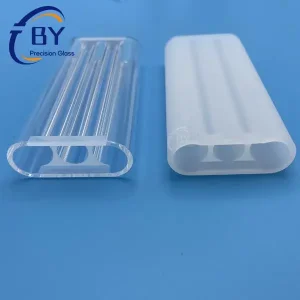
High-Quality Candela Laser Head Triple Bore Old and New Version In Stock Manufacturer, Factory
Explore Specification
High-Quality Diffuse Reflectors Made of Spectralon‑Grade PTFE for Diode‑Pumping Chambers Manufacturer, Suppliers
Explore Specification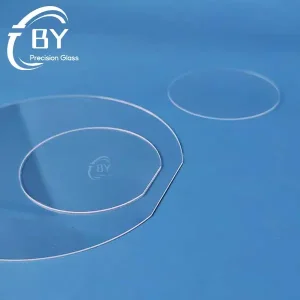
Custom Borofloat 33® Glass Wafers for Semiconductor Manufacturers, Factories
Explore Specification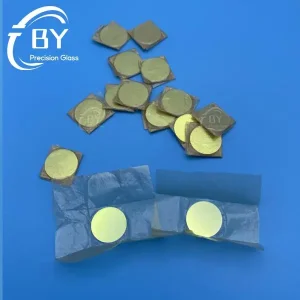
High-Quality Candela Laser Distance Gauge Slider Windows With coating 755 and 1064nm Suppliers, Factories
Explore Specification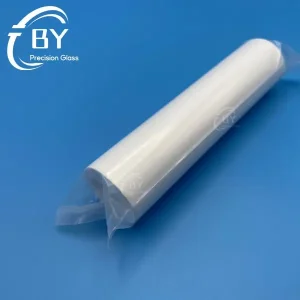
Wholesale Candela VBeam Laser 6" White Cavity Ceramic Reflector 2 Pk Manufacturer, Suppliers
Explore Specification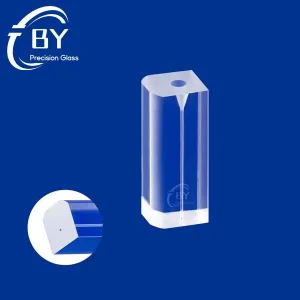
Custom Fiber Optic Glass Ferrules Supplier, Factories
Explore SpecificationPrecision Micro-Tubing Architecture & Glass Physics
Miniature glass tubing represents a fundamental cornerstone in modern precision engineering, microfluidics, biomedical diagnosis, and fiber-optic telemetry. Operating within sub-millimeter inner diameters (ID) down to micrometric capillary dimensions, miniature glass tubing demands extreme thermodynamic stability, exceptional chemical inertness, and deterministic optical properties.
Synthetic UV Fused Silica (JGS1)
Fabricated through the gas-phase chemical oxidation of silicon tetrachloride, JGS1 exhibits vanishingly low metallic trace impurities (<1 ppm) and an OH absorption profile tuned for deep-ultraviolet (DUV) applications down to 185 nm. Critical for spectrophotometric capillaries, capillary electrophoresis, and excimer laser delivery channels where solarization resistance is mandatory.
Borosilicate 3.3 (Borofloat / Pyrex Equivalent)
Characterized by a low linear thermal expansion coefficient (3.3 × 10⁻⁶ K⁻¹), our custom redrawn borosilicate tubing provides extreme resistance to thermal shock and strong acid leaching. Engineered specifically for medical blood gas analyzers, lab-on-a-chip connectors, and high-temperature electrical feedthrough seals where cost and dimensional repeatability intersect.
Doped Silica & Rare-Earth Compositions
Including Cerium-doped (Ce³⁺) and Samarium-doped (Sm³⁺) compositions, as well as Fluorine-doped down-cladding capillary profiles. These custom chemistries suppress hazardous UV wavelengths (190–380 nm) while transmitting visible and near-infrared pump energy, protecting diode-pumped solid-state (DPSS) cavities from thermal degradation and parasitic 1064 nm oscillations.
Thermal Drawing, Micro-Machining & Metrology Validation
Precision capillary manufacturing bridges pyrochemical thermal synthesis and micro-mechanical cold working. By unifying continuous downward drawing, laser interferometric gauging, and oxyhydrogen micro-welding in our Tianjin facility, we bypass intermediate supply vulnerabilities and maintain end-to-end quality control.
| Dimensional & Mechanical Parameter | Standard Commercial Range | High-Precision OEM Capability | Verification & Metrology Standard |
|---|---|---|---|
| Inner Diameter (ID) Range | 0.100 mm – 5.000 mm | 0.005 mm – 20.000 mm | Optical Micro-Interferometry & Laser Scanning |
| Outer Diameter (OD) Tolerance | ±0.050 mm | ±0.002 mm | Continuous In-Line Dual-Axis Laser Micrometer |
| Concentricity / Bore Eccentricity | < 3.0 % of wall thickness | < 0.5 % of wall thickness | Multi-Angle Confocal Laser Scanning Microscopy |
| Surface Micro-Roughness (Ra) | Ra 0.1 μm – 0.4 μm | Ra < 0.01 μm (Laser Fire-Polished) | White Light Interferometry (Zygo NewView) |
| End Face Geometry & Squareness | Mechanical Scribe & Break (<3°) | Optically Lapped & Chamfered (<0.5°) | Video Goniometer & Digital Toolmaker Microscope |
| Spectral Transmission Window | Visible Range (400–700 nm) | 185 nm – 3,500 nm (JGS1 / JGS3) | PerkinElmer Lambda 1050+ UV/Vis/NIR Spectrophotometer |
Continuous Downward Drawing
Automated vertical drawing towers equipped with real-time pneumatic tension modulators and dual-axis laser diameter monitoring ensure that axial dimensional taper is completely suppressed across entire meter-scale mother tubes.
Laser Cleaving & Fire-Polishing
CO₂ laser slicing produces ultra-planar end faces without sub-surface micro-cracking or particulate contamination, followed by localized hydrogen flame polishing to round sharp chamfers and reduce fluid shear stress.
Multi-Lumen & Profile Geometry
Beyond concentric circular capillary tubes, we precision-redraw square, rectangular, D-shape, twin-bore, and multi-channel honeycomb profile tubing tailored to multi-fluid mixing and specialized optical fiber preforms.
High-Value Industry Applications & Case Studies
Across North America, Europe, East Asia, and emerging industrial hubs, our custom miniature glass tubing serves as a mission-critical component in high-reliability systems where failure is not an option.
Biomedical Microfluidics & IVD Diagnostics
Used in automated hematology analyzers, flow cytometry interrogation channels, and capillary electrophoresis arrays. The synthetic silica matrix provides near-zero background autofluorescence under 405 nm and 488 nm laser excitation, maximizing signal-to-noise ratios in molecular diagnostic instruments.
Optical Telecommunications & Fiber Splicing
Micro-glass ferrules, collimator housings, and fiber alignment capillaries requiring sub-micron ID concentricity. Designed to accommodate standard single-mode and polarization-maintaining fibers (125 μm / 250 μm) with low thermal expansion matching ceramic components.
Semiconductor Gas Metering & MFCs
Thermal Mass Flow Controllers (MFC) deploy calibrated miniature glass bypass capillaries for corrosive precursor dosing (WF₆, NF₃, BCl₃). Glass ensures zero metallic ion outgassing, high pressure tolerance (up to 100 bar bursting pressure), and laminar flow calibration.
Aerospace & Nuclear Radiation Sensors
Custom capillary encapsulation for scintillation cocktail counting, cryogenic temperature sensors, and hermetic vacuum instrumentation viewports. Radiation-hardened pure synthetic silica withstands intense gamma flux without darkening or brittle failure.
China Factory Ecosystem: Efficiency, Scale & Resilience
In an era of global supply chain volatility, BY Photonics leverages China's unified industrial supply matrix in Tianjin. We unify raw ingot smelting, redraw tower engineering, precision cold CNC machining, and cleanroom export logistics under one roof.
Vertical Upstream Integration
Direct supply agreements with primary high-purity synthetic quartz crystals and borosilicate float block manufacturers eliminate raw material rationing. We maintain over 50 metric tons of pre-qualified ingot feedstock in inventory, insulating OEM partners from price swings.
Rapid Prototype-to-Volume Agility
Our agile engineering setup delivers verified engineering prototypes within 5 to 7 business days from CAD freeze. Transitioning to high-volume multi-thousand piece batch production is executed in-house with zero tooling transfer latency.
Cleanroom Export Packaging
All micro-tubing undergoes ultrasonic deionized water cascade cleaning, vacuum thermal dehydration, and electrostatic neutralization before being heat-sealed in Class 1,000 cleanroom nitrogen-purged ESD antistatic barrier packaging for worldwide air freight.
Regulatory Conformance, Traceability & Metrology Standards
International medical, semiconductor, and industrial optical equipment requires uncompromising documentary compliance. Every batch leaving our Tianjin factory is governed by rigorous quality protocols matching global engineering expectations.
USP Class VI & ISO 10993 Biocompatibility
Our medical-grade borosilicate and synthetic fused silica capillaries are chemically inert, non-pyrogenic, and cytotoxic-free, fully validated to meet USP Class VI biological reactivity tests for invasive and in-vitro medical devices.
RoHS 3 & REACH SVHC Strict Compliance
Every glass melt lot is analyzed via inductively coupled plasma mass spectrometry (ICP-MS) to guarantee zero banned heavy metals (Pb, Cd, Hg, Cr⁶⁺) or SVHC plasticizers, delivering turnkey compliance for European and North American markets.
Full Lot Traceability & CMM Inspection Reports
Shipments include Certificate of Conformance (CoC), spectral transmittance curves, optical surface roughness profiles, and 100% CMM dimensional verification data sheets pegged to batch heat numbers.
Technology Roadmap: Sub-Micron Precision & Quantum Frontiers
As quantum computing, deep-space optometry, and single-molecule genetic sequencing mature, the structural and optical requirements of miniature glass tubing are shifting from macro-tolerances to sub-micron boundaries.
Sub-Micron Bore Precision (ID ±0.5 μm)
Continuous algorithmic tension-temperature feedback loops to hold capillary bores beneath 50 micrometers with absolute diameter variances bounded within ±500 nanometers along continuous 2,000 mm draw lengths.
Integrated Optofluidic Waveguides
Co-drawing hollow capillary tubing coated with internal gradient refractive index fluoropolymer layers or photonic crystal micro-structures, combining microfluidic fluid transportation with laser excitation transmission.
Ultra-High Vacuum Atomic Vapor Cells
Miniature glass and sapphire redrawn vacuum-sealed capillaries filled with Rubidium or Cesium alkali vapors for chip-scale atomic clocks (CSAC), quantum magnetometers, and gravimetric sensing arrays.
Frequently Asked Questions: Technical Sourcing & Engineering
Key engineering considerations answered directly by our senior process engineers. Review these technical specifications before finalizing your production drawings.
What is the practical minimum inner diameter (ID) and wall thickness BY Photonics can redraw?
How does JGS1 Synthetic Silica compare with Borosilicate 3.3 for analytical fluidics?
Can you provide custom end-face preparation, such as angle polishes or precision chamfers?
• Optical flat polishing with surface quality down to 20-10 scratch-dig and perpendicularity <0.5°.
• Custom angle polishing (e.g., 8° APC for fiber optic interfaces to minimize back-reflection).
• Micro-conical taper polishing, trumpet-mouth chamfering for smooth fluid/fiber entry, and hydrogen flame fire-polishing to remove microscopic chips.
What is the standard turnaround time for custom prototyping versus containerized batch orders?
How does BY Photonics guarantee dimensional concentricity across an entire batch?
Precision Glass & Optical Assemblies: Specialized Production
Explore our specialized line of laser cavity optics, flow tubes, vacuum viewports, and custom high-purity quartzware engineered to customer drawings.

High-Quality Chemical Resistant Custom Quartz Glass Parts Fabrication Supplier, Factories
Explore Specification
Wholesale Quartz Optical Windows for Semiconductor Lithography Equipment Suppliers, Factories
Explore Specification
High-Quality Customized Quartz Fiber End Caps for QBH Manufacturer, Factory
Explore Specification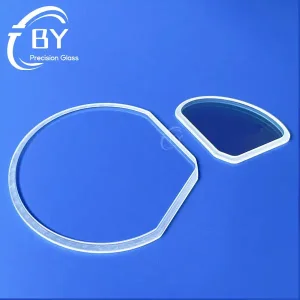
High-Quality Sapphire Viewing Plates for Harsh Chemical Environments Suppliers, Factories
Explore Specification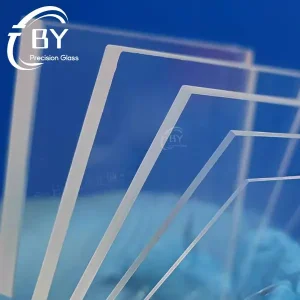
High-Quality Borosilicate Windows and Plates for Viewports Suppliers, Factory
Explore Specification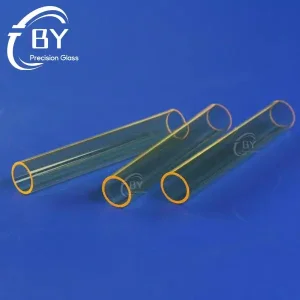
Custom UV Block Yellow Quartz Tube for IPL Lamp Flow Handle Manufacturer, Factories
Explore Specification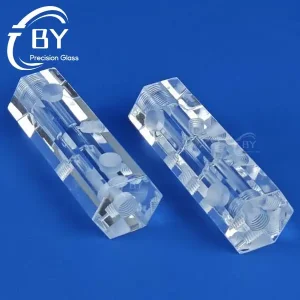
High-Quality Custom Fabrication of Quartz Glass Precision Components Supplier, Factory
Explore Specification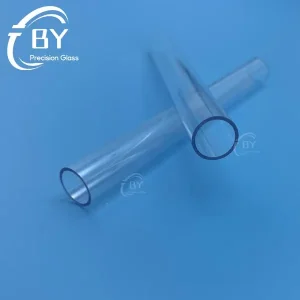
Wholesale Cerium Doped Quartz Tube Blocked UV Wavelength Manufacturer, Manufacturers
Explore SpecificationSubmit Your Custom Drawing for Engineering Review
Directly interface with our senior optical process engineers in Tianjin, China. Send your 2D/3D CAD models (STEP, IGES, DWG, DXF, or PDF) to receive comprehensive DFM feedback, material grading advice, and volume manufacturing quotations within 24 working hours.