
Tier-1 Factory Direct Inventory
Featured Precision Optical Components & Assemblies
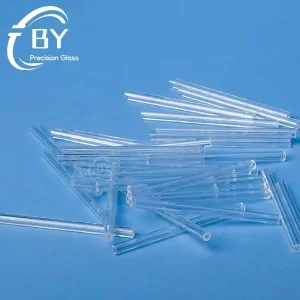
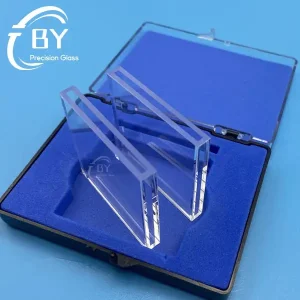
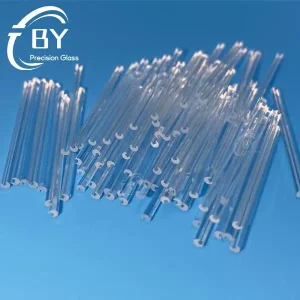
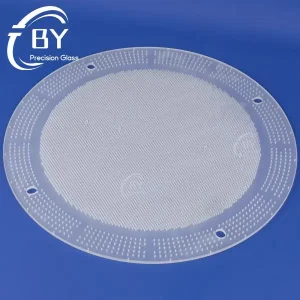
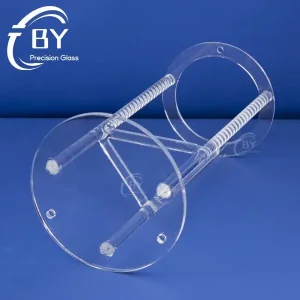
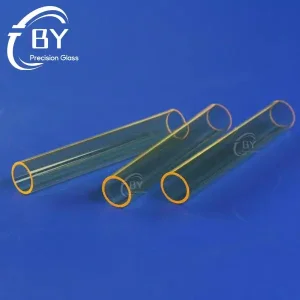
Explore high-purity optical glass, specialized quartz capillaries, and precision-machined laser cavity components fabricated under micron-level tolerance controls.
Engineering Whitepaper Insights
The Crucial Physics of Custom Glass Ferrules in High-Speed Interconnects
In modern optical communications, industrial laser routing, and biomedical endoscopes, the optical fiber ferrule serves as the foundational micro-mechanical fixture. While standard telecommunication infrastructure has traditionally relied upon molded zirconia ceramic ferrules, next-generation high-bandwidth optoelectronics and extreme-environment photonics demand precision-machined glass ferrules fabricated from synthetic fused silica (JGS1), clear borosilicate, or monocrystalline sapphire.
Glass ferrules provide an exact thermal coefficient of expansion (CTE) match to standard silica core and cladding fibers (CTE ~0.55 × 10⁻⁶/K). Under severe thermal cycling from -40 °C to +125 °C, ceramic or metallic sleeves induce lateral micro-stresses and axial differential displacement, creating high insertion loss (IL) drift and polarization mode dispersion (PMD). Glass-to-silica matching eliminates thermal expansion differentials, securing long-term sub-0.1 dB coupling stability.
Information Gain Keynote: By fabricating the ferrule substrate from UV-transmissive synthetic silica, optical device engineers can utilize UV-curable epoxies through the ferrule body, slashing cure cycles from 45 minutes of heat curing down to 12 seconds of 365 nm irradiation without thermal stress.
Tianjin BY Photonics Co., Ltd. (operating since 2010) combines advanced oxyhydrogen thermal redrawing, cold diamond micro-coring, and precision end-face chemical-mechanical polishing (CMP) under one roof. Our bespoke optical ferrules achieve inner bore concentricity below 0.5 µm, tailored for single-mode, polarization-maintaining (PM), multicore (MCF), and specialty hollow-core photonic bandgap fibers.
Critical Ferrule Tolerances Held In-House
Every custom ferrule run is verified with non-contact video interferometers and laser concentricity gages to satisfy Telcordia GR-326-CORE and IEC 61754 specifications:
- Bore Diameter (ID): 125.0 µm to 1000 µm with ±0.3 µm tolerance
- Outer Diameter (OD): 1.25 mm, 1.8 mm, 2.5 mm, 3.0 mm (±0.001 mm)
- Concentricity (Bore to OD): < 0.5 µm for single-mode SMF-28e
- End-face Geometry: Flat (PC), 8° APC, or dual-angle micro-wedge
- Surface Quality: 10-5 Scratch-Dig (laser-grade finish)
Material Science Benchmarking
Comprehensive Optical Substrate Comparison for Fiber Alignment
Selecting the ideal raw substrate governs polishing wear rates, CTE integrity, chemical resilience, and laser-damage thresholds (LIDT) in demanding photonic packaging.
| Material Type | Refractive Index (n @ 1310nm) | CTE (×10⁻⁶ / K) | Thermal Cond. (W/m·K) | UV Transmission | Polishing Hardness (Mohs) | Primary Industrial Application |
|---|---|---|---|---|---|---|
| Synthetic Fused Silica (JGS1) | 1.447 | 0.54 | 1.38 | >90% @ 185–2500nm | 6.5 – 7.0 | Co-Packaged Optics, High-Power Lasers, DWDM Collimators |
| Optical Borosilicate (BK7/Pyrex) | 1.503 | 3.25 | 1.14 | Negligible <310nm | 6.0 | Fiber Optic Sensors, Cost-Sensitive Couplers, Telecom Splitters |
| Monocrystalline Sapphire (Al₂O₃) | 1.750 | 5.80 (parallel) | 35.0 | >80% @ 200–5000nm | 9.0 | Medical Laser Delivery, Downhole Harsh Sensors, Cryogenics |
| Zirconia Ceramic (ZrO₂) | 2.150 | 10.5 | 2.50 | Opaque | 8.2 | Standard Telecommunication Patch Cords (SC, LC, FC) |
| Fluorine-Doped Silica Capillaries | 1.435 – 1.442 | 0.52 | 1.30 | High UV / Low OH | 6.5 | Cladding-Mode Suppression, Mode Field Adapters, Specialty Sensors |
Sourcing Excellence & Supply Resilience
Why Global Tier-1 Tech OEMs Leverage BY Photonics Supply Chain
Operating in Tianjin, China since 2010, our vertically integrated plant bridges material synthesis, high-precision thermal redrawing, micro-machining, and swift international delivery.
Single-Roof Manufacturing Integration
By eliminating cross-contracting between glass drawing mills, polishing houses, and inspection labs, BY Photonics reduces manufacturing turnaround from 14 weeks to 18 business days, simultaneously eliminating secondary transport micro-fractures.
Sub-Micron Tooling & Thermal Drawing
Our proprietary vertical redrawing towers feature multi-zone laser micrometers dynamically feeding back into pull rates, ensuring high outer and inner diameter circularity down to ±0.2 µm on customized dual-bore and capillary stock.
Cost Elasticity & Raw Material Reserves
Direct partnerships with domestic silica ingot and ultra-pure synthetic fused silica refiners insulate our buyers from raw material price shocks while guaranteeing certified provenance (RoHS, REACH, and Conflict Minerals free).
15+
Years Engineering Precision Optics (Since 2010)
<0.5 µm
Bore-to-OD Concentricity Standard
120+
Multi-Axis CNC & Flame Polishing Machines
100%
Interferometer End-Face Inspection
Global Compliance & OEM Standards
Localized Engineering Support & International Standards Compliance
Whether supplying photonics companies in North America, laser integrators in Germany, or telecom OEMs in Japan, our export delivery guarantees seamless qualification.
Telcordia GR-326-CORE Qualified
Our custom optical ferrules undergo rigorous qualification testing including 2,000 thermal cycles (-40 °C to +85 °C), damp heat storage (85 °C / 85% RH for 2,000 hours), and high-vibration exposure without micro-cracking or optical IL drift exceeding 0.15 dB.
RoHS, REACH & ISO 9001:2015
Full material traceability is documented per batch. Comprehensive COC (Certificate of Conformance), material spectroscopic analysis reports, and RoHS 3/REACH SVHC declarations accompany every global air-freight consignment.
Global DFM & Time-Zone Support
Our dedicated bilingual photonics engineering desk reviews CAD prints (STEP, IGES, DXF) and dimensioned 2D prints within 24 working hours, offering design-for-manufacturability (DFM) adjustments on lead-in chamfers, tolerances, and anti-reflective (AR) coatings.
Future Horizons & R&D Frontiers
The Rise of Co-Packaged Optics (CPO) and Multi-Core Fiber (MCF) Ferrules
Hyperscale cloud data centers and AI compute clusters are transitioning from conventional pluggable transceivers (QSFP-DD, OSFP) to Co-Packaged Optics (CPO) and Optical I/O Chiplets operating at 1.6 Tbps, 3.2 Tbps, and beyond. Traditional fiber arrays and ceramic ferrules encounter severe channel-to-channel pitch skew when routing dozens of channels directly onto silicon substrates.
Custom glass capillary ferrules provide the precision required for pitch-matched multi-fiber arrays (127 µm or 250 µm pitch). Due to the near-identical refractive indices of silica glass ferrules and silicon V-groove arrays, index-matching adhesives can be introduced without creating multiple reflection interfaces, preventing high Return Loss (RL < -55 dB) failure.
Furthermore, the integration of 4-core, 7-core, and 19-core Multi-Core Fibers (MCF) requires rotational alignment keyed ferrules with anti-rotation flats micro-ground into the outer silica profile. BY Photonics utilizes 5-axis CNC diamond micromachining to mill reference flats directly onto ferrule barrels with positional angular precision better than ±0.2°.
High-Power Kilowatt Fiber Laser Collimation
In high-power industrial fiber lasers (1 kW to 20 kW CW), cladding power stripping generates extreme stray light dissipation. Fused silica ferrules featuring laser-grade end-face polishes and conductive metallic sleeves prevent epoxy burnout by permitting direct fusion splicing or glass-to-metal solder sealing, ensuring maximum laser-induced damage threshold (LIDT > 10 J/cm² @ 1064nm, 10ns).
Versatile Engineering Domains
Specialized Industry Applications for Custom Micro-Ferrules
Explore how leading engineering enterprises utilize our bespoke ferrules to overcome extreme environmental and photonic hurdles.
Biomedical Optical Probes & OCT
Biocompatible, non-magnetic fused silica and sapphire ferrules used in Optical Coherence Tomography (OCT) catheters, micro-endoscopes, and surgical diode delivery systems.
DWDM & Passive Fiber Collimators
Angled 8° APC polished dual-bore glass ferrules engineered for inline Dense Wavelength Division Multiplexers, optical isolators, circulators, and MEMS switches.
Harsh Oil & Gas Downhole Sensing
Radiation-hardened pure silica ferrules operational up to 450 °C and 20,000 psi hydrostatic pressure, deployed in distributed temperature and acoustic sensing (DTS/DAS).
Aerospace & Defense Avionics
Lightweight, vibration-immune micro-ferrules compliant with MIL-PRF-29504 standards for airborne radar systems, high-altitude UAV links, and satellite laser communication.
Procurement & Engineering Answers
Frequently Asked Questions by Optical Engineers & Buyers
Technical clarity directly from our cleanroom staff regarding materials, machining capabilities, and order logistics.
What are the key technical advantages of glass optical fiber ferrules over ceramic (zirconia) ferrules?
+
Glass ferrules provide an identical coefficient of thermal expansion (CTE ~0.55 × 10⁻⁶/K) to standard silica fibers, eliminating temperature-dependent micro-shifting and insertion loss drift across wide thermal swings (-40 °C to +125 °C). Moreover, transparent glass substrates permit fast 365 nm UV epoxy curing through the ferrule body, exhibit matched mechanical wear rates during end-face chemical-mechanical polishing (preventing fiber undercutting or protrusion), and enable high-temperature laser fusion welding.
What inner diameter (ID) bore sizes and concentricity tolerances can BY Photonics deliver?
+
We machine and redraw bore diameters from standard 125.0 µm, 126.0 µm, and 127.0 µm for single-mode fiber up to custom bores of 200 µm, 400 µm, 600 µm, and 1000 µm for large-core energy delivery fibers. We routinely achieve tight bore-to-outer diameter concentricity of <0.5 µm, with customized ultra-precision runs reaching <0.3 µm upon engineering review.
Can BY Photonics fabricate custom multi-bore (dual-bore, triple-bore, 7-bore) glass ferrules?
+
Yes. Utilizing our specialized capillary redrawing and CNC ultrasonic drilling stations, we manufacture single, dual-bore (for bi-directional transceivers and couplers), triple-bore, and multi-bore capillary alignment tubes in both borosilicate and JGS1 synthetic fused silica. Bore pitch and spacing can be tailored to match custom photodiode arrays or multi-fiber ribbons.
What drawing file formats are accepted for technical reviews and quotation?
+
Our engineering team accepts 3D CAD models in STEP (.stp), IGES (.igs), and SolidWorks formats, as well as 2D dimensioned engineering drawings in DWG, DXF, or PDF. Please specify required material (JGS1, JGS2, Borosilicate, Sapphire), inner/outer diameter tolerances, end-face finish (Flat, PC, 8° APC), and estimated annual production volumes.
What is the typical lead time for custom prototypes and volume production?
+
For rapid prototyping using stocked preform capillary tubes, first-article samples are completed within 7 to 10 working days. For entirely custom geometries requiring tailored preform tooling and custom drawing towers, prototype delivery is typically 2 to 3 weeks. Production batch orders are fulfilled within 3 to 4 weeks, dispatched worldwide via FedEx, DHL, or UPS air priority with complete inspection documentation.
How does Tianjin BY Photonics guarantee quality control and prevent transit damage?
+
Every production lot undergoes 100% end-face video microscopy inspection, non-contact laser dimension verification, and interferometer radius-of-curvature checks. Finished ferrules are ultrasonically cleaned in high-purity DI water, vacuum sealed in lint-free anti-static semiconductor waffle packs or protective gel boxes, and cushioned in multi-layer foam export cartons to eliminate any shock or particulate contamination during international transit.
Full Photonics Portfolio
Specialty Laser Optics, Ferrules & Semiconductor Quartzware
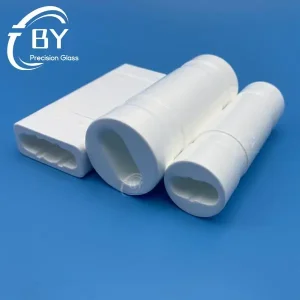
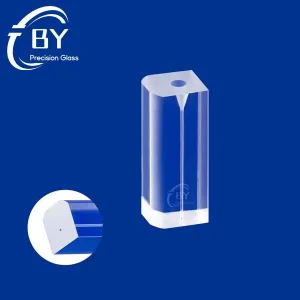
Explore complementary precision optical components machined from high-transmission fused silica, synthetic quartz, and high-durability optical ceramics.
Request a 24-Hour Engineering DFM Review & Quotation
Skip generic customer service channels. Upload your STEP, IGES, or 2D technical prints directly to our optical engineering group for instant manufacturability feedback, micro-tolerance optimization, and factory-direct volume pricing.