
Featured Optical Glass & Quartz Assemblies (Part Series I)
Industrial-grade precision quartz, laser cavity components, doped flow tubes, and specialty optical substrates manufactured to verified drawing specifications.
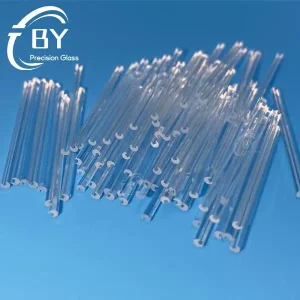
High-Quality Quartz Substrate Groove Use For Optical Fiber Coupler
View Product Specs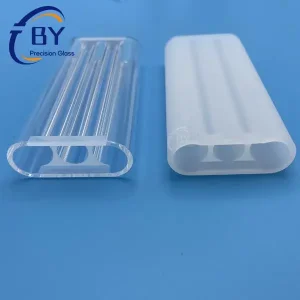
High-Quality Candela Laser Head Triple Bore Old & New Version
View Product Specs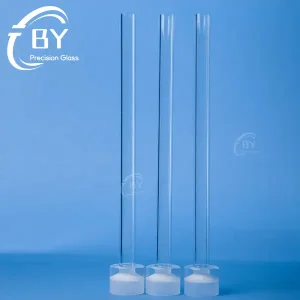
High-Quality Chemical Resistant Custom Quartz Glass Parts Fabrication
View Product Specs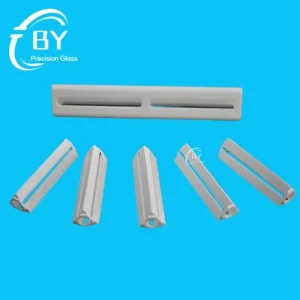
High-Quality Diode‑Pumping Chamber Diffuse Reflectors PTFE‑based
View Product Specs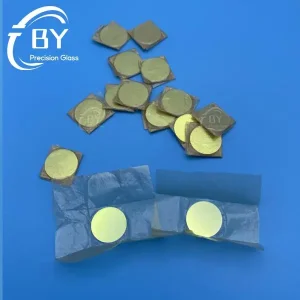
High-Quality Candela Distance Gauge Slider Windows (755 & 1064nm)
View Product Specs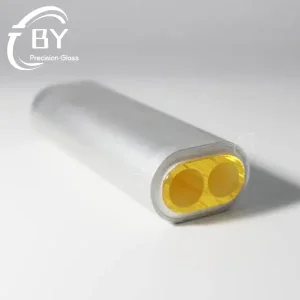
Custom Packed Laser Cavity Flowtubes for Laser Head
View Product Specs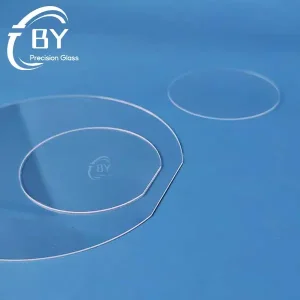
Custom Borofloat 33® Glass Wafers for Semiconductor Processing
View Product Specs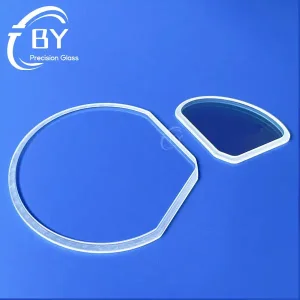
High-Quality Sapphire Viewing Plates for Harsh Chemical Environments
View Product SpecsEngineering Round Glass Capillaries: Sub-Micron Precision & Thermal Drawing Science
Custom round glass capillaries represent the backbone of contemporary analytical instrumentation, biophotonic flow measurement, chromatography, and telecommunications alignment sleeves. At Tianjin BY Photonics Co., Ltd. (established in 2010), our engineering division approaches the manufacturing of cylindrical capillary tubing through proprietary vertical drawing tower protocols coupled with multi-spectral laser diameter gauges. Whether your design mandates synthetic UV fused silica (JGS1), high-purity natural quartz (JGS2 / JGS3), or ultra-flat low-expansion borosilicate 3.3 glass, achieving dimensional fidelity down to ±0.001 mm requires an uncompromising metallurgical and thermodynamic framework.
The fundamental parameter defining micro-capillary performance is bore concentricity—the radial uniformity between the internal diameter (ID) and external diameter (OD). In high-pressure liquid chromatography (HPLC) and capillary electrophoresis (CE), slight variations in bore circularity induce peak broadening, erratic fluidic shear stress, and optical distortion during laser-induced fluorescence (LIF) detection. BY Photonics implements preform annealing and real-time tension-controlled feed mechanisms that suppress inner bore ovality to under 0.5%, ensuring laminar flow characteristics across severe thermal ranges up to 1,150°C.
Furthermore, internal bore wall smoothness plays a critical role in preventing biological sample adhesion and microfluidic clogging. By applying precision fire-polishing and clean-room oxyhydrogen thermal finishing, our round glass capillaries boast an internal surface roughness parameter of Ra < 0.5 nm, eliminating micro-fissures and chemical entrapment sites commonly found in mechanical micro-drilling methods.
Capillary Geometry & Material Tolerance Benchmark
Operational parameters held across custom redrawn round quartz, borosilicate, and doped silica micro-tubing at BY Photonics:
| Parameter Metric | Standard Grade | Ultra-Precision Class |
|---|---|---|
| Bore Diameter (ID) | 0.010 mm – 5.00 mm | ±0.001 mm (Down to ±0.0005 mm) |
| Outer Diameter (OD) | 0.050 mm – 12.00 mm | ±0.002 mm (Laser-Monitored) |
| Wall Concentricity | ≥ 95% | ≥ 98.8% Total Indicated Runout |
| Bore Ovality / Roundness | < 1.5% | < 0.4% Circularity Deviation |
| Internal Roughness (Ra) | < 1.2 nm | < 0.5 nm (Fire-Polished) |
| Spectral Transmission | 185 nm – 3,500 nm | Synthetic UV Fused Silica (JGS1) |
Competitive Advantages of BY Photonics Capillary Production in China
Leveraging 15+ years of glass processing mastery in Tianjin to deliver scalable volume, rapid prototyping cycles, and unmatched cost-to-precision ratios for Western and Asian OEM tier-1 enterprises.
Full Supply Chain Integration
Situated in the optical manufacturing hub of Tianjin, BY Photonics maintains consolidated control from raw high-purity quartz ingot synthesis through vertical cane drawing, automated multi-axis grinding, and ultrasonic cleaning. By bypassing regional brokerages, we ensure complete lot-to-lot material traceability.
- Direct feedstock access: JGS1, JGS2, JGS3, Borofloat 33
- ISO 14644-1 Class 6 clean-room packaging facilities
- Eliminated inter-factory logistics lead times and transit flaws
Dual Thermal & Cold Machining
Unlike specialized workshops that solely redraw or strictly lap glass, our 3,000 m² Tianjin plant unites high-temperature oxyhydrogen flame glassblowing with precision CNC ultrasonic diamond coring, double-sided lapping, and laser cleavage under one operational ceiling.
- 120+ specialized glassworking lathes & multi-axis CNCs
- Thermal trumpet/funnel flare ends and fire-polished edges
- Precision beveling, internal stepped bores, and multi-lumen canes
Sub-24h DFM & Rapid Tooling
Our optical and mechanical engineers evaluate customer CAD files (STEP, DWG, DXF, PDF) within 24 hours. We identify stress concentration vectors, draft angles, and thermal shock thresholds early, cutting prototype iterations from typical months down to 7–10 calendar days.
- Comprehensive Design for Manufacturability (DFM) audits
- High-mix, low-volume (HMLV) to automated million-piece batches
- Export-compliant vacuum seal packaging for worldwide transit
Global Trends Shaping the Precision Capillary Industry
From micro-total analysis systems (µTAS) to high-throughput sequencing and deep-ultraviolet photonics, next-generation instruments demand capillary architectures of unprecedented purity and structural integrity.
Microfluidics & Organ-on-a-Chip
Transition away from polymeric substrates toward chemically inert fused silica round capillaries. Round glass micro-channels prevent gas permeability, withstand organic solvent elution, and provide zero background autofluorescence for confocal microscopy imaging.
Next-Gen Capillary Electrophoresis
Single-cell proteomic analysis and Sanger sequencing platforms require capillaries with internal diameters below 25 µm and ultra-uniform wall thickness to dissipate Joule heat efficiently under electric fields exceeding 30 kV/m.
Deep-UV / Laser Pumping Flow Tubes
Modern solid-state lasers and aesthetic light devices integrate precision capillaries as liquid coolant jackets and laser flow tubes. Capillaries doped with samarium, cerium, or yellow UV-blocking dopants filter unwanted solarizing bands while guiding flash energy.
Optoelectronic Collimation Sleeves
DWDM optical splitters and fiber arrays depend on borosilicate and quartz round ferrules with ultra-tight clearance (ID 126 µm +1/-0 µm) to achieve sub-0.1 dB insertion loss and match thermal expansion coefficients across outdoor telecoms environments.
Macro-Industrial Solutions & Localized Engineering Scenarios
BY Photonics round glass capillaries are engineered into critical hardware across aerospace sensors, biopharmaceutical fermentation lines, semiconductor manufacturing, and environmental water monitoring systems worldwide.
In Vitro Diagnostics & Flow Cytometry
In hydrodynamic focusing cells, cells are guided in single file through a high-precision round quartz capillary. Our optical-grade fire polishing provides 93% transmission at 488 nm and 635 nm laser wavelengths, maximizing signal-to-noise ratio in blood analysis and cell sorting.
- Low fluorescence background fused silica (JGS1)
- Square exterior with round interior channel options
- High burst pressure ratings exceeding 200 bar
Semiconductor Wet Chemistry & Gas Delivery
Micro-dispensing nozzles for hazardous precursors, deionized water, and corrosive acids (HF, piranha etch) require pure quartz round capillaries that introduce zero trace metal contamination (< 0.1 ppm Fe, Cu, Ni, Na), preventing wafer surface defects during sub-5nm fabrication.
- Ultra-high purity synthetic quartz (> 99.999% SiO₂)
- Flame-drawn pulled tips down to sub-10 µm apertures
- Seamless compatibility with Teflon compression fittings
Subsea & Downhole Pressure Sensors
Fiber optic Fabry-Perot sensors embedded inside oil exploration wells and marine seismic monitors rely on heavy-wall borosilicate capillaries. Their high compressive mechanical strength and predictable elastic modulus ensure drift-free acoustic wave detection at 150°C and 10,000 psi.
- Hermetic fusion splicing to silica single-mode fibers
- Strict longitudinal straightness (< 0.1 mm per 100 mm)
- Zero thermal hysteresis over cyclical temperature loads
Global Procurement Standards: What International Engineering Teams Demand
Sourcing precision glass capillaries from an offshore manufacturer requires unambiguous quality gates. Procurement directors from Europe, North America, Japan, and Singapore interface with BY Photonics because our metrology pipeline mirrors Western aerospace and ISO 9001 expectations. Every batch of custom round capillaries is validated using automated multi-axis non-contact optical comparators, laser diffraction micrometer systems, and spectrophotometers before authorization for dispatch.
Key Verification Criteria on Every Shipment:
- Concentricity & Runout: 100% video-optical verification of ID/OD center offset to guarantee zero misalignment during sleeve assembly.
- End-Face Cleave Geometry: Ultrasonic score-and-snap or diamond-saw dicing followed by thermal fire-polishing to remove micro-chips larger than 5 µm.
- Internal Bubble & Inclusion Index: Compliant with DIN ISO 10110-3 (Bubble Class 0; zero inclusions > 0.02 mm in effective optical zone).
- Chemical Compliance: Fully certified for RoHS 3 (EU 2015/863), REACH (EC 1907/2006), and halogen-free standards.
OEM Customization Spectrum
Specify your project's dimensional, mechanical, and optical parameters directly into our flexible production scheduling system:
| Dimension Spec | Available Range | Standard Tolerance |
|---|---|---|
| Inner Diameter (ID) | 5 µm – 15.0 mm | ±0.001 mm / ±0.002 mm |
| Outer Diameter (OD) | 50 µm – 25.0 mm | ±0.002 mm / ±0.005 mm |
| Cut Length | 1.0 mm – 2,000 mm | ±0.05 mm (Optical Cleave) |
| End Treatment | Flat / Beveled / Funnel | Angle ±0.5° / Fire Polish |
| Material Substrate | JGS1, Borosilicate, Sapphire | Transmission 185-3500nm |
Frequently Asked Questions on Custom Round Glass Capillaries
Detailed engineering answers covering glass selection, thermal expansion matching, dimensional constraints, and international procurement processes.
Featured Optical Glass & Quartz Assemblies (Part Series II)
Explore specialized redrawn quartz capillaries, diffuse PTFE reflectors, borosilicate sight windows, laser cavities, and semiconductor gas distribution plates.
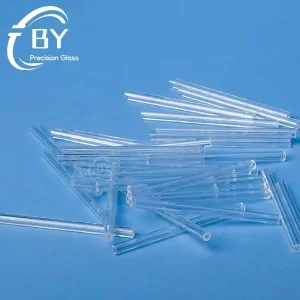
High-Quality Custom Precision Quartz Capillary Tubes
View Product Specs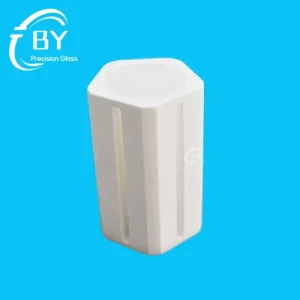
Diffuse High‑Reflectivity PTFE Reflectors for Diode Chambers
View Product Specs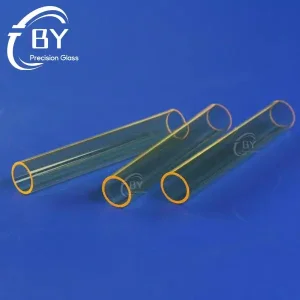
Custom UV Block Yellow Quartz Tube for IPL Lamp Flow Handle
View Product Specs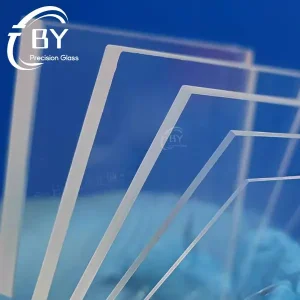
High-Quality Borosilicate Windows and Plates for Viewports
View Product Specs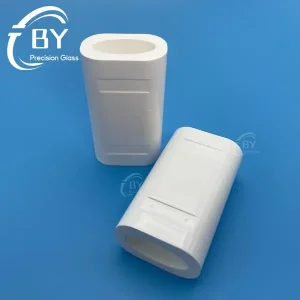
High-Quality Ceramic Cavities For Nd YAG Laser Systems
View Product Specs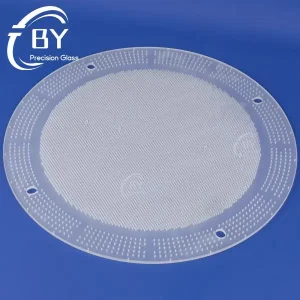
Custom Optical Quartz Gas Distribution Plate for Etch & CVD
View Product Specs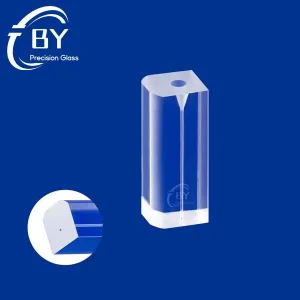
Custom Fiber Optic Glass Ferrules & Alignment Sleeves
View Product Specs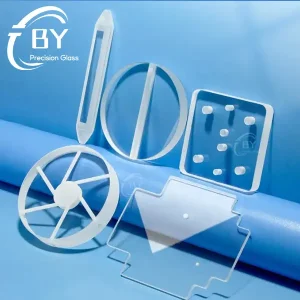
High Temperature Custom Quartz Glass Fabrication & Ware
View Product SpecsSubmit Your Capillary Drawing for Comprehensive DFM Review
Upload your technical specifications (CAD, STEP, DXF, DWG, or PDF). Our senior optical engineers in Tianjin return a full manufacturability analysis, tolerance verification, and volume pricing within 24 business hours.