High-Performance Optical & Laser Cavity Assemblies
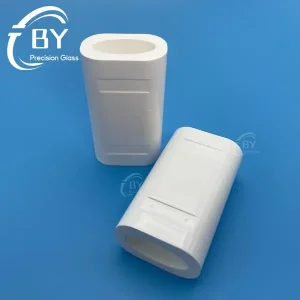
Explore our certified precision-machined quartz, sapphire, and ceramic reflectors engineered for stringent optical pump chambers, semiconductor furnaces, and medical laser platforms.
Material Science of High-Reflectance Laser Cavity Ceramics
In high-power solid-state lasers (DPSSL and lamp-pumped Nd:YAG, Alexandrite, Ruby, and Holmium systems), the pumping chamber is the critical core governing electro-optical conversion efficiency, spatial beam quality, and system longevity.
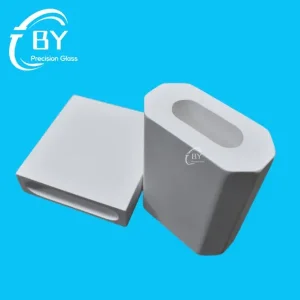
Unlike specular metal mirrors (gold, silver, aluminum) which depend on surface boundary reflection susceptible to pinhole burn and peeling, technical ceramics rely on volumetric diffuse scattering. Our 99.7% pure Al₂O₃ ceramic matrix contains precisely controlled micro-porosity (15% to 22% volumetric void distribution) sintered at 1700°C.
Photons entering the ceramic substrate undergo millions of internal refractions and Rayleigh-Mie scattering events at the high-refractive-index grain boundaries, emerging as a perfectly randomized Lambertian radiation profile with diffuse reflectivity exceeding 97.8% across the 600 nm to 1100 nm absorption bands.
Trace metal impurities (such as Fe, Cr, and Ti) inside ceramic pump cavities cause parasitic photon absorption and heat buildup under high-joule excitation. BY Photonics implements a chemical synthesis process guaranteeing an ultra-pure alumina content of ≥ 99.7%.
This purity level prevents solarization and yellowing under intense broad-spectrum flashlamp radiation, ensuring uniform excitation across laser rods and diode slabs without degradation over millions of firing cycles.
Unsealed porous ceramics directly exposed to deionized (DI) cooling water act like sponges, absorbing coolant, organic contaminants, and heavy metal ions, leading to catastrophic laser power decay. We apply a proprietary high-temperature borosilicate-alumina transparent glaze layer.
Thermally bonded at 1250°C, the glaze provides a zero-porosity hermetic barrier that protects the diffuse reflective bulk from moisture ingress, cavitation erosion, and chemical degradation while maintaining an index-matched optical boundary.
Technical Roadmap & Future Outlook for Laser Ceramics
The evolution of next-generation photonics demands thermal dissipation systems and diffuse optics that can withstand kilowatt-class average powers, ultra-short femtosecond pump pulses, and corrosive micro-fluidic environments.
As solid-state lasers push toward continuous-wave kilowatt operational parameters, localized thermal gradients inside the pump cavity induce optical distortions and mechanical micro-fractures. Our R&D team is piloting cordierite-alumina and silicon nitride nanocomposites engineered for near-zero coefficient of thermal expansion (CTE).
These advanced ceramic composites maintain micron-scale mechanical stability under extreme duty cycles, ensuring pump focal lines remain aligned with the laser gain medium without phase distortion.
Conventional pump chambers rely on external fluid manifolds, resulting in bulky head assemblies and turbulent flow hotspots. We are engineering 3D-sintered ceramic reflectors with integrated internal convective micro-channels.
By routing the coolant directly through hermetically glazed conduits within the ceramic body itself, heat transfer rates are increased by up to 340%, eliminating localized bubble nucleation and lowering system operating temperatures.
Broadband flashlamps emit high levels of hard ultraviolet radiation (<380 nm) that accelerate color center formation in Nd:YAG crystals and cause thermal lensing in aesthetic handpieces. Our upcoming generation of functional glazed reflectors incorporates rare-earth dopants directly into the glaze layer.
This design selectively absorbs harmful UV radiation while converting it into visible fluorescence, boosting the effective pumping efficiency of the laser rod while protecting critical optical assemblies.
Macro Industry Solutions & Application Systems
From dermatological clinics to sub-micron wafer inspection lines, ceramic reflectors are the unsung optical workhorses driving modern photonics systems.
Critical OEM replacement and assembly components for market-leading dermatology platforms including Candela (GentleLase, VBeam), DEKA, Cynosure, and Fotona. Provides uniform flashlamp pump distribution for Alexandrite (755 nm), Nd:YAG (1064 nm), and Pulsed Dye (595 nm) laser heads.
- Eliminates thermal hot spots on laser crystals.
- Guaranteed chemical inertness against glycol-water mixtures.
- Standardized replacement geometries with direct fitment.
High-power solid-state deep-UV lasers used in wafer inspection, defect metrology, and photomask repair require maximum optical stability and zero outgassing in vacuum-adjacent chambers.
- Cleanroom vacuum baked to prevent organic carbon contamination.
- Zero flaking, particulate-free ceramic surfaces certified for ISO Class 5 cleanrooms.
- High mechanical stiffness resistant to thermal cycling.
Solid-state laser rangefinders, target designators, and airborne LIDAR systems operate under severe environmental stress including high G-force acceleration, vibration, and thermal shocks from -40°C to +85°C.
- Glazed non-hygroscopic ceramic structures impervious to humidity.
- Maintains 98% diffuse reflectivity across broad temperature ranges.
- Direct bonding compatibility with titanium and invar enclosures.
Continuous-wave and Q-switched industrial lasers used for precision micromachining, battery tab welding, and diamond processing run 24/7 duty cycles demanding zero unplanned downtime.
- Exceptional corrosion resistance against prolonged coolant exposure.
- Double-bore and multi-lamp custom cavity geometries.
- Long operating lifetimes exceeding 15,000 continuous hours.
China Factory 4.0: Supply Chain Resilience & Precision Agility
Tianjin BY Photonics Co., Ltd. (established in 2010) brings over 15 years of end-to-end ceramic and optical glass machining under one roof. Our facility integrates automated manufacturing, material science, and comprehensive digital quality inspection.
Diamond-grinding fully fired 99.7% alumina ceramic is costly and induces micro-cracks along precision edges. BY Photonics utilizes an advanced green-state machining workflow. The ceramic is first shaped by precision slip casting or isostatic pressing into pre-forms.
Our 5-axis CNC centres machine the intricate contours, lamp holes, rod channels, and fluid flow ports while the material is in its softer pre-sintered state, using calibrated shrinkage algorithms to hit exact final dimensions upon sintering at 1700°C.
Unlike Western suppliers that outsource ceramic sintering, glaze application, and final lapping to different sub-contractors, BY Photonics performs every step within our 3,000+ m² modernized Tianjin facility.
From raw chemical powder formulation to sintering, glazing, optical polishing, coordinate measuring machine (CMM) testing, and ultrasonic cleaning, full vertical integration guarantees complete batch traceability, competitive pricing, and compressed production cycles.
Every ceramic reflector and cavity assembly carries a unique laser-etched tracking identifier mapped to our ERP system. Critical inspection instruments include Zeiss CMMs, spectrophotometers with integrating spheres, laser interferometers, and surface profilometers.
Dimensional tolerance reports, spectrophotometric reflectance curves, and material purity certificates are generated and archived with every production lot for complete customer compliance.
| Performance Parameter | BY Photonics 99.7% Glazed Ceramic | Conventional Gold-Plated Metal Reflector | Unsealed Sintered PTFE Diffuse Cavity |
|---|---|---|---|
| Diffuse Reflectance (600–1000 nm) | 97.8% – 98.5% (Volumetric Lambertian) | 95.0% – 96.5% (Specular Mirror) | 99.0% – 99.2% (Initial) |
| Coolant Resistance (Deionized Water) | Impervious (Glaze sealed at 1250°C) | Prone to pinhole oxidation & electro-peeling | Porosity absorbs impurities; degrades reflectivity |
| Thermal Shock Resistance | High (ΔT > 220°C without crack) | High expansion mismatch leading to warp | Low (Creeps and softens above 120°C) |
| Mechanical Rigidity & Durability | Mohs 9 (Extremely scratch/wear resistant) | Soft gold surface prone to scratching | Easily deformed under clamping torque |
| Long-Term Degradation / Solarization | Zero solarization under UV flashlamp | Tarnishes upon exposure to dissolved ozone | Yellows under severe deep-UV irradiation |
Global Enterprise Procurement & Drawing Review Protocols
Serving multinational laser system integrators across Europe, North America, and the Asia-Pacific region, we operate under defined Design for Manufacturability (DFM) and verification frameworks.
Global procurement teams can submit engineering models in STEP, IGES, DWG, DXF, or fully dimensioned 2D PDF formats. Within 24 business hours, our optical and ceramic process engineers return a detailed manufacturability review addressing:
- Shrinkage allowance calculations across curved reflector contours.
- Glaze boundary specifications (identifying contact and non-contact sealing zones).
- Mechanical tolerance optimization to eliminate costly post-sinter diamond grinding.
To support high-urgency R&D cycles and field service replacements, our rapid prototyping department produces customized ceramic reflectors within 10 to 15 business days using specialized tooling setups.
- Pilot testing for laser rod pumping uniformity and conversion efficiency.
- Thermal cycling testing across simulated coolant loops up to 80°C.
- First Article Inspection (FAI) reports with complete geometric data.
For high-volume medical and industrial OEMs, we support scheduled blanket purchase orders, custom safety stock reserves in our clean warehouses, and Kanban shipping schedules.
- Ultra-clean multi-stage ultrasonic degreasing prior to hermetic sealing.
- Class 10,000 cleanroom vacuum packaging with moisture barrier desiccants.
- Expedited global air dispatch with direct customs documentation clearance.
Regulatory Compliance & Global Support Assurances
Procuring specialized ceramics for regulated medical devices and industrial laser equipment requires full compliance with environmental directives, cleanroom cleanliness standards, and product quality systems.
All alumina raw powders, binder polymers, and borosilicate glazes comply with EU RoHS Directive 2011/65/EU and REACH Regulation (EC) No 1907/2006. Our products are free of lead, cadmium, mercury, hexavalent chromium, and SVHC candidate substances, with regular third-party SGS testing.
For clients building CE-marked and FDA-cleared dermatological and surgical laser systems, we provide comprehensive Certificates of Conformance (CoC), material melt/batch analysis reports, and dimensional inspection dossiers aligned with ISO 13485 supplier qualification requirements.
Our dedicated bilingual engineering sales desk provides direct technical consultation in English. We coordinate design modifications, CAD adjustments, and after-sales support directly between client optical designers and our Tianjin factory production team without communication delays.
Frequently Asked Questions: Ceramic Laser Reflectors
Get direct, engineering-backed answers to the most common questions raised by optical physicists, mechanical designers, and procurement managers.
Complementary Optical Glass & Laser Cavity Components
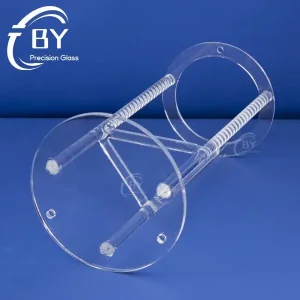
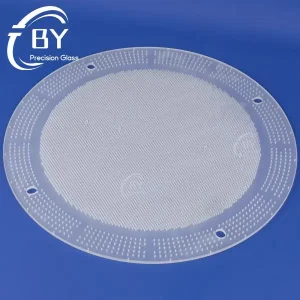
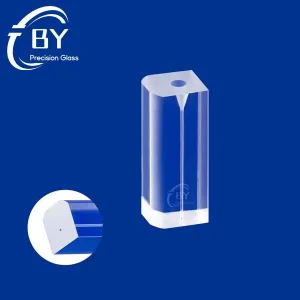
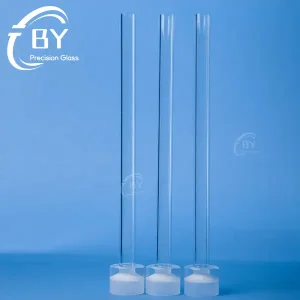
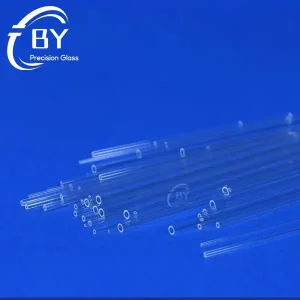
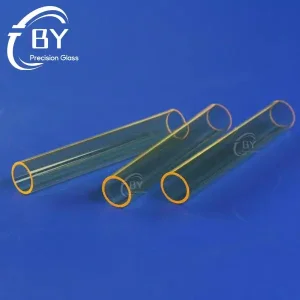
Complement your laser cavity assembly with our precision quartz wafer carriers, PTFE diffuse reflectors, doped flow tubes, and capillary glass optics.