
Precision Laser Reflectors & Optical Substrates
Explore our Tier-1 optical components designed for high-power diode pumping cavities, harsh medical laser duty cycles, and semiconductor packaging environments.
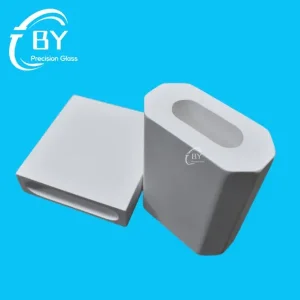
High-Quality Diffuse Reflectors Made of Spectralon‑Grade PTFE
Product Details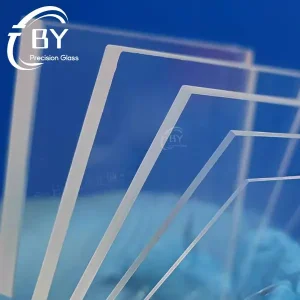
High-Quality Borosilicate Windows & Plates for Viewports
Product Details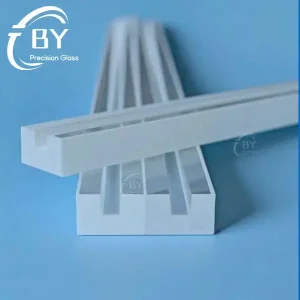
Square Groove Quartz Substrate for Fiber Couplers
Product Details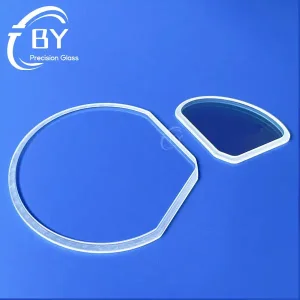
High-Quality Sapphire Viewing Plates for Harsh Chemical Duty
Product Details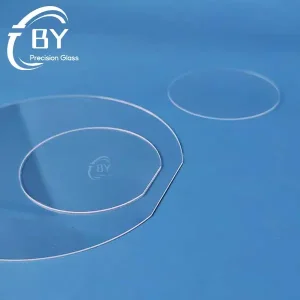
Custom Borofloat 33® Glass Wafers for Semiconductors
Product Details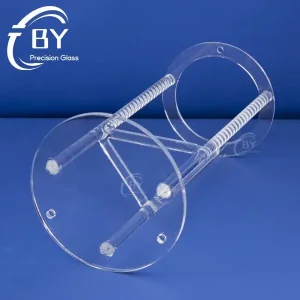
Wholesale Quartz Wafer Carriers for Semiconductor Fabs
Product Details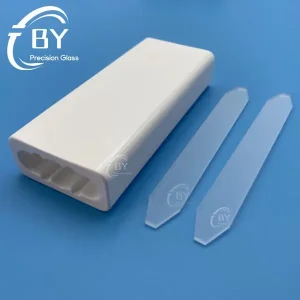
Ceramic Cavity Reflector Engineered for DEKA Laser Systems
Product Details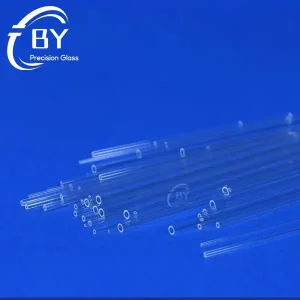
Fluorine-Doped Fused Silica Precision Capillary Tubes
Product DetailsNext-Generation Ceramic Laser Cavity Dynamics
From flashlamp-pumped Nd:YAG rods to high-flux diode arrays, how porous alumina ceramics with tailored optical glazes have revolutionized solid-state photonics efficiency and longevity.
Diffuse Lambertian Reflectance
Traditional specular gold-plated or silver-coated metal reflectors suffer from uneven focal hotspot distribution, micro-peeling, and rapid chemical tarnishing in deionized cooling loops. High-purity alumina ceramics (99.7% Al₂O₃) provide nearly 98% diffuse Lambertian reflectance across the 600–1100 nm pumping bands.
- Uniform gain medium excitation without localized thermal lensing
- Elimination of parasitic mode oscillations in laser crystals
- Broadband reflectivity extending from visible into NIR (up to 2000 nm)
Thermal Shock & Corrosion Resistance
Laser pump chambers undergo severe pulsed thermal cycling alongside continuous exposure to high-pressure deionized coolant. Porous ceramic bodies engineered with high-temperature lead-free silicate glazes seal cavity bores hermetically, insulating against cavitation and DI water chemical leaching.
- Zero mechanical deformation under continuous multi-kilowatt thermal loads
- Glazed surface impervious to chemical etching and microbial growth
- Dielectric breakdown strength surpassing 10–15 kV/mm
Solarization Immunity & Extended TCO
Prolonged ultraviolet flashlamp emission degrades organic polymers and degrades metallic optical mirrors. Specially sintered porous ceramics exhibit near-zero solarization degradation, maintaining optical pump transfer efficiency over tens of millions of continuous pulses and drastically reducing Total Cost of Ownership.
- Operating lifespan exceeding 10,000 continuous laser operational hours
- No costly recoating cycles required compared to gold galvanic cavities
- Drop-in replacement compatibility for legacy laser resonator systems
Comprehensive Material Selection & Procurement Analysis
Procurement directors and optoelectronic engineers face critical trade-offs between gold-plated chambers, PTFE diffuse reflectors, and glazed technical ceramic cavities.
| Evaluation Parameter | High-Purity Glazed Ceramic (Al₂O₃) | Spectralon-Grade PTFE | Gold-Plated Metal Alloy |
|---|---|---|---|
| Reflectance (600–1100 nm) | 96.5% – 98.5% (High Diffuse) | 98.5% – 99.2% (Ultra-high Diffuse) | 95.0% – 97.0% (Specular) |
| Continuous Service Temperature | Up to 1,200 °C (Bulk) | 260 °C (Softens at high temps) | 350 °C (Degradation of adhesion) |
| Mechanical Rigidity & Modulus | 380 GPa (Extremely rigid) | 0.5 GPa (Easily warped under torque) | 110 – 200 GPa (Rigid alloy) |
| Resistance to Flowing Coolant / DI Water | Impervious (High-Density Glaze) | Hydrophobic but prone to micro-porosity trapping | Prone to flaking, pitting, and pinholes |
| Solarization / UV Aging Resistance | Zero measurable degradation | Slight yellowing under prolonged deep UV | Surface oxidation & tarnish over time |
| Structural Form Factor Machinability | Diamond grinding / 5-Axis Ultrasonic CNC | High-speed turning & milling | Conventional CNC milling & turning |
| Typical OEM Application Spectrum | Medical Nd:YAG, Alexandrite, Ruby, DPSS | Diode array pumping, integrating spheres | CO₂ redirect mirrors, low-rep lamp lasers |
1. Porosity vs. Surface Density
The core ceramic substrate requires a precisely controlled porosity matrix (typically 15%–22% micro-void density) to achieve optimal internal diffuse backscattering. The optical glaze layer, however, must achieve 100% density and zero porosity to prevent water-borne ionic contamination.
2. Bore Geometry & Concentricity
Double-bore (single lamp, single rod), triple-bore (two lamps, single rod), and multi-lamp elliptic or close-coupled cylindrical geometries require sub-20 micron center-to-center bore pitch tolerance to guarantee balanced pump energy distribution across the crystal axis.
3. Coefficient of Thermal Expansion
Thermal expansion matching between the porous alumina ceramic substrate and the silicate vitreous glaze prevents micro-cracking and crazing over tens of thousands of thermal duty cycles, ensuring the reflector does not spall or introduce particles into closed liquid chillers.
China Factory 4.0: Supply Chain Resilience & Precision Execution
Combining raw ultra-pure alumina isostatic molding, computerized atmospheric kiln sintering, multi-axis diamond CNC machining, and comprehensive cleanroom metrology in a unified ecosystem.
Cold Isostatic Pressing
Dry-bag and wet-bag cold isostatic pressing at >200 MPa ensures uniform green-body compaction. This eliminates directional density gradients, preventing distortion during high-temperature crystallization.
5-Axis CNC Diamond Tooling
Post-sintered ceramic blocks enter dedicated multi-axis CNC machines fitted with diamond electroplated grinding pins, cutting complex dual-elliptical internal contours, cooling ports, and locator flats in a single clamping.
Robotic Glazing & Refiring
Proprietary chemical glazes are automatedly applied via precision dipping and micro-spray automation before secondary refiring at 1,250 °C, ensuring a mirror-smooth, pinhole-free finish with zero optical absorption peaks.
100% CMM & Spectrophotometry
Every batch undergoes coordinate measuring machine (CMM) dimensional verification, spectrophotometer diffuse reflectance curve validation, and ultrasonic flaw detection to ensure zero defect slippage.
DFM (Design for Manufacturability) Engineering Fast-Track
Send us your 2D prints (DWG, DXF, PDF) or 3D models (STEP, IGES). Our engineering team conducts full thermal expansion matching, bore spacing tolerance review, and coolant channel flow modeling with feedback supplied within 24 working hours.
Mission-Critical Applications Across Global Industries
From dermatological laser handpieces to sub-nanometer lithography tools, explore how our ceramic reflectors and precision glass substrates serve key high-technology sectors.
Medical Aesthetics & Surgical Lasers
Ceramic cavity reflectors form the optical heart of high-performance aesthetic and surgical systems, including Alexandrite (755 nm), Nd:YAG (1064 nm), and Holmium/Erbium (2100 nm / 2940 nm) medical lasers.
- Compatible replacement cavities for Candela GentleLase / GentleMax systems
- DEKA SmartXide & Synchro series retrofit pumping chambers
- Cynosure Apogee & Elite series precision ceramic blocks
- Surgical lithotripsy holmium lasers requiring severe shock resistance
Semiconductor Metrology & Lithography
Semiconductor wafer processing requires optical stability with non-outgassing, chemically inert materials resistant to plasma cleaning and corrosive vapors.
- Borofloat 33® and synthetic fused silica substrate wafer carriers
- Reflector bodies for UV wafer curing and annealing lamp banks
- Precision quartz boats and diffusion paddles operating at 1,150 °C
- Optical inspection viewports for advanced etching chambers
Industrial Laser Material Processing
Continuous-duty pulsed and CW solid-state laser welders, markers, and cutting systems rely on ceramic pump chambers to minimize energy consumption and maintain mode purity.
- Multi-kilowatt pulsed laser welding pump heads
- High-speed jewelry and electronics micro-welding resonators
- Defense & aerospace LIDAR rangefinder solid-state pump modules
- Pulsed laser deposition (PLD) and scientific research lasers
High-Efficiency Laser Cavities & Optical Tubes
Explore our specialized range of Nd:YAG ceramic assemblies, Candela slider windows, PTFE diode pump reflectors, and doped quartz flow tubes.
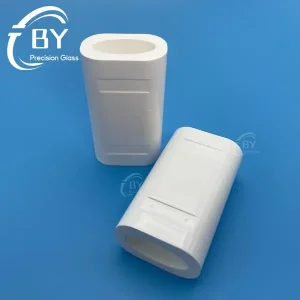
High-Quality Ceramic Cavities For Nd:YAG Laser Systems
Product Details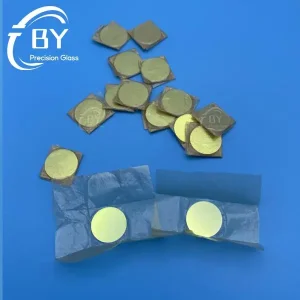
Candela Laser Slider Windows (AR Coating 755nm & 1064nm)
Product Details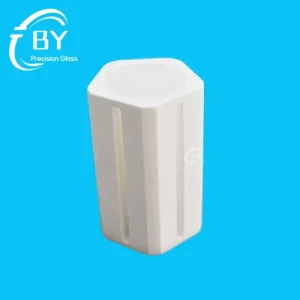
Diffuse High‑Reflectivity PTFE Reflectors for Diode Pumping
Product Details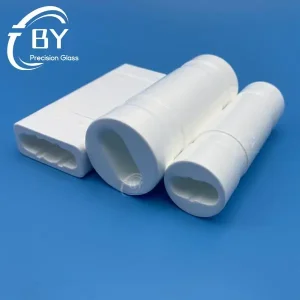
Ceramic Diffuse Reflectors for Semiconductor Laser Arrays
Product Details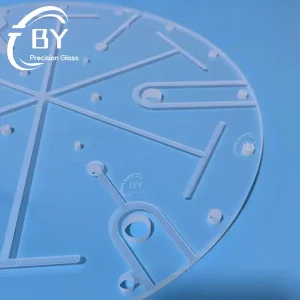
High-Quality Custom Precision Quartz Glass Fabrication
Product Details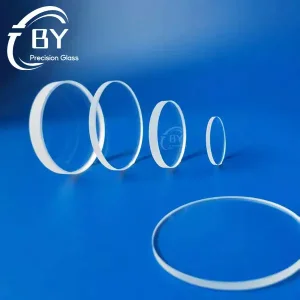
Quartz Optical Windows for Semiconductor Lithography Tools
Product Details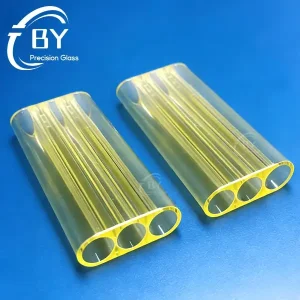
Samarium-Doped Quartz Triple Bore Flow Tube for Medical Lasers
Product Details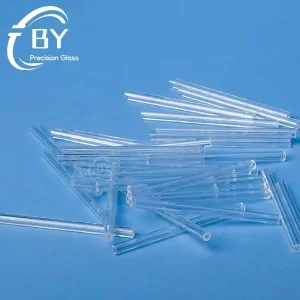
Custom Precision Quartz Capillary Tubing & Rods
Product DetailsFrequently Asked Questions by OEM Engineers & Buyers
In-depth responses covering ceramic composition, optical glaze integrity, laser cavity lifetime, and direct replacement manufacturing standards.
What is the optical mechanism behind diffuse reflectance in porous alumina ceramics?
Why is an optical glaze required, and what happens if a ceramic cavity is unglazed?
How does ceramic cavity performance compare with gold-plated metal cavities in medical Nd:YAG lasers?
Can BY Photonics fabricate exact replacement ceramic reflectors for Candela, DEKA, or Cynosure lasers?
What CAD files, tolerances, and technical specifications are required for custom cavity quotes?
• Bore diameters, overall length, and center-to-center pitch with allowable tolerances (standard tolerance is ±0.05 mm; precision CNC can achieve ±0.015 mm).
• Glaze requirements: Specify internal bore glazing, partial external glazing, or fully glazed surfaces.
• Operating parameters: Pump source (flashlamp vs. diode bars), cooling medium (DI water, distilled water, or forced air), operating temperature, and wavelength range.
Our engineering desk reviews manufacturability and returns formal DFM feedback within 24 working hours.
What quality assurance documentation is supplied with production shipments?
Ready to Optimize Your Laser Cavity Performance?
Send your dimensional drawings or replacement cavity specifications to BY Photonics. Our senior optical ceramic engineers will review your geometry, evaluate thermal flow conditions, and provide DFM feasibility with competitive OEM pricing in 24 hours.