
Precision Engineered CGi Glassblowing Components
Discover our flagship fused quartz, borosilicate, and optical crystal components crafted via synchronized hot-flame manipulation, precision CNC diamond grinding, and ultra-clean thermal annealing.
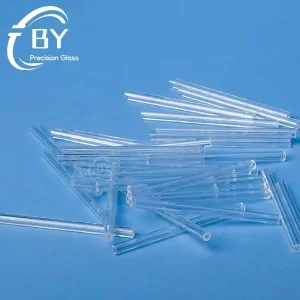
High-Quality Custom Precision Quartz Capillary Tubes
Explore Specifications
High-Quality Custom Fabrication of Quartz Glass Precision Components
Explore Specifications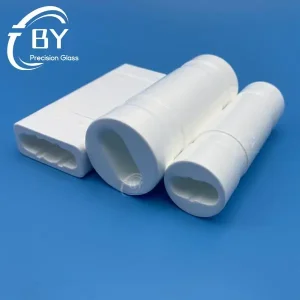
Wholesale Ceramics Reflector for Semiconductor Lasers
Explore Specifications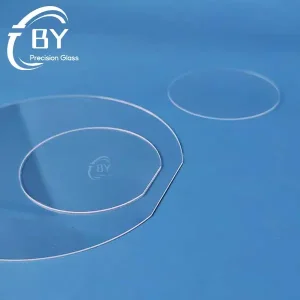
Custom Borofloat 33® Glass Wafers for Semiconductor Fabs
Explore Specifications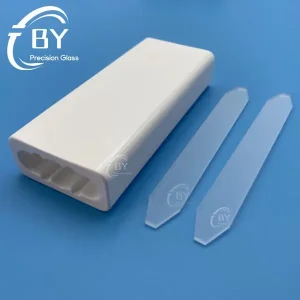
Wholesale Ceramic Cavity Reflector for DEKA Laser Systems
Explore Specifications
High-Quality Borosilicate Windows and Plates for Viewports
Explore Specifications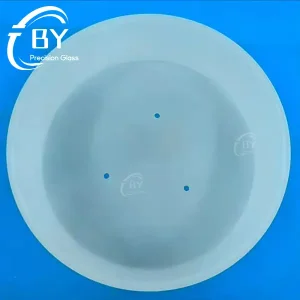
High-Quality Custom Quartz Glass for Vacuum Coating
Explore Specifications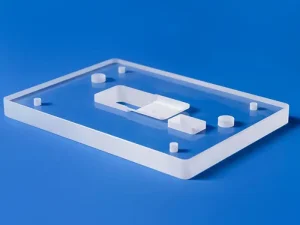
Factory Supply Precision Quartz Glass Machining Plate
Explore SpecificationsEngineering Excellence in CGi Glassblowing: Metallurgy, Thermal Chemistry & Dimensional Physics
In modern advanced manufacturing, Commercial, Industrial, and Scientific Glassblowing (CGi Glassblowing) serves as the indispensable structural backbone for frontier sectors ranging from sub-5nm lithography and laser fusion research to bio-analytical chromatography.
Thermal Shock Resistance & Low CTE
Standard engineering glasses fail abruptly when exposed to steep thermal gradients. CGi-grade fused quartz possesses an ultra-low Coefficient of Thermal Expansion (CTE) of approximately 5.5 × 10⁻⁷ /°C from 20°C to 1000°C, enabling seamless operation under continuous working temperatures of 1100°C and intermittent thermal excursions up to 1300°C without devitrification or dimensional warping.
Broadband Spectral Transmission
From Deep Ultraviolet (DUV 185 nm) excimer laser wavelengths through the visible and near-infrared (NIR up to 3500 nm), CGi glass components crafted from synthetic JGS1, JGS2, and JGS3 silica deliver optical internal transmission surpassing 92%. Minimized hydroxyl ion ([OH⁻]) concentrations eliminate deep absorption notches at 2730 nm, ensuring clean optical signal delivery in precision spectroscopy.
Exceptional Chemical Inertness
Scientific glass apparatus requires unyielding resistance to aggressive halogen chemistries, oxidizing acids, and volatile plasmas. Fused silica and 3.3 borosilicates remain inert in all acidic media (except hydrofluoric and hot phosphoric acid at elevated temperatures), guaranteeing zero leach-out of metallic cation impurities (Fe, Cu, Ni < 0.1 ppm) within semiconductor wafer processing baths.
Global Commercial & Industrial Landscape for Custom Glassblowing
The international market for precision CGi glassblowing is experiencing an unprecedented technological shift driven by three primary vectors: fab capacity expansions, bio-separation automation, and extreme-power diode laser systems.
Semiconductor Fabrication Ecosystems
Front-end wafer processing tools demand mammoth quartz diffusion furnaces, multi-wafer carriers, quartz injector torches, and LPCVD liner tubes. In modern 300mm wafer fabs, a microscopic thermal slip or trace sodium contamination in a quartz diffusion boat destroys entire chip batches. BY Photonics executes flame-fused, seamless quartzware built from high-purity crystalline feedstock, delivering purity benchmarks exceeding 99.999% SiO₂.
Medical & Aesthetic Photonic Systems
Solid-state flashlamp pumped lasers (Nd:YAG, Alexandrite, Er:YAG) and Intense Pulsed Light (IPL) medical platforms require custom glassblowing solutions that withstand severe optical irradiance and intense UV radiation. Samarium-doped flow tubes eliminate parasitic 1064 nm amplified spontaneous emission (ASE), while yellow-doped fused quartz sleeves cut off harmful deep UV (<380 nm), protecting handpiece housings and human tissue.
Analytical Chemistry & Chromatography
Modern HPLC, capillary zone electrophoresis (CZE), and gas spectrometry systems operate under extreme hydraulic pressures (>10,000 psi). Redrawn quartz capillary canes and precision cuvettes fabricated via molecular optical contact welding ensure absolute physical parallelity, bubble-free optical paths, and zero spectroscopic baseline drift.
Localized Application Scenarios & Field Engineering
How CGi glassblowing products deliver mission-critical reliability across diverse, harsh operating environments.
| Sector / Domain | Primary Material Applied | Typical CGi Manufactured Component | Operational Engineering Challenges Solved |
|---|---|---|---|
| Semiconductor Front-End | Ultra-High Purity Fused Quartz (JGS2/Corning HPFS) | Diffusion furnace quartz boats, bell jars, wafer carriers | Eliminates particulate flaking at 1150°C, maintains thermal homogeneity, prevents trace metal contamination during thermal oxidation. |
| Optoelectronics & Fiber | Fluorine-Doped Silica, Synthetic Quartz (JGS1) | Capillary redraw ferrules, QBH laser fiber end-caps | Delivers strict concentricity (<1.5 μm) and exact refractive index depression for high-power fiber fusion splicing up to 20 kW. |
| Analytical Spectroscopy | Synthetic UV Fused Silica (OH < 2 ppm) | Precision spectro cuvettes, flow cells, microchannels | Guarantees 100% molecular fusion (no glue joints), high transmission at 190-250 nm, and zero fluorescence interference under laser excitation. |
| Aesthetic & Surgical Lasers | Sm³⁺ Doped Glass, Monocrystalline Sapphire | Cavity flow plates, triple-bore tubes, IPL light guides | High thermal dissipation prevents solarization; filters 1064 nm parasitic emission, suppresses flashlamp DUV degradation of laser dyes. |
| Aerospace & Defense | Synthetic Sapphire (C-plane / A-plane) | High-pressure optical viewports, sensor protective dome | Mohs 9 surface hardness prevents erosion from high-velocity sand/rain particles; handles operating environments up to 1800°C. |
Chinese Factory Supply Chain Resilience & Efficiency Advantages
Positioned in Tianjin, Northern China’s premier industrial maritime hub, Tianjin BY Photonics Co., Ltd. capitalizes on an integrated manufacturing ecosystem that overcomes global supply chain bottlenecks.
Full Lifecycle Cold & Hot Processing
Unlike conventional suppliers who outsource flame manipulation or diamond CNC grinding, BY Photonics operates both under a single 3,000 m² production roof. Our dual-capability facility eliminates tolerance stack-up and eliminates cross-vendor lead time delays, compressing prototype manufacturing cycles from 8 weeks down to under 10 business days.
Upstream Feedstock Security
Leveraging vast domestic mineral refining clusters in Donghai and surrounding regional silica centers, our production pipeline remains completely immune to raw silica ingot shortfalls. We maintain an active revolving warehouse inventory of JGS1, JGS2, JGS3, Borofloat 33, and optical crystal blanks, shielding international OEM customers from geopolitical supply volatility.
Direct DFM Engineering Agility
When you submit complex CAD models or technical drawings, our senior glass-processing engineers perform immediate Design for Manufacturability (DFM) reviews within 24 hours. We evaluate draft angles, thermal expansion mismatches, localized flame-weld stress points, and surface polish thresholds, cutting prototype validation costs by up to 45%.
Technology Roadmap & Next-Generation Fabrication (2026–2035)
CGi glassblowing is evolving rapidly from manual flame craft into a digitized, laser-assisted, and automated precision science.
CO₂ Laser Glass Welding
Replacing traditional oxyhydrogen torches with high-power industrial CO₂ laser systems to execute localized, micro-scale quartz welds. This technology drastically lowers Heat Affected Zones (HAZ), avoiding residual thermal stress and bubble entrapment in sub-millimeter optics.
Automated Robotic Lathes
Integration of multi-axis CNC glassblowing robotic lathes equipped with real-time pyrometric optical feedback. The automation provides exact wall-thickness uniformity during tubular expansion, redrawing, and flange joining across volume runs exceeding 50,000 units.
3D Microfluidic Glass Etching
Combining Selective Laser-induced Etching (SLE) with optical contact thermal bonding. This enables true 3D fluidic labyrinths, sub-micron channels, and integrated optical detection windows embedded seamlessly into monolithic fused silica microchips.
Ultra-Low Expansion (ULE) Fused Optics
Pioneering multi-element optical glassblowing that joins titanium-doped silicate ULE glass and synthetic silica for next-generation space exploration mirrors, lithography alignment markers, and gravitational-wave detection cavities.
Localized Global Support & Rigorous Compliance Frameworks
Every piece of CGi scientific glassware exported to North America, Europe, Japan, and Southeast Asia complies with international technical directives, structural safety norms, and contamination standards.
ISO 9001 & ISO 14001 Certification
Our Tianjin processing facilities adhere to certified ISO 9001:2015 Quality Management Systems. Complete manufacturing records, from raw boule batch identification to thermal annealing curves, are archived for a minimum of 7 years, providing end-to-end traceability for aerospace and medical device tier-1 contractors.
RoHS, REACH & SEMI Standards
All fabricated optical quartz components, ceramic reflectors, and borosilicate products comply fully with EU RoHS (Directive 2011/65/EU) and REACH (EC 1907/2006). Semiconductor-grade components meet SEMI F72 and SEMI S2 clean handling criteria, preventing trace ionic migration in front-end cleanrooms.
Cleanroom Ultraclean Vacuum Packaging
To eliminate particulate contamination during international air and sea freight, finished components undergo ultrasonic de-ionized water cleansing (>18 MΩ·cm) in an ISO Class 6 cleanroom. Components are double-vacuum-sealed with anti-static nitrogen flushing in custom shock-absorbing foam enclosures.
Frequently Asked Questions (FAQ) & Buyer Guide
Direct, factual engineering answers addressing common questions in procurement, drawing preparation, and material selection.
JGS2 is fused quartz produced by melting high-purity natural quartz crystal in an electric or gas flame. It exhibits strong performance across the visible and NIR range (220–2500 nm) and is widely used for diffusion furnace tubes, wafer carriers, and viewport glasses.
JGS3 is infrared-grade fused silica manufactured via electrical vacuum melting. It features a critically low hydroxyl content ([OH⁻] < 2–5 ppm), effectively eliminating the deep water-absorption bands around 2.73 μm and transmitting cleanly up to 3500 nm for IR heating and thermal imaging optics.
Advanced Optical & Semiconductor Quartz Solutions
Review our precision-machined sapphire components, ceramic laser reflectors, and vacuum chamber viewports engineered to withstand severe thermal, optical, and chemical loads.
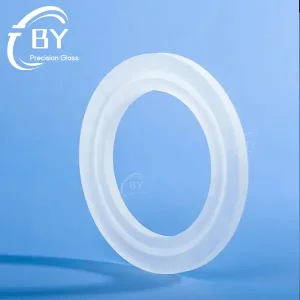
Precision Custom Quartz Glass Components for Semiconductor Tools
Explore Specifications
Wholesale Customized Quartz Cuvette for Spectrophotometers
Explore Specifications
Custom UV Block Yellow Quartz Tube for IPL Flow Handles
Explore Specifications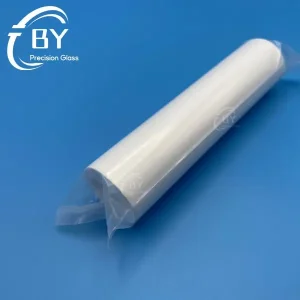
Candela VBeam Laser 6" White Cavity Ceramic Reflector
Explore Specifications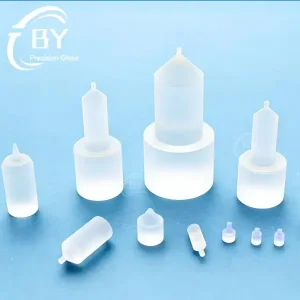
High-Quality Customized Quartz Fiber End Caps for QBH
Explore Specifications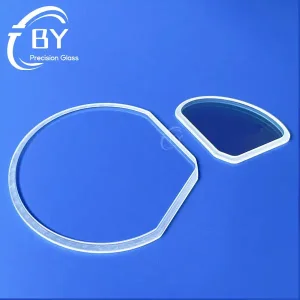
Sapphire Viewing Plates for Harsh Chemical Environments
Explore Specifications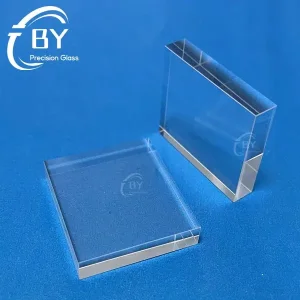
Custom Sapphire IPL Light Guide Block for Handpieces
Explore Specifications