
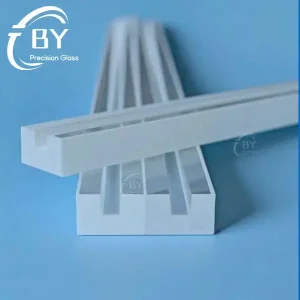
High-Quality Square Groove Quartz Substrate for Fiber Couplers Supplier, Factories
Precision synthetic fused silica engineering delivering vacuum-UV transparency, ultra-low solarization, sub-millimeter concentricity, and extreme thermal shock endurance for global industrial laser and photonic architectures.
Direct OEM supply and micron-grade custom fabrication for specialized laser cavities, diode-pumping arrays, and semiconductor processing equipment.
High-Quality Square Groove Quartz Substrate for Fiber Couplers Supplier, Factories
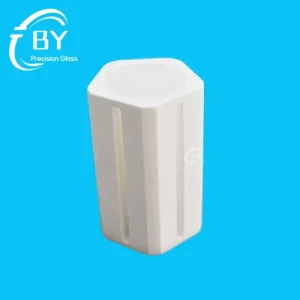
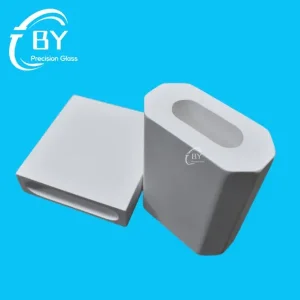
Wholesale Diffuse High‑Reflectivity PTFE Reflectors for Diode‑Pumping Chambers Suppliers, Factory
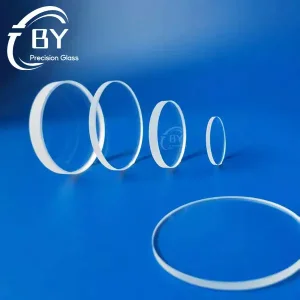
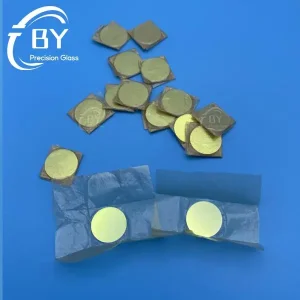
Wholesale Quartz Optical Windows for Semiconductor Lithography Equipment Suppliers, Factories
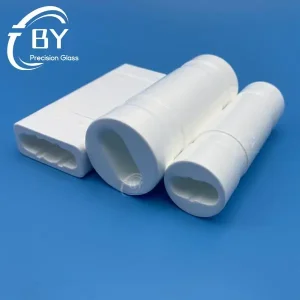
Wholesale Ceramics Reflecor for Semiconductor Lasers Suppliers, Factory
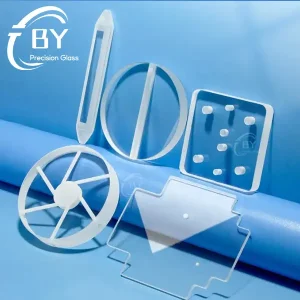
Wholesale High Temperature Custom Quartz Glass Fabrication Suppliers, Factories
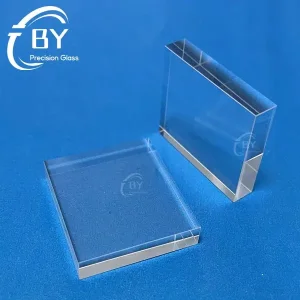
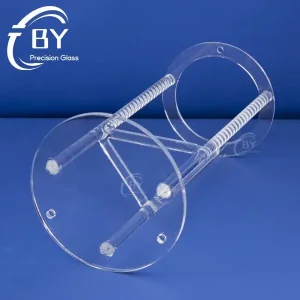
Wholesale Quartz Wafer Carriers for Semiconductor Supplier, Suppliers
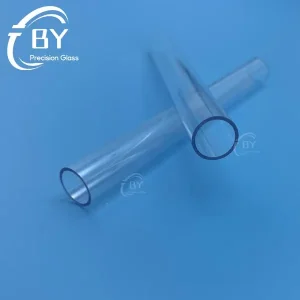
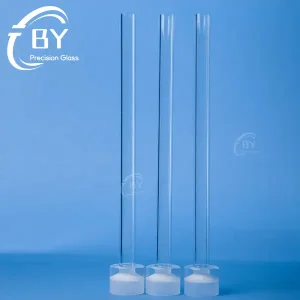
Wholesale Cerium Doped Quartz Tube Blocked UV Wavelength Manufacturer, Manufacturers
Addressing extreme optomechanical and thermodynamic challenges across solid-state laser pumping cavities, deep UV fluidics, and high-frequency plasma enclosures.
Corning 7980 represents the premier benchmark for high-purity synthetic fused silica produced via flame hydrolysis. Fabricated flow tubes maintain unmatched internal transmittance reaching deep into the 185 nm to 260 nm vacuum-UV spectra. Unlike standard natural quartz, our synthesized 7980 flow sleeves resist E-center defect formation, preventing premature transmission blackouts and refractive index shifts caused by sustained high-energy excimer and flashlamp radiation.
Laser cooling chambers undergo violent thermal gradients ranging from sub-zero deionized coolant temperatures to extreme core plasma temperatures. Corning 7980 exhibits an exceptionally low coefficient of thermal expansion (CTE ≈ 0.52 × 10⁻⁶/K between 5°C and 35°C). This virtually eliminates localized thermal stresses, mitigating mechanical rupture risks and maintaining stable wavefront properties across demanding kilowatt-class DPSS and flashlamp-pumped systems.
Engineered flow channels demand ultra-low birefringence and negligible inclusion figures. Using Grade 0 / Class A Corning material blanks, our manufacturing process ensures the complete absence of micro-bubbles, striae, and metallic seed impurities. This provides absolute beam homogeneity, pristine internal flow profiles, and superior laser-induced damage thresholds (LIDT) exceeding 15 J/cm² at 1064 nm (10 ns pulse width).
A strategic assessment of international procurement trends, material constraints, and the shifting dynamics of precision laser component manufacturing.
The global shift toward high-duty multi-kilowatt fiber-delivered systems, defense directed-energy weapons, and next-generation cosmetic lasers has rendered traditional borosilicate and natural quartz flow sleeves obsolete. Global OEMs now require certified synthetic silica (such as Corning 7980) to survive continuous operating temperatures and aggressive cooling water cavitation without optical degradation.
Beyond laser pumping, precision flow tubes and capillary cells are essential for high-throughput flow cytometry, DNA sequencing arrays, and capillary electrophoresis. Global diagnostic system integrators face severe bottlenecks when procuring custom geometries, requiring fabrication facilities capable of holding concentricity within ±0.01 mm while guaranteeing zero auto-fluorescence under 488 nm excitation.
Global optical supply chains frequently grapple with extended lead times for raw synthetic silica blocks, often stretching from 16 to 28 weeks. Tier-1 manufacturers establish direct bulk allocation contracts and local buffer reserves. This guarantees international clients rapid delivery cycles for both precision one-off R&D flow geometries and multi-thousand unit recurring commercial orders.
| Material Specification | Corning HPFS® 7980 | JGS1 Synthetic Silica | JGS2 Fused Quartz | Borosilicate Glass |
|---|---|---|---|---|
| Primary Raw Material | Synthetic SiCl₄ Precursor | Synthetic SiCl₄ Precursor | Refined Natural Quartz Sand | Boron Trioxide & Silica |
| UV Cut-off Wavelength | < 180 nm | ~ 185 nm | ~ 220 nm | ~ 310 nm |
| Refractive Index (nd @ 589nm) | 1.45840 | 1.45845 | 1.45850 | 1.47000 |
| Birefringence / Homogeneity | Total Grade Selection (< 2 nm/cm) | Standard High (< 5 nm/cm) | Commercial (< 15 nm/cm) | Standard Technical |
| Solarization Susceptibility | Extremely Low (Grade Specific) | Low | Moderate to High | Extreme (Rapid Darkening) |
Combining global optical glass traceability with domestic full-chain engineering, advanced CNC cold-machining, and high-temperature flame fusion under one roof.
Unlike regional brokers who outsource critical hot-working or surface finishing, BY Photonics integrates raw ingot diamond wire sawing, precision multi-axis CNC core drilling, high-efficiency lapping, and stress-relieved oxyhydrogen flame reshaping inside our Tianjin facility. This consolidated ecosystem ensures complete quality custody and prevents tolerance stack-up across subcontractors.
By leveraging optimized Chinese high-precision diamond tool chains, automated polishing machinery, and local fabrication expertise, our facility achieves a 35% to 55% direct procurement cost reduction relative to European or North American optical machine shops, while exceeding mil-spec optical parameters.
Every engineering print submitted undergoes immediate Design for Manufacturability (DFM) verification by our senior optical fabrication engineers within 24 hours. We evaluate edge-fracture risks, micro-crack risks in internal bores, and optimal chamfer geometry before a single cut is made, accelerating the timeline from rapid prototyping to mass-scale production.
Engineered Corning 7980 flow assemblies operate across demanding front-line applications spanning heavy industrial manufacturing, defense optics, and clinical life sciences.
Serving as high-durability cooling jackets around Nd:YAG, Alexandrite, and ruby laser gain rods. Flow sleeves channel turbulent deionized fluid at flow rates exceeding 15 L/min while transmitting intense pump wavelengths from flashlamps or diode banks with negligible losses.
Applied within deep ultraviolet (DUV) light sources and stepper purging channels. Corning 7980 maintains optical wavefront purity under continuous 193 nm ArF and 248 nm KrF excimer beam exposure without solarization-induced transmission degradation.
Integrated within high-output Intense Pulsed Light (IPL) and picosecond laser surgical systems. Flow tubes shield optical rods, isolate coolant circulation from electrical feeds, and preserve spectral purity without yellowing over thousands of operational hours.
Precision-drawn square and round micro-flow tubes facilitate hydrodynamic focusing in high-speed cell sorters. Exceptionally low internal scatter enables single-molecule detection and crisp fluorescence signal capture.
Essential dimensional and optical tolerances engineering teams should define before releasing procurement RFQs for fused silica flow tubes.
Always define Inner Diameter (ID), Outer Diameter (OD), Wall Thickness, and Total Length. For dynamic cooling cavities, specify Maximum Total Runout (TIR) and Wall Concentricity (typically held within ±0.01 mm to ±0.03 mm) to avoid non-uniform flow resistance and localized hot spots on gaining crystals.
Standard drawn tubes display draw-lines and optical micro-ripples. High-performance flow tubes demand precision mechanical honing and chemical-mechanical polishing (CMP) on internal and external cylindrical walls, specifying surface finishes down to 40-20 or 20-10 scratch-dig to eliminate scattered light and stress risers.
Specify end treatments: 90° precision square cuts, mechanical bevel chamfers, or optically polished flat ends for O-ring and metal seal retention. Crucially, require full thermal annealing post-fabrication to relieve internal residual stresses to < 5 nm/cm, preventing explosive stress fractures during dynamic clamping.
Clear, engineering-driven answers to frequent questions regarding raw material authenticity, processing capabilities, and international logistics.
Explore our full line of semiconductor quartzware, specialized laser-cavity flow tubes, filter glasses, and precision-machined substrates.
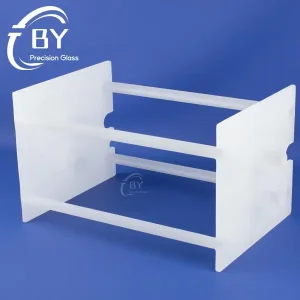
Wholesale Quartz Diffusion Boat for Semiconductor Suppliers, Factories
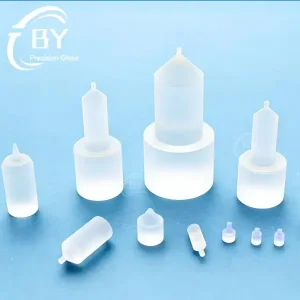
High-Quality Customized Quartz Fiber End Caps for QBH Manufacturer, Factory
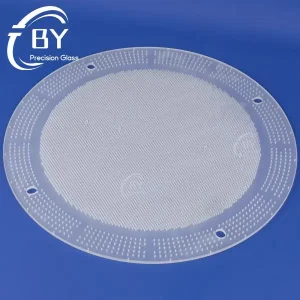
Custom Custom Optical Quartz Gas Distribution Plate Manufacturer, Suppliers
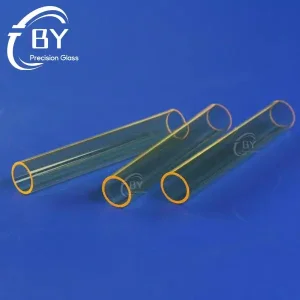
Custom UV Block Yellow Quartz Tube for IPL Lamp Flow Handle Manufacturer, Factories
High-Quality Chemical Resistant Custom Quartz Glass Parts Fabrication Supplier, Factories
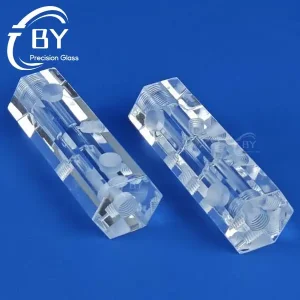
High-Quality Custom Fabrication of Quartz Glass Precision Components Supplier, Factory