
Featured Precision Ceramic & Optical Glass Assemblies
Cold-worked and hot-sintered components machined to rigorous sub-millimeter tolerances for medical solid-state lasers, diode-pumped systems, and semiconductor handling.
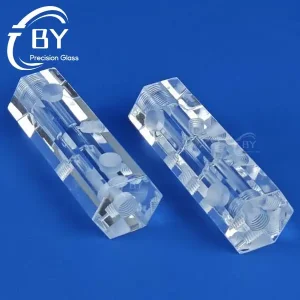
High-Quality Custom Fabrication of Quartz Glass Precision Components Supplier, Factory
View Specifications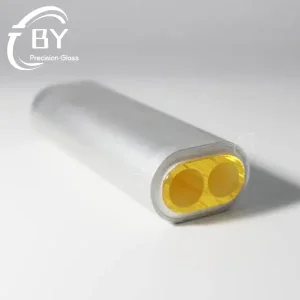
Custom Packed Laser Cavity Flowtubes for Laser Head Manufacturers, Suppliers
View Specifications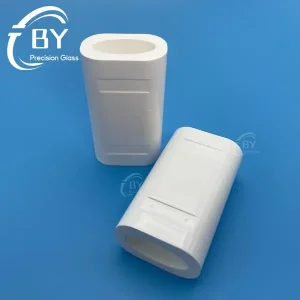
High-Quality Ceramic Cavities For Nd YAG Laser Supplier, Factories
View Specifications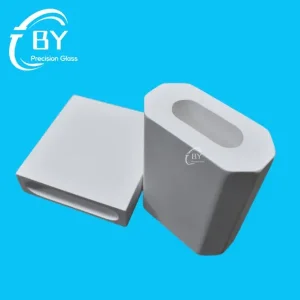
High-Quality Diffuse Reflectors Made of Spectralon‑Grade PTFE for Diode‑Pumping Chambers Manufacturer, Suppliers
View Specifications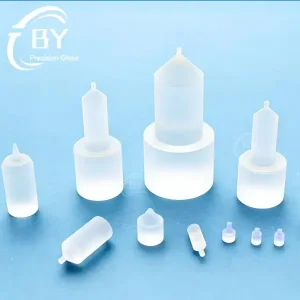
High-Quality Customized Quartz Fiber End Caps for QBH Manufacturer, Factory
View Specifications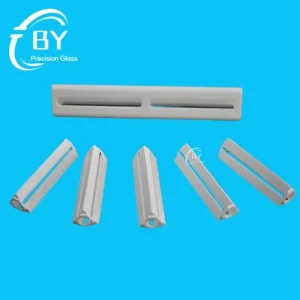
High-Quality Diode‑Pumping Chamber Diffuse Reflectors PTFE‑based Supplier, Suppliers
View Specifications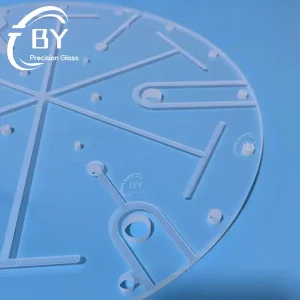
High-Quality Custom Precision Quartz Glass Fabrication Supplier, Suppliers
View Specifications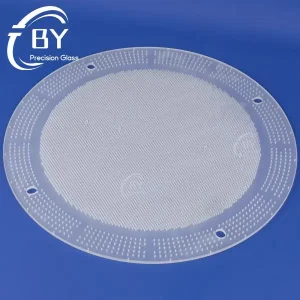
Custom Custom Optical Quartz Gas Distribution Plate Manufacturer, Suppliers
View SpecificationsGlobal Landscape: Physics & Industrial Demand for Ceramic Pump Cavities
Understanding the transition from specular metal gold-coated chambers to porous, high-reflectance alumina (Al₂O₃) ceramic reflectors in high-energy solid-state laser architectures.
Lambertian Diffuse Reflectance
Unlike specular mirrors that reflect pump rays at fixed angles causing localized gain saturation and thermal lensing in Nd:YAG or Alexandrite crystals, high-purity alumina ceramics provide near-perfect Lambertian scattering. Photons randomly scatter throughout the cavity volume, resulting in an extraordinarily homogeneous transverse gain profile.
Chemical Inertness & Coolant Resilience
Industrial pulse lasers and medical aesthetic equipment rely on deionized (DI) water circulating at high velocities. Metallic gold electroplating inevitably suffers blistering, peeling, or electrochemical oxidation over 10⁶ to 10⁸ pulses. High-grade glazed ceramics are chemically immune to turbulent water erosion and micro-galvanic corrosion.
Solarization & UV Hardening
Intense xenon flashlamp emissions release broad-spectrum UV radiation below 380 nm that solarizes polymer-based reflectors and tarnishes reflective coatings. Synthetic alumina ceramics sintered above 1650°C exhibit zero optical color-center degradation, maintaining >97.8% diffuse reflectivity across 600 nm to 1064 nm over 10+ years.
| Cavity Reflector Technology | Diffuse Reflectivity (λ=600–1064nm) | Coolant Compatibility | Thermal Shock & Heat Dissipation | Long-term Pulse Lifetime | Primary Industrial Constraint |
|---|---|---|---|---|---|
| BY Photonics High-Purity Ceramic (99.7% Al₂O₃) | 97.8% – 99.2% | Impervious with vitreous high-temp glaze | High (Conductivity ~28 W/m·K) | >100,000,000 Pulses | Requires diamond-tool CNC finishing |
| Gold-Plated Copper / Kovar Reflectors | 95.0% – 96.5% (Specular) | Sensitive to DI water cavitation & oxidation | Very High (Metal substrate) | Moderate (Flakes over thermal cycling) | High maintenance, beam hot-spots |
| Sintered PTFE (Spectralon-Grade) | 99.0% – 99.5% | Non-absorbent, but low pressure limit | Very Low (Degrades above 260°C) | High (Diode pump low-temp only) | Cannot survive direct flashlamp arc |
| Barium Sulfate (BaSO₄) Slurry Coating | 96.0% – 97.0% | Unusable in wet pump chambers | Poor adhesion under thermal flux | Low (Fibers crumble into coolant) | Dry cavity enclosures only |
Engineering Synthesis: From Sub-Micron Powder to Precision Chambers
How BY Photonics achieves sub-micron pore dispersion, high mechanical modulus, and defect-free internal glazing for high-efficiency solid-state pumping heads.
Sub-Micron Porosity Control
Using high-purity α-Al₂O₃ raw powder (>99.7%) with precisely measured binder systems, cold isostatic pressing (CIP) creates uniform green compacts. Carefully scheduled thermal ramp-ups ensure micro-pores remain in the optimal 0.2–0.6 µm range, matching the scattering parameters that maximize total internal refraction for pump light.
High-Temperature Vitreous Glazing
For wet pump chambers where water circulates directly against the reflector, unglazed ceramics can absorb ions and trap organic bio-film. We apply proprietary high-temperature silica-aluminate glazes matching the expansion coefficient of alumina, firing them to a non-porous glass finish that prevents water infiltration.
5-Axis Diamond Grinding
Because fully fired alumina possesses a Mohs hardness of 9, standard carbide tooling is ineffective. BY Photonics deploys high-speed diamond grinding workstations capable of achieving tolerances within ±0.02 mm on intricate single-lamp, double-lamp elliptic, and close-coupled cylindrical bores.
Complete Metrology Verification
Every production run undergoes spectrophotometer reflectance confirmation across 200–1100 nm, CMM 3D coordinate dimensional mapping, helium mass spectrometer vacuum tightness tests (for sealed chambers), and ultrasonic crack detection to ensure zero micro-fissures before shipment.
Precision That Elevates Optical Pump Efficiencies
Empirical data verified across more than 50,000 laser cavity assemblies deployed globally.
Localized Blueprints & Industrial Application Segments
How high-performance ceramic reflectors optimize photon efficiency across medical aesthetics, surgical oncology, defense optics, and micro-machining systems.
Aesthetic Medical Laser Replacements (DEKA, Candela, Cynosure)
Widely deployed in Alexandrite (755 nm) and Nd:YAG (1064 nm) aesthetic systems. Our wholesale replacement ceramic cavity bodies directly match OEM dimensions for systems like DEKA Synchro, Motus AX, and GentleLase. High diffuse reflection prevents hot spots, ensuring uniform pulse delivery to skin targets and lengthening flashlamp lifespan by up to 35%.
Holmium:YAG (2.1 µm) & Erbium Surgical Systems
Lithotripsy and soft-tissue surgical resonators require high peak optical powers. Ceramic reflectors maintain absolute structural rigidity under thermal shock when flashlamps discharge up to 80 Joules per pulse. Glazed interior chambers withstand high deionized water flow, preventing chemical scaling and cavity discoloration.
Industrial Pulsed Laser Welding & Additive Cladding
Heavy industrial fabrication demands 24/7 duty cycles. Single-lamp or twin-lamp ceramic pumping modules drive rod lasers used for battery tab seam welding, aerospace superalloy repairs, and jewelry welding. The superior thermal resistance of alumina eliminates cavity warping and beam alignment drift.
Semiconductor Diode-Pumped (DPSSL) Modules
For diode stack close-coupled pumping chambers, our ceramic reflectors incorporate custom micro-slits and cooling channels that accept high-density 808 nm and 880 nm laser diode bar arrays. High diffuse recycling ensures that unabsorbed diode radiation is redirected repeatedly across the laser crystal slab or rod.
Laser Cavity Flow Tube & Samarium Filter Packaging
We provide complete turnkey optical pumping integration: ceramic cavity blocks matched with Samarium-doped glass flow tubes (absorbing 1064 nm parasitic ASE emission while protecting Nd:YAG rods from UV damage), synthetic fused silica flow plates, and high-purity yellow UV-block IPL light guide blocks.
Scientific Research & Defense Laser Designators
Customized multi-segment ceramic reflectors for high-peak-power Q-switched military rangefinders, LIDAR target illuminators, and university physics laboratories requiring ultra-compact, lightweight, and vibration-proof laser resonator housing.
Technology Roadmap: 2025–2035 Innovations
Anticipating emerging solid-state laser demands: from transparent composite ceramics to hybrid micro-channel cooling structures.
Phase 1: Silicon Nitride & High-Conductivity Matrices
Integrating additive nanoparticles into the ceramic matrix to raise thermal conductivity from 28 W/m·K to >45 W/m·K, mitigating cavity thermal expansion under multi-kilowatt average pump powers.
Phase 2: Hybrid Glass-Ceramic Sintered Monoliths
Fusing synthetic fused silica flow tubes directly onto sintered alumina reflectors via intermediate glass frit co-firing, eliminating elastomer O-rings that frequently degrade under intense UV radiation.
Phase 3: Digital Ceramic Additive 3D Lithography
Transitioning from subtractive diamond CNC milling to stereolithography-based ceramic 3D printing, enabling conformal internal cooling passages and custom asymmetric parabolic geometries impossible with conventional tooling.
Engineering & Procurement FAQ
Key technical answers regarding material purity, glazed vs unglazed selection, dimensional tolerances, and OEM customization.
Why is a 99.7% Al₂O₃ ceramic reflector superior to gold-plated metallic cavities in Nd:YAG lasers?
What is the practical difference between glazed and unglazed laser ceramic reflectors?
Can BY Photonics fabricate custom ceramic reflectors based on 2D drawings or 3D CAD files?
How do you verify the optical diffuse reflectance of your ceramic cavities?
Do you manufacture replacement ceramic cavities for brand-name medical laser equipment?
Specialized Laser & Semiconductor Component Catalog
Engineered sapphire viewing optics, semiconductor quartz carriers, and specialized ceramic reflectors manufactured to rigorous ISO 9001 quality systems.
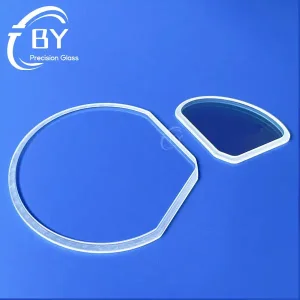
High-Quality Sapphire Viewing Plates for Harsh Chemical Environments Suppliers, Factories
View Specifications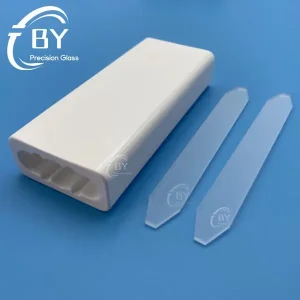
Wholesale Ceramic Cavity Reflector use for DEKA Laser Manufacturers, Supplier
View Specifications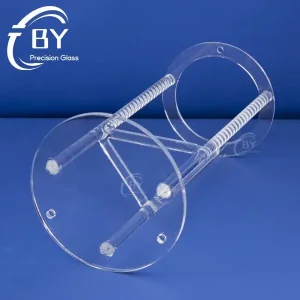
Wholesale Quartz Wafer Carriers for Semiconductor Supplier, Suppliers
View Specifications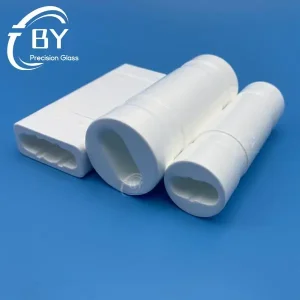
Wholesale Ceramics Reflecor for Semiconductor Lasers Suppliers, Factory
View Specifications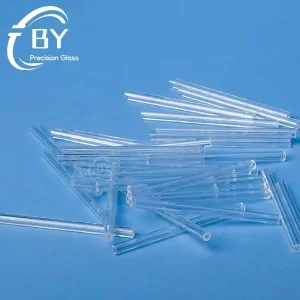
High-Quality Custom Precision Quartz Capillary Tubes Manufacturers, Suppliers
View Specifications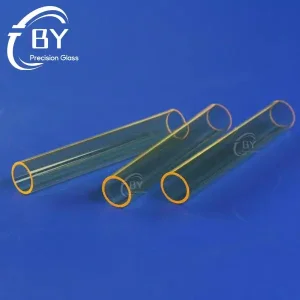
Custom UV Block Yellow Quartz Tube for IPL Lamp Flow Handle Manufacturer, Factories
View Specifications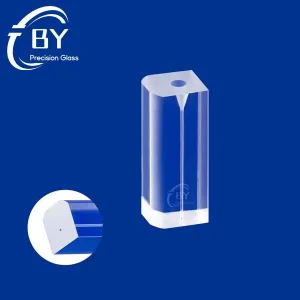
Custom Fiber Optic Glass Ferrules Supplier, Factories
View Specifications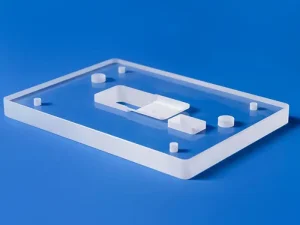
High-Quality Factory Supply Precision Quartz Glass Machining Plate Supplier, Suppliers
View SpecificationsFull Lifecycle Engineering: Prototyping to Batch Production
BY Photonics integrates cold glass working, precision high-temperature ceramic sintering, and comprehensive metrology under one roof in Tianjin, China.
1. Drawing & DFM Review
Within 24 hours of receiving your 3D STEP or 2D CAD prints, our senior ceramic process engineers examine dimensional tolerances, glaze edge boundaries, internal coolant passage geometry, and thermal expansion matching.
2. CIP Sintering & 5-Axis Diamond Grinding
High-purity >99.7% Al₂O₃ undergoes cold isostatic pressing at >200 MPa followed by 1650°C atmospheric sintering. Precision 5-axis CNC diamond workstations machine all sealing grooves, flow holes, and elliptic pump bores to tight tolerances.
3. 100% Quality & Cleanroom Pack
Every cavity is inspected for reflectance compliance via spectrophotometry, cleaned with ultrasonic deionized cascades, dried under HEPA filtration, and vacuum-sealed in anti-static, shock-absorbent multi-layer shipping crates.
Need a Custom Laser Ceramic Cavity or Flow Tube Assembly?
Upload your CAD specifications (STEP / IGES / DWG / PDF). Our engineering team will analyze your pump chamber geometry, verify material grades, and return a comprehensive manufacturability and quotation assessment within 24 hours.