Industrial Whitepaper & Sourcing Guide
High-Quality Optical Endcaps Manufacturers & Factories
Precision engineering standards, laser damage threshold (LIDT) breakthroughs, and high-power fiber optic termination solutions engineered under strict ISO-grade manufacturing protocols.
Featured Components
Featured Precision Quartz & Optical Engineering Solutions
Direct-from-factory optical components, UV fused silica substrates, and high-purity laser-cavity assemblies precision-machined to custom blueprints.
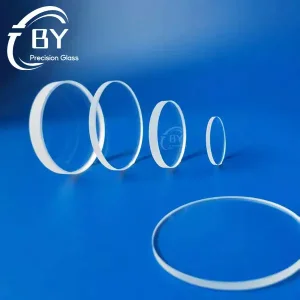
Quartz Optical Windows for Semiconductor Lithography Equipment
Explore Specifications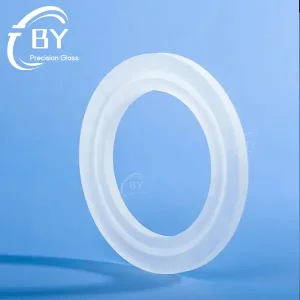
Precision Custom Quartz Glass Components for Semiconductor Tools
Explore Specifications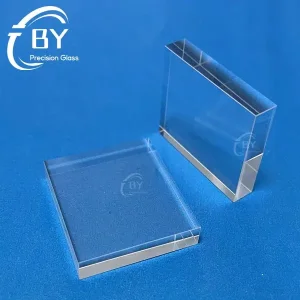
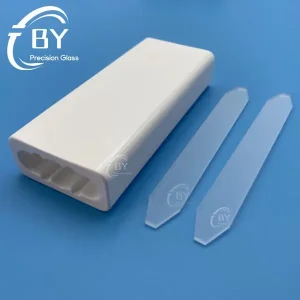
Sapphire IPL Light Guide Block for Aesthetic Laser Handles
Explore Specifications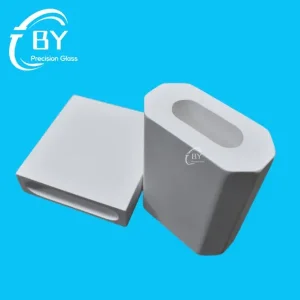
Diffuse Reflectors Made of Spectralon-Grade PTFE for Pumping Chambers
Explore Specifications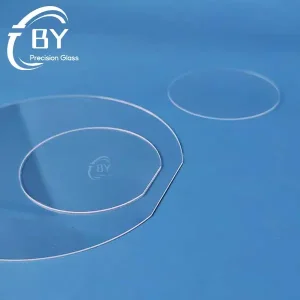
Custom Borofloat 33® Glass Wafers for Semiconductor Carriers
Explore Specifications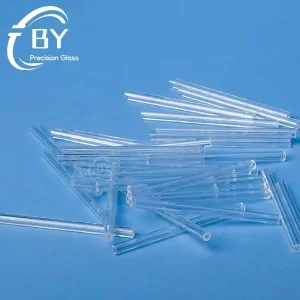
Custom Precision Quartz Capillary Tubes for Fiber Alignment
Explore Specifications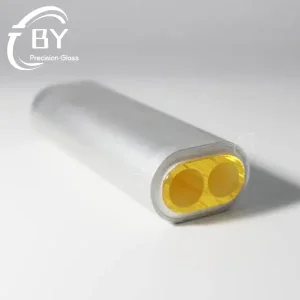
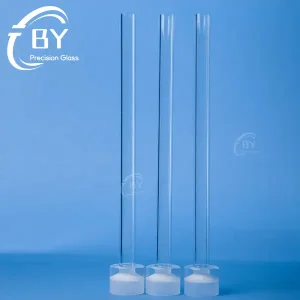
Custom Packed Laser Cavity Flowtubes for Solid-State Systems
Explore SpecificationsEngineering Fundamentals
Optical Endcaps: Physics, Beam Expansion & Laser Damage Threshold (LIDT)
In high-power fiber lasers and optical amplifiers, the terminal facet of the fiber represents the most vulnerable boundary in the optical chain. Optical endcaps serve as core-less, homogenous extensions that manage beam physics and eliminate catastrophic optical mirror breakdown.
Beam Expansion Dynamics
When laser light leaves a narrow fiber core (e.g., 10 µm to 50 µm mode field diameter), the endcap allows the guided mode to propagate without waveguiding, allowing the beam wavefront to expand freely before reaching the silica-air interface. This drastically dilutes power density below the critical threshold of dielectric breakdown.
Elimination of Fresnel Feedback
Fresnel back-reflections into active fiber cores destabilize fiber resonators, induce self-pulsing, and cause fatal catastrophic optical damage (COD). Precision angle-cleaving (typically 8° to 10°) alongside ion-beam sputtered (IBS) AR coatings suppresses back reflections down to < -50 dB.
Thermal Lens & Mode Integrity Control
Operating multi-kilowatt CW lasers induces temperature gradients that alter the refractive index (dn/dT). High-purity synthetic fused silica (such as JGS1, Suprasil, or Corning 7980) features ultra-low absorption (<0.5 ppm/cm), completely eliminating thermal lensing distortion and maintaining beam quality (M² < 1.15).
Global Procurement Trends
Enterprise Sourcing Demands & Optical Endcap Industrial Solutions
From kilowatt industrial cutting to orbital free-space telecom, Tier-1 system integrators face stringent procurement bottlenecks.
Industrial Multi-kW Sheet Metal Laser Cutting
Procurement Hurdle: Endcap facet burnout caused by continuous dust contamination and extreme pump scattering at output power exceeding 12 kW to 40 kW.
Engineering Answer: Pre-fused, water-cooled quartz housings and oversized 3 mm–8 mm cylindrical silica endcaps featuring anti-scratch hydro-protective AR coatings that endure industrial factory environments.
Ultrafast Picosecond & Femtosecond Lasers
Procurement Hurdle: Non-linear phase modulation, B-integral accumulation, and self-focusing dielectric fracture under gigawatt-level peak intensities.
Engineering Answer: Ultra-short length-matched quartz cylinders with super-polished 10-5 scratch-dig surfaces, maintaining sub-100 fs pulse width without chromatic or spatial chirping.
Aerospace LiDAR & Satellite Optical Communications
Procurement Hurdle: Vacuum outgassing, ionizing cosmic radiation darkening, and launch thermal-shock vibration delamination.
Engineering Answer: Radiation-hardened, fluorine-doped fused silica endcaps fusion-spliced with zero adhesive bonding, fully compliant with NASA/ESA ECSS outgassing criteria.
Comprehensive Material Performance Comparison Matrix
| Substrate Grade | Transmission Window | OH Content (Absorption) | LIDT (@ 1064nm, 10ns) | Recommended Deployment |
|---|---|---|---|---|
| JGS1 Synthetic Silica | 185 nm – 2,500 nm | High (<1200 ppm) | >85 J/cm² | UV Optics, CW Fiber Laser Termination (<2 kW) |
| Ultra-Dry Fused Silica (JGS3 / Corning) | 260 nm – 3,500 nm | Ultra-low (<1 ppm) | >110 J/cm² | Multi-Kilowatt (10kW+) Fiber Resonators & Medical Lasers |
| Fluorine-Doped Silica | 200 nm – 2,200 nm | Tailored (<10 ppm) | >95 J/cm² | Cladding Light Stripping & Radiation-Resistant Space Comm |
| Optical Monocrystalline Sapphire | 170 nm – 5,500 nm | Non-hydroxyl | >45 J/cm² (Hardness 9H) | Abrasive Environments, IPL Handles, Mid-IR Delivery |
Auditing & Supply Chain Integrity
Localized Sourcing Support, ISO Metrology & Compliance Framework
Ensuring seamless transition from high-mix low-volume prototyping to mass-scale serial batch supply without quality decay.
Traceable Material Metallurgy & RoHS/REACH
Every batch of synthetic fused silica is accompanied by spectrophotometer raw ingot certificates, verification of zero bubble classes (ISO 10110-3: 1/0.1), and complete chemical documentation compliant with European RoHS, REACH, and Conflict Mineral mandates.
Zygo Laser Interferometry & Metrology
Surface figure validation utilizing Zygo Verifire phase-shifting interferometers verifies transmitted wavefront distortion (<λ/10 @ 632.8 nm) and end-face parallelism down to <15 arcseconds. Micro-roughness is verified below 0.3 nm RMS via optical profiler scans.
Export-Grade Cleanroom Packaging
Components are processed under Class 100 (ISO 5) laminar flow workstations, subjected to ultrasonic detergent stripping, vacuum-sealed into custom anti-static waffle trays, and packed in nitrogen-flushed barrier bags for long-haul intercontinental maritime and air shipment.
Future Perspective
Technology Roadmap: High-Power Optical Endcaps (2026–2030)
How evolving laser diode powers and photonics packaging are redefining endcap geometry, splicing automation, and coating science.
Phase 01 · 2026
Automated CO₂ Laser Splicing
Shift from conventional electric-arc fusing to symmetrical ring-mirror CO₂ laser heating, achieving zero micro-bubble joints with tensile strengths >1.5 GPa.
Phase 02 · 2027
Integrated Cladding Strippers
Monolithic endcaps fabricated with chemically-etched and surface-roughened sections designed to dissipate residual clad light within the terminal housing safely.
Phase 03 · 2028-2029
Metasurface Nano-Structured Facets
Replacement of multi-layer thin-film dielectric coatings with etching sub-wavelength antireflective moth-eye patterns, raising laser damage thresholds above 150 J/cm².
Phase 04 · 2030
Photonic Crystal & LMA Integration
Precision hermetic collapse and endcapping for large-pitch photonic crystal fibers (PCF) and hollow-core fibers for next-gen mid-IR gas sensing and fusion research.
Direct Questions
Procurement & Engineering Frequently Asked Questions (FAQ)
Detailed technical answers to common queries submitted by optical design engineers and global procurement heads.
Q What determines the optimum length of an optical endcap?
The length is calculated using the numerical aperture (NA) and mode field diameter (MFD) of the delivery fiber. The endcap must be long enough to allow the beam to expand until the power density at the silica-air interface drops safely below the optical coating's laser damage threshold (LIDT), typically with a safety factor of 3x to 5x.
Q Why is synthetic fused silica favored over conventional quartz for endcaps?
Synthetic fused silica (such as JGS1 or Suprasil) is created by chemical vapor oxidation of silicon precursor gas. This results in virtually zero metallic trace impurities (Fe, Cr, Ni < 0.05 ppm) compared to natural quartz, preventing localized hot-spot absorption that causes thermal lensing and runaway optical fracture in multi-kW lasers.
Q Can you provide pre-angled facets and custom AR coatings?
Yes. We routinely fabricate endcaps with 8° or 10° angled output facets to prevent back-reflections into laser diodes. Our in-house Ion Beam Sputtering (IBS) coating chambers apply anti-reflective (AR) coatings with reflectance R < 0.1% at 1030–1080 nm, 532 nm, or multi-wavelength combinations with verified LIDT certifications.
Q What are the standard mechanical dimensional tolerances held?
Our CNC ultrasonic grinding and cylindrical polishing achieve diameter tolerances down to ±0.005 mm, length tolerances to ±0.02 mm, end-face flatness of λ/10, parallelism < 15 arcseconds, and surface quality down to 10-5 scratch-dig per MIL-PRF-13830B / ISO 10110 standards.
Q How does fusion splicing compatibility get verified before batch ordering?
We supply sample validation batches alongside thermal expansion match certificates (fused silica CTE ~0.55 × 10⁻⁶ /K). Endcap outer diameters are chamfered and concentricity-controlled to ensure seamless loading into automated splicers like Vytran, Fujikura, or 3SAE equipment.
Q What is the typical lead time for custom prototype endcap fabrications?
For custom CAD designs (STEP, IGES, or dimensioned drawings), design for manufacturability (DFM) reviews are completed within 24 hours. Custom prototypes are delivered within 10 to 15 working days, while recurring volume production orders are supported via flexible buffer stock agreements.
Industrial Catalog
Explore Complete Laser, Semiconductor & Glass Assemblies
Precision engineered components fabricated from synthetic quartz, samarium-doped filters, flow tubes, and laser cavity optics.
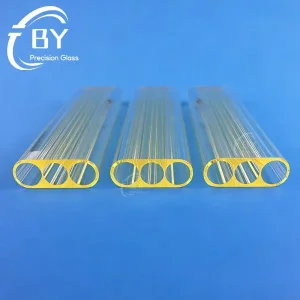
Laser Cavity Flow Tubes & Filters Made from Samarium-doped Glass
Explore Specifications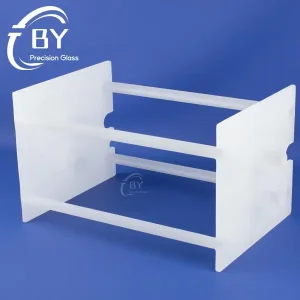
High-Purity Quartz Diffusion Boat for Semiconductor Oxidation
Explore Specifications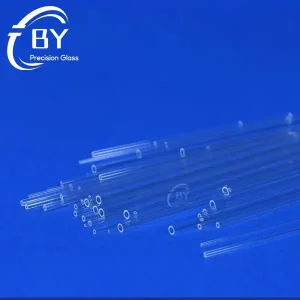
Fluorine-Doped Fused Silica Capillary Tubes for Fiber Waveguides
Explore Specifications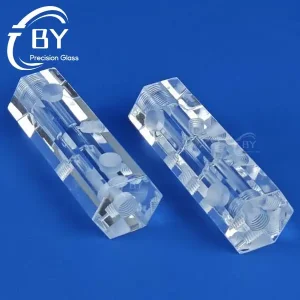
Custom Fabrication of Quartz Glass Precision Components
Explore Specifications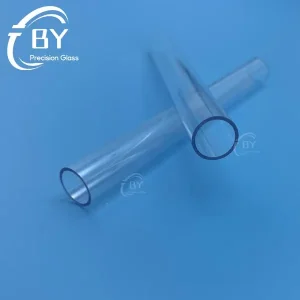
Cerium-Doped Quartz Tubes for UV-Blocking Flashlamp Systems
Explore Specifications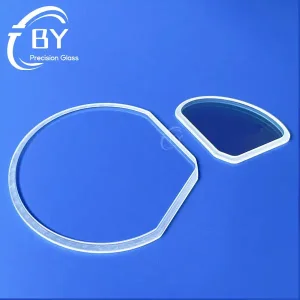
Sapphire Viewing Plates for Harsh Chemical & Vacuum Ports
Explore Specifications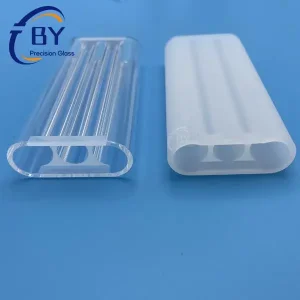
Candela Laser Head Triple Bore Precision Chambers
Explore Specifications