Precision Substrates, Reflectors & Optical Glassware
Direct OEM manufacturing and micro-machining solutions. Review our active wholesale production configurations below.
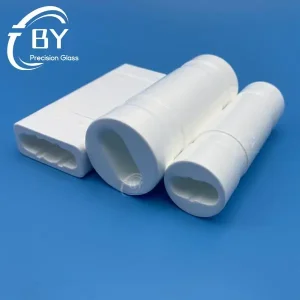

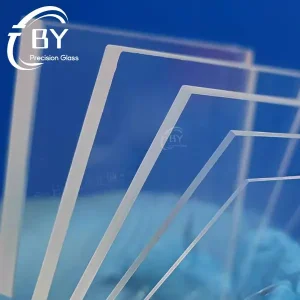
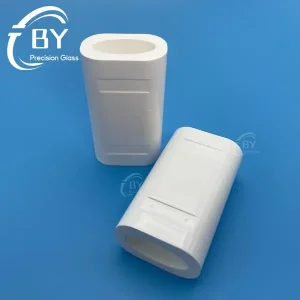
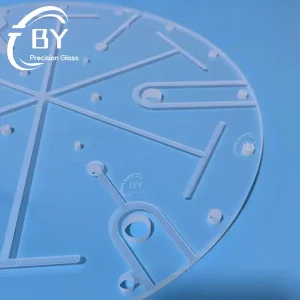

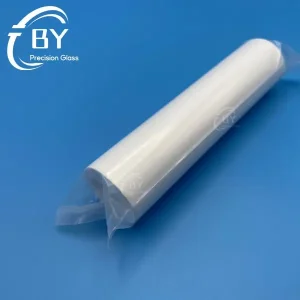
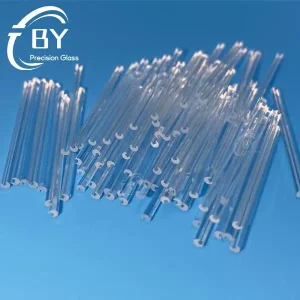
High-Precision Fine-Gauge Glass Tubes: Material Science & Tolerances
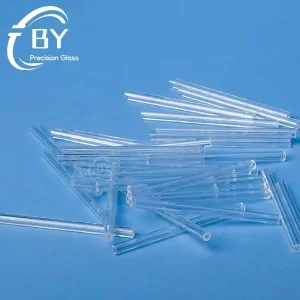
In modern high-tech assembly lines, fine-gauge glass tubes (often referred to as micro-capillary glass tubes) serve as the unsung foundation for analytical chemistry, optical telecommunications, and photonic cavities.
Fine-gauge glass tubes represent an advanced category of micro-tubular components characterized by extremely small inner diameters (ID down to < 5 µm) and external diameters (OD ranging from 0.1 mm to 3.0 mm). Unlike standard industrial sight glass, precision capillary glass requires strict thermodynamic control during thermo-mechanical redrawing, nanoscale surface smoothness, and minimal wall thickness variability.
Material integrity determines performance limits under extreme temperature, aggressive chemical exposure, and intense laser radiation. Based on chemical composition and manufacturing methodologies, fine-gauge tubes fall primarily into synthetic fused silica (JGS1), natural fused quartz (JGS2/JGS3), and low-expansion borosilicate 3.3 platforms.
| Material Grade | Transmission Bandwidth | Coefficient of Thermal Expansion (CTE) | Softening Point | Typical Critical Application |
|---|---|---|---|---|
| JGS1 Synthetic Fused Silica | 185 nm – 2,500 nm (Deep UV) | 5.5 × 10⁻⁷ / °C | ~1,730 °C | Capillary Electrophoresis, UV-C Lithography, Laser Flow Tubes |
| JGS2 Fused Quartz | 220 nm – 2,500 nm (Standard UV-Vis) | 5.5 × 10⁻⁷ / °C | ~1,680 °C | Flashlamp Sleeves, Optocoupler Bushings, Pyrometry Viewports |
| JGS3 Infrared Quartz | 260 nm – 3,500 nm (Low OH < 5 ppm) | 5.5 × 10⁻⁷ / °C | ~1,680 °C | IR Spectroscopy Sensors, Fiber Alignment Ferrules |
| Borosilicate 3.3 (Borofloat) | 310 nm – 2,200 nm (Visible/NIR) | 3.3 × 10⁻⁶ / °C | ~820 °C | Medical Fluid Dispensing, Micro-sampling Pipettes, Electronic Packaging |
Why Tier-1 Tech Enterprises Source Fine-Gauge Tubes from China
China's optical glass manufacturing cluster has shifted from standard commoditized tubing to ultra-tight-tolerance high-purity glass fabrication.
Full Supply Chain Integration
From refined synthetic silicon tetrachloride gas cracking to precision preform synthesis, redrawing, CNC grinding, and vacuum AR/UV coatings, our domestic industrial cluster minimizes logistical latency and mitigates material supply interruptions.
Significant CapEx & Tooling Efficiency
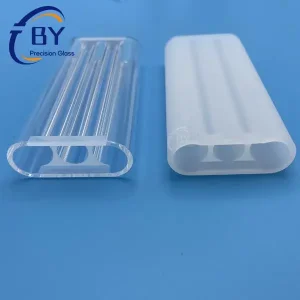
Custom bore geometries (such as square, rectangular, D-shape, and multi-lumen capillary configurations) incur tens of thousands of dollars in tooling costs in Western markets. Chinese agile precision tooling reduces setup costs by up to 60% while accelerating sampling turnaround.
High-Capacity Precision Micro-Redrawing
Equipped with computerized dual-axis laser diameter monitors, automatic tension feed-back loops, and micro-flame thermo-forming lines, our facilities yield millions of meters of fine-gauge tubes annually with tight CPK reliability indexes.
Macro Solutions: Cross-Sector Engineering Deployments
Explore how fine-gauge micro-tubing serves as an enabling hardware substrate across modern technology segments.
Biomedical Microfluidics
Ultra-low auto-fluorescence fused silica capillaries are deployed in DNA sequencing arrays, capillary zone electrophoresis (CE), and nano-liquid chromatography (nano-LC) columns where laminar flow precision is mandatory.
Laser Pumping & Cavity Cooling
Micro-fine Samarium-doped and cerium-doped quartz cooling tubes prevent unwanted 1064nm parasitic oscillations and absorb UV radiation to prevent thermal lensing inside high-power flashlamp aesthetic and industrial lasers.
Fiber Optic Packaging
Single and multi-bore fine-gauge tubes function as fiber alignment sleeves, collimator housings, and pigtailed ferrule blanks requiring sub-micron ID concentricity to reduce insertion loss in DWDM telecom networks.
Semiconductor Gas Handling
Chemically inert borosilicate and quartz micro-tubes distribute corrosive carrier gases (HCl, silane) inside atomic layer deposition (ALD) and plasma-enhanced chemical vapor deposition (PECVD) micro-nozzles.
Global Sourcing Trends & Quality Risk Mitigation
Procurement directors and optoelectronic system designers operate under strict zero-defect parameters. Sourcing fine-gauge tubes requires specialized technical scrutiny beyond pricing.
1. Strict Demand for Low OH Fused Silica: As fiber lasers and infrared detection systems scale into the 2 µm to 3.5 µm spectrum, absorption bands caused by hydroxyl ions (OH⁻) around 2.73 µm cause transmission degradation. Enterprise buyers require infrared-grade fused quartz (JGS3) with hydroxyl content controlled strictly below 5 ppm, verified via FTIR spectroscopy.
2. Tight Geometric Tolerances & Bore Roundness: Modern automated capillary pick-and-place systems demand tight outer diameter consistency (±0.005 mm or ±0.002 mm). Out-of-round bores or wall variations can cause misalignment, epoxy migration, or flow velocity imbalances.
3. Cleanroom Packaging and Clean Cleave Edges: End-face preparation defines assembly yield. We provide ultrasonic cleanroom washing, flame-polished end-faces, mechanical 90° precision scribing, or flat mirror lap polishing (≤ λ/4) to prevent micro-chipping, dust contamination, and stress concentrations.
Frequently Asked Technical & Sourcing Questions
Direct engineering answers to support your drawing review, DFM analysis, and factory procurement requirements.
What are the minimum inner diameter (ID) and wall thickness achievable?
How do you verify internal capillary cleanliness and dimensional compliance?
Can you manufacture non-circular cross sections (square, rectangular, multi-bore)?
What is the difference between fire-polished, scored-break, and optically polished ends?
What documentation is provided for wholesale and export orders?
Custom Quartz, Sapphire & Borosilicate Components
Explore additional high-demand fabricated optical and laser components engineered to customer drawings.