
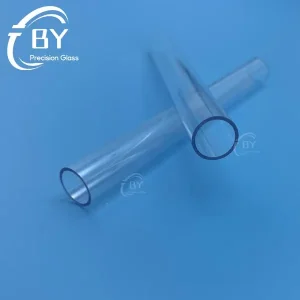
Direct From Production Floor
High-Precision Optical & Semiconductor Engineered Ware
Featured batch components: UV-absorption tubes, diffusion equipment, laser cavity flow components, and ultra-flat quartz distribution plates certified for cleanroom environments.
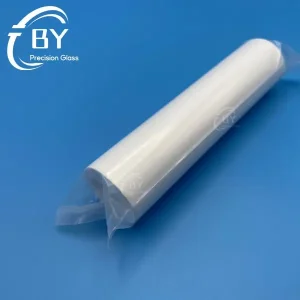
Candela VBeam Laser 6" White Cavity Ceramic Reflector
Technical Specs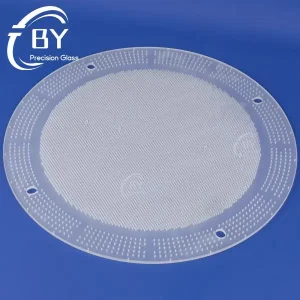
Custom Optical Quartz Gas Distribution Plate
Technical Specs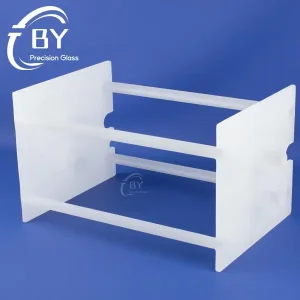
Semiconductor Thermal Processing Quartz Diffusion Boat
Technical Specs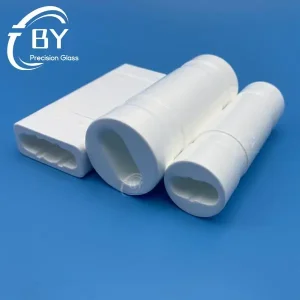
Ceramic Reflector for Semiconductor Pumping Diode Lasers
Technical Specs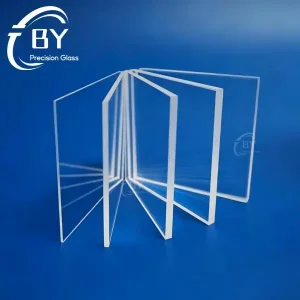
High-Quality JGS1 Ultraviolet Fused Silica Plate
Technical Specs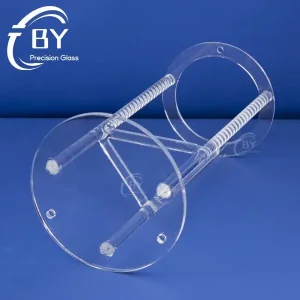
Chemical Wet-Bench Quartz Wafer Carriers
Technical Specs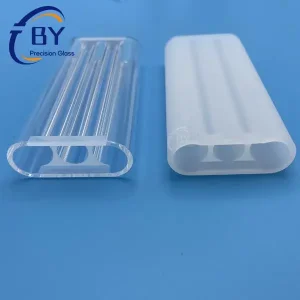
Candela Laser Head Triple Bore Precision Flow Tube
Technical Specs
Industry Intelligence 2026-2030
Precision Glass Tubing: Global Market Trends & Next-Gen Drivers
The convergence of semiconductor sub-node scaling, biopharma nanofluidics, and quantum telecommunications has transformed precision glass tubing from a static consumable into an active performance-limiting component.
Sub-Micron Geometric Accuracy
Next-generation applications require strict tolerances: outer diameter (OD) and inner diameter (ID) tolerances squeezed below ±0.001 mm. Maintaining circularity and continuous wall thickness along meter-length redraw runs is fundamental for analytical repeatability in capillary electrophoresis and optofluidics.
Extreme Photonic Stress Handling
Solid-state and diode-pumped systems operate at extreme fluence thresholds. Precision glass tubing now integrates engineered dopants like Cerium and Samarium to block destructive deep UV while allowing maximum visible excitation, mitigating solarization and internal lattice micro-fracturing.
Material Purity & Trace Elements
Modern silicon etching and advanced bioprocessing require transition metal contamination levels below parts-per-billion (ppb). Eliminating trace hydroxyl (OH−) groups ensures zero bubble formation during thermal processing up to 1,200 °C in chemical vapor deposition (CVD) environments.
B2B Procurement Realities
Shift in Global Enterprise Sourcing Frameworks
Tier-1 OEM instrument builders in North America, Western Europe, and East Asia are restructuring procurement models to counter geopolitical supply disruptions and long European lead times.
Mitigating Single-Region Supplier Fragility
Historic reliance on legacy Western manufacturers has resulted in order backlogs exceeding 30 to 45 weeks. Leading procurement teams are diversifying toward direct manufacturing partners in China that possess fully integrated domestic synthetic quartz supply bases, securing production predictability.
Total Lifecycle Material Traceability
Medical and aerospace supply chains enforce strict audits. Every production batch of precision glass tubing must include spectrographic transmission curves, certified chemical purity analyses, surface roughness interferometry profiles, and laser concentricity scans.
High-Mix, Low-to-Mid Volume Flexibility
Traditional glass giants often refuse custom geometric draws below tens of thousands of meters. Modern high-tech applications (such as prototype flow cells and bespoke clinical probes) demand custom draws in batch sizes from 50 to 5,000 units without exorbitant NRE tooling costs.
Manufacturing Infrastructure
China Industry 4.0: Modernizing Glass Tubing Production
Tianjin BY Photonics bridges the gap between old-world glass-drawing craftsmanship and automated, sensor-guided production lines, ensuring high throughput, lower scrap rates, and cost efficiencies.
Laser Diameter Monitoring
Dual-axis dynamic optical micrometers continuously monitor ID and OD during capillary redrawing, feeding real-time pull-speed data back to closed-loop servos within milliseconds.
Oxyhydrogen Clean Fusion
Oxyhydrogen torch welding maintains a carbon-free, ultra-clean flame environment. This prevents hydrocarbon deposition during complex tubing assemblies, ensuring vacuum-tight seal integrity.
Diamond-Core Ultrasonic Milling
5-axis ultrasonic CNC platforms mill through-holes, slots, and complex end geometries in glass tubing without subsurface micro-fractures, improving structural strength under high internal pressure.
Thermal Annealing & Stress Relief
Computer-controlled electric annealing lehrs eliminate internal stress distributions, verified using dual-polariscope polarimetry to prevent failure during laser pump pulsing or deep thermal cycles.
Engineering Spec Sheet
Precision Glass Tubing Material Selection Matrix
Match mechanical, thermal, and optical properties directly to your device operating parameters. Compare our standard materials below.
| Material Class | Transmission Band | Max Working Temp | Thermal Expansion (×10⁻⁷/K) | Key Strengths | Primary Industrial Use |
|---|---|---|---|---|---|
| JGS1 Synthetic Fused Silica | 185 nm – 2,500 nm | 1,150 °C | 5.5 | Zero bubble content, highest deep UV transmission, bubble-free | Excimer lasers, semiconductor lithography, UV flow cells |
| JGS2 Optical Fused Quartz | 220 nm – 2,500 nm | 1,100 °C | 5.5 | Excellent thermal shock resistance, visible-range clarity | Furnace diffusion tubes, sight glass, laser lamp envelopes |
| JGS3 Infrared Grade Quartz | 260 nm – 3,500 nm | 1,100 °C | 5.5 | Ultra-low OH content (< 5 ppm), no 2.7 µm water absorption peak | IR gas analyzers, thermal pyrometry sleeves, heat shields |
| 3.3 Borosilicate Glass | 310 nm – 2,200 nm | 480 °C | 33.0 | High chemical resistance (Class 1 acid/alkali), cost-effective | Medical diagnostics, fluidic manifolds, flow meters |
| Samarium / Cerium Doped Quartz | Tailored / UV-Cut | 1,050 °C | 5.5 | Absorbs target UV and 1064 nm parasitic emission, fluorescent pump assist | Laser cavity flow tubes, aesthetic IPL handpiece guides |
Field Deployments
Precision Tubing: Real-World Engineering Scenarios
Explore how our custom glass tubing components operate within mission-critical equipment around the globe.
Aesthetic & Surgical Medical Lasers
Triple-bore and samarium-doped flow tubes support flashlamp and laser rod arrays in surgical systems. They channel deionized cooling water, absorb harmful UV wavelengths that degrade solid-state crystals, and eliminate parasitic laser oscillations.
Capillary Electrophoresis & Bio-Sequencing
Synthetic silica capillaries with sub-micron circularity serve as optical detection windows for gene sequencing and HPLC instruments. Superior internal wall finishes limit boundary turbulence, ensuring clean peaks in micro-volume separations.
Semiconductor Gas Distribution Systems
Micro-perforated quartz showerhead tubes and injector manifolds deliver reactive precursor gases uniformly across heated wafers inside ALD and CVD vacuum chambers, resisting corrosion from fluorine- and chlorine-based plasma cleaning chemistries.
Technical FAQs
Frequently Asked Sourcing & Engineering Questions
Clear, direct answers regarding tolerances, materials, delivery terms, and custom capabilities for precision glass tubing.
What dimensional tolerances can you maintain on custom capillary tubing?
We consistently achieve inner diameter (ID) and outer diameter (OD) tolerances down to ±0.002 mm through precision closed-loop redraw towers. For specialized optical and analytical projects, tolerances of ±0.001 mm can be maintained depending on the geometry and raw material selected.
How do you verify wall thickness uniformity and avoid concentricity runout?
Every critical batch undergoes real-time multi-angle laser scanning during draw stages, followed by offline optical coordinate measurement machines (CMM) and cross-sectional interferometric inspections. Inspection certificates are included with production shipments upon request.
Why choose synthetic JGS1 silica tubing over standard JGS2 quartz?
JGS1 synthetic fused silica is produced via chemical vapor deposition of silicon halides, resulting in high optical purity, zero bubble inclusions, and exceptional transmission in the deep UV spectrum (down to 185 nm). JGS2 is derived from natural refined quartz, making it more cost-effective for visible, infrared, and standard thermal applications.
Can you provide secondary end-machining, fire-polishing, and shaping?
Yes. Our Tianjin facility houses both hot working and cold CNC machining under one roof. We offer optical-grade end-face polishing, precision diamond beveling, torch flaring, capillary fusion sealing, and ultrasonic hole drilling directly into tubing bodies.
What is your lead time for bespoke prototype runs versus bulk orders?
Standard prototype redraws and custom machined samples typically ship within 7 to 14 business days from final 2D/3D CAD approval. High-volume repeat manufacturing schedules are tailored via rolling buffer stock agreements, ensuring deliveries arrive on time worldwide.
How do you guarantee breakage-free international logistics?
We use custom shock-absorbent multi-layer EPE foam casing, vacuum-sealed barrier packaging, and rigid, ISPM-15 compliant export crates. Sensitive capillary shipments include shock and tilt indicator tags to guarantee total physical integrity across global air and sea routes.
Advanced Product Series
Precision Capillary, Cavity & Micro-Groove Components
Explore our specialized range of fluorine-doped capillary assemblies, laser pump cavities, optical lithography windows, and grooved substrates engineered to customer prints.
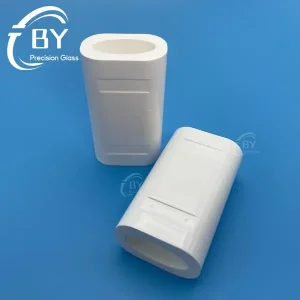
High-Efficiency Ceramic Cavities for Nd:YAG Laser Heads
Technical Specs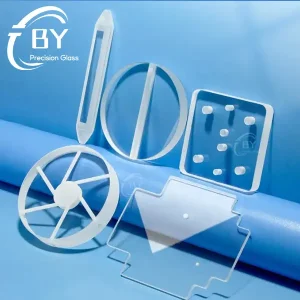
High-Temperature Custom Quartz Glass Chamber Fabrication
Technical Specs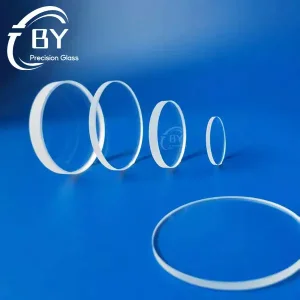
Semiconductor Lithography Grade Quartz Optical Windows
Technical Specs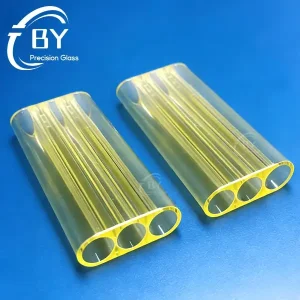
Samarium-Doped Quartz Triple Bore Tube for Medical Lasers
Technical Specs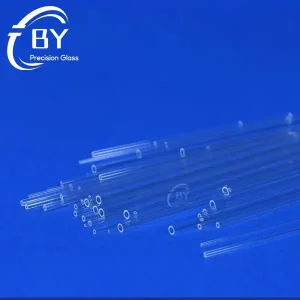
Fluorine-Doped Fused Silica Capillary Tubing
Technical Specs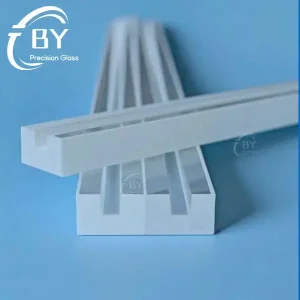
Square Groove Quartz Substrate for Optical Fiber Couplers
Technical Specs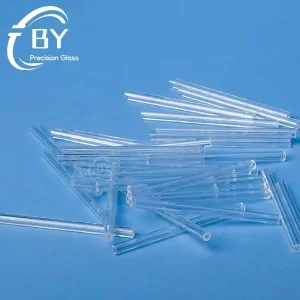
Custom Sub-Micron Precision Quartz Capillary Tubes
Technical Specs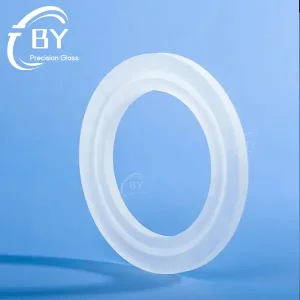
Precision Quartz Glass Parts for Semiconductor Chambers
Technical SpecsRequest a Direct Factory Engineering Review
Upload your technical drawing in STEP, DWG, DXF, or PDF format. Our optical engineering team provides comprehensive manufacturability feedback and price structures within 24 working hours.