
Featured Quartz Capillary & Substrate Solutions
Engineered for immediate integration across Russian scientific laboratories and high-stress industrial laser platforms.
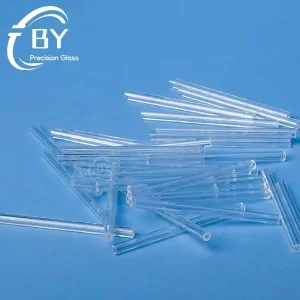
High-Quality Custom Precision Quartz Capillary Tubes for Russian Analytical Metrology
View Product Specs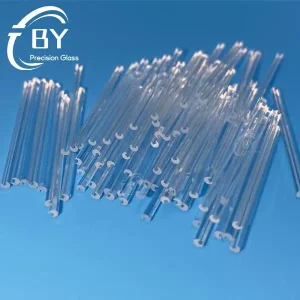
High-Quality Quartz Substrate Groove Use For Optical Fiber Coupler in Russian Telecom
View Product Specs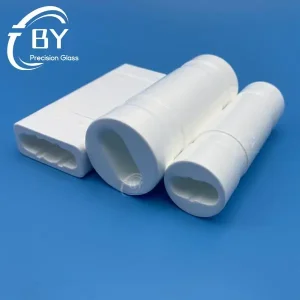
Wholesale Ceramics Reflector for Semiconductor Lasers (Russia High-Power Systems)
View Product Specs
High-Precision Quartz Alignment V-Grooves & Substrates for Russian Photonics Lines
View Product SpecsPrecision Quartz Capillaries and Rods: The Russian Industrial Reality
The Russian Federation is experiencing an unprecedented structural realignment across its high-technology manufacturing and advanced analytical sectors. In the wake of supply-chain ruptures with historical Western European glass fabricators, Russian industrial enterprises, state research universities, and precision instrument manufacturers are accelerating the adoption of direct, tier-one manufacturing partnerships for ultra-pure quartz capillary tubing, precision optical rods, and custom fused silica ware.
Historically, the Russian optical and laboratory instrumentation sector depended heavily on traditional quartz imports from Central Europe for specialized capillary dimensions—specifically high-precision gas chromatography columns, capillary electrophoresis (CE) channels, flow-cell sight windows, and high-energy laser pump cavities. Today, major technological clusters in the Moscow Oblast (including Zelenograd and Troitsk), St. Petersburg, Novosibirsk (Akademgorodok), Nizhny Novgorod, and the Ural-Siberian industrial corridor require guaranteed continuity of quartz components compliant with international purity standards (SiO2 purity ≥ 99.998%) and dimensional tolerances reaching down to ±0.002 mm.
Moreover, Russia's formidable petrochemical sector—centered across the Volga-Ural basins, Western Siberia (Tyumen, Khanty-Mansiysk), and Tatarstan—demands uninterrupted analytical vigilance. High-temperature gas chromatography (GC) columns, petroleum hydrocarbon analyzers, and sulfur-chemiluminescence detection systems depend fundamentally on precision-redrawn synthetic fused silica capillaries that exhibit no micro-cracking, exceptional thermal shock resilience (ΔT > 1,000 °C), and inert internal surfaces capable of handling volatile organosulfur compounds without adsorption.
At the same time, the domestic Russian optoelectronics and laser processing industries (encompassing cutting, welding, medical laser equipment, and specialized defense optronics) are deploying higher continuous-wave (CW) and pulsed laser powers. This shifts material selection from standard borosilicate toward ultra-low bubble class synthetic fused silica (JGS1) and samarium-doped absorbing filtration flow tubes that reject parasitic 1064 nm amplified spontaneous emission (ASE). BY Photonics bridges this technological requirement by offering certified material equivalence to Russian GOST specifications while eliminating supply delays.
Global Standards vs. Russian GOST Equivalence
Precision quartz redrawing requires strict optical homogeneity, structural purity, and thermal coefficient synchronization.
Synthetic Fused Silica (JGS1 / KU-1)
Synthesized via chemical vapor deposition of silicon halides (SiCl4). Characterized by absolute absence of bubble inclusion, negligible metallic impurities (< 0.1 ppm), and exceptional deep UV transmission extending down to 185 nm. Primary equivalent to Russian optical grade KU-1 (ГОСТ 15130-86), ideal for excimer lasers and spectrophotometer capillary cells.
Optical Fused Quartz (JGS2 / KV)
Melted from premium natural rock crystals. Features robust mechanical stability, broad transmission from 220 nm through 2,500 nm, and high thermal resistance against sag up to 1,150 °C. Closely correlated with Russian industrial quartz glass KV (ГОСТ 15130-86), extensively utilized across petroleum flow sensors, protective pyrometer viewports, and thermal furnace tubes.
Low-OH Infrared Quartz (JGS3 / KS-4V)
Vacuum-fused quartz engineered with ultra-low hydroxyl (OH−) ion concentrations (< 2 to 5 ppm). Completely eliminates the prominent water absorption bands at 1.38 μm, 2.22 μm, and 2.73 μm, allowing transmission up to 3,500 nm. Serves as direct match for Russian KS-4V optical quartz in military FTIR analyzers and Er:YAG infrared medical lasers.
| Material Class | Russian GOST Standard | Transmission Band | Hydroxyl [OH−] Content | Thermal Expansion Coeff. | Primary Industrial Use in Russia |
|---|---|---|---|---|---|
| JGS1 (Synthetic Silica) | KU-1 (ГОСТ 15130-86) | 185 nm – 2,500 nm | ~800 – 1,200 ppm | 5.5 × 10⁻⁷ / °C | UV CE Capillaries, Laser Optics, Zelenograd MEMS |
| JGS2 (Natural Fused) | KV / KI (ГОСТ 15130-86) | 220 nm – 2,500 nm | ~150 – 200 ppm | 5.4 × 10⁻⁷ / °C | Petrochemical Sight Tubes, Flow Indicators |
| JGS3 (Infrared Grade) | KS-4V (ГОСТ 15130-86) | 260 nm – 3,500 nm | < 5 ppm | 5.5 × 10⁻⁷ / °C | IR Spectroscopy Sensors, Pyrometry Rods |
| Borosilicate 3.3 | Group 1 Glass (ГОСТ 21400) | 320 nm – 2,500 nm | N/A (Multi-component) | 33 × 10−7 / °C | Standard Lab Fluidics, Low-Temp Burner Guides |
| Samarium-Doped Quartz | Specialty Optical Glass | Absorbs < 400 nm & 1064 nm | < 30 ppm | 5.6 × 10⁻⁷ / °C | Nd:YAG Pumping Flow Tubes, Medical Dermatology |
Localized Application Scenarios Across Russian Sectors
Tailored dimensional tolerances and custom bore configurations operating reliably in Siberian deep freezes and high-heat refineries.
1. Oil & Gas Refinery Analytical Chromatography (Urals & Western Siberia)
Refineries across Ufa, Perm, Tyumen, and Omsk require extreme precision chromatography columns to analyze trace contaminants in natural gas condensates and crude fractions. BY Photonics manufactures polyimide-coated and uncoated fused silica capillary tubing with inner diameters ranging from 10 μm to 530 μm with geometric wall concentricity > 98%. The chemically deactivated silica surfaces prevent peak tailing of polar sulfur compounds during gas chromatography analysis.
2. High-Power Laser Optics & Material Processing (Moscow & St. Petersburg)
Russian manufacturers of multi-kilowatt fiber lasers and solid-state Nd:YAG cutting heads utilize our precision-ground quartz rods, QBH fiber end caps, and triple-bore samarium-doped cooling jackets. Low laser-induced damage thresholds (LIDT > 15 J/cm² at 1064 nm, 10 ns) ensure that high-intensity industrial beams transmit without non-linear optical distortion or thermal lensing inside high-duty fabrication plants.
3. Nuclear Physics, Isotopes & Radiometry (Rosatom & Dubna JINR)
Institutes operating particle accelerators, heavy-water reactors, and isotope extraction circuits require irradiation-resistant fused quartz tubes and ultra-clean quartz rods. KU-1 synthetic grade capillary tubing exhibits zero radiation-induced darkening under high gamma flux, rendering it the benchmark choice for radiation monitoring probes and scintillation fluid conduits.
4. Microelectronics & MEMS Substrates (Zelenograd Cluster)
In the semiconductor center of Zelenograd, cleanroom fabrication lines demand precision-slotted quartz diffusion carriers, gas distribution showerheads, and microfluidic capillary flow plates. Tight mechanical flatness (λ/10 per inch) and low sodium/potassium contamination (< 0.05 ppm total alkali metals) safeguard sensitive silicon wafer diffusion cycles from ionic poisoning.
Need Custom Drawings Reviewed for Russian Deployment?
Send your STEP, DWG, or PDF specifications. Our senior optical engineers calculate thermal stress coefficients and manufacturability within 24 hours.
Technical Roadmap: The Future of Capillary & Quartz Rod Engineering
Navigating the boundaries of redrawing accuracy, optical transmission efficiency, and multi-lumen channel geometry.
As instrumentation scales down toward microfluidic Total Analysis Systems (μTAS) and ultra-high-pressure liquid chromatography (UHPLC operating beyond 1,500 bar), the physical limits of conventional tubing are constantly tested. The global quartz industry is transitioning from standard drawn capillary canes to engineered micro-structured light guides and high-aspect-ratio multi-bore capillaries.
1. Multi-Lumen Array Micro-Redrawing: While single-bore circular tubing remains the industry workhorse, advanced Russian medical cytometry and European aerospace particle detectors increasingly utilize multi-bore quartz tubing (dual-bore, 4-bore, 7-bore honeycombs, and D-shape capillaries). By strictly regulating furnace pressure down to ±5 Pa during oxyhydrogen draw cycles, BY Photonics maintains pore-to-pore pitch accuracy within ±0.005 mm across multi-meter continuous runs.
2. Laser-Polished Capillary End-Faces and Flame Splicing: Mechanical saw cutting inevitably introduces sub-surface micro-fissures that act as stress concentration points under thermal cycling or internal hydraulic pressure. Our proprietary CO2 laser-cleaving and localized flame-polishing produce smooth, burr-free end faces (Ra < 0.05 μm) that eliminate flaking in critical spectroscopic flow cells.
3. Internal Fluorine Doping and Numerical Aperture Tuning: Incorporating fluorine into the inner perimeter of silica tubes lowers the refractive index, turning the liquid-filled capillary itself into an optical waveguide (Liquid Core Waveguide, LCW). This technology enhances light-path absorption for spectroscopic flow cells by orders of magnitude—critical for trace contaminant detection in environmental and drinking water monitoring networks across the Russian Federation.
Frequently Asked Questions: Sourcing Quartz for the Russian Market
Direct answers to the engineering, material verification, and logistical questions Russian procurement teams face.
How does JGS1, JGS2, and JGS3 quartz compare to Russian GOST 15130-86 grades? +
What is the minimum inner diameter (ID) and maximum outer diameter (OD) tolerance you can achieve? +
How are fragile quartz tubes and rods packed for long-distance Siberian transit? +
Can you manufacture custom cross-sections such as square, D-shape, and multi-bore tubes? +
What documentation and quality certifications accompany orders shipped to Russia? +
Advanced Engineered Quartz & Crystal Components
Explore our full line of doped laser flow tubes, semiconductor quartzware, vacuum viewport plates, and optical ferrules.
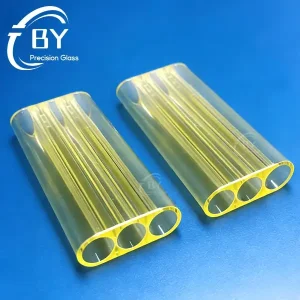
Wholesale Samarium-Doped Quartz Triple Bore for Medical & Industrial Lasers (Russia)
View Product Specs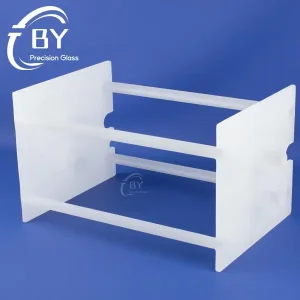
Wholesale Quartz Diffusion Boat for Russian Semiconductor & Wafer Annealing
View Product Specs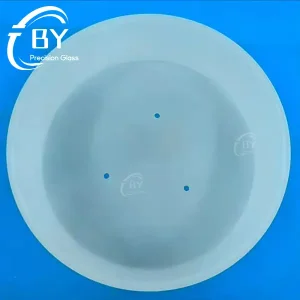
High-Quality Custom Quartz Glass Components for Vacuum Coating Systems (Russia)
View Product Specs
High-Quality Customized Quartz Fiber End Caps for QBH High-Power Laser Collimators
View Product Specs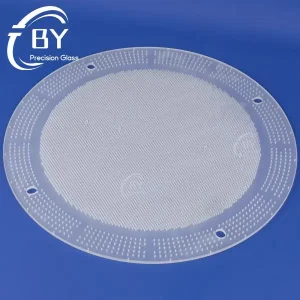
Custom Precision Optical Quartz Gas Distribution Plate for Russian Etch Chambers
View Product Specs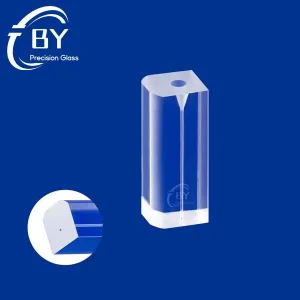
Custom Precision Fiber Optic Glass Ferrules for Russian Telecom & Sensor Splices
View Product Specs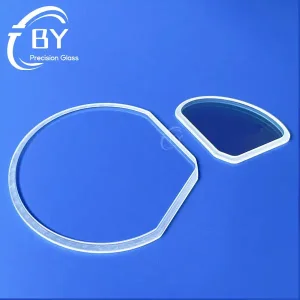
High-Quality Sapphire Viewing Plates for Harsh Russian Chemical & High-Pressure Autoclaves
View Product Specs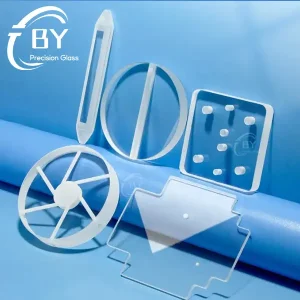
Wholesale High-Temperature Custom Quartz Glass Fabrication for Russian Industrial Kilns
View Product SpecsInitiate Your Russian Project Evaluation
Whether you need low-volume custom prototypes for laboratory research or high-volume recurring capillary runs for petrochemical instrumentation, our engineers provide complete manufacturability evaluations, DFM optimization, and material certification.
Send Inquiry Now • Connect with Our Technical Team