
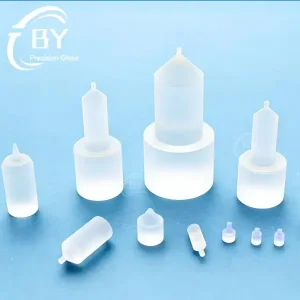
Precision Engineering Portfolio (Part I)
Featured Cavity Reflectors & Optical Pump Substrates
Direct-from-factory laser cavity components engineered to satisfy stringent optical absorption thresholds, radiation hardness, and dimensional tolerances down to ±0.01 mm.
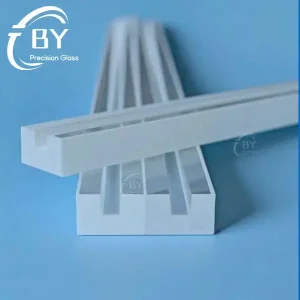
High-Quality Square Groove Quartz Substrate for Fiber Couplers Supplier, Factories
Explore Component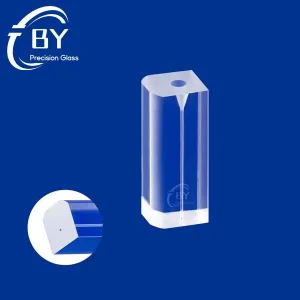
Custom Fiber Optic Glass Ferrules Supplier, Factories
Explore Component
High-Quality Borosilicate Windows and Plates for Viewports Suppliers, Factory
Explore Component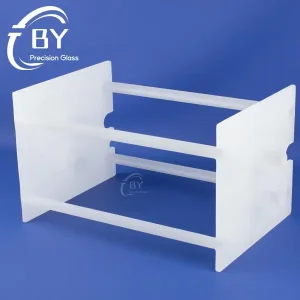
Wholesale Quartz Diffusion Boat for Semiconductor Suppliers, Factories
Explore Component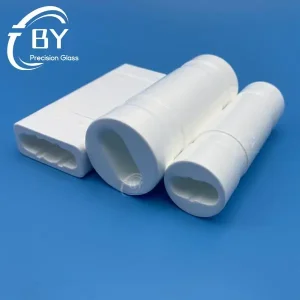
Wholesale Ceramics Reflecor for Semiconductor Lasers Suppliers, Factory
Explore Component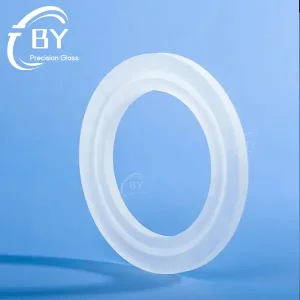
High-Quality Precision Custom Quartz Glass Components for Semiconductor Manufacturers, Supplier
Explore Component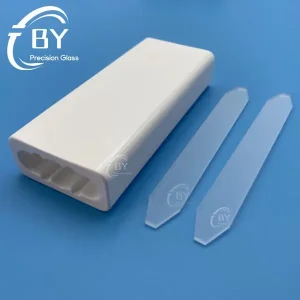
Wholesale Ceramic Cavity Reflector use for DEKA Laser Manufacturers, Supplier
Explore Component
Engineering White Paper Briefing
Physics of Modern Laser Cavity Reflectors: Diffuse vs. Specular Dynamics
In solid-state laser physics, the pump chamber is the core thermodynamic engine. Transferring broadband light from flashlamps or narrowband beams from laser diode arrays into an active crystal rod (Nd:YAG, Er:YAG, Alexandrite, Ruby) requires an optimized reflector geometry that maximizes photon density while mitigating non-uniform thermal lensing.
Diffuse Reflectance Ceramics
High-purity sintered porous alumina (99.7% Al₂O₃) achieves near-Lambertian diffuse reflectance exceeding 97.8% across the 600 nm to 1064 nm absorption spectrum. This random scattering homogenizes pump light throughout the laser rod, eliminating localized hot spots that lead to optical breakdown and mode distortion.
- Diffuse Reflectance: >97.5% at 500–1200 nm
- Glazed Bore Seals: Zero coolant infiltration
- Bulk Thermal Shock Resistance: ΔT > 350°C
Spectralon-Grade PTFE Chambers
Microporous sintered virgin PTFE serves as the premier diffuse reflector for diode-pumped solid-state (DPSS) systems. Exhibiting up to 99.2% diffuse reflectance, it eliminates metallic tarnishing and dielectric blistering, maintaining high UV-to-NIR chemical inertia under non-stop industrial operating schedules.
- Extreme Reflectance: >99% at 808 nm / 940 nm
- Hydrophobic Surface: Resists deionized water stagnation
- Micro-milled coolant jackets with O-ring seals
Spectral Filtering & Doped Optics
Cavity performance relies on matching spectral emission with rod absorption bands. Samarium-doped glass (Sm³⁺) flow tubes absorb unneeded ultraviolet and parasitically oscillating 1064 nm transitions while transmitting key pump bands, thereby protecting crystal lattices from solarization and preventing Amplified Spontaneous Emission (ASE).
- 1064 nm Parasitic Suppression: Absorption >98%
- UV Solarization Cut-off: <380 nm blocker
- Precision concentricity: Wall tolerance <±0.02 mm
Market Intelligence & Paradigm Shifts
Emerging Trends in Laser Cavity Reflector Engineering
As industrial lasers advance toward multi-kilowatt CW outputs and medical laser handpieces demand ultra-compact footprints, cavity reflector design is undergoing major technological transformations.
Shift from Metal to Sintered Ceramics
Traditional gold- or silver-electroplated copper reflectors are vulnerable to peeling, electrochemical corrosion, and sulfide oxidation caused by deionized cooling water. High-density alumina ceramics are non-conductive, chemically inert, and do not degrade over tens of thousands of operating hours.
Conformal Hydro-Cooling Architecture
High-repetition flashlamp pulses release substantial heat. Next-generation cavity reflectors feature computer-designed internal cooling loops and micro-channels machined directly into ceramic bodies, reducing thermal boundary layers and maintaining uniform cooling without micro-turbulence.
Selective Glaze Chemistry
Uncoated porous ceramics can absorb cooling fluids, harboring contaminants and degrading reflectance. Modern cavity manufacturing utilizes high-refractive-index vitreous glazes applied to internal bores. This forms an impermeable barrier that preserves 98%+ internal reflectivity while permitting direct, high-pressure coolant contact.
Multi-Bore Geometry Integration
Medical dermatological platforms (such as Alexandrite 755 nm / Nd:YAG 1064 nm combination systems) demand dual- and triple-bore configurations. These multi-cavity designs pack multiple flashlamps around single or dual crystals within a single ceramic block, requiring tight bore axis parallelisms within 0.02 mm.
| Reflector Substrate Material | Reflection Mechanism | Reflectance (600–1000 nm) | Resistance to DI Water | Thermal Degradation Risk | Recommended Laser Class |
|---|---|---|---|---|---|
| Porous Alumina Ceramic (Al₂O₃ 99.7%) | Diffuse / Bulk Scattering | 97.5% – 98.2% | Excellent (Glazed) | Virtually Zero (<1200°C) | Flashlamp Nd:YAG / Alexandrite / Ruby |
| Spectralon-Grade Sintered PTFE | Diffuse / Bulk Scattering | 98.5% – 99.2% | Hydrophobic / Inert | Moderate (<260°C limit) | Diode-Pumped (DPSS) / Slab Resonators |
| Gold-Electroplated Copper / Brass | Specular / Metallic Film | 95.0% – 96.5% | Prone to Peeling/Pitting | High (Film Oxidation) | Legacy Industrial CW Systems |
| Samarium-Doped Glass Flow Shells | Spectral Filtering + Transmission | Filters 1064nm & UV | Chemically Stable | Low (<450°C) | High-Energy Q-switched Systems |
Global Supply Chain Insights
Resolving Critical Procurement Bottlenecks for Global OEMs
Procurement directors and chief optical engineers face recurring challenges when sourcing custom cavity reflectors from fragmented optical shops. BY Photonics addresses these friction points with clear, measurable engineering controls.
Challenge: Accelerated Solarization & Glaze Crazing
Sub-standard ceramic glazes crack under repeated 30 Hz UV-intense flashlamp pulses, allowing cooling water to permeate the porous matrix, causing reflectivity loss and cavity contamination.
BY Photonics Solution: Proprietary lead-free optical glaze formulations matched in coefficient of thermal expansion (CTE) to the Al₂O₃ substrate, thermally fired at 1250°C to eliminate micro-crazing and seal pores entirely.
Challenge: Dimensional Drift in Multi-Bore Cavities
Shrinkage during ceramic sintering often misaligns lamp and rod bore centerlines by 0.1 mm or more, resulting in uneven beam pumping, multimode hopping, and premature rod damage.
BY Photonics Solution: Near-net-shape green machining followed by post-sinter 5-axis ultrasonic diamond grinding, guaranteeing bore-to-bore parallelism within ±0.015 mm across parts up to 250 mm long.
Challenge: Supply Chain Bottlenecks & MOQs
Western tier-1 suppliers often impose 16–24 week lead times and high minimum order quantities, hindering rapid R&D iterations and aftermarket replacement schedules.
BY Photonics Solution: Fully integrated internal fabrication from powder preparation to final CMM inspection in Tianjin, offering prototype samples in 10–14 days and production batch scalability from 5 to 5,000 units.
Smart Manufacturing Ecosystem
China Industry 4.0: Supply Chain Resilience & Fabrication Precision
Operating from our modern production facility in Tianjin, China, BY Photonics blends modern raw-material supply networks with automated CNC optics machining, oxyhydrogen flame processing, and thorough metrology.
15+
Years Optical Machining (Est. 2010)
3,000m²
Standardized Production Plant
120+
High-Precision CNC & Flame Lathes
<24h
DFM Engineering Review Turnaround
Ultrasonic Diamond CNC Centers
Machining fully sintered Al₂O₃ ceramics (Mohs hardness 9) and sapphire requires ultrasonic-assisted high-speed spindle machining. This process reduces micro-chipping at bore edges to <0.05 mm, preserving fracture strength and seal integrity around critical O-rings.
Automated Optical Metrology & CMM
Each custom cavity reflector undergoes 100% inspection using multi-sensor bridge Coordinate Measuring Machines (CMM), laser scanning profilometers, and spectrophotometers to verify bore straightness, runout, and surface reflectance.
Single-Roof Supply Integration
By managing ceramic molding, sintering, precision diamond grinding, flame quartz processing, and thin-film optical coatings internally, we avoid subcontractor hand-offs—the primary driver of tolerance stacking, quality drift, and unexpected production delays.
Field Applications
Industrial & Medical Application Blueprints
Our custom laser cavity reflectors, samarium flow tubes, and precision quartzware operate inside leading diagnostic, aesthetic, and industrial laser platforms worldwide.
Medical & Aesthetic Systems
Custom multi-bore ceramic cavities for Alexandrite (755 nm) and Nd:YAG (1064 nm) platforms (compatible with Candela GentleLase/GentleYag and DEKA systems). Equipped with yellow UV-cutoff filter tubes to protect patient handpieces and ensure stable output pulse energies.
Semiconductor Processing
High-purity quartz diffusion boats, wafer carriers, and ceramic reflectors for excimer laser annealing (ELA) and wafer inspection. Zero metallic contamination, low thermal expansion, and resistance to aggressive HF/acid cleaning chemistry.
Industrial Laser Machining
PTFE and ceramic reflectors for high-average-power DPSS marking, deep engraving, and precision seam-welding modules. Delivers steady, high-efficiency diffuse reflection that preserves TEM₀₀ beam mode purity under continuous multi-kilowatt operation.
Defense & Scientific Research
Customized single- and dual-elliptical gold-coated and ceramic chambers designed for high-energy Q-switched laser rangefinders, LIDAR transmitters, and spectroscopy research requiring high radiation survivability.
Precision Engineering Portfolio (Part II)
Flow Tubes, Cavity Chambers & Optical Substrates
Complete line of laser cavity components, samarium-doped filters, borosilicate plates, and custom-fabricated quartz optics machined to custom technical drawings.
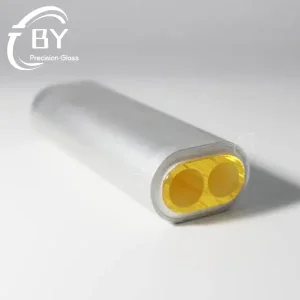
Custom Packed Laser Cavity Flowtubes for Laser Head Manufacturers, Suppliers
Explore Component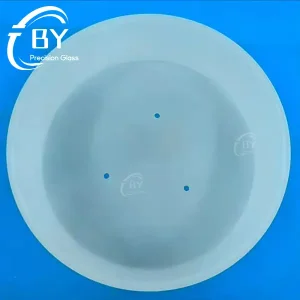
High-Quality Custom Quartz Glass Components for Vacuum Coating Supplier, Factories
Explore Component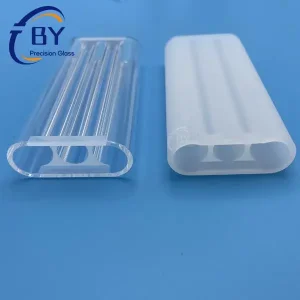
High-Quality Candela Laser Head Triple Bore Old and New Version In Stock Manufacturer, Factory
Explore Component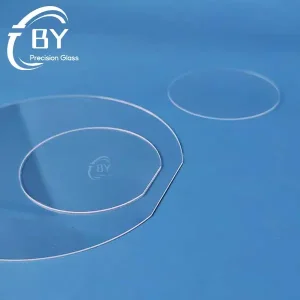
Custom Borofloat 33® Glass Wafers for Semiconductor Manufacturers, Factories
Explore Component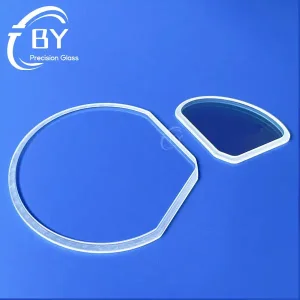
High-Quality Sapphire Viewing Plates for Harsh Chemical Environments Suppliers, Factories
Explore Component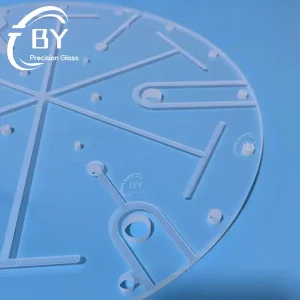
High-Quality Custom Precision Quartz Glass Fabrication Supplier, Suppliers
Explore Component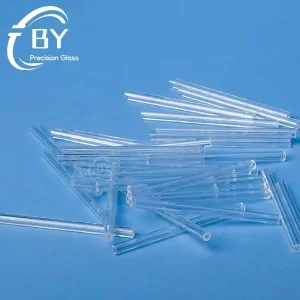
High-Quality Custom Precision Quartz Capillary Tubes Manufacturers, Suppliers
Explore Component
Custom UV Block Yellow Quartz Tube for IPL Lamp Flow Handle Manufacturer, Factories
Explore Component
Engineering Knowledge Base
Frequently Asked Engineering Questions
Direct technical answers to questions commonly raised by optical designers, mechanical engineers, and global procurement managers.
Why is porous alumina ceramic preferred over gold-plated copper in modern pump chambers? +
While gold provides high specular reflectivity in the infrared, it relies on electroplated layers over metallic substrates. Under turbulent deionized (DI) cooling water and repetitive thermal cycling, micro-pinholes in the plating lead to galvanic blistering, delamination, and copper oxidation. In contrast, 99.7% Al₂O₃ high-density ceramic exhibits bulk volumetric diffuse scattering that cannot flake or peel. Furthermore, diffuse scattering yields a more uniform pump distribution across the laser crystal, mitigating thermal stress and wavefront distortion.
What is the functional difference between glazed and unglazed ceramic laser reflectors? +
Porous ceramic diffuse reflectors rely on microscopic air-particle refractive index differences to scatter light. An unglazed ceramic reflector provides peak reflectance (>98%) but will absorb coolant fluids if placed in direct liquid contact, eventually trapping contaminants and lowering efficiency. Applying a specially formulated vitreous glaze seals internal bores completely, creating a non-porous, fluid-tight barrier resistant to high-pressure DI water without compromising overall diffuse transfer efficiency.
How does Samarium-doped glass (Sm³⁺) prevent parasitic laser oscillations? +
Samarium glass exhibits strong optical absorption bands at 1064 nm alongside high transmission in the visible pump bands (600–850 nm). When used as a flow tube or cavity shell in flashlamp-pumped Nd:YAG lasers, it absorbs transverse 1064 nm photons escaping the rod, suppressing parasitic Amplified Spontaneous Emission (ASE). This preserves upper-state population inversion, maximizing pulse energy and slope efficiency during Q-switched extraction.
What geometric tolerances can BY Photonics maintain on custom multi-bore reflectors? +
Utilizing 5-axis ultrasonic CNC diamond machining, we hold inner bore diameter tolerances to ±0.015 mm, bore-to-bore center distance parallelism within ±0.02 mm over 200 mm lengths, and overall chamber envelope tolerances to ±0.05 mm. Critical O-ring grooves and sealing chamfers undergo 100% optical coordinate inspection to guarantee hermetic seals in pressurized liquid-cooled assemblies.
How do Spectralon-grade PTFE reflectors perform compared to ceramic reflectors in DPSS lasers? +
Sintered PTFE provides higher absolute diffuse reflectivity (often 99.0%–99.2% at 808 nm diode bands) compared to alumina ceramics (97.5%–98.0%), translating to lower threshold power and improved diode pumping efficiency. However, PTFE has lower thermal conductivity and a maximum continuous operating limit of 260°C. For diode-pumped systems with dedicated fluid or conductive heat sinking, PTFE is ideal; for intense flashlamp systems with significant UV and infrared emission, glazed alumina ceramic remains the preferred solution.
What quality documentation and material certifications accompany international orders? +
Every production delivery includes a Certificate of Conformance (CoC), material traceability reports (ICP-OES purity analyses for quartz/ceramics), raw material spectral transmittance or reflectance graphs, dimensional inspection reports from our Mitutoyo/Hexagon CMM systems, and surface roughness interferometry profiles. Full RoHS and REACH compliance certificates are provided standard.
What CAD drawing formats are supported, and how fast is engineering DFM feedback? +
We accept STEP, IGES, Parasolid (x_t), DXF, DWG, and fully dimensioned PDF engineering drawings. Complete packages submitted to our engineering desk receive a Design for Manufacturability (DFM) review and process feasibility analysis within 24 working hours, covering material selection, tolerance optimizations, and fabrication routing.