
Precision Optical Substrates & Custom Machined Components
Explore factory-fabricated optical glass plates, semiconductor wafers, laser cavity reflectors, and specialized fused quartz structural parts manufactured to tight ISO 10110 drawings.
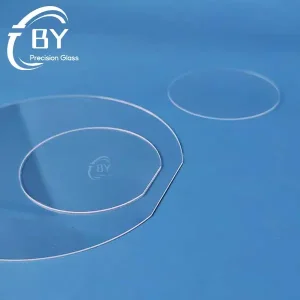
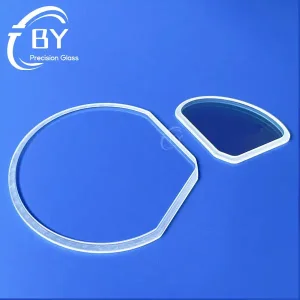
High-Quality Sapphire Viewing Plates for Harsh Chemical Environments Suppliers, Factories
View Specifications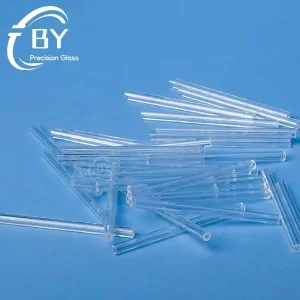
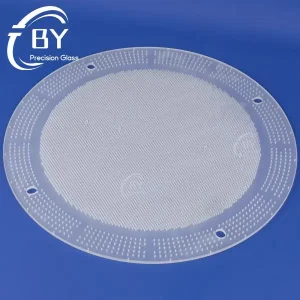
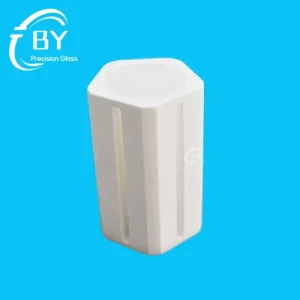
Wholesale Diffuse High‑Reflectivity PTFE Reflectors for Diode‑Pumping Chambers Suppliers, Factory
View Specifications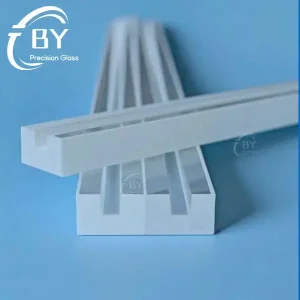
High-Quality Square Groove Quartz Substrate for Fiber Couplers Supplier, Factories
View Specifications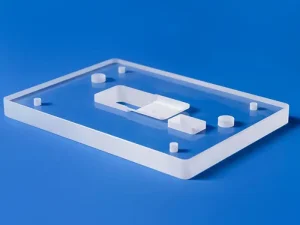
High-Quality Factory Supply Precision Quartz Glass Machining Plate Supplier, Suppliers
View Specifications
Wholesale Quartz Optical Windows for Semiconductor Lithography Equipment Suppliers, Factories
View SpecificationsEngineering Fundamentals of Optical Grade Fused Silica Plates
Optical grade fused silica ($SiO_2$) represents an amorphous state of silicon dioxide produced via chemical vapor deposition (CVD) or high-temperature flame hydrolysis of silicon tetrachloride ($SiCl_4$). Unlike naturally fused quartz, which is produced by melting natural rock crystals and inherently carries residual metallic impurities, synthetic fused silica achieves purity levels exceeding 99.9999% (6N), mitigating absorption bands and laser-induced fluorescence.
| Material Designation | Origin / Synthesis Process | Transmission Bandwidth | Hydroxyl [OH⁻] Content | Predominant Industrial Application |
|---|---|---|---|---|
| JGS1 (UV Grade Fused Silica) | Synthetic SiCl₄ Flame Hydrolysis (Equivalent to Suprasil 1/2, Corning 7980) | 185 nm – 2,500 nm | 800 – 1,200 ppm (High OH) | DUV Excimer Lithography, UV Laser Windows, Fluorescence Spectrophotometry |
| JGS2 (Optical Grade Quartz) | Electric / Oxyhydrogen Fusion of High-Purity Natural Quartz Grit | 220 nm – 2,500 nm | 150 – 300 ppm (Medium OH) | High-Power Industrial Laser Sight Glasses, Thermal Processing Windows, Standard Prisms |
| JGS3 (IR Grade Fused Silica) | Vacuum Electro-Fused Quartz Crystals (Equivalent to Infrasil 301) | 260 nm – 3,500 nm | < 5 ppm (Water-Free / Low OH) | Mid-Infrared Diagnostics, Gas Spectroscopy, Analytical Sensor Cavities, Pyrometry |
| Corning 7980 / ArF Excimer Grade | Modified Direct Chemical Vapor Deposition (VAD / Plasma Deposition) | 193 nm – 2,100 nm | < 0.1 ppm Trace Metal Impurities | Sub-micron Lithography Steppers, Metrology Reticle Blanks, Spatial Light Modulators |
Technical Clarification: The Physical Role of Hydroxyl [OH⁻] Radical Density
In high-power laser and deep-ultraviolet (DUV) applications, the selection between high-OH (JGS1) and dry fused silica (JGS3) determines systemic longevity. High hydroxyl concentrations eliminate molecular structural strain and suppress ultraviolet color-center formation (such as E' centers) under prolonged 193nm (ArF) or 248nm (KrF) radiation. Conversely, for near-infrared telecommunication and mid-IR sensor windows operating at 1,380 nm, 2,200 nm, and 2,730 nm, OH vibrational overtone absorption bands induce significant optical attenuation, necessitating low-OH vacuum-melted fused quartz substrates.
Mission-Critical Deployment Scenarios for Custom Silica Plates
From sub-nanometer cleanrooms to harsh orbital space conditions, custom fabricated fused silica plates deliver an unmatched balance of near-zero thermal distortion, high chemical passivity, and broad-spectrum optical clarity.
Semiconductor Lithography & Wafer Handling
Utilized as photomask substrates, wafer inspection windows, and electrostatic chuck dielectric covers in deep-UV wafer manufacturing. Ultra-pure JGS1 ensures zero phase wavefront distortion under coherent illumination while withstanding aggressive cleaning protocols utilizing SC-1, sulfuric-peroxide mixes (SPM), and ozonated deionized water.
High-Power Multi-Kilowatt Laser Shields
Serving as high-damage-threshold protective debris plates in industrial 12kW–30kW fiber laser cutting and directed-energy heads. The negligible thermal expansion ($5.5 \times 10^{-7}/K$) prevents thermal lensing—where laser heat causes focal drift—preserving beam point stability and cutting kerf quality throughout long production cycles.
Aerospace & Defense Thermal Viewports
Deployed as sensor fairings and hypersonic telemetry sight windows subjected to severe thermal shock. Fused silica components remain crack-resistant even when transitioned rapidly from cryogenic upper-atmosphere temperatures (-65°C) to aerodynamic boundary-layer friction heat surpassing 900°C without mechanical failure.
Analytical Biotechnology & Flow Cytometry
Precision-milled microfluidic plates, fluorometer cover windows, and multi-channel detection cells. The ultra-low autofluorescence of synthetic silica prevents signal corruption in single-molecule DNA sequencing, PCR fluorescence quantification, and capillary electrophoresis.
State-of-the-Art Processing, Surface Polishing & Metrology
Achieving optical transmitted wavefront distortion of $\lambda/10$ to $\lambda/20$ across plate diameters up to 600mm requires an end-to-end controlled manufacturing chain combining cold abrasive cutting, CNC multi-axis contouring, double-sided planetary pitch polishing, and deterministic MRF (Magnetorheological Finishing).
01. Ingot Slicing & Ultrasonic CNC
Raw boules are sectioned using multi-wire diamond slurry saws to minimize subsurface damage (SSD). Structural contouring, countersinks, and stepped mounting profiles are carved via high-speed 5-axis ultrasonic CNC milling centers running under constant coolant filtration.
- Dimensional Tolerance: ±0.01 mm
- Aspect Ratio Control: up to 1:60 thickness-to-diameter
- Custom chamfers, bevels, and O-ring grooves
02. Double-Sided Lapping & Pitch Polishing
Double-sided planetary machines utilizing cerium oxide and diamond nanosuspensions gently eliminate micro-fractures. Chemical mechanical polishing (CMP) produces a crystal-lattice-grade super-smooth polish with surface roughness Ra < 0.2 nm (2 Ångströms).
- Surface Accuracy: λ/10 @ 632.8 nm (λ/20 available)
- Parallelism: < 5 arcseconds
- Scratch-Dig: Down to 10-5 per MIL-PRF-13830B
03. Thin-Film Dielectric AR Coatings
In-house electron beam evaporation with Ion-Assisted Deposition (IAD) and magnetron sputtering. We deposit highly adherent, hard dielectric coatings designed for maximum transmission or selective reflection across single, dual, or broadband wavelengths.
- Residual Reflectance: R < 0.1% per surface
- Laser Damage Threshold: > 45 J/cm² (1064nm, 10ns pulse)
- Environmental Durability: MIL-C-48497A compliant
04. Metrological Verification & QC
Every batch of fused silica plates undergoes 100% QA certification. Interferometric testing maps transmitted and reflected wavefront error, while spectrophotometers authenticate ultraviolet and infrared transmission bands before export shipping.
- Zygo Verifire™ GPI XP Phase-Shifting Interferometers
- PerkinElmer Lambda 1050+ UV/Vis/NIR Spectrometer
- Laser Ellipsometry & Stress Birefringence Polariscopes
China Factory Supply Chain Resilience & Global Competitiveness
For international optical design houses, defense integrators, and semiconductor equipment OEMs, procuring custom fused silica plates from Chinese manufacturing clusters offers strategic agility, raw material proximity, and accelerated prototype-to-production scalability.
Integrated Upstream Material Supply
Our Tianjin processing center is strategically linked to China's primary silica and quartz synthesis industrial hubs in Jiangsu and Hebei. Direct boule sourcing guarantees reliable allocations of optical synthetic JGS1, JGS2, and JGS3 raw ingots, mitigating global supply shocks and raw material surcharges.
Rapid DFM & Tooling Turnaround
Our dedicated optical engineering desk conducts Design for Manufacturability (DFM) reviews within 24 hours of CAD receipt. Custom jigs, diamond grinding wheels, and planetary polishing laps are fabricated internally, compressing prototype lead times from standard 8–10 weeks down to 10–14 business days.
Scalable Low-to-High Batch Volume
Whether demanding a singular custom $\varnothing500\text{mm}$ observatory viewport or monthly delivery lots of 50,000 laser protection plates for handheld welding tools, our modular facility operates over 120 processing machines to adjust throughput seamlessly without tooling re-engineering fees.
Cost Efficiency Without Quality Compromise
By executing ingot core-drilling, CNC milling, planetary polishing, cleanroom laser marking, and vacuum thin-film AR coating under one unified factory roof, intermediate subcontractor handling and logistics margins are eliminated, resulting in a 30%–45% procurement cost reduction.
Global Commercial Landscape, Technology Roadmap & Future Outlook
The global demand for optical grade fused silica plates is experiencing exponential growth, catalyzed by sub-3nm semiconductor node transitions, high-energy laser weapon development, space telemetry, and quantum computation architectures.
Sub-Angstrom Surface Finishing
Next-generation EUV metrology tools require surface roughness parameters below $0.1\,\text{nm}$ ($1\,\text{Å}$). The integration of Ion Beam Figuring (IBF) with reactive atom plasma polishing allows deterministic correction of high-spatial-frequency errors without subsurface micro-cracks.
Radiation-Hardened Doped Silicas
Satellite inter-satellite optical links (LCTs) and orbital LIDAR require cerium-doped or fluorine-doped fused silica substrates that exhibit zero darkening and negligible refractive index shifts when subjected to continuous cosmic gamma ray and proton bombardment.
Ultra-Low Expansion (ULE) Silicas
For cryogenic space telescopes and laser cavity references, titanium-doped titania-silicate glasses with near-zero thermal expansion ($CTE \approx 0 \pm 30 \times 10^{-9}/K$ between 5°C and 35°C) are emerging as the industry benchmark for ultra-stable optical resonators.
Laser Damage Resistance Breakthroughs
Petawatt-class ultrafast femtosecond lasers require optic coatings and polished silica substrates capable of withstanding electric field breakdown. Advanced acid etching techniques (HF megasonic rinsing) are routinely implemented to leach trace polishing contaminants.
Global Compliance, Cleanroom Packaging & Technical Support
Delivering sensitive optical plates across international borders demands stringent compliance, cleanroom cleanliness, and robust impact-resistant packaging.
International Metrology Standards
All fabricated optical components comply with DIN ISO 10110 standards, Mil-PRF-13830B optical quality specifications, and strict European environmental directives including RoHS 3 (Directive 2015/863) and REACH (EC 1907/2006). Complete material certs and melt indices accompany every shipment.
Class 1,000 / 100 Cleanroom Packaging
Following final automated ultrasonic deionized water cleaning, optical plates are inspected under high-intensity collimated green light and sealed into cleanroom-certified, static-dissipative fluoropolymer containers, vacuum-sealed barrier pouches, and shock-isolated suspension crates.
Export Logistics & Customs Fast-Tracking
With established worldwide logistics hubs in Tianjin and Beijing, we provide direct door-to-door express delivery with DHL, FedEx Priority, and air cargo forwarders. Full customs clearance documentation, HS code optimization, and Certificate of Origin (CO) paperwork are managed directly.
Engineering Support & NDA Protection
Our senior optical engineering staff collaborates directly with your photonics researchers under strict bilateral Non-Disclosure Agreements (NDAs). We review critical tolerances, recommend cost-saving alternative geometries, and optimize AR coating spectra before manufacturing commences.
Specialized Fused Silica, Doped Quartz & Laser Cavity Components
Browse our extended product lines of fused silica plates, semiconductor furnace quartzware, doped filtering tubes, and vacuum coating components ready for customized fabrication.
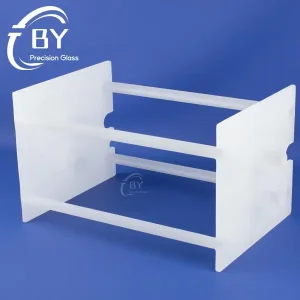
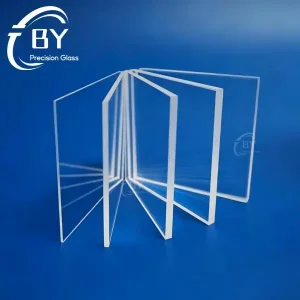
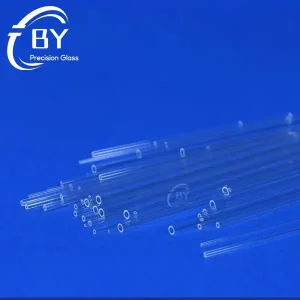
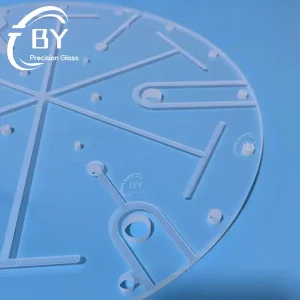
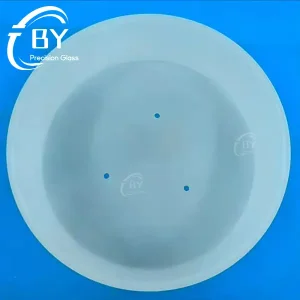
High-Quality Custom Quartz Glass Components for Vacuum Coating Supplier, Factories
View Specifications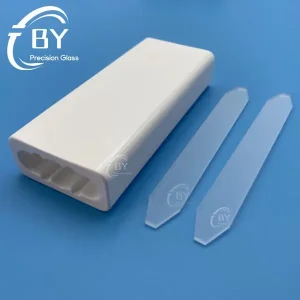
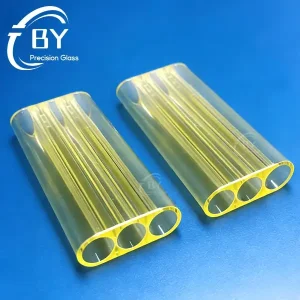
Wholesale Samarium-doped Quartz Triple Bore for Medical Laser Manufacturer, Supplier
View Specifications
High-Quality Chemical Resistant Custom Quartz Glass Parts Fabrication Supplier, Factories
View SpecificationsFrequently Asked Questions: Optical Fused Silica Engineering
Authoritative technical answers to common engineering questions concerning material selection, thermal mechanics, laser damage limits, and factory manufacturing parameters.
Fused quartz is created by high-temperature electric or flame fusion of natural crystalline quartz sands. While cost-effective and chemically durable, it contains parts-per-million levels of metallic impurities (Fe, Al, Ti), leading to UV absorption below 240nm. Synthetic fused silica is synthesized gas-phase from pure silicon precursors (like $SiCl_4$). It features 99.9999% chemical purity, making it fully transparent into the deep UV down to 185nm with practically zero bubble inclusions (Class 0 according to DIN 58927).
Fused silica has an extraordinarily low coefficient of thermal expansion ($0.55 \times 10^{-6}/\text{K}$, nearly 14 times lower than N-BK7 at $7.1 \times 10^{-6}/\text{K}$) and a significantly higher optical bandgap. When exposed to kilowatt-level optical power densities, residual absorption causes localized heating. While N-BK7 develops pronounced thermal lensing and wave-front distortion, fused silica maintains focal point stability, resisting laser-induced stress fractures and thermal breakdown.
On standard continuous planetary polishing runs, we routinely achieve a transmitted wavefront error of $\lambda/10$ peak-to-valley (PV) at 632.8 nm with a 20-10 Scratch-Dig surface quality per MIL-PRF-13830B. For ultra-precision interferometer reference flats, lithography reticles, and laser gyroscope cavities, our cleanroom technicians deliver $\lambda/20$ PV flatness with 10-5 Scratch-Dig and super-polished surface microroughness $Ra \le 0.2\,\text{nm}$.
Water radicals chemically bonded within the amorphous silica matrix create fundamental stretching vibration absorption peaks in the infrared spectrum at 2.73 µm, alongside overtones at 2.22 µm and 1.38 µm. In IR grade JGS3 (< 5 ppm [OH]), these absorption bands are virtually eradicated, allowing high transmission out to 3.5 µm. Conversely, in UV grade JGS1 (800–1200 ppm [OH]), these NIR bands appear as distinct dips in the transmission curve.
We accept standard STEP, IGES, DXF, DWG, and fully dimensioned PDF mechanical drawings. For accurate DFM evaluation, please indicate the desired material grade (JGS1, JGS2, JGS3, or equivalent), wavelength of interest, required anti-reflective (AR) coating bandwidth, critical dimensional tolerances, parallelism, surface flatness (e.g. $\lambda/4$ or $\lambda/10$), and batch quantity.
Yes. Amorphous fused silica exhibits virtually zero outgassing, making it exceptionally well-suited for bake-out in Ultra-High Vacuum ($< 10^{-10}\,\text{Torr}$) chambers. Furthermore, fused silica remains mechanically stable down to liquid helium temperatures (4 K) without embrittlement, making it widely deployed in cryogenic spectroscopy windows and superconducting quantum sensor chambers.