
Featured Industrial Quartz & Optical Components
OEM-certified fused silica plates, laser pump chambers, and custom precision-machined optical quartz solutions for demanding thermal environments.
-
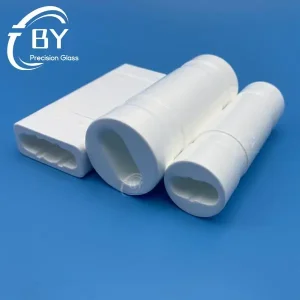
Wholesale Ceramics Reflector for Semiconductor Lasers
-
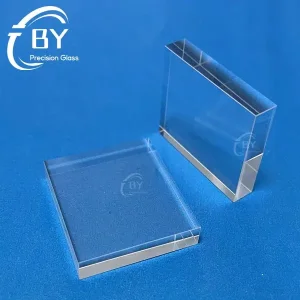
Custom Sapphire IPL Light Guide Block Used for Hair Removal
-
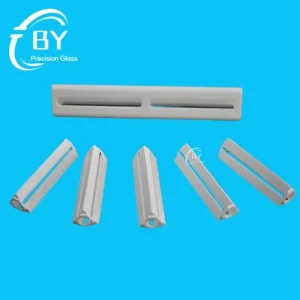
High-Quality Diode-Pumping Chamber Diffuse Reflectors
-
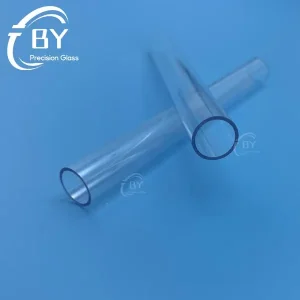
Wholesale Cerium Doped Quartz Tube Blocked UV Wavelength
-
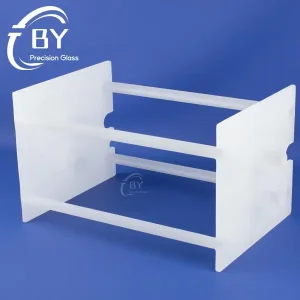
Wholesale Quartz Diffusion Boat for Semiconductor
-
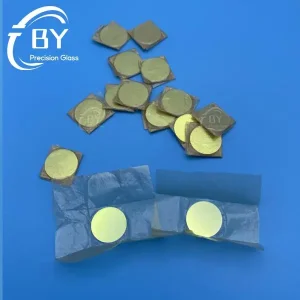
Candela Laser Slider Windows With Coating 755/1064nm
-
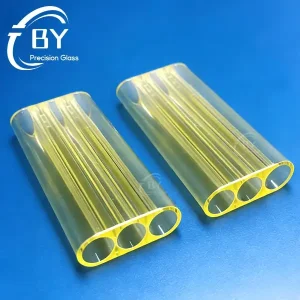
Wholesale Samarium-doped Quartz Triple Bore for Laser
-
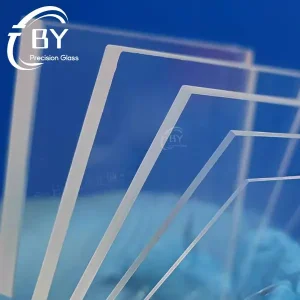
High-Quality Borosilicate Windows and Plates for Viewports
Global Landscape of High-Temperature Quartz Glass Plates
High-temperature quartz glass plates (fused silica) represent the pinnacle of vitreous materials science. Manufactured through oxyhydrogen flame fusion or electric vacuum furnace melting of silicon dioxide (SiO₂ ≥ 99.99%), these plates are non-negotiable optical elements in high-thermal, chemically corrosive, and ultra-clean environments across global semiconductor foundries, aerospace observation portals, and photonics research.
| Material Grade | Spectral Bandwidth | Max Working Temp. | Softening Point | Hydroxyl [OH⁻] Content | Key Industrial Applications |
|---|---|---|---|---|---|
| JGS1 (Synthetic UV Silica) | 185 nm – 2,500 nm | 1,100 °C (Peak 1,300 °C) | 1,730 °C | ≤ 1000 ppm (Synthesized) | Deep-UV Lithography, Laser Cavity Optics, Eximer Windows |
| JGS2 (Optical Fused Quartz) | 220 nm – 2,500 nm | 1,150 °C (Peak 1,350 °C) | 1,710 °C | ≤ 30 ppm (Fused Crystal) | Semiconductor Furnace Sight Windows, High-Temp Sight Glasses |
| JGS3 (Low-OH Infrared Quartz) | 260 nm – 3,500 nm | 1,150 °C (Peak 1,350 °C) | 1,720 °C | ≤ 5 ppm (Vacuum Electric) | IR Spectroscopy Viewports, Plasma Chambers, Pyrometry Windows |
Thermal Shock Resistance
Features an extraordinarily low thermal expansion coefficient (α = 5.5 × 10⁻⁷ /°C). Plates withstand instantaneous quenching from 1,100°C to 20°C water bath without fracture, ensuring absolute structural safety in vacuum rapid-thermal-annealing (RTP) equipment.
Chemical Inertness & Purity
Total metallic impurities are strictly controlled under 5–20 ppm. Chemically unaffected by standard acids (including concentrated nitric, sulfuric, and hydrochloric acid) at elevated temperatures, with exceptional etch resistance in fluorinated plasma processing chambers.
Sub-Nanometer Precision
Equipped with advanced double-sided planetary lapping and magnetorheological finishing (MRF). We achieve transmitted wavefront distortion < λ/10 @ 632.8 nm, parallelism < 5 arcseconds, and surface roughness Ra < 0.3 nm for direct atomic-layer bonding substrates.
Technology Roadmap: 2026–2030 Quartz Trends
As leading suppliers of high-temperature quartz glass plates, we are transitioning from standard dimensional cutting to atomic-level surface engineering to support three emerging macro-shifts in high-tech manufacturing.
Advanced Node Semiconductor Scaling
Below the 3 nm logic threshold and in 3D NAND stacking surpassing 300 layers, trace ion contamination yields fatal device defects. The demand for ultra-low bubbles (Class 0 per DIN 3140) and synthetic JGS1 quartz plates for viewport glass and carrier plates is projected to grow by 14.2% CAGR.
Direct Laser Deposition & EUV Optics
High-power continuous wave (CW) industrial lasers are exceeding 30 kW thresholds. Standard borosilicate viewports succumb to catastrophic thermal lensing. Fused silica plates with zero bulk absorption at 1064 nm and 10.6 μm provide structural integrity for debris shields and inspection windows.
Aerospace & Hypersonic Thermal Windows
Next-generation avionics sensors require multi-band IR-optical tracking while subjected to acute aerothermal friction. JGS3 plates provide the structural toughness, high thermal conductance, and wide atmospheric transmission required for extreme hypersonic sight sensors.
Macro-Industry Solutions: From Drawing to Cleanroom Integration
Tianjin BY Photonics bridges the gap between raw optical blank synthesis and micro-precision components, eliminating tolerance mismatch across segmented subcontractors.
5-Axis Ultrasonic CNC Machining
Diamond-tooled ultrasonic-assisted CNC machining reduces micro-chipping to < 15 μm during complex contouring, precision beveling, step-milling, and deep hole drilling in vitreous fused silica plates.
Stress-Free Annealing Cycles
Every fabricated plate undergoes programmable multi-step thermal soaking in atmospheric electric furnaces up to 1,200°C followed by controlled cooling (< 1.5°C/min) to entirely relax residual stresses, eliminating birefringence.
Class 1,000 Cleanroom Packaging
Final parts undergo ultrasonic detergent baths, high-resistivity DI water rinsing (>18.2 MΩ·cm), nitrogen spray drying, and hermetic vacuum packaging in semiconductor-grade ESD cleanroom bags.
Frequently Asked Technical Questions
Detailed clarifications on material grades, thermal limits, tolerances, and procurement guidelines for precision quartz glass plates.
What are the maximum operational temperatures for quartz glass plates?
How does fused silica differ from fused quartz in plate manufacturing?
Can BY Photonics machine custom bevels, holes, and polished steps on quartz plates?
What optical coatings (AR) can be applied to high-temperature quartz plates?
What CAD drawing formats and minimum order quantities (MOQ) are supported?
More Specialized Optical & Semiconductor Components
Full-process in-house manufacturing: JGS1 plates, laser cavity components, Borofloat 33 wafers, and harsh-chemical sapphire observation windows.
-
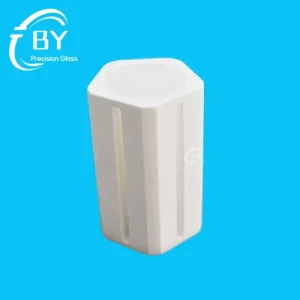
Wholesale Diffuse High-Reflectivity PTFE Reflectors
-
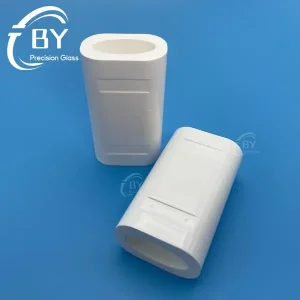
High-Quality Ceramic Cavities For Nd YAG Laser Supplier
-
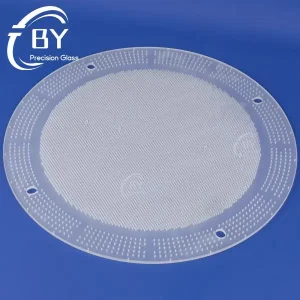
Custom Optical Quartz Gas Distribution Plate
-
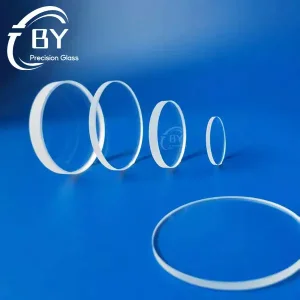
Quartz Optical Windows for Semiconductor Lithography
-
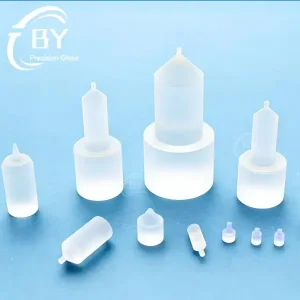
Customized Quartz Fiber End Caps for QBH Laser
-
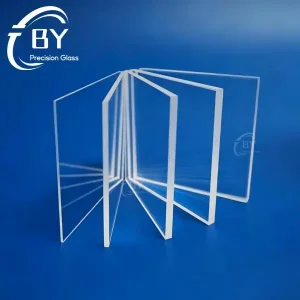
High-Quality JGS1 UV Grade Fused Silica Plate
-
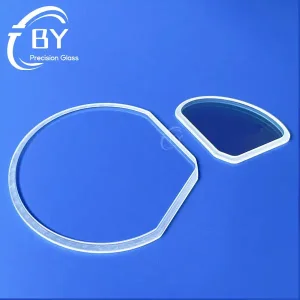
Sapphire Viewing Plates for Harsh Chemical Environments
-
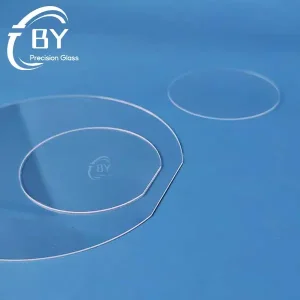
Custom Borofloat 33® Glass Wafers for Semiconductor