
Engineered Optical Systems & High-Tolerance Fabrication
Sustain high optical throughput across extreme thermodynamic gradients. Explore our top precision components engineered for advanced semiconductor tools, industrial laser cavities, and ultra-high-vacuum viewing environments.
-
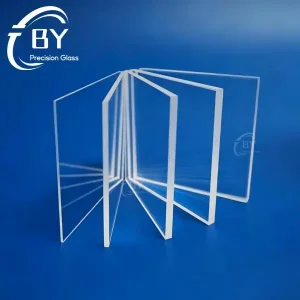
High-Quality JGS1 UItraviolet (UV) Grade Fused Silica Plate Supplier, Factory
-
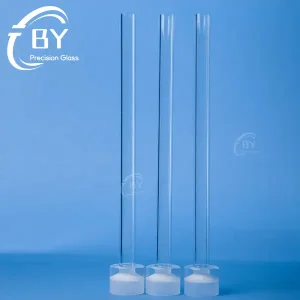
High-Quality Chemical Resistant Custom Quartz Glass Parts Fabrication Supplier, Factories
-
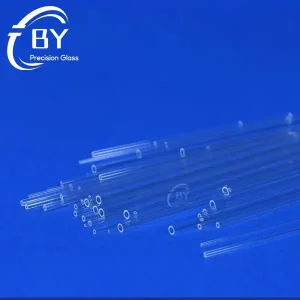
Wholesale Fluorine-Doped Fused Silica Capillary Tube Manufacturer, Factories
-
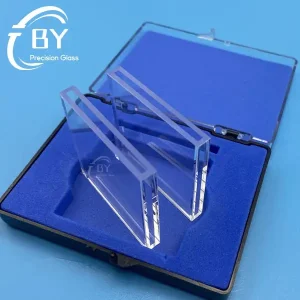
Wholesale Customize Quartz Cuvette for Spectrophotometer Supplier, Factory
-
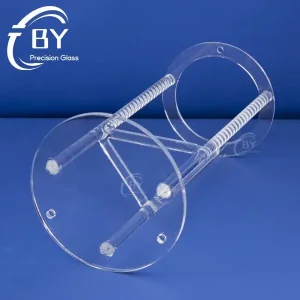
Wholesale Quartz Wafer Carriers for Semiconductor Supplier, Suppliers
-
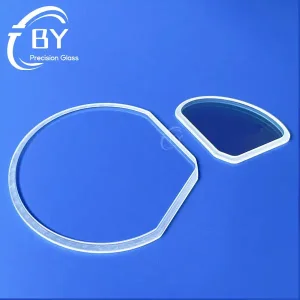
High-Quality Sapphire Viewing Plates for Harsh Chemical Environments Suppliers, Factories
-
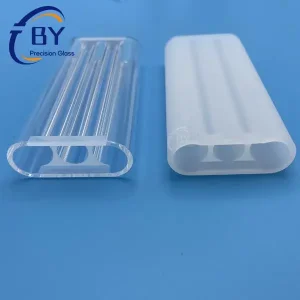
High-Quality Candela Laser Head Triple Bore Old and New Version In Stock Manufacturer, Factory
-
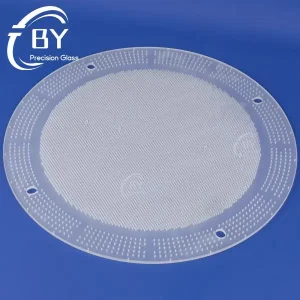
Custom Custom Optical Quartz Gas Distribution Plate Manufacturer, Suppliers
Transformative Industrial Solutions: Overcoming the Large-Aperture Crystal Dilemma
Single-crystal alpha-alumina (α-Al&sub2;O&sub3;) sapphire is recognized globally as the gold standard for severe thermal, chemical, and mechanical operations. As optical apertures scale beyond 100 mm to 300 mm+, manufacturing challenges shift from basic geometry to crystallographic lattice control, thermal stress dissipation, and wave-front aberration management.
Kyropoulos (KY) Ingot Growth
We deploy high-capacity Kyropoulos (KY) and Heat Exchanger Method (HEM) crystallization furnaces to grow crack-free, ultra-pure sapphire boules exceeding 80 kg, securing minimal defect densities for large cross-sectional viewports.
Stress-Free Trepanning & Lapping
Utilizing high-rigidity 5-axis ultrasonic CNC grinding and customized diamond slurry planarization, we prevent micro-fracturing along crystallographic slip lines, guaranteeing uniform thickness and high structural integrity.
C-Plane Zero-Birefringence Control
For precision polarimetric, laser delivery, and aerospace reconnaissance instruments, our windows are sliced strictly along the C-axis [0001] with alignment tolerances within ±0.5°, entirely neutralizing natural double refraction.
Large Sapphire Physical & Optical Properties
Single-crystal sapphire outperforms standard silicate glasses and conventional engineering ceramics across high-temperature, corrosive, and mechanical loads.
| Property Parameter | Standard Metric Value | Engineering Significance |
|---|---|---|
| Chemical Formula & Structure | α-Al&sub2;O&sub3; (Hexagonal / Rhombohedral) | 100% dielectric non-porous single crystal, inert to standard acids, bases, and halogens |
| Transmission Spectrum Range | 170 nm (VUV) – 5,500 nm (MWIR) | Eliminates multi-aperture sensor arrays by handling visible, NIR, and thermal signatures in one optic |
| Hardness (Mohs / Knoop) | Mohs 9 / Knoop 1800–2200 kg/mm² | Near-diamond scratch resistance; withstands sand, sea spray, and particulate erosion at Mach speeds |
| Thermal Shock & Service Ceiling | Continuous operation up to 1800°C (Melting: 2040°C) | Resists severe cyclic thermal downshocks without structural fatigue or phase shifts |
| Thermal Conductivity | 40 W/(m·K) @ 20°C | Rapid heat spreading mitigates thermal lensing in high-average-power CW industrial lasers |
| Wavefront Distortion & Flatness | Up to λ/10 @ 632.8 nm (Zygo Interferometry verified) | Retains diffraction-limited imaging and low beam-deviation in high-resolution optics |
Mission-Critical Deployment Scenarios
Engineered to integrate into harsh production and operational environments worldwide:
Aerospace & Defense Pods
Supersonic reconnaissance pods and forward-looking infrared (FLIR) systems deploy large C-plane sapphire windows to resist airborne sand impact, rain erosion, and extreme aerodynamic friction heating.
Semiconductor Plasma Chambers
Inductively Coupled Plasma (ICP) etch, chemical vapor deposition (CVD), and atomic layer deposition (ALD) chambers rely on large sapphire viewports to resist fluorine, chlorine, and NF&sub3; radical degradation.
Multi-Kilowatt Laser Windows
Industrial ultra-fast fiber and CO&sub2; cutting heads require high laser damage threshold (LIDT > 15 J/cm² @ 1064 nm) sapphire debris windows to protect inner collimation and focus objectives without optical breakdown.
Deep-Sea Oceanographic Sensors
Benthic exploratory submersibles and underwater petroleum monitoring instruments operate under hydrostatic pressures above 10,000 psi, utilizing large step-profile sapphire windows that eliminate buckling risks.
High-Pressure Chemical Autoclaves
Petrochemical synthesis vessels and explosive combustion diagnostic rigs use thick, precision-polished sapphire sight glasses to allow direct spectroscopic tracking of supercritical fluids and reactive flows.
Medical Diagnostics & IPL Crystals
Aesthetic dermatological handles and surgical laser scanners use sapphire's high refractive index (n≈1.76) and high thermal conductance to provide integrated skin contact cooling while guiding energetic light pulses.
Worldwide Engineering Support & Regulatory Frameworks
Procuring large sapphire optics involves addressing material supply chain verification, international export compliance, optical metrology certification, and cleanroom packaging logistics. BY Photonics supports your procurement cycle end-to-end:
Full Raw Material Traceability
Every large sapphire blank is tracked back to its original crystal growth charge. We furnish comprehensive raw ingot certificates, glow discharge mass spectrometry (GDMS) purity records, and crystallographic X-ray rocking curves.
Dual-Use & Export Compliance
Experienced in international optical trade, we facilitate export documentation, tariff classification, and end-user verification protocols to streamline global logistics to EU, North American, and APAC hubs.
Zygo Laser Interferometry
Every optical window is accompanied by a certified interferogram, documenting transmitted wavefront distortion (TWD), peak-to-valley (P-V) flatness, and atomic-force surface roughness profilometry (Ra).
Cleanroom Export Packaging
Windows are cleaned via multi-stage ultrasonic degreasing, baked to desorb residual water vapor, and heat-sealed in Class 100 anti-static cleanroom pouches to arrive contamination-free.
Manufacturing Technology Roadmap: Toward 500 mm Sapphire Windows
As industrial applications demand larger viewports, our engineering teams are developing new crystal growth and polishing methodologies:
Chemical Mechanical Planarization (CMP)
Refining chemo-mechanical abrasive formulations for super-polished sapphire surfaces below Ra 0.2 nm. This removes sub-surface damage (SSD), increasing mechanical break limits and boosting laser-induced damage thresholds (LIDT).
Magnetorheological Finishing (MRF)
Integrating sub-aperture deterministic MRF polishing machines to correct localized transmitted wavefront aberrations across large non-circular and conformal sapphire geometries, achieving sub-λ/20 precision.
500 mm KY Crystal Growth Automation
Upgrading RF induction heating loops and dynamic AI-driven crucible thermal gradient algorithms to scale Kyropoulos crystal growth, targeting single-piece optical blanks with 500 mm clear apertures.
Frequently Asked Questions for Large Sapphire Procurement
Detailed answers to common engineering questions regarding crystallographic plane selection, edge mounting, and anti-reflective thin-film durability.
Why is C-plane (0001) sapphire preferred over A-plane or R-plane for large windows?
Sapphire belongs to the trigonal crystal system and exhibits natural optical birefringence (Δn ≈ 0.008). Light entering along any axis other than the optical c-axis splits into ordinary and extraordinary rays, generating double imaging, beam displacement, and polarization shifts. Slicing windows parallel to the C-plane [0001] aligns the propagation vector with the optic axis, eliminating birefringence along normal incidence. A-plane and R-plane are generally chosen only when specific anisotropic mechanical stiffness or epitaxial lattice matching is needed.
How does large-diameter sapphire mitigate high-pressure failure risks?
Unlike amorphously structured fused silica, sapphire has a flexural modulus (Young's modulus of 345–400 GPa) roughly five times that of standard glass, paired with a compressive strength of over 2 GPa. For large-aperture viewports subject to pressure differentials, sapphire allows design engineers to reduce plate thickness by 50% to 70% while sustaining safety factors above 4:1. We also implement chamfered edges, radius corners, and acid etching to clear micro-notches where edge stress concentrates.
What anti-reflective (AR) coatings can be applied to large sapphire windows?
Due to its high index of refraction (n ≈ 1.76), uncoated sapphire exhibits Fresnel reflection losses of ~14% per window (7% per surface). We apply durable thin-film dielectric coatings using Ion-Assisted Electron-Beam Deposition (IAD) and Ion Beam Sputtering (IBS). Standard configurations include Broadband Anti-Reflective (BBAR) coatings covering 400–1000 nm, Dual-Band Visible-MWIR coatings (e.g., 532 nm + 3–5 μm), and hard Carbon-Like/DLC coatings designed to survive external MIL-STD-810 sand and environmental tests.
What is the typical lead time and process verification procedure for custom parts?
Initial Design for Manufacturability (DFM) reviews are delivered within 24 business hours. Prototype production for custom diameters runs between 3 to 5 weeks depending on boules allocation and custom tooling requirements. Production batches are verified via coordinate measuring machines (CMM), Zygo GPI laser interferometers, spectrophotometer transmission traces, and optical micro-roughness profilometry prior to dispatch.
Specialized Laser Cavities, Substrates & Assemblies
Discover our comprehensive range of specialized quartzware, precision end caps, and custom substrates supporting international scientific labs and industrial photonics equipment:
-
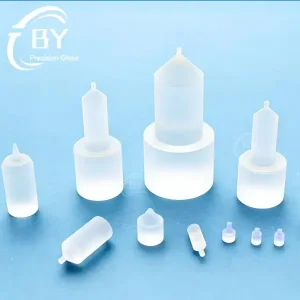
High-Quality Customized Quartz Fiber End Caps for QBH Manufacturer, Factory
-
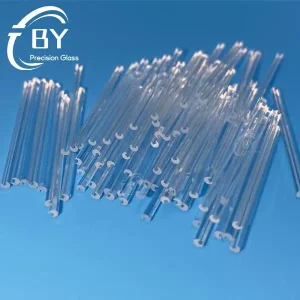
High-Quality Quartz Substrate Groove Use For Optical Fiber Coupler Suppliers, Factories
-
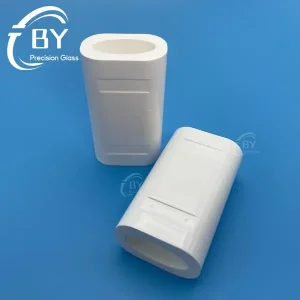
High-Quality Ceramic Cavities For Nd YAG Laser Supplier, Factories
-
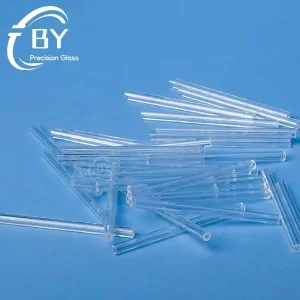
High-Quality Custom Precision Quartz Capillary Tubes Manufacturers, Suppliers
-
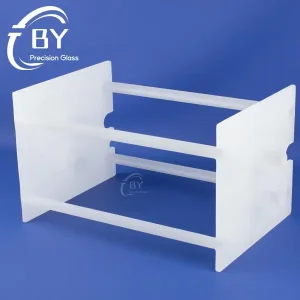
Wholesale Quartz Diffusion Boat for Semiconductor Suppliers, Factories
-
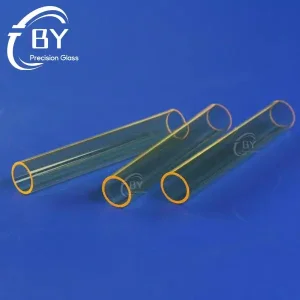
Custom UV Block Yellow Quartz Tube for IPL Lamp Flow Handle Manufacturer, Factories
-
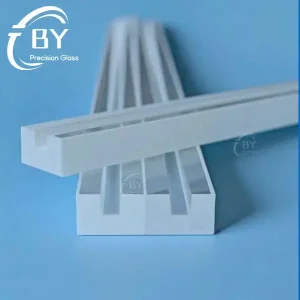
High-Quality Square Groove Quartz Substrate for Fiber Couplers Supplier, Factories
-
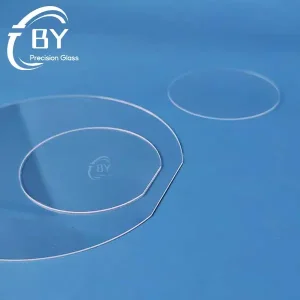
Custom Borofloat 33® Glass Wafers for Semiconductor Manufacturers, Factories