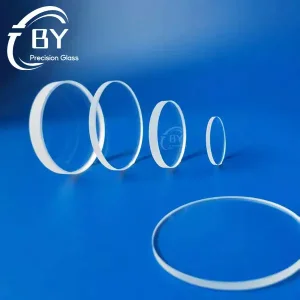
Precision Engineered Quartz & Optical Substrates: Primary Showcase
Explore our factory-direct precision components manufactured to tight geometric tolerances for analytical chromatography, laser pump cavities, optical fiber telecom modules, and semiconductor wafer processing.
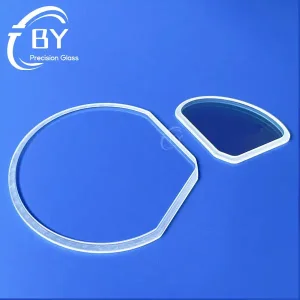
High-Quality Sapphire Viewing Plates for Harsh Chemical Environments
View Specifications →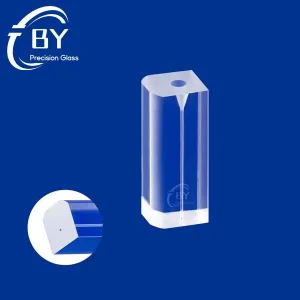
Custom Fiber Optic Glass Ferrules Supplier, Factories
View Specifications →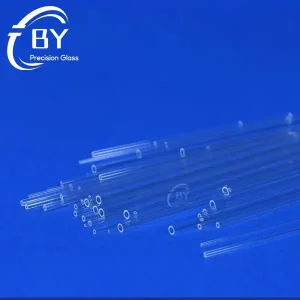
Wholesale Fluorine-Doped Fused Silica Capillary Tube Manufacturer
View Specifications →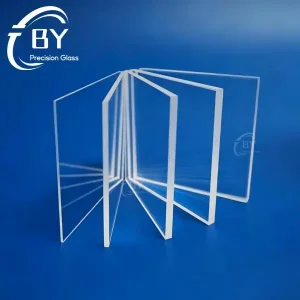
High-Quality JGS1 UItraviolet (UV) Grade Fused Silica Plate
View Specifications →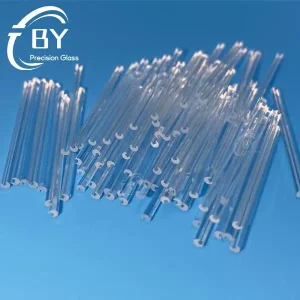
High-Quality Quartz Substrate Groove Use For Optical Fiber Coupler
View Specifications →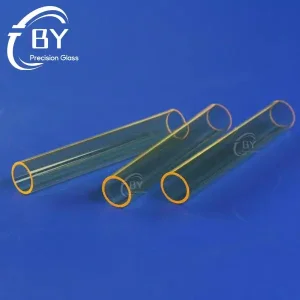
Custom UV Block Yellow Quartz Tube for IPL Lamp Flow Handle
View Specifications →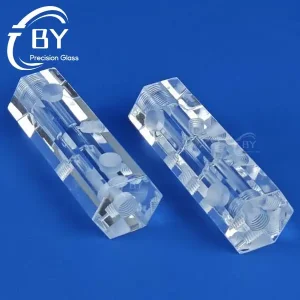
High-Quality Custom Fabrication of Quartz Glass Precision Components
View Specifications →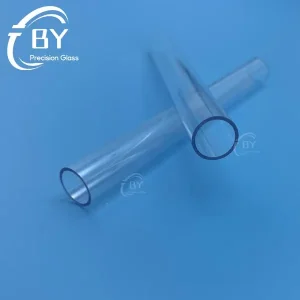
Wholesale Cerium Doped Quartz Tube Blocked UV Wavelength
View Specifications →The Global Strategic Footprint of Precision Quartz Capillary Tubing
As analytical chemistry, biopharmaceutical sequencing, advanced photonic interconnections, and sub-nanometer semiconductor packaging converge, the global quartz capillary market has transformed from a standard scientific glassware niche into a multi-billion-dollar critical infrastructure sector.
Across North America, Western Europe, and the Asia-Pacific region, commercial sourcing of high-purity fused silica and quartz capillary tubing is governed by stringent operational constraints. Modern high-pressure capillary liquid chromatography (Capillary LC) and capillary electrophoresis (CE) equipment demand operating burst pressures exceeding 15,000 PSI (~1,000 bar) in internal bores ranging from 10 μm to 500 μm. Standard borosilicate capillaries fail prematurely under these sustained hydraulic shears; pure synthetic silica (SiO₂) drawn from flame-hydrolyzed silicon tetrachloride (SiCl₄) exhibits the molecular homogeneity and amorphous covalent bonding network required to prevent catastrophic failure.
Simultaneously, the semiconductor equipment industry requires quartz capillary tubes to serve as micro-dispense nozzles, gas distribution needles, and plasma sample extractors. In wafer etching and atomic layer deposition (ALD) processing, these components endure volatile halides, hydrofluoric acid vapors, and elevated temperatures exceeding 1,000°C. Natural quartz capillary tubing, refined from pure Brazilian crystal rock, offers extraordinary mechanical stiffness and creep resistance, making it an indispensable asset in modern industrial production ecosystems.
Comparative Metallurgy & Thermodynamics of Quartz Capillaries
Choosing between synthetic fused silica, semiconductor-grade natural fused quartz, and specialized dopants (Fluorine, Samarium, Cerium) dictates optical transmission, hydroxyl band attenuation, and fracture mechanics.
| Silica Category | Grade Equivalent | Transmission Range | OH Content (ppm) | Softening Point | Primary Industrial Deployment |
|---|---|---|---|---|---|
| Synthetic Fused Silica | JGS1 / Suprasil | 180 nm – 2,500 nm | < 5 to > 1200 (Adjustable) | 1,730 °C | Deep-UV capillary electrophoresis, laser flow cells, DNA sequencers |
| Natural Fused Quartz | JGS2 / Herasil | 220 nm – 2,500 nm | 30 – 150 | 1,680 °C | Gas chromatography columns, optical ferrule tubes, furnace thermocouples |
| Infrared Grade Silica | JGS3 / Infrasil | 260 nm – 3,500 nm | < 8 (Anhydrous) | 1,700 °C | Mid-IR spectroscopic fluidics, thermal pyrometry sight tubes |
| Fluorine-Doped Silica | F-300 / Cladded | 190 nm – 2,100 nm | < 20 | 1,620 °C | Down-doped waveguiding capillaries, total internal reflection flow cells |
Vertical Tower Redrawing Mechanics
Our automated drawing towers utilize oxyhydrogen multi-port burner rings coupled with induction-heated graphite muffle furnaces. High-resolution servomotors precisely calibrate feed rate (mm/min) and take-up capstan velocity, ensuring uniform capillary bore cross-sections without wall sagging.
In-Line Dual-Axis Laser Micrometry
Continuous closed-loop control relies on dual-axis scanning helium-neon micrometers capturing outer diameter (OD) and circularity variations at 2,000 scans per second. Data feedback adjusts furnace thermal setpoints dynamically to sustain diametrical precision under ±0.5 μm.
Surface Passivation & Polymer Cladding
For applications demanding flexural elasticity and scratch prevention, capillaries undergo in-line coating with optical-grade polyimide, fluoropolymer (PTFE/FEP), or aluminum metallization, ensuring tensile burst strengths exceeding 100 kpsi (0.7 GPa) via Weibull distribution metrics.
End-to-End Solutions Across Core High-Technology Sectors
How our custom quartz capillary tubing enables breakthrough performance across industrial metrology, life sciences, photonics, and semiconductor manufacturing.
Capillary Gas Chromatography (GC) & HPLC
Analytical chromatography requires chemical inertness where sample components do not adsorb onto tube walls. Our quartz capillary tubes undergo ultra-pure dehydroxylation, yielding an internal surface completely devoid of Lewis acid sites, ensuring symmetrical peak elution for polar, basic, and thermally labile compounds.
- Operating burst pressures exceeding 20,000 PSI
- Inner diameters down to 5 μm with mirror surface finish (Ra < 0.005 μm)
- Full chemical immunity to corrosive organic elution solvents
Fiber Optic Ferrules & Telecom Interconnects
In high-density optical communication, Co-Packaged Optics (CPO), and multi-fiber push-on (MPO) assemblies, glass and quartz capillary ferrules match the thermal expansion coefficient (CTE: 0.55 × 10⁻⁶/K) of standard single-mode optical fibers, eliminating insertion loss fluctuations across -40°C to +125°C.
- Precision concentricity under 1.0 μm between OD and ID
- Custom funnel-entry chamfers for damage-free fiber threading
- High mechanical grindability for physical contact (PC/APC) polishing
Life Science Flow Cytometry & Genomics
Deep-ultraviolet transmission is critical for laser-induced fluorescence (LIF) detection down to 214 nm and 193 nm. BY Photonics fabricates square, rectangular, and multi-lumen quartz flow cells with exceptional optical homogeneity, minimizing background stray light autofluorescence during DNA fragment detection.
- Rectangular and square capillary channels for flat optical focal planes
- Zero bubble formation within synthetic silica wall matrices
- Biocompatible, non-leaching matrix compliant with USP Class VI protocols
Field Validations & Real-World Engineering Implementations
Documented technical solutions delivered by BY Photonics engineers to resolve mission-critical tolerance, pressure, and optical attenuation barriers.
Case 1: Deep-Well Oil & Gas Downhole Spectrometry
Challenge: An exploration telemetry client encountered frequent tube ruptures in downhole infrared crude-oil fluid analyzers operating at 300°C and 25,000 PSI.
Solution: BY Photonics redrew heavy-wall anhydrous quartz capillary tubing (OD: 6.0 mm, ID: 0.8 mm) utilizing JGS3 low-OH silica, proof-tested hydrostatically to 45,000 PSI.
Outcome: Achieved continuous 1,800-hour downhole survival without degradation of absorption bands between 1,700 nm and 3,100 nm.
Case 2: Ultra-Sensitive Micro-Flow CE-MS Interface
Challenge: A European pharmaceutical testing laboratory suffered signal dampening and flow pulsation during electrospray ionization due to capillary tip inner surface micro-ridges.
Solution: We implemented a specialized flame-polishing and hydrogen etching protocol on custom 20 μm ID synthetic silica capillaries, achieving an internal surface roughness Ra < 0.003 μm.
Outcome: Replicate analytical relative standard deviations (RSD) declined by 64%, yielding stable nanoliter spray currents.
Case 3: Extreme Environment Aerospace Gyroscope Coil
Challenge: An aerospace contractor required ultra-fine quartz capillary guide tubes for fiber-optic gyroscope spooling that withstood -60°C to +150°C cyclic thermal shock.
Solution: Multi-layer polyimide coated JGS1 quartz capillaries were precision-cut using CO₂ lasers, producing 90° square end-faces without edge chipping.
Outcome: Passed full DO-160 vibration and thermal shock validation without insertion loss drift or micro-crack propagation.
Engineering Trajectory: Advanced Silica Capabilities (2025–2032)
Our ongoing research and capital investments ensure our clients remain ahead of tightening precision and extreme operational standards.
| Development Phase | Technological Focus | Tolerance / Purity Target | Target Sector |
|---|---|---|---|
| Phase I (2025–2026) | Sub-micron Multi-Bore Redrawing Kinetics | ID Tolerance ±0.2 μm; 7-bore arrays | Capillary electrophoresis arrays & Microfluidics |
| Phase II (2027–2028) | Deep-UV Vacuum Solarization Resistance | 0% loss at 193 nm after 10,000 J/cm² | Excimer laser delivery & EUV Metrology |
| Phase III (2029–2030) | Hermetic Metalized Capillary Bonding | Helium leak rate < 1×10⁻¹⁰ mbar·L/s | Aerospace & Quantum sensing vacuum packages |
| Phase IV (2031–2032) | Hollow-Core Photonic Bandgap Microstructures | Single-mode light transmission in hollow core | Ultra-low latency Co-Packaged Optics (CPO) |
Frequently Asked Questions: Technical Specifications & Procurement
Direct answers to the most rigorous technical and dimensional questions raised by procurement engineers and optical system designers.
Burst pressure depends fundamentally on the ratio of wall thickness to internal diameter, calculated via Lamé's equation for thick-walled cylinders: P = S × (OD² - ID²) / (OD² + ID²), where S represents intrinsic tensile strength. A fused silica capillary with 360 μm OD and 50 μm ID comfortably withstands working pressures exceeding 20,000 PSI (1,380 bar), with proof-tested burst limits frequently surpassing 45,000 PSI.
We employ pre-machined, ultrasonic-cleaned fused silica preforms maintained in a cleanroom environment before loading into our computer-controlled vertical drawing towers. Dual-axis non-contact laser gauges and internal inert gas (Argon/Nitrogen) back-pressure regulation prevent bore collapse or ovality, guaranteeing circularity tolerances within ≤1.0% of nominal ID.
JGS1 is synthetic fused silica synthesized from gaseous silicon compounds, providing near-total absence of bubbles, inclusions, and metallic impurities. It transmits light efficiently down to 180 nm. JGS2 is produced by melting natural quartz crystals; while it exhibits outstanding structural rigidity and withstands temperatures up to 1,150°C, it has slight absorption bands in the UV spectrum near 240 nm.
We offer precision diamond-wheel dicing, CO₂ laser cleaving, mechanical tension-cleaving, and optical-grade flame polishing. End-faces can be specified as 90° perpendicular cuts (±0.5°), angled PC/APC bevels, conical tapers, or rounded bullet-nose tips for insertion into sealing gaskets without tearing elastomer O-rings.
Yes. In addition to standard concentric round tubes, BY Photonics draws square, rectangular, and multi-lumen (dual, triple, quadruple, and 7-hole hexagonal) capillaries. Square cross-sections eliminate the cylindrical lens effect, facilitating direct optical interrogation across flat capillary windows in spectrophotometric flow cells.
Finished capillaries undergo multi-stage ultrasonic degreasing, ultra-pure water (18.2 MΩ·cm) flush, and vacuum oven drying before being sealed in anti-static, particulate-free cleanroom bags or custom protective polycarbonate slide canisters. This eliminates particulate ingestion that could clog sub-50 μm channels.
Precision Semiconductor Quartzware & Optical Substrates: Extended Showcase
Discover our advanced structural quartzware, laser pump chambers, cuvettes, and lithography-grade windows manufactured under stringent ISO-certified cleanroom conditions.
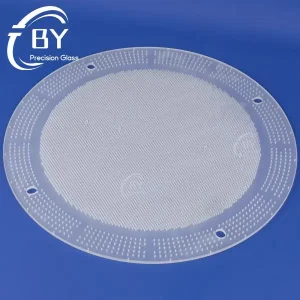
Custom Custom Optical Quartz Gas Distribution Plate Manufacturer
View Specifications →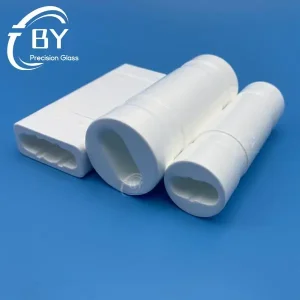
Wholesale Ceramics Reflecor for Semiconductor Lasers Suppliers
View Specifications →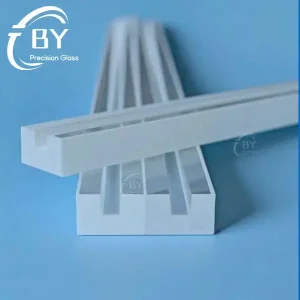
High-Quality Square Groove Quartz Substrate for Fiber Couplers
View Specifications →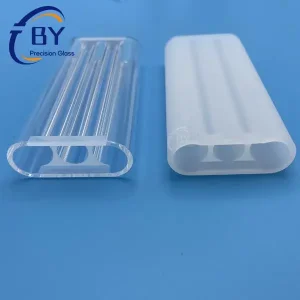
High-Quality Candela Laser Head Triple Bore Old and New Version
View Specifications →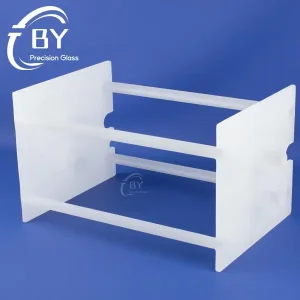
Wholesale Quartz Diffusion Boat for Semiconductor Suppliers
View Specifications →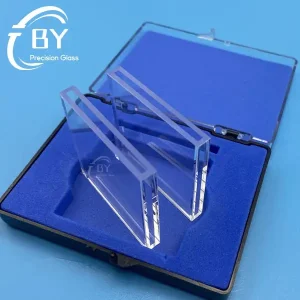
Wholesale Customize Quartz Cuvette for Spectrophotometer
View Specifications →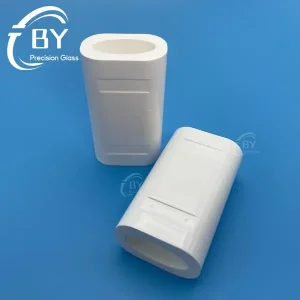
High-Quality Ceramic Cavities For Nd YAG Laser Supplier
View Specifications →