
Featured Precision Micro-Optic Components
Engineered for New York analytical research laboratories and high-energy optical transmission lines.
-
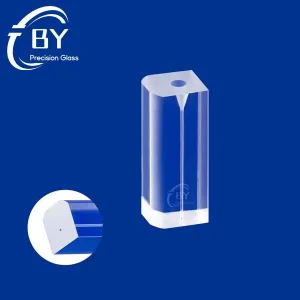
New York Standard Fiber Optic Glass Ferrules
View Technical Specs -
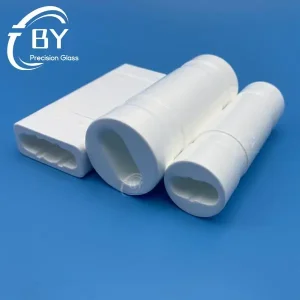
Semiconductor Ceramic Laser Reflectors (NY Hub)
View Technical Specs -
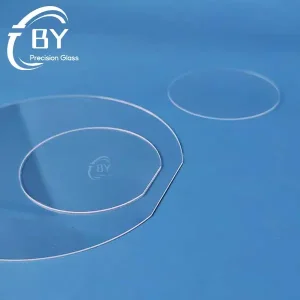
Custom Borofloat 33® Glass Wafers for Albany Nanotech
View Technical Specs -
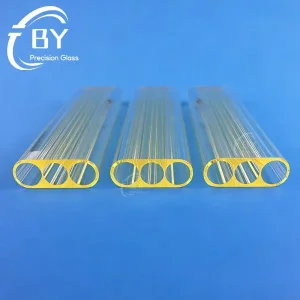
Samarium-Doped Laser Cavity Flow Tubes
View Technical Specs
New York’s Photonics Ecosystem: The Precision Capillary Backbone
Bridging advanced materials fabrication with the Empire State’s semiconductor corridors, biophotonic research centers, and quantum computing corridors.
Rochester Photonics & Imaging Cluster
As the historical cradle of optical science, Greater Rochester houses demanding requirements for micro-bore capillaries used in beam shaping, optical alignment sleeves, and fiber-optic ferrule integration.
- Strict ID/OD concentricity down to ±0.002 mm
- Direct integration with Rochester optics cleanrooms
- Thermal matching for fused silica interface modules
Albany NanoTech & Semiconductor Corridor
Borosilicate 3.3 capillary tubing and precision ground rods serve critical thermal diffusion and microfluidic chemical sampling roles across Upstate New York wafer fabrication facilities.
- Hydrolytic resistance Class 1 (ISO 719) compliance
- Zero leaching for extreme purity wet-bench systems
- Coefficient of thermal expansion matched for silicon bonding
Long Island & NYC Biotech Hub
From Stony Brook to the Manhattan life science clusters, precision-drawn square and circular capillaries enable next-generation flow cytometry, single-cell DNA sequencing, and automated micro-dispensing.
- High UV-Vis optical transmission above 310 nm
- Custom wall thickness for high-pressure fluid flow
- End-finish options: Fire-polished, flat-lapped, or beveled
Global Precision Glass Dynamics & Technical Capacity
Evaluating material advantages, scaling parameters, and key manufacturing performance metrics.
Global Sourcing Dynamics & Supply Security
Industrial supply chains are transitioning away from high-lead, unstable alkali compositions to Type 1 Borosilicate glass. Driven by tightening medical directives and EU RoHS compliance, tier-one device manufacturers require end-to-end trace elements disclosure, zero trace leaching, and stable internal dimensions under repeated autoclave cycles.
Our hybrid factory operational model combines overseas high-precision multi-axis thermal drawing towers with localized support for New York and North American engineering hubs, providing prototype delivery within days and scalable production runs.
Sub-Micron Dimensional Stability vs Quartz
While fused quartz remains essential for ultra-deep UV (<200 nm) or extreme thermal thresholds (>1,100°C), borosilicate 3.3 serves as the cost-effective, easily sealable, and structurally robust alternative for visible/NIR optics, laboratory analytics, and standard fluidic manifolds.
- Lower working temperature enables cost-efficient flame forming
- Superior scratch resistance and chemical inertness over soda lime
- Seamless fusion sealing directly with Kovar and tungsten pins
Borosilicate 3.3 Engineering Characteristics
Comprehensive chemical, physical, and optical metrics conforming to ASTM E438 Type 1, Class A standards.
| Physical / Chemical Property | Reference Value (Metric) | Standard Validation | Practical Engineering Significance |
|---|---|---|---|
| Coefficient of Mean Linear Expansion | 3.3 ± 0.1 × 10⁻⁶ K⁻¹ | ISO 7991 (20°C to 300°C) | Extreme resistance to thermal shock, crack propagation, and uneven heat gradient. |
| Density (ρ) | 2.23 ± 0.02 g/cm³ | DIN 51057 (at 25°C) | Lightweight structural integrity for high-speed moving optical heads and avionics. |
| Refractive Index (nd) | 1.473 ± 0.002 | At λ = 587.6 nm | High transparency with minimal internal scatter for light-guiding and wavemeter rods. |
| Hydrolytic Resistance | Class HGB 1 | ISO 719 / DIN 12111 | Zero alkali release into neutral fluids during long-duration HPLC and DNA analysis. |
| Acid Resistance | Class S 1 | DIN 12116 | Tolerates concentrated boiling acids (excluding Hydrofluoric and hot phosphoric acid). |
| Alkali Resistance | Class A 2 | ISO 695 | High resistance to aggressive basic detergents and cleaning solutions during sanitization. |
Next-Generation Capillary Machining & Future Outlook
Anticipating the converging requirements of optofluidics, quantum sensors, and micro-electrochemical systems.
Non-Circular & Multi-Lumen Geometries
Advancing beyond conventional concentric cylinders. Precision tooling allows square, rectangular, D-shaped, and multi-bore capillary tubes to facilitate multi-channel fluidic mixing and polarization-preserving optical sleeves.
Automated In-Line Laser Metrology
Real-time dual-axis laser scanning micrometers monitor outside and inside diameters during continuous redrawing, feeding continuous speed corrections to ensure longitudinal runout under 0.05 mm per meter.
Hermetic Packaging & Metallization
Supplying borosilicate capillary tubes and ground rods with selective Ti-Pt-Au or Cr-Ni coatings on ends, allowing direct soldering into stainless steel, brass, or Kovar housings for high-vacuum and marine sensing environments.
Need Custom Capillaries Machined to Exact Tolerances?
Our engineering team reviews drawings within 24 hours. Prototypes and low-volume pre-production batches shipped directly to your facility.
Frequently Asked Questions
Detailed technical and operational answers for precision glass procurement and design engineers.
What are the key differences between borosilicate capillary tubing and quartz capillary tubing?
What inside diameter (ID) tolerances and bore configurations can you produce?
How do you verify straightness and concentricity across extended rod or capillary lengths?
Can you supply cut-to-length borosilicate rods with ground or polished optical end-faces?
What drawing formats are accepted for DFM (Design for Manufacturability) review?
Engineered Glass & Quartz Machining Catalog
Browse our complete spectrum of high-temperature substrates, laser flow tubes, and specialized optical carriers.
-
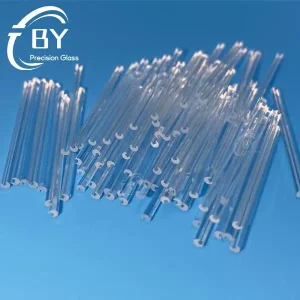
Quartz Substrate Groove for Optical Fiber Coupler
View Technical Specs -
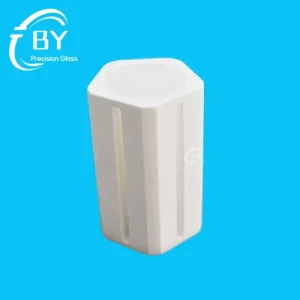
Diffuse High-Reflectivity PTFE Diode Chambers
View Technical Specs -
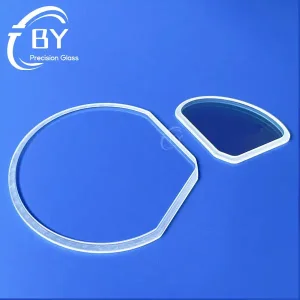
Sapphire Viewing Plates for Harsh Chemical Lines
View Technical Specs -
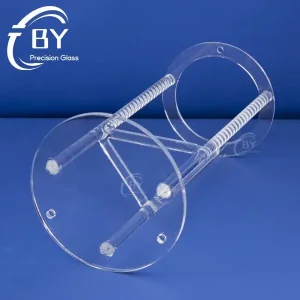
High-Purity Quartz Wafer Carriers for Fab Lines
View Technical Specs -
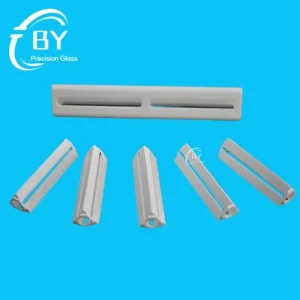
PTFE-Based Diode Pumping Chamber Reflectors
View Technical Specs -
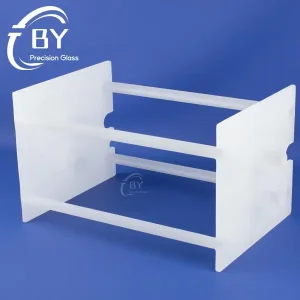
Precision Slotted Quartz Diffusion Boat
View Technical Specs -

Quartz Optical Windows for Lithography Equipment
View Technical Specs -
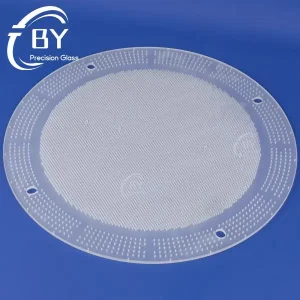
Custom Quartz Gas Distribution Showerhead Plate
View Technical Specs