
High-Performance Quartz & Optical Glass Catalog
Engineered cold-worked substrates, high-temperature capillaries, and laser cavity components manufactured to ISO 10110 standards.
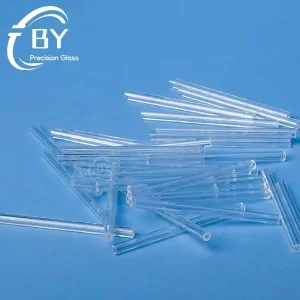
High-Quality Custom Precision Quartz Capillary Tubes Manufacturers, Suppliers
View Product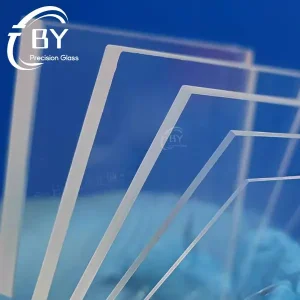
High-Quality Borosilicate Windows and Plates for Viewports Suppliers, Factory
View Product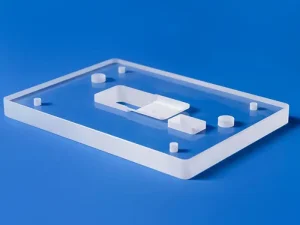
High-Quality Factory Supply Precision Quartz Glass Machining Plate Supplier, Suppliers
View Product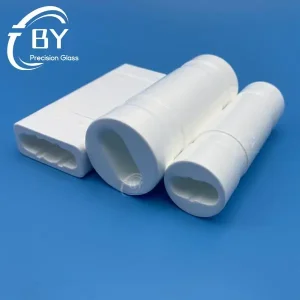
Wholesale Ceramics Reflecor for Semiconductor Lasers Suppliers, Factory
View Product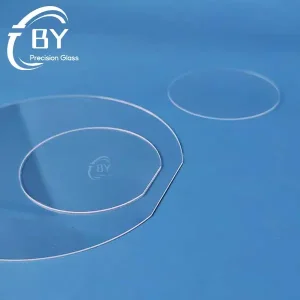
Custom Borofloat 33® Glass Wafers for Semiconductor Manufacturers, Factories
View Product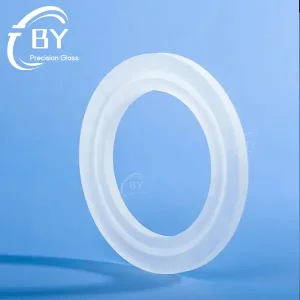
High-Quality Precision Custom Quartz Glass Components for Semiconductor Manufacturers, Supplier
View Product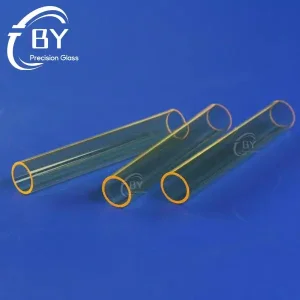
Custom UV Block Yellow Quartz Tube for IPL Lamp Flow Handle Manufacturer, Factories
View Product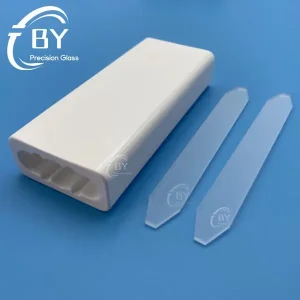
Wholesale Ceramic Cavity Reflector use for DEKA Laser Manufacturers, Supplier
View ProductPhysics of Low-OH Hydroxyl Fused Silica Plates & Substrates
Analyzing molecular purity, hydroxyl radical (Si-OH) concentration extinction coefficients, and thermal-optical stability in infrared & high-fluence laser environments.
Suppression of Absorption Bands
Standard synthetic fused silica (such as JGS1) contains elevated hydroxyl radical concentrations (800–1200 ppm) stemming from flame hydrolysis combustion. In high-power infrared systems, these Si-OH bonds induce violent fundamental vibrational absorption at 2.73 µm, accompanied by overtone harmonics at 1.38 µm and 2.22 µm.
- Eliminates thermal lensing phenomena in 1070 nm multi-kilowatt fiber laser systems.
- Zero micro-thermal distortion during long-exposure FTIR and pyrometry diagnostic sessions.
- Minimizes phase retardation shifts in precision polarization windows.
Electric Vacuum Fusion Sintering
To produce authentic low-OH silica ingots (equivalent to JGS3 and Infrasil® standards), Tianjin BY Photonics employs a two-step vacuum electric-arc fusion synthesis method. Ultra-pure natural crystal sands (SiO2 ≥ 99.999%) are liquefied inside specialized de-gassing vacuum furnaces, driving off volatile bound hydrogen compounds.
- Total hydroxyl level strictly restrained below 1 to 5 ppm.
- Exceptionally uniform internal refractive index gradient (Δn ≤ 1×10⁻⁶).
- Virtually bubble-free structure compliant with DIN ISO 10110-3 (Class 0/1).
Sub-Nanometer Cold Machining
Converting brittle low-OH fused silica ingots into optical viewports requires stringent stress-free planetary lapping and Magnetorheological Finishing (MRF). Our shopfloor ensures atomic-level surface smoothness without subsurface mechanical micro-fractures.
- Flatness achieved up to λ/10 per inch at 632.8 nm.
- Surface finish certified to scratch-dig 20-10 or 10-5 MIL-PRF-13830B.
- Surface micro-roughness Ra controlled below 0.3 nm (3 Å) via AFM profilometry.
| Optical Glass Material Grade | Hydroxyl Content (OH) | Usable Spectral Transmission | Softening Point (°C) | Refractive Index (nd @ 587.6nm) | Primary Industrial Applications |
|---|---|---|---|---|---|
| JGS3 Low-OH Fused Quartz Infrared Grade | < 2 - 5 ppm | 260 nm – 3,500 nm | 1,730 °C | 1.4585 | High-power NIR lasers, FTIR spectrometers, pyrometry viewports |
| JGS1 Synthetic Silica UV Grade | 800 – 1,200 ppm | 185 nm – 2,500 nm | 1,680 °C | 1.4584 | Excimer lasers (193nm/248nm), DUV lithography, UV spectroscopy |
| JGS2 Optical Fused Quartz Standard Grade | 30 – 150 ppm | 220 nm – 2,500 nm | 1,710 °C | 1.4585 | Sight glass viewports, furnace observation windows, general optics |
| Borofloat 33® Borosilicate Float Glass | N/A (Alkaline borosilicate) | 350 nm – 2,500 nm | 820 °C | 1.4714 | MEMS bonding substrates, explosion-proof light viewports, bio-MEMS |
| Sapphire Single Crystal (Al2O3) C-Plane / A-Plane | 0 ppm | 170 nm – 5,500 nm | 2,040 °C | 1.7680 | Extreme pressure viewing ports, IPL light blocks, aerospace sensors |
China Factory Direct Advantages in Precision Quartz Glass Fabrication
Combining domestic raw crystal purity reserves, integrated hot-and-cold processing workshops, and scalable multi-axis CNC clusters.
Vertical In-House Value Stream
Unlike regional distributors or single-process cutting shops, our 3,000+ m² standardized Tianjin plant conducts every phase in-house: vacuum boule fusion, wire cutting, multi-axis milling, diamond edging, double-sided planetary polishing, and ISO Class 100 ultrasonic cleaning.
Direct Benefit: Zero cumulative subcontractor margin stacks and guaranteed traceability from raw silica sand to finished packed substrate.
Advanced Machinery Matrix
Equipped with over 120 specialized machines, including 5-axis ultrasonic CNC glass processing centers, automated double-sided lapping systems (speed-regulated ceramic disks), laser beam edge chamfering tools, and robotic high-precision capillary drawing towers.
Precision Standard: Dimension tolerances repeatable to ±0.01 mm, center thickness to ±0.005 mm, and parallelism ≤ 10 arcseconds.
DFM Agility & Prototyping
Experienced optical glass fabrication engineers review custom STEP, IGES, DWG, and PDF technical drawings within 24 hours. We evaluate bevel design, aspect-ratio thermal stresses, thermal shock limits, and coating compatibility before initial prototype cuts.
Speed-to-Market: Prototype delivery cycles inside 7-10 working days; batch scale manufacturing scalable to 50,000+ units monthly.
Enterprise Procurement Criteria & High-End Industry Trends
Why leading global laser conglomerates, semiconductor wafer fabs, and aerospace research facilities prioritize low-OH fused silica plates.
Ultra-High Power Lasers
Continuous-wave (CW) industrial fiber laser systems are scaling beyond 20 kW to 60 kW power levels. Standard quartz glass windows absorb stray energy at 1070 nm, triggering destructive thermal runaway. Low-OH fused silica ensures near-zero absorption (< 5 ppm/cm), safeguarding processing heads.
Wafer Fab Processing
Extreme chemical vapor deposition (CVD), plasma etch, and rapid thermal processing (RTP) equipment demand plasma-resistant viewport plates. Low-OH fused quartz withstands halogen gas erosion (CF4, NF3) while maintaining optical transmission for pyrometric wafer temperature sensing.
Broadband Infrared Systems
From environmental FTIR gas spectrometers to defense mid-infrared forward-looking FLIR calibration, low-OH plates provide consistent transmittance without the severe dip between 2.6 µm and 2.8 µm, expanding usable signal-to-noise ratios across wide spectral bands.
Laser Damage Resistance
In nanosecond and picosecond pulsed laser machining, bulk impurity clusters and hydroxyl defects nucleate breakdown plasma. Low-OH JGS3 material exhibits higher laser-induced damage thresholds (LIDT), prolonging component lifetime in harsh photon environments.
Localized Engineering Support & Rigorous Compliance Assurance
Ensuring frictionless procurement for North American, European, and Asia-Pacific OEM enterprises with total documentation integrity.
Full Inspection Certifications (CoC & Test Reports)
Every delivery batch is accompanied by comprehensive testing reports: spectrophotometer UV-Vis-NIR transmission curves (PerkinElmer Lambda 1050+), Zygo GPI laser interferometer surface wave-front interferograms, and non-contact stylus roughness reports.
- DIN ISO 10110 compliant optical drawings and verification.
- Full raw material chemical lot traceability and heat numbers.
- 100% dimensional and visual scratch-dig verification.
Export-Grade Clean Packaging & Logistics
Finished low-OH fused silica plates are ultrasonically decontaminated, vacuum-sealed in ESD-safe cleanroom bags (Class 1000 environment), and buffered in custom high-density CNC-milled EVA foam compartments enclosed within reinforced wooden export cases.
- DDP / CIF / FOB air and ocean freight shipping terms.
- Consignment buffer stock agreements for scheduled annual OEM call-offs.
- Comprehensive customs HS code documentation support.
RoHS, REACH & Conflict-Free Compliance
All quartz and fused silica manufactured by BY Photonics strictly adheres to European Union Directive 2011/65/EU (RoHS 3) and Regulation (EC) No 1907/2006 (REACH SVHC). Our raw materials are inert, free from hazardous heavy metals, and sourced with verified ethical compliance.
- Certified halogen-free and mercury-free glass compositions.
- Formal compliance certificates issued directly with commercial invoices.
- Bilingual technical support desk (English / Chinese).
High-Reliability Industrial Application Environments
Real-world integration points where low hydroxyl fused silica plates provide critical thermal and optical performance advantages.
Industrial Fiber Laser Protective Windows
In 10 kW+ fiber laser sheet-metal cutting and automated robotic welding heads, the protective debris shield window is exposed to hot metal spatter, severe back-reflections, and intense near-infrared flux. Low-OH silica exhibits near-zero thermal distortion (ΔT < 2°C across aperture), preserving the focal point depth-of-field and avoiding laser head shutdowns.
Semiconductor Chamber Viewports
Epitaxial reactor chambers, PECVD tools, and ion implanters require inspection viewports that withstand inside-outside pressure differentials (ΔP > 1 bar) and temperatures topping 1000 °C. Our low-OH plates provide clear optical access for optical pyrometers while remaining impervious to sudden cooling gas thermal shocks.
FTIR & Infrared Spectroscopy Flowcells
When analyzing petroleum derivatives, pharmaceutical reagents, and environmental greenhouse gases in liquid cells, standard quartz windows obscure critical hydrocarbon absorption peaks near 2.7 µm to 3.4 µm. JGS3 low-OH fused silica plates provide an open, transparent analytical window across these bands.
Frequently Asked Questions: Low-OH Fused Silica Fabrication
Direct technical answers addressing material specifications, tolerances, delivery schedules, and optical finishing parameters.
In the global optical glass sector, material classified as "Low OH" or "Infrared Grade" (Chinese standard JGS3, Heraeus Infrasil® equivalent, or Corning 7979 IR) contains hydroxyl radical (Si-OH) concentrations of less than 5 ppm, with premium vacuum electric-fused melts typically achieving ≤ 1 to 2 ppm. By contrast, standard UV synthetic fused silica (JGS1) possesses 800 to 1,200 ppm of OH.
While sapphire features extreme Mohs 9 hardness, low-OH fused silica provides three distinct advantages: significantly lower thermal expansion coefficient (0.55×10⁻⁶/K vs sapphire's 5.8×10⁻⁶/K) enabling supreme thermal shock resistance; zero optical birefringence (fused silica is isotropic, whereas sapphire is birefringent); and significantly lower bulk density and material cost in apertures exceeding 100 mm diameter.
Our CNC grinding and planetary double-sided polishing production lines accommodate low-OH fused quartz discs and rectangular plates with maximum dimensions up to ∅650 mm or 600 × 600 mm. Center thicknesses range from ultra-thin 0.2 mm wafers up to 100 mm heavy-duty pressure-rated viewing blocks.
Yes. We supply plates pre-coated with Ion-Assisted Deposition (IAD) electron-beam dielectric thin films, including single-wavelength AR (@ 1064nm, R < 0.1%), dual-band AR (e.g., 532nm + 1064nm for alignment lasers), and broadband BBAR coatings spanning the NIR-SWIR spectral regions (1000 - 2500 nm). Custom high-durability hydrophobic (easy-clean) topcoats are also available.
We accept 3D CAD files (STEP, IGES) and 2D engineering drawings (PDF, DWG, DXF). To provide an accurate DFM review and quotation within 24 hours, please state the intended material grade (JGS3 / low OH), dimensional tolerances, surface quality (scratch-dig), transmitted wavefront error (λ/4, λ/10), coating requirements, and expected order quantities.
Hard and brittle materials are vulnerable to edge micro-fractures during dicing and drilling. Our factory implements full CNC diamond grinding with multi-stage grit transitions (from 320# diamond wheels down to 1500# finishing tools), followed by standardized safety protective beveling (0.2 mm – 0.5 mm @ 45°) and optional fire-polishing or acid etching to relieve localized hoop stresses.
Precision Optical Machining & Ceramic Components Catalog
Explore our hot-welded quartz boats, samarium-doped laser tubes, PTFE reflectors, and extreme-environment sapphire observation windows.
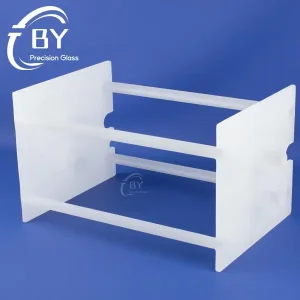
Wholesale Quartz Diffusion Boat for Semiconductor Suppliers, Factories
View Product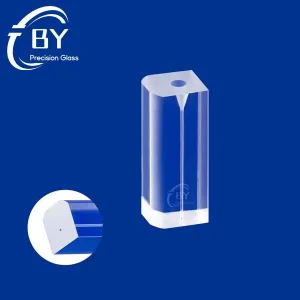
Custom Fiber Optic Glass Ferrules Supplier, Factories
View Product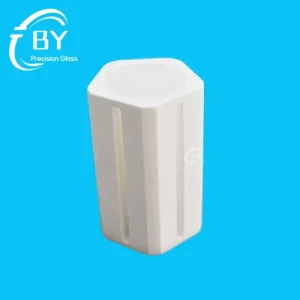
Wholesale Diffuse High‑Reflectivity PTFE Reflectors for Diode‑Pumping Chambers Suppliers, Factory
View Product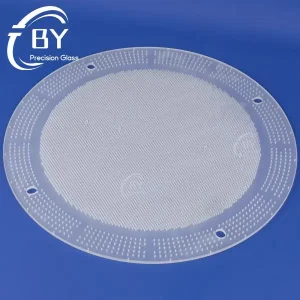
Custom Custom Optical Quartz Gas Distribution Plate Manufacturer, Suppliers
View Product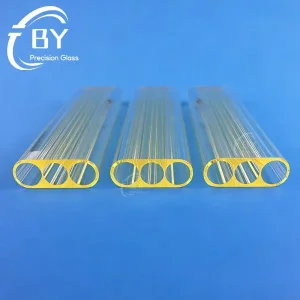
Custom Laser Cavity Flow Tubes & Filters Made from Samarium-doped Glass Supplier, Suppliers
View Product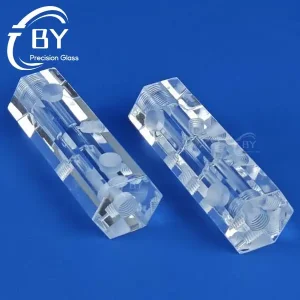
High-Quality Custom Fabrication of Quartz Glass Precision Components Supplier, Factory
View Product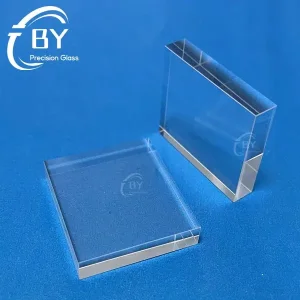
Custom Sapphire IPL Light Guide Block Used for Laser IPL Hair Removal Handle Manufacturer, Manufacturers
View Product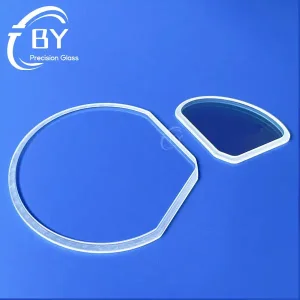
High-Quality Sapphire Viewing Plates for Harsh Chemical Environments Suppliers, Factories
View ProductRequest Custom Low-OH Fused Silica Fabrication
Send your custom technical drawings (STEP, IGES, DXF, or PDF). Our senior optical process engineers will review your dimensional tolerances, material grade fit, and coating specifications with an official manufacturability assessment and competitive factory pricing within 24 hours.